Collecting essentials
Silver Tarnish: What the Dark Layer Means
A dark silver surface is a chemistry lesson, not an automatic instruction to clean. Learn what tarnish changes and what collectors should preserve.
Read the story
From a coin in your hand to a spacecraft on the Moon. Explore the science, history, and small surprises behind a remarkable metal.
Follow eight chapters through the science, history and unexpected life of silver.
Pick a topic. Follow the story.
Every published fact has sources and room for a closer look.
50 facts
A dark silver surface is a chemistry lesson, not an automatic instruction to clean. Learn what tarnish changes and what collectors should preserve.
Read the storySilver ions can disrupt bacterial cells. In a purpose-made dressing, that chemistry has a specific job alongside the fabric that handles wound fluid.
Read the storySilver leads the elemental metals at ordinary room temperature. That result explains useful applications, but it cannot tell you what is inside every electronic device.
Read the story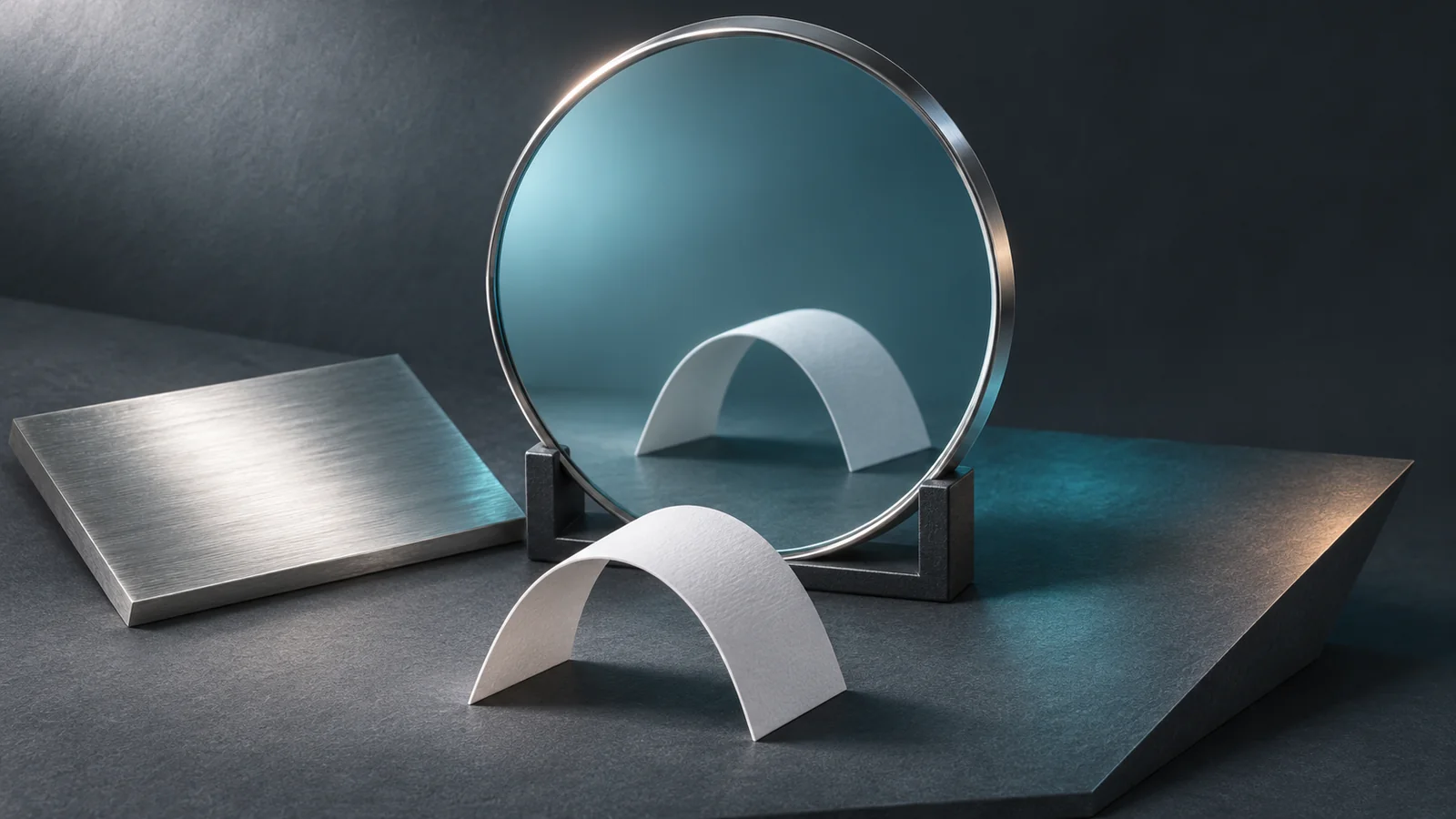
Silver is an excellent reflector across much of the visible and infrared. The wavelength, surface finish, and protective layers determine how a real mirror performs.
Read the story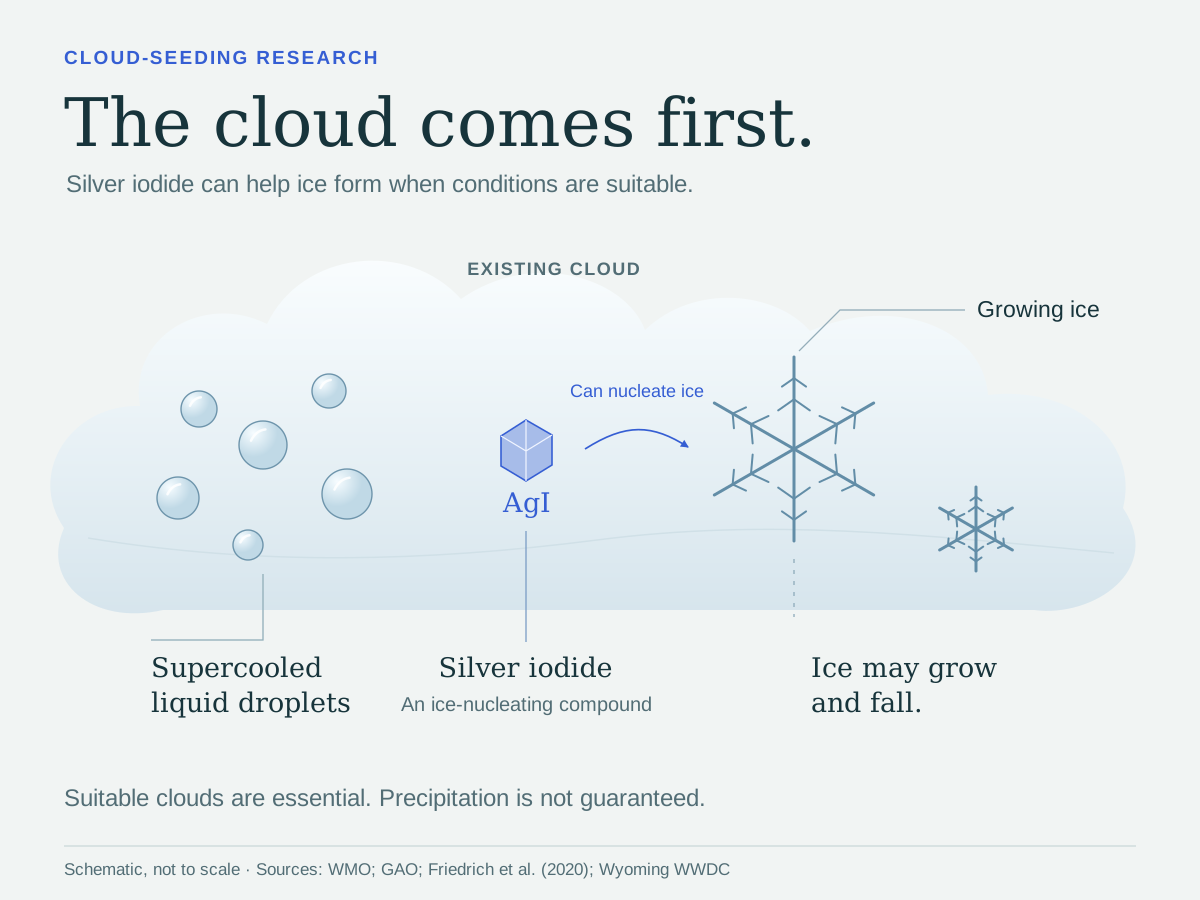
Tiny particles of silver iodide can help ice crystals form inside certain cold clouds. Researchers have watched the process produce snowfall.
Read the story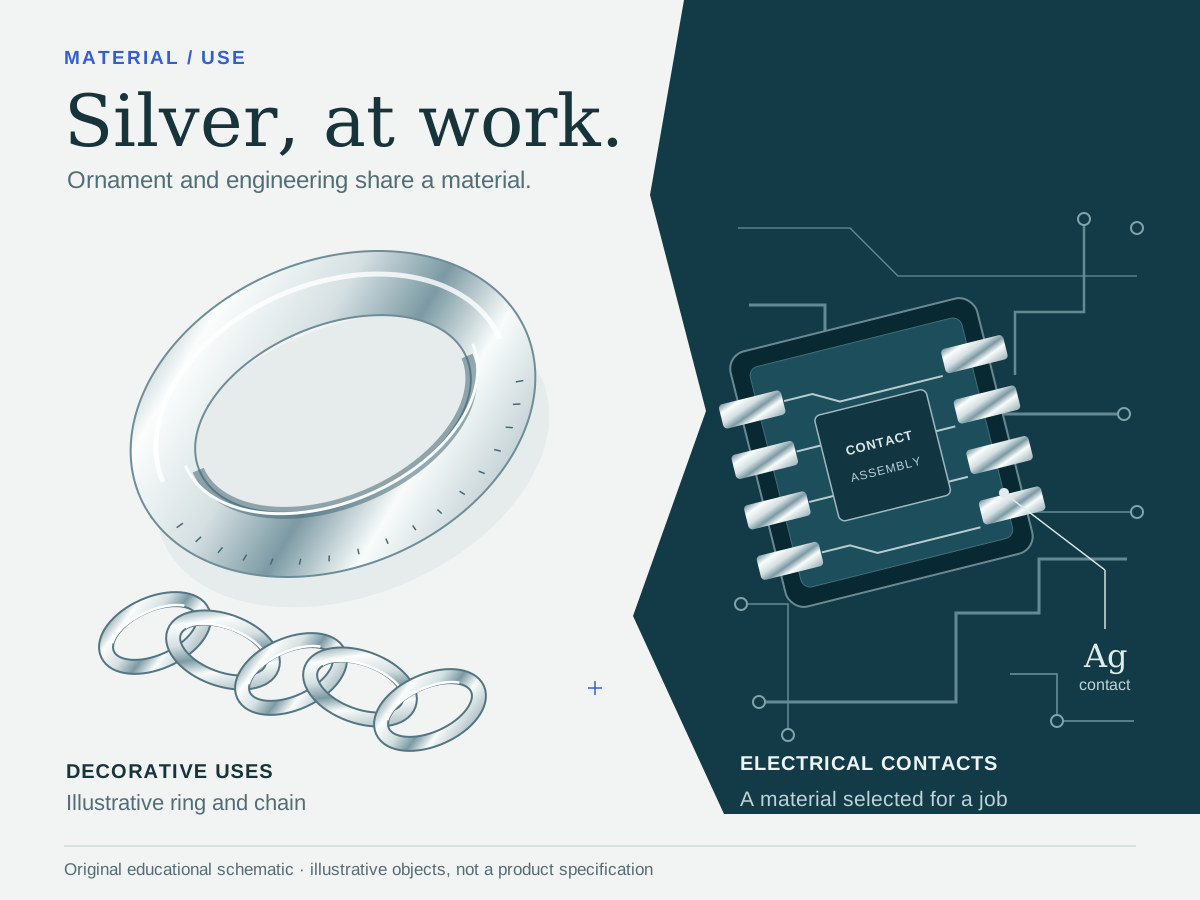
The metal in a treasured coin also has a working life in technology. Its electrical and optical properties put silver to use far beyond jewelry and display cases.
Read the story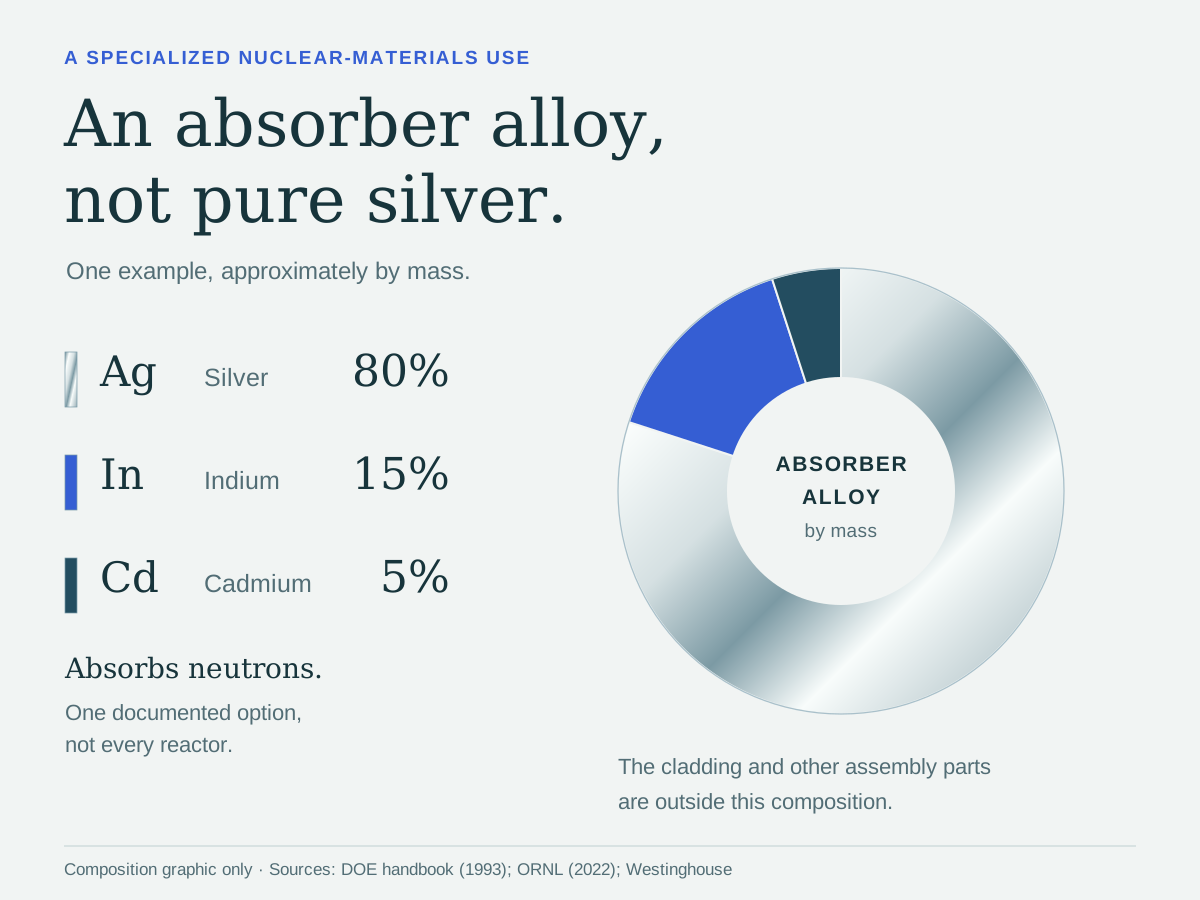
Some reactor control rods contain a silver-rich alloy that captures neutrons. Its job is to help regulate the chain reaction, not to carry electricity.
Read the storyFollow the manufacturing chain from ethylene to PET. Silver’s catalytic role comes before the fabric, and does not establish that a shirt contains silver.
Read the story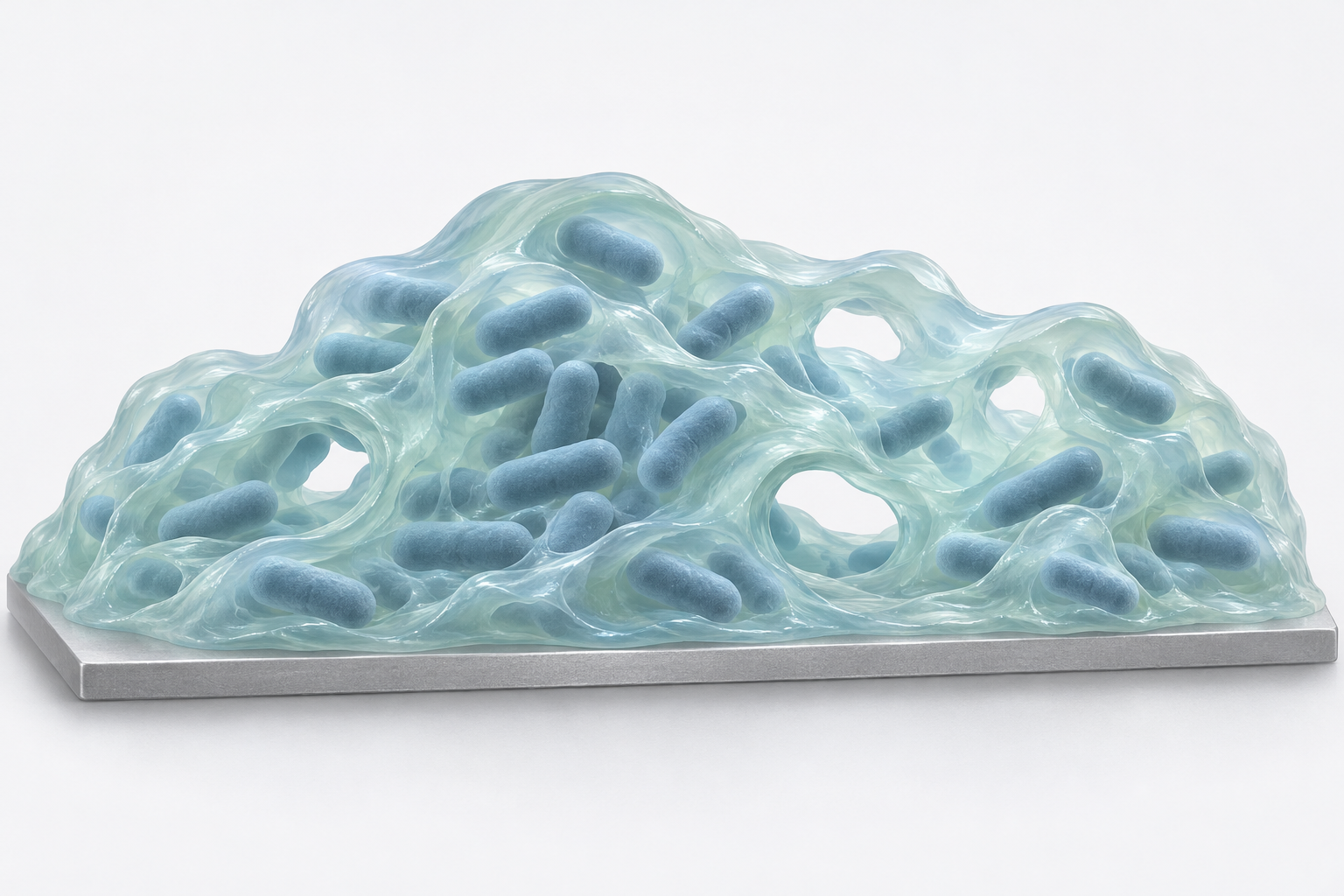
Silver-containing gels have harmed bacteria in laboratory-grown biofilms, the communities microbes build on surfaces. Turning that result into a useful treatment is a separate challenge.
Read the story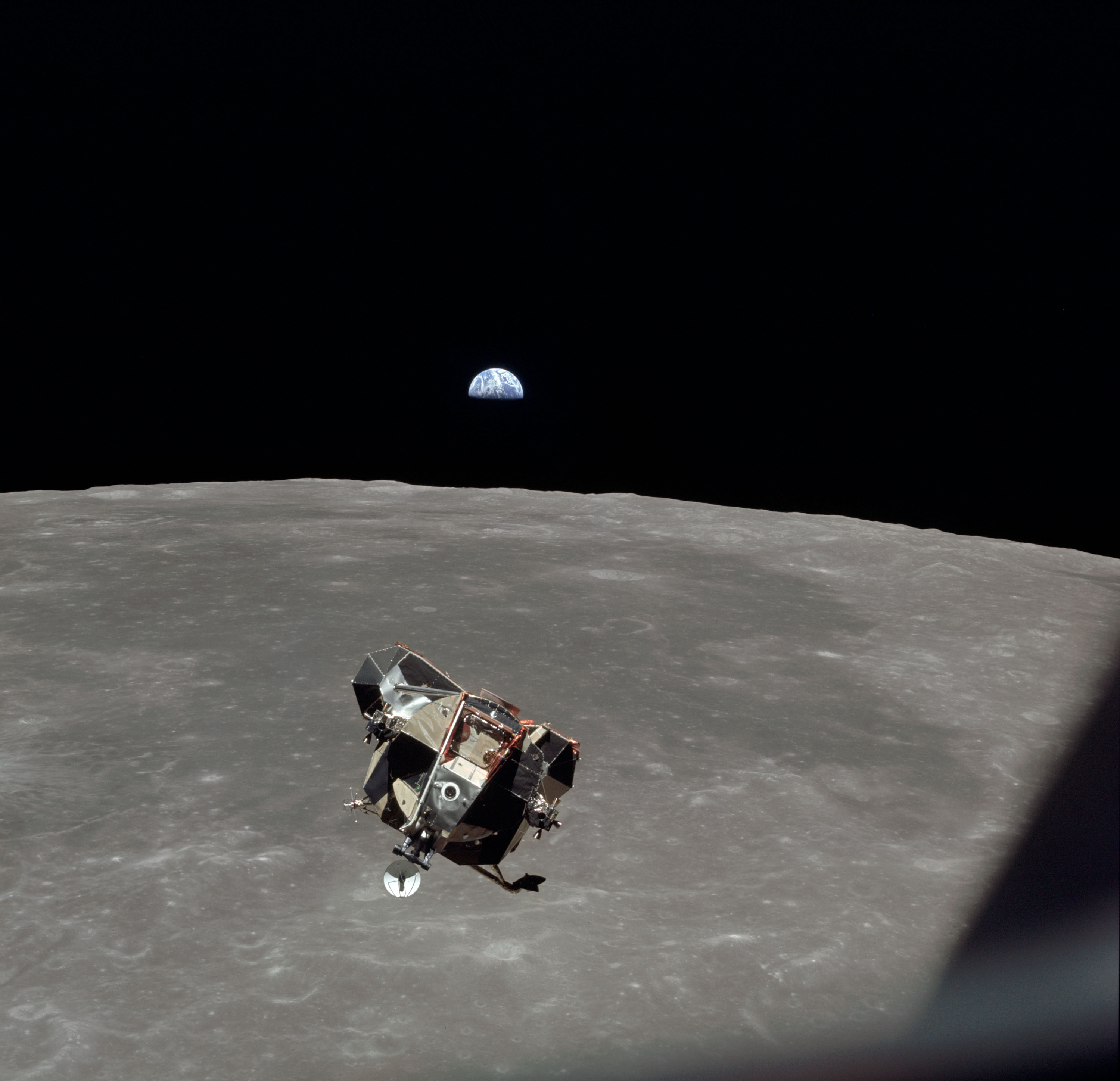
Silver-zinc batteries supplied electricity for Apollo’s lunar landers, returning capsules and Moon rovers. Each had a different job to do.
Read the storyA relay contact has to carry current and survive repeated switching. Silver-based materials help, but the best choice depends on the job and the surrounding atmosphere.
Read the storyA coin’s ring reflects its material and shape. Discover the science behind acoustic screening, why a good ping is not proof of authenticity, and how to protect collectible surfaces.
Read the story
Some energy-efficient glazing uses very thin silver layers to manage radiant heat while admitting daylight. The full window design matters as much as the metal’s name.
Read the story
Many traditional black-and-white photographs contain an image made from metallic silver. Learn how silver-halide crystals record light, what development changes, and why photographic prints need special care.
Read the storyThousands of tons of Treasury silver became electrical conductors at Oak Ridge during World War II. The loan, its careful accounting, and the long return journey reveal a different side of precious metal.
Read the storyThe yellow and amber details in some historic windows come from silver. Explore the fired stain, the microscopic particles behind its color, and the clues it gives glass collectors.
Read the story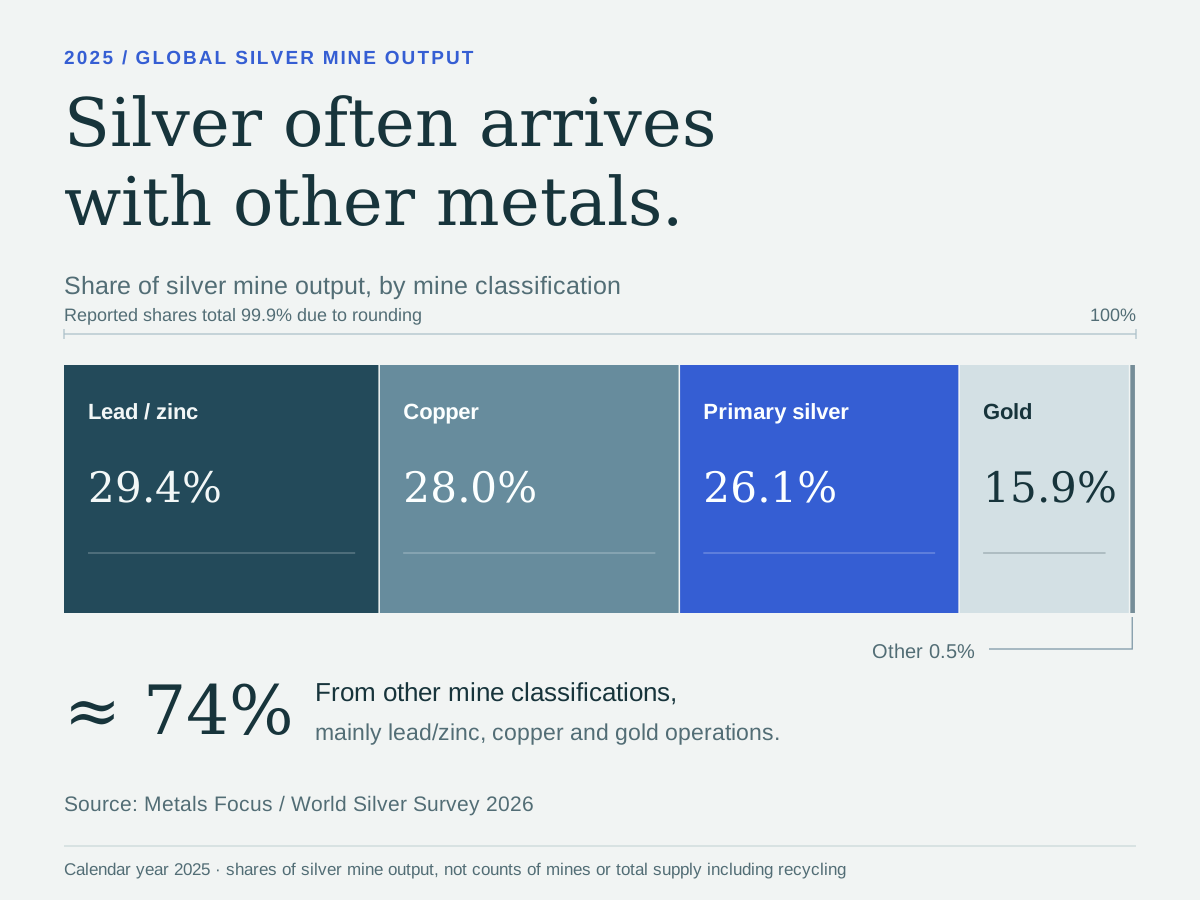
Most silver mine output comes from operations classified around other metals. That connection matters, but does not dictate a future price.
Read the storyThree familiar coinage metals share a periodic-table column, but their conductivity and practical uses need more explanation than a single electron.
Read the storyPrinted silver-based conductors are a documented way to heat automotive glass. Those familiar lines show how a precious metal can become part of a practical surface.
Read the storyMany heart-recording sensors use silver and silver chloride to connect the body’s electrical activity with electronic equipment. The important chemistry happens where the sensor meets its gel.
Read the story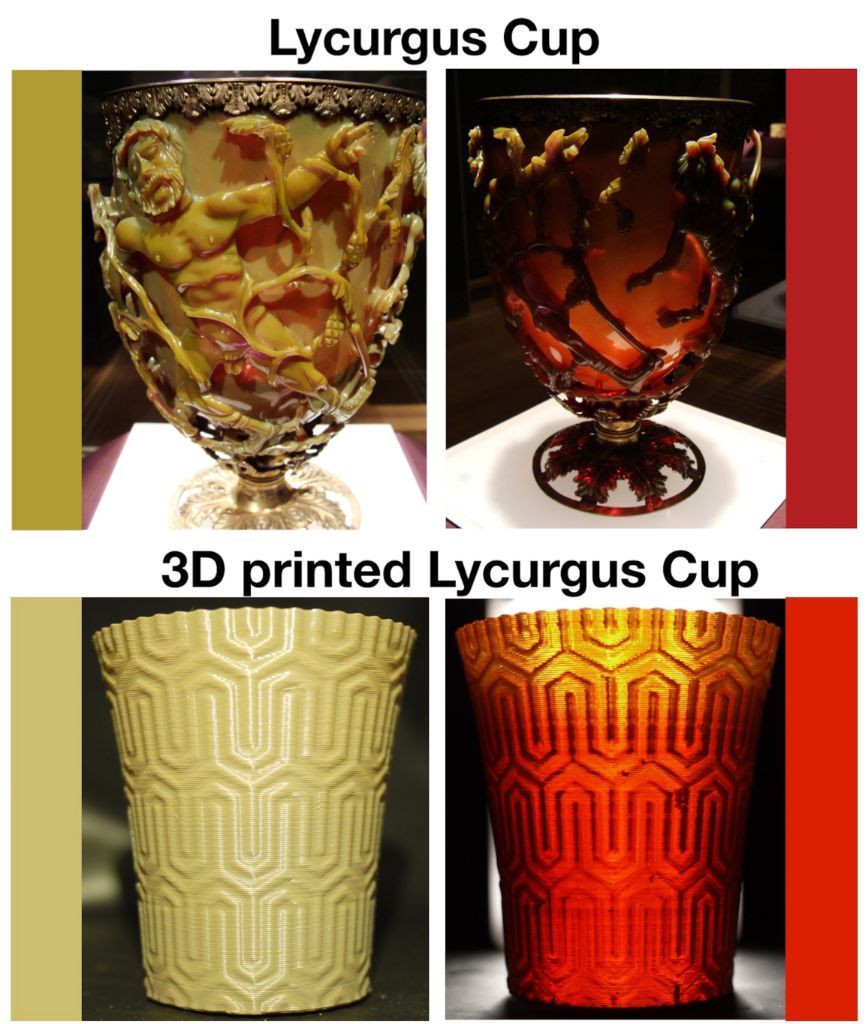
Tiny silver-gold particles help the Lycurgus Cup look green in reflected light and glow red when light shines through it.
Read the story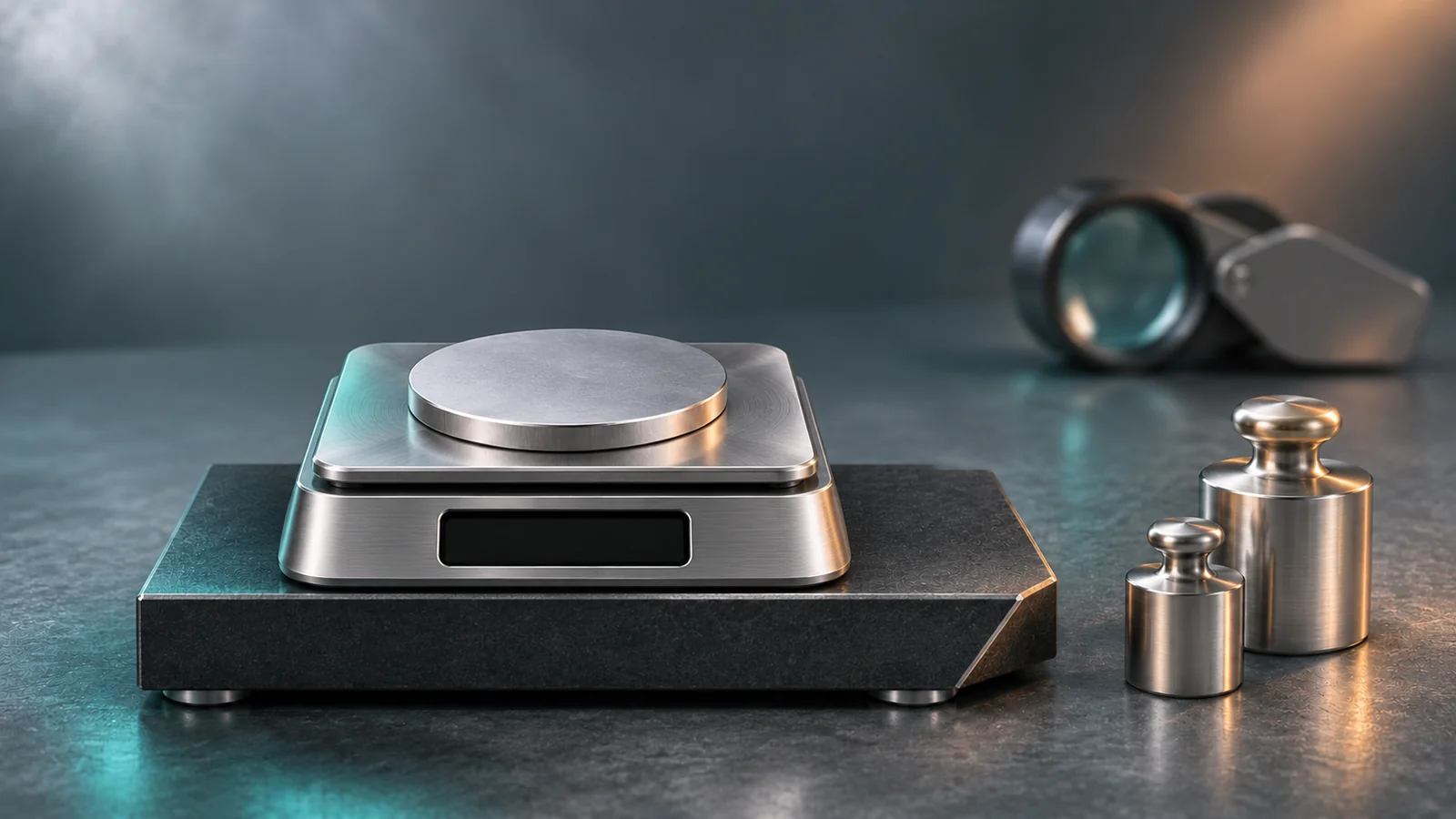
A silver ounce is usually a troy ounce, which is heavier than an everyday ounce. Learn the exact conversion, the history behind the name, and the weight checks that matter to collectors.
Read the story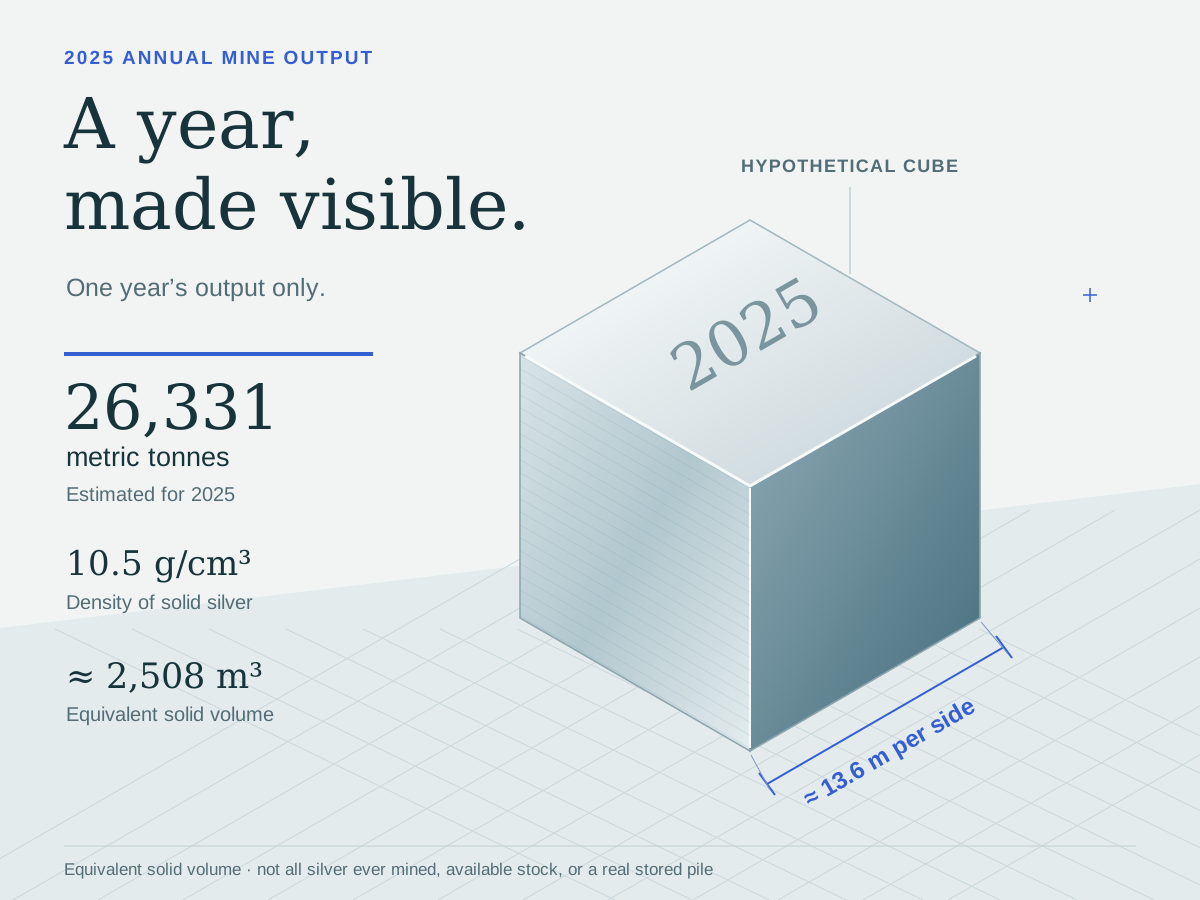
Imagine gathering all the silver mined worldwide in 2025 into one solid block. The cube would stand about 13.6 metres high, with the same width and depth.
Read the storyA new coinage law ended one silver dollar while authorizing a different one. Dimes, quarters and half dollars remained part of the silver story.
Read the story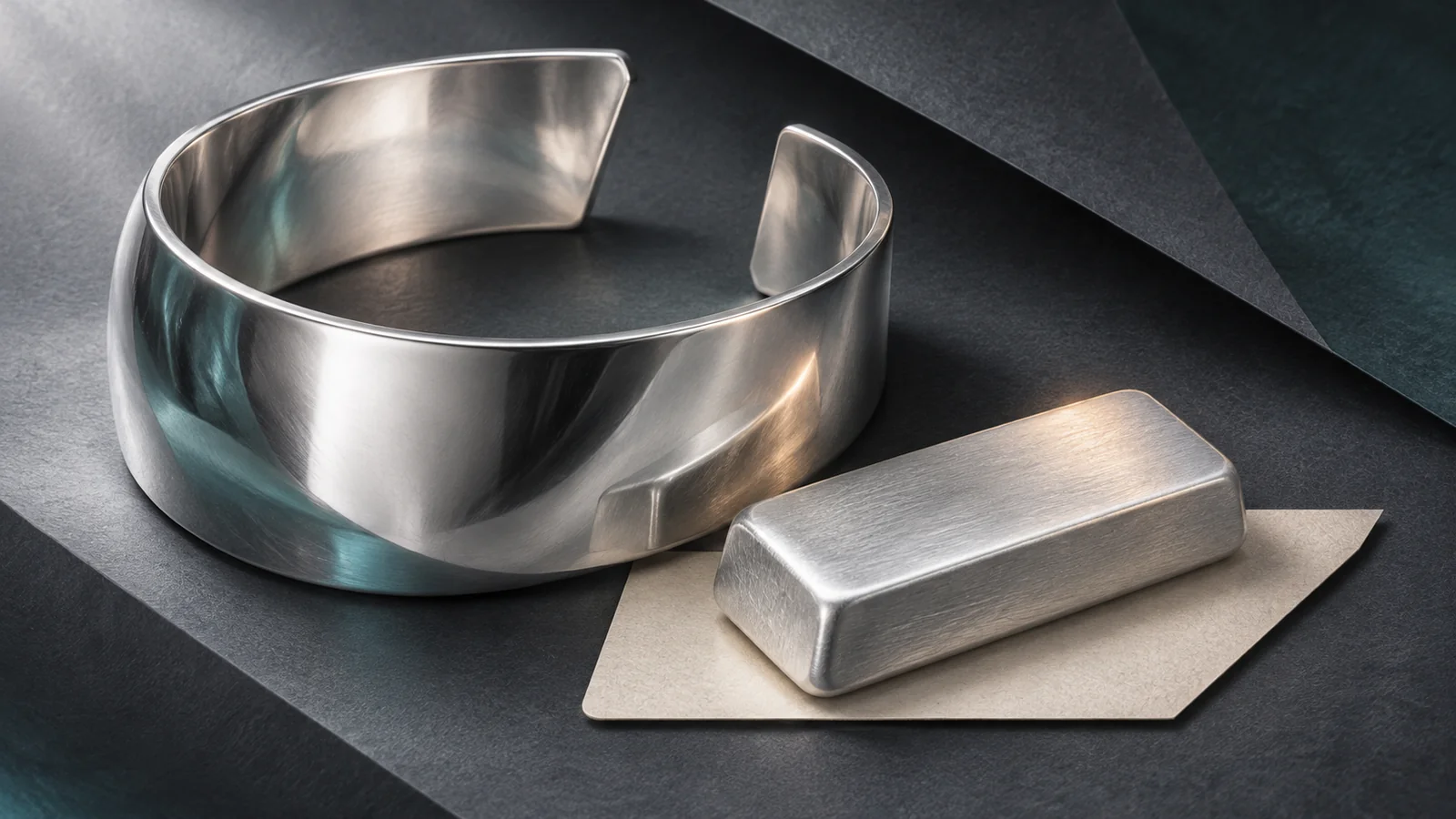
Sterling and fine silver describe different silver contents. Understand purity marks, why jewelers use alloys, and how to avoid confusing an item's total weight with the silver inside it.
Read the storyDental amalgam contains silver alongside other metals, including mercury. Understanding its composition must go together with current safety guidance, not a blanket instruction to replace fillings.
Read the story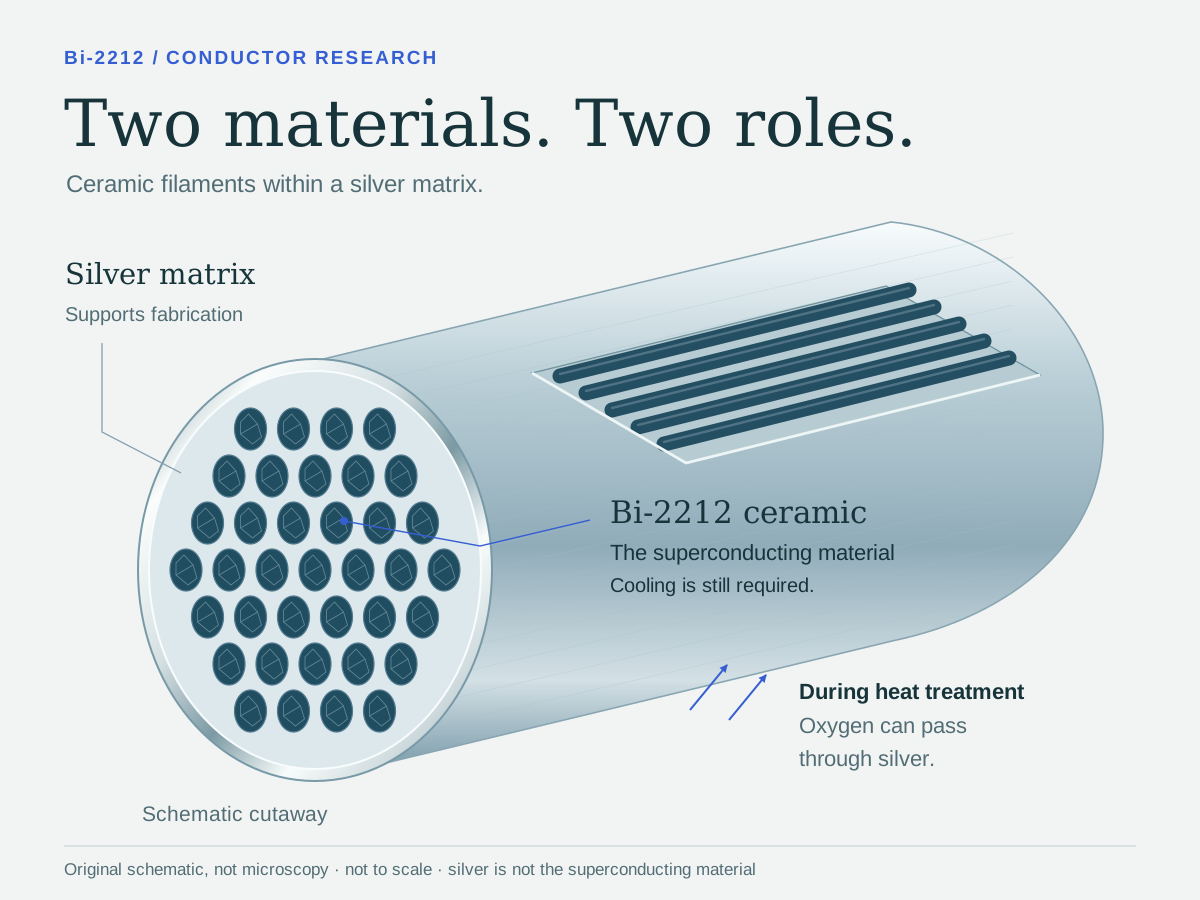
Some superconducting wire contains brittle ceramic inside a silver structure. The silver helps engineers make a useful wire from a material that would otherwise be difficult to handle.
Read the storySilver can occur naturally as curling wires and branching forms. Learn what native silver means, see documented museum examples, and separate a mineral specimen’s shape from evidence of its origin.
Read the storyTiffany has made the Super Bowl championship trophy since the first game in 1967. Its silver, form, and hand-finishing connect a famous sporting prize with the traditions of hollowware.
Read the storyWhen very pure silver changes from liquid to solid, its temperature holds nearly steady. Laboratories use that pause as a reference for high-temperature measurements.
Read the story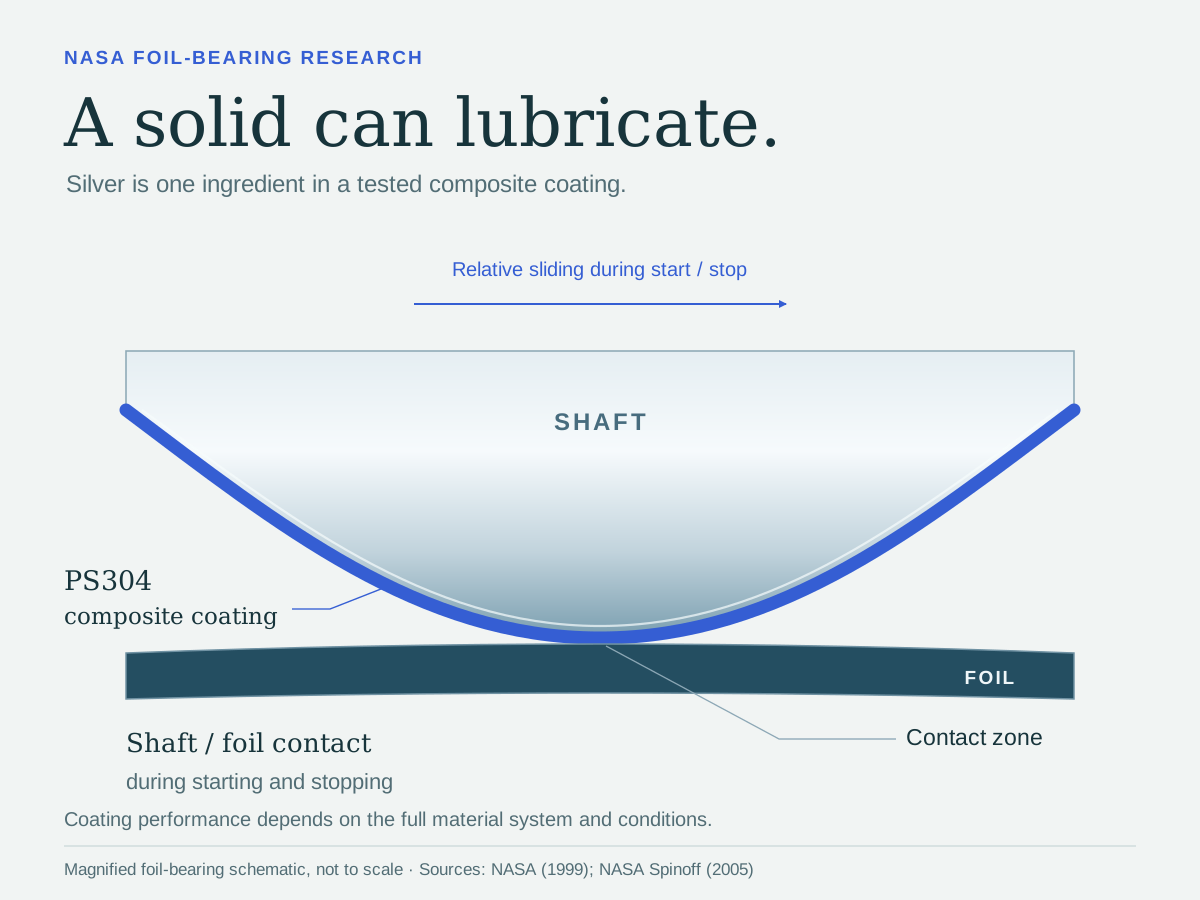
Silver appears in some bearing coatings and solid-lubricant systems. Its performance depends on the contact, coating and operating conditions.
Read the story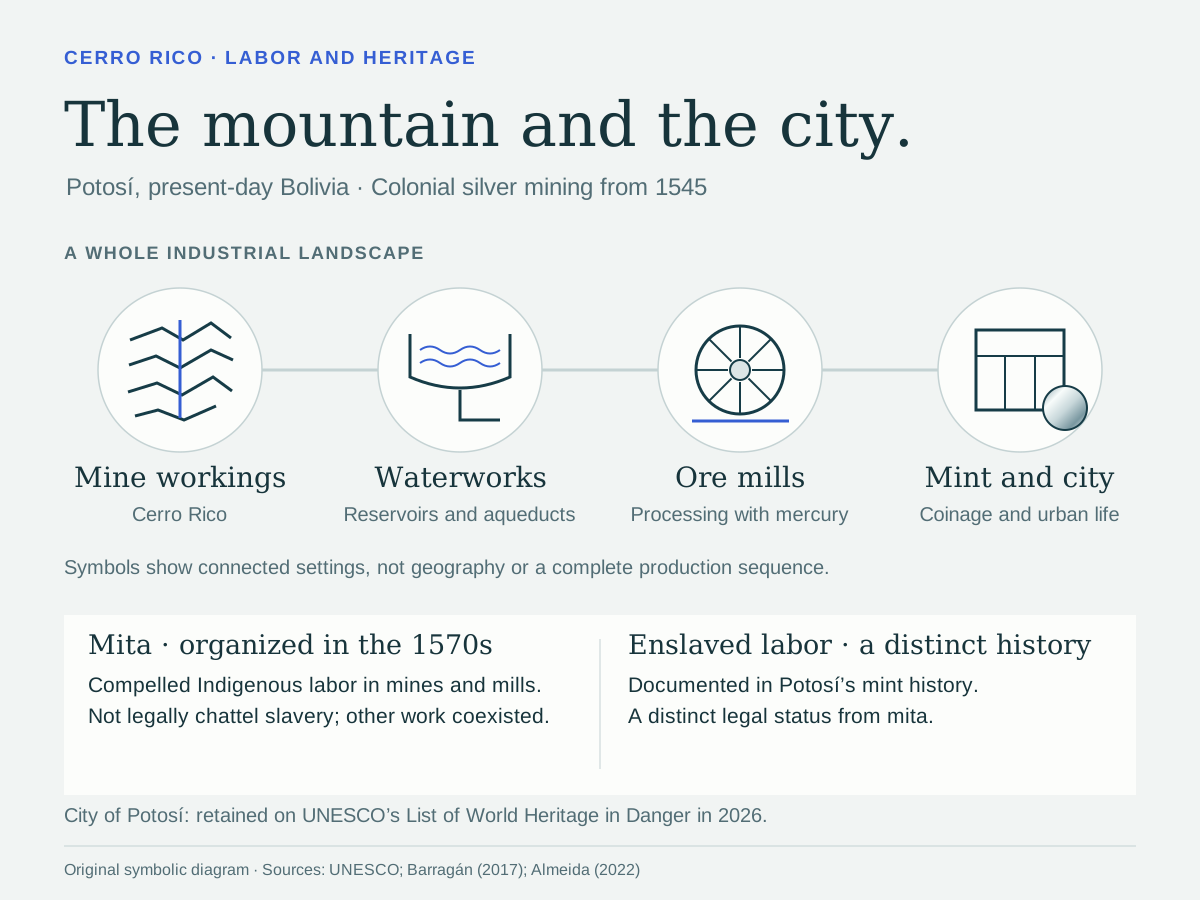
Potosí’s silver history combines an industrial landscape, coerced labor and continuing conservation challenges.
Read the story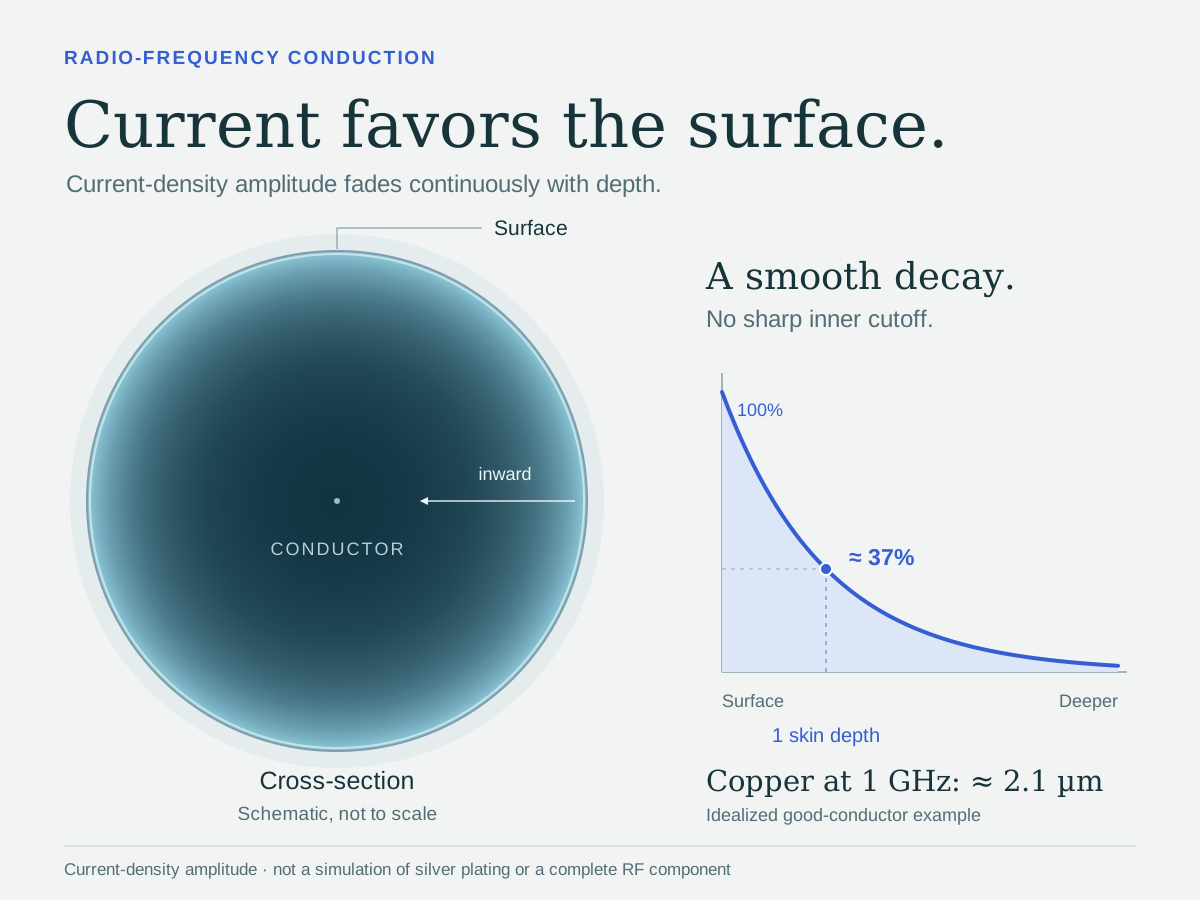
At high frequencies, electric current crowds near a conductor’s surface. A thin silver finish can put a good conducting material where it matters.
Read the story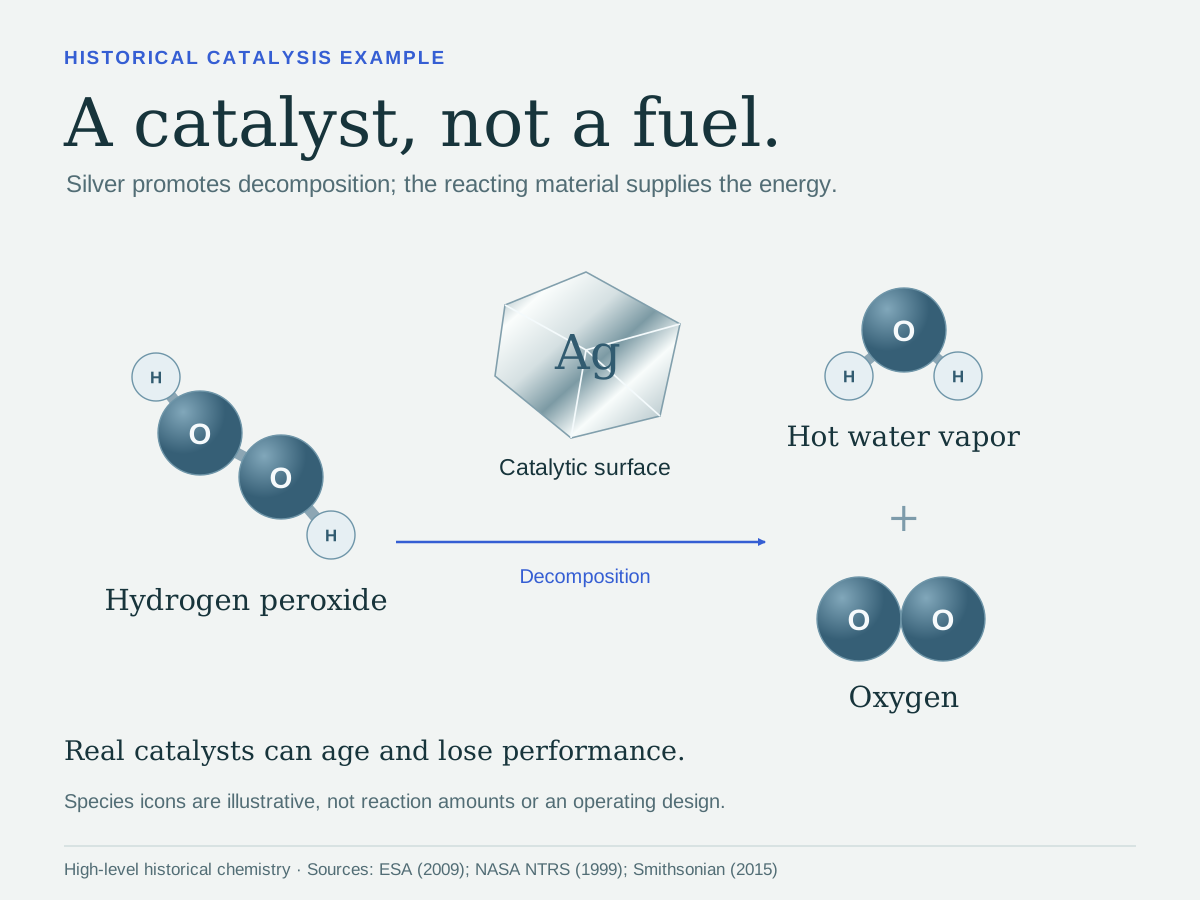
The Bell rocket belt used silver screens to help release hot gases from its propellant. Those gases supplied the push that lifted its wearer.
Read the storyEarly coins from western Anatolia used electrum, a gold-silver alloy. Their story includes natural deposits, controlled metal mixtures, and Croesus’s separate gold and silver issues.
Read the story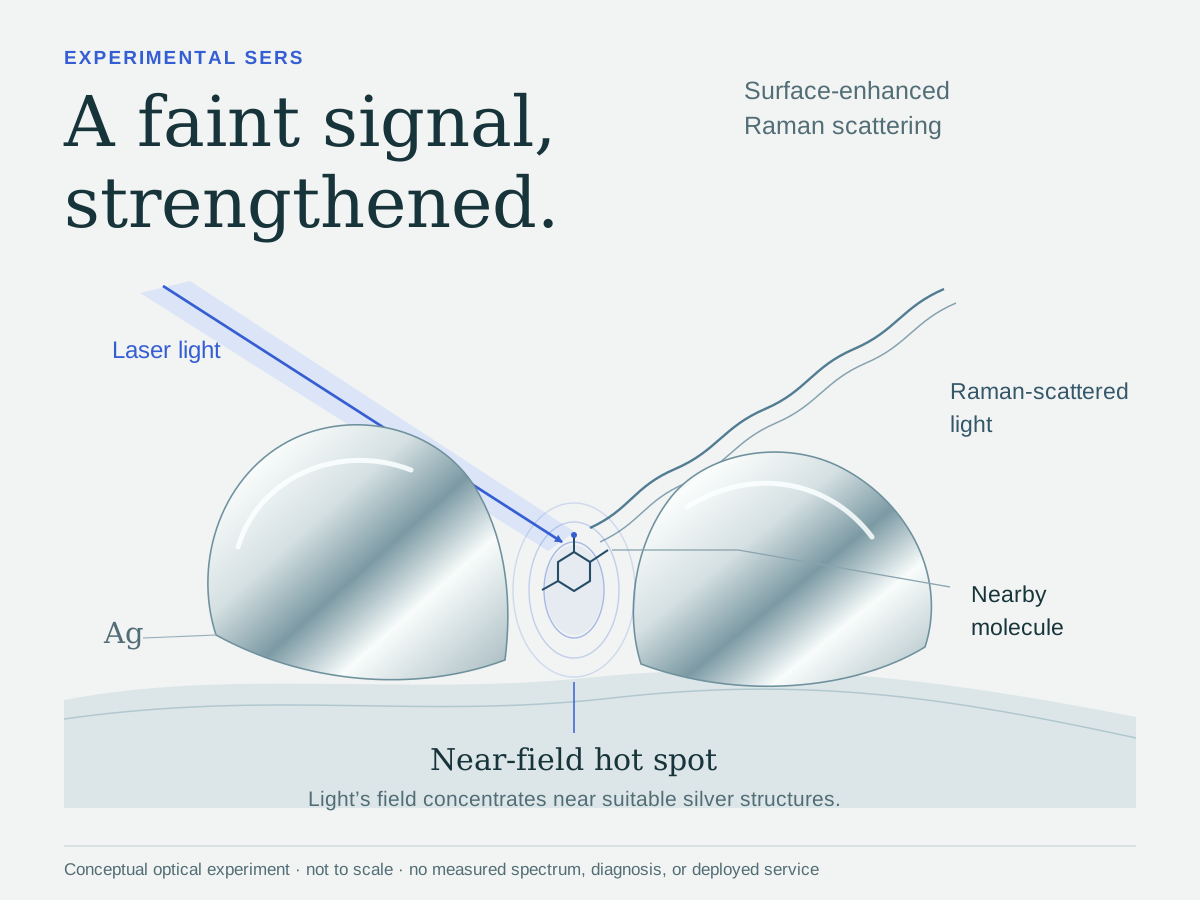
Tiny structures of silver can make faint patterns in scattered light much stronger, giving scientists a better chance of detecting and studying nearby molecules.
Read the storyA moving magnetic field can induce currents in silver without making it behave like iron. The effect is physics, not proof of authenticity.
Read the storyAn average crustal concentration can illustrate how dilute silver is, but it cannot tell you how much ore a mine must process.
Read the storySAC305 is mostly tin, with silver and copper added to form a useful solder alloy. Its composition is precise; claims about service life need more context.
Read the storyThe wreck was identified in 2011, followed by silver recovery in 2012 and 2013. The documented salvage deserves a careful distinction from estimates of cargo aboard.
Read the story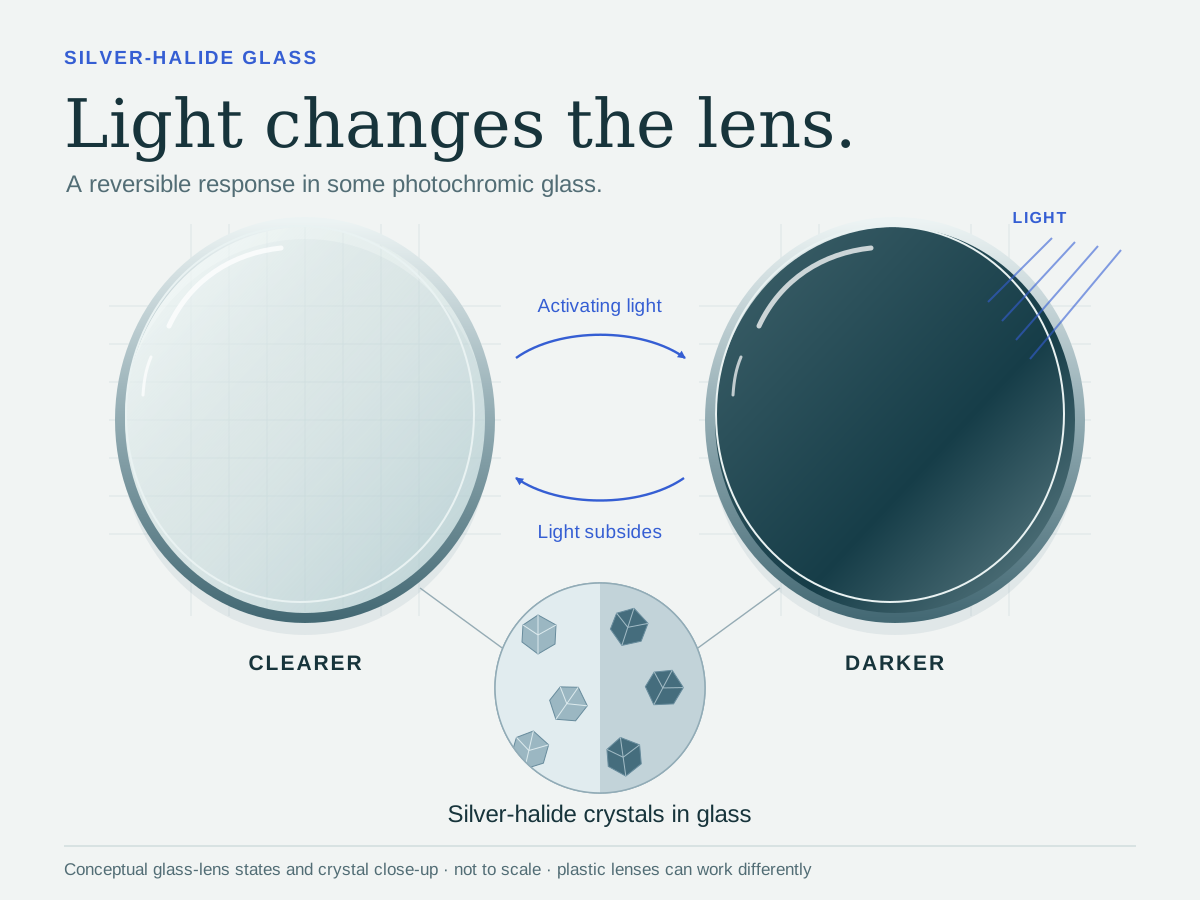
Silver-halide crystals help some glass lenses darken in light and fade again. Other photochromic lens materials can work differently.
Read the storyModern Olympic gold medals can contain far more silver than gold. Named Games and official specifications reveal the metal beneath the winning color.
Read the storySilver accumulation can produce blue-gray discoloration that is usually permanent. The effect is a warning about exposure, not evidence that silver is a beneficial supplement.
Read the story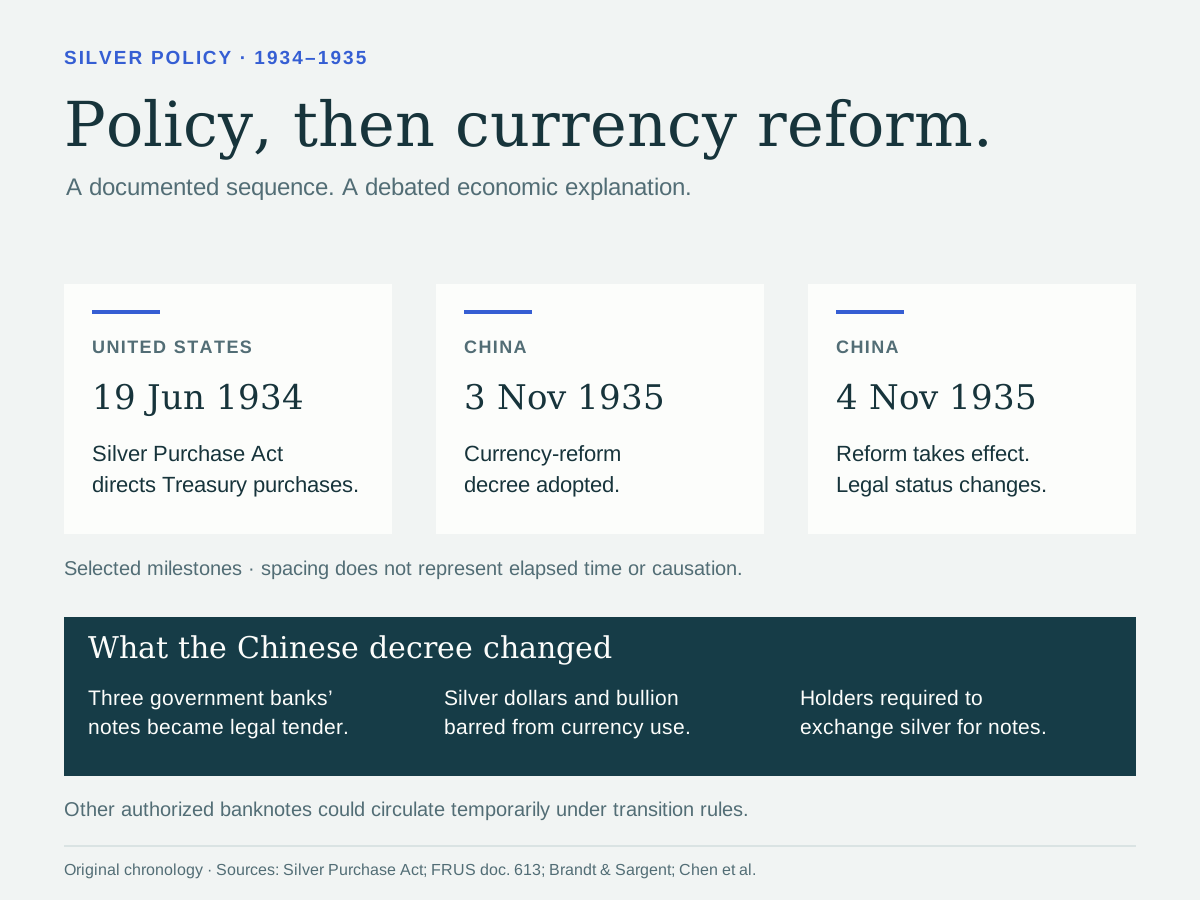
China’s government told people to exchange silver coins and bullion for banknotes. The change ended a silver-based monetary system, while the reasons behind it remain debated.
Read the story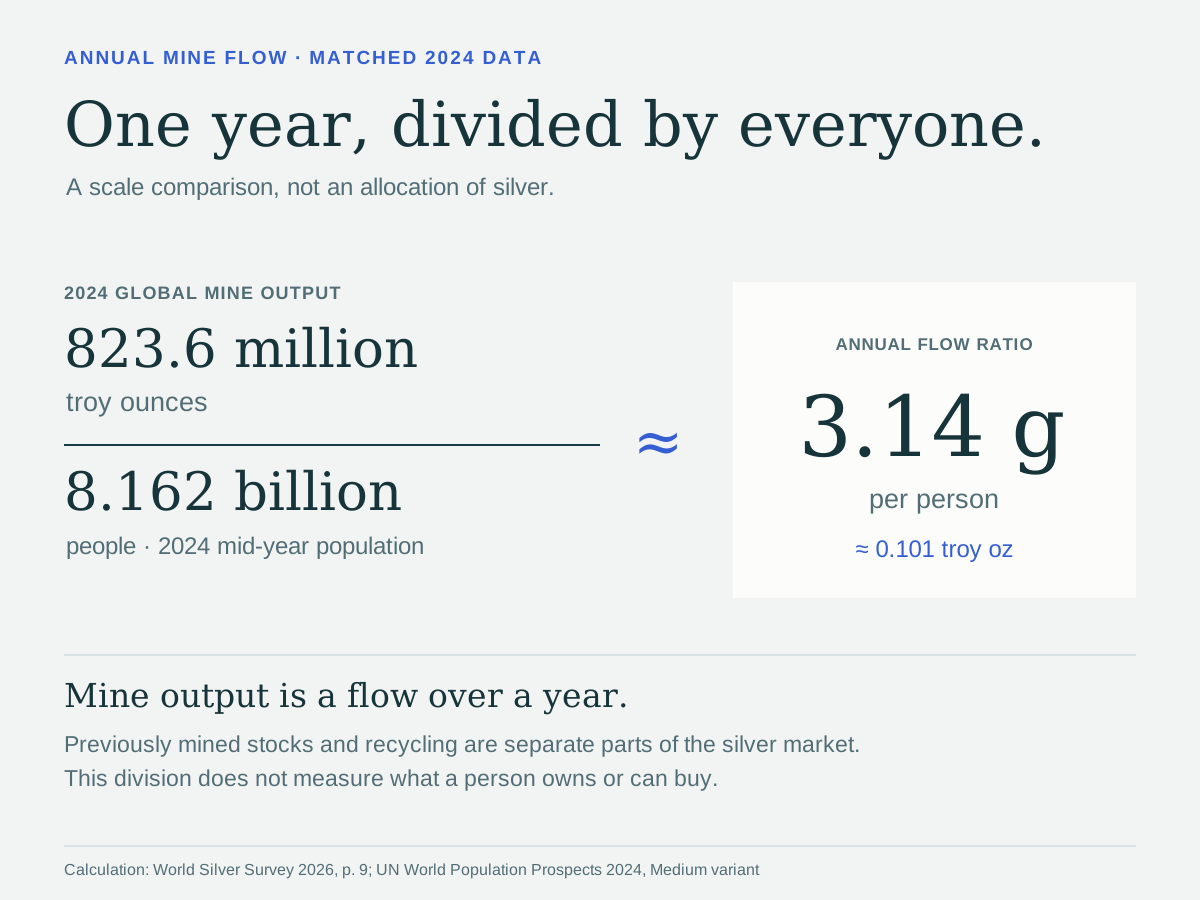
Dividing one year of mine output by the matching population gives a useful scale comparison. It is not an allocation of available silver.
Read the story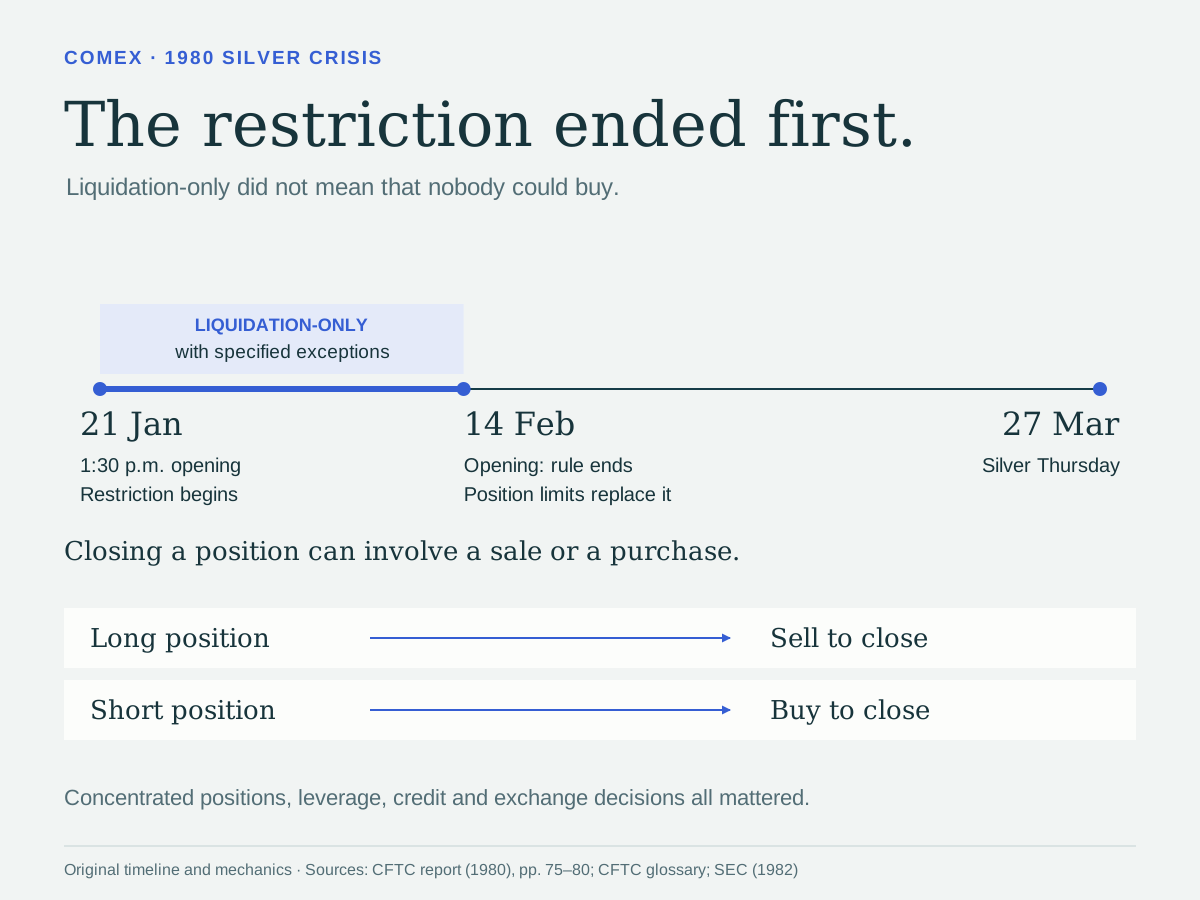
Large bets on silver, borrowed money and changing exchange rules collided in 1980. Falling prices created payment demands that threatened traders and their brokers.
Read the storyDentists can use a silver-containing solution to help stop selected areas of decay from progressing. The treatment has an important trade-off: it can permanently darken the treated decay.
Read the story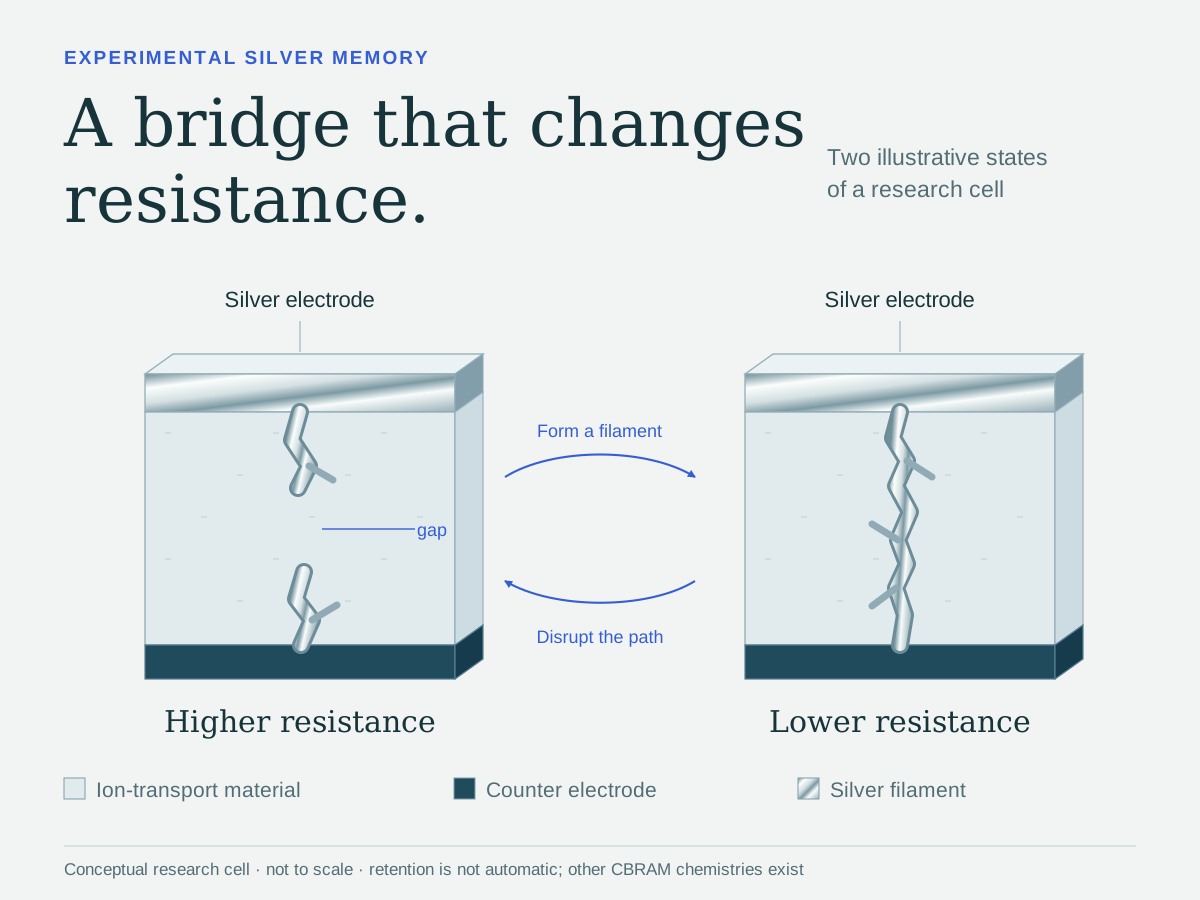
In some resistive-memory research, electrical pulses form or disrupt tiny silver filaments. The mechanism is real, but not every commercial CBRAM device uses silver.
Read the story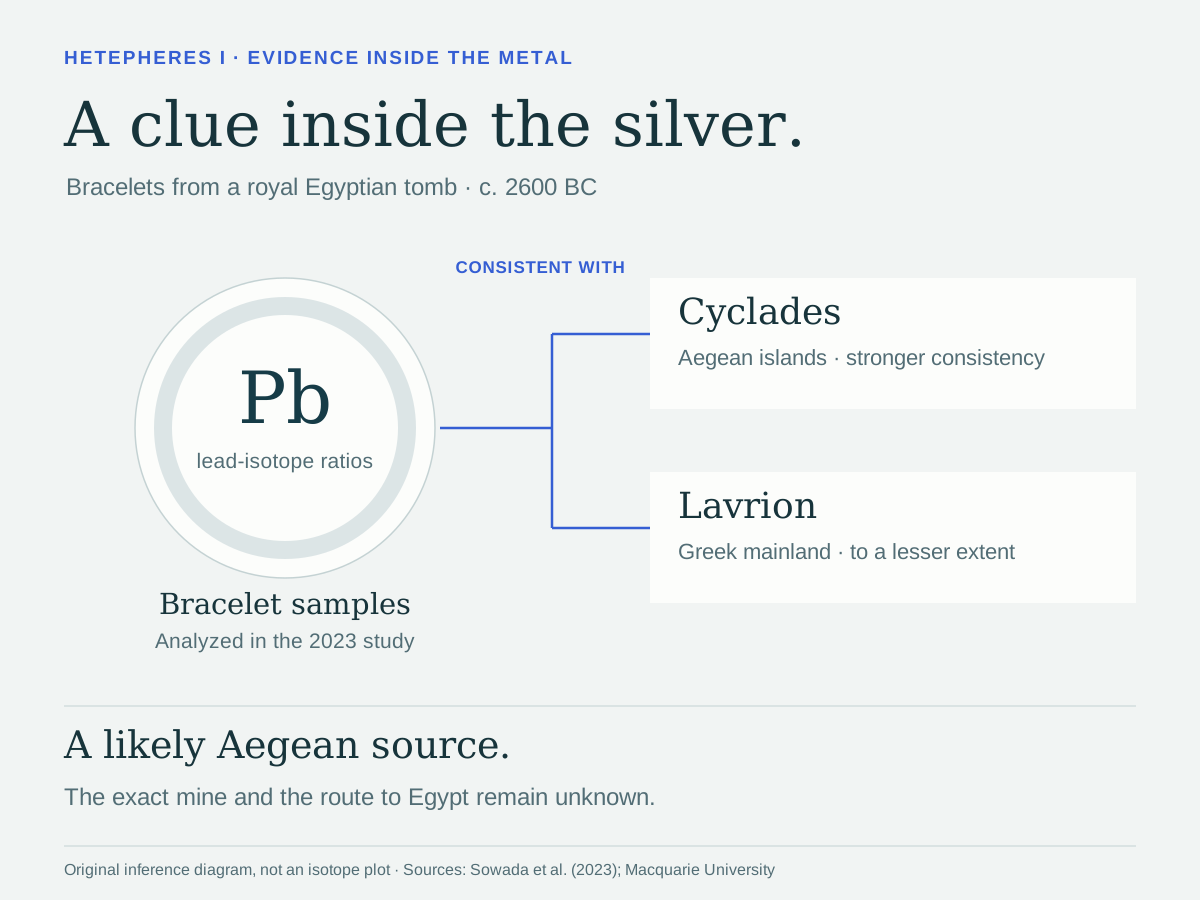
Silver bracelets from an Egyptian royal tomb hold a clue to ancient trade: their metal probably came from across the Mediterranean, in what is now Greece.
Read the storyAfter losing a war to Japan, China agreed to enormous payments measured in silver. The unit was a tael: a weight of silver used to state money values.
Read the storyNo matches. Try another topic or clear the search.