
The short answer
One troy ounce equals exactly 31.1034768 grams, compared with 28.349523125 grams for an everyday avoirdupois ounce. Silver coins and bullion commonly use troy ounces, so always check the unit and whether the stated weight means the whole object or its silver content.
The ounce on a silver coin
Pick up a silver coin marked one ounce and you are usually holding a product described in troy ounces. The Royal Mint confirms that precious-metal weights and prices commonly use this unit. An everyday ounce belongs to a different system, called avoirdupois. The distinction matters whenever you compare a coin specification, a dealer listing, or a scale reading.
Strictly speaking, these are units of mass, although collectors normally call the measurement weight. Neither should be confused with a fluid ounce, which measures volume. Start by identifying the unit before deciding whether a piece matches its description.
How many grams are in a troy ounce?
NIST's measurement tables give one troy ounce as exactly 31.1034768 grams. One avoirdupois ounce equals exactly 28.349523125 grams. For an easy working comparison, remember 31.10 grams versus 28.35 grams. Calculating from those definitions, the troy ounce is about 9.7 percent heavier.
To convert grams to troy ounces, divide by 31.1034768. To convert troy ounces to grams, multiply by the same number. A mass of 100 grams is therefore about 3.2151 troy ounces; ten troy ounces are about 311.0348 grams. These calculations describe mass, regardless of the material being weighed.
Where does the name come from?
The familiar explanation connects troy weight with Troyes, a trading city in France's Champagne region. The Perth Mint describes the medieval fairs where merchants from across Europe exchanged goods, including precious metals, and presents the city's name as the traditional source of the term.
That history helps explain why a specialized unit survived in precious-metal trading. It should not be stretched into a claim that all medieval Europe used one identical, universally enforced silver standard. For a modern collector, the decisive reference is the defined gram conversion.
The surprising pound problem
A troy pound contains 12 troy ounces. An avoirdupois pound contains 16 avoirdupois ounces. NIST lists their masses as 373.2417216 grams and 453.59237 grams respectively. Consequently, the heavier ounce belongs to the lighter pound because the systems divide their pounds differently.
A listing for a pound of silver therefore needs clarification. Ask which pound the seller means and request the gram weight. Do not automatically multiply a troy-ounce figure by 16 or assume an ordinary pound contains only 12 ounces.
Weight and silver content are separate details
The U.S. Mint's specifications for its 2024 American Eagle One Ounce Silver Uncirculated Coin list silver weight as 1.000 troy ounce and composition as 99.9 percent fine silver. Reading those fields separately is a useful habit: a product specification may describe the precious-metal content rather than simply the complete object's weight.
For an alloy object, calculating silver content requires both the relevant metal mass and its fineness. A scale alone cannot establish purity. Stones, packaging, a capsule, or non-silver components must not be treated as silver when interpreting a total weight.
A simple collector's check
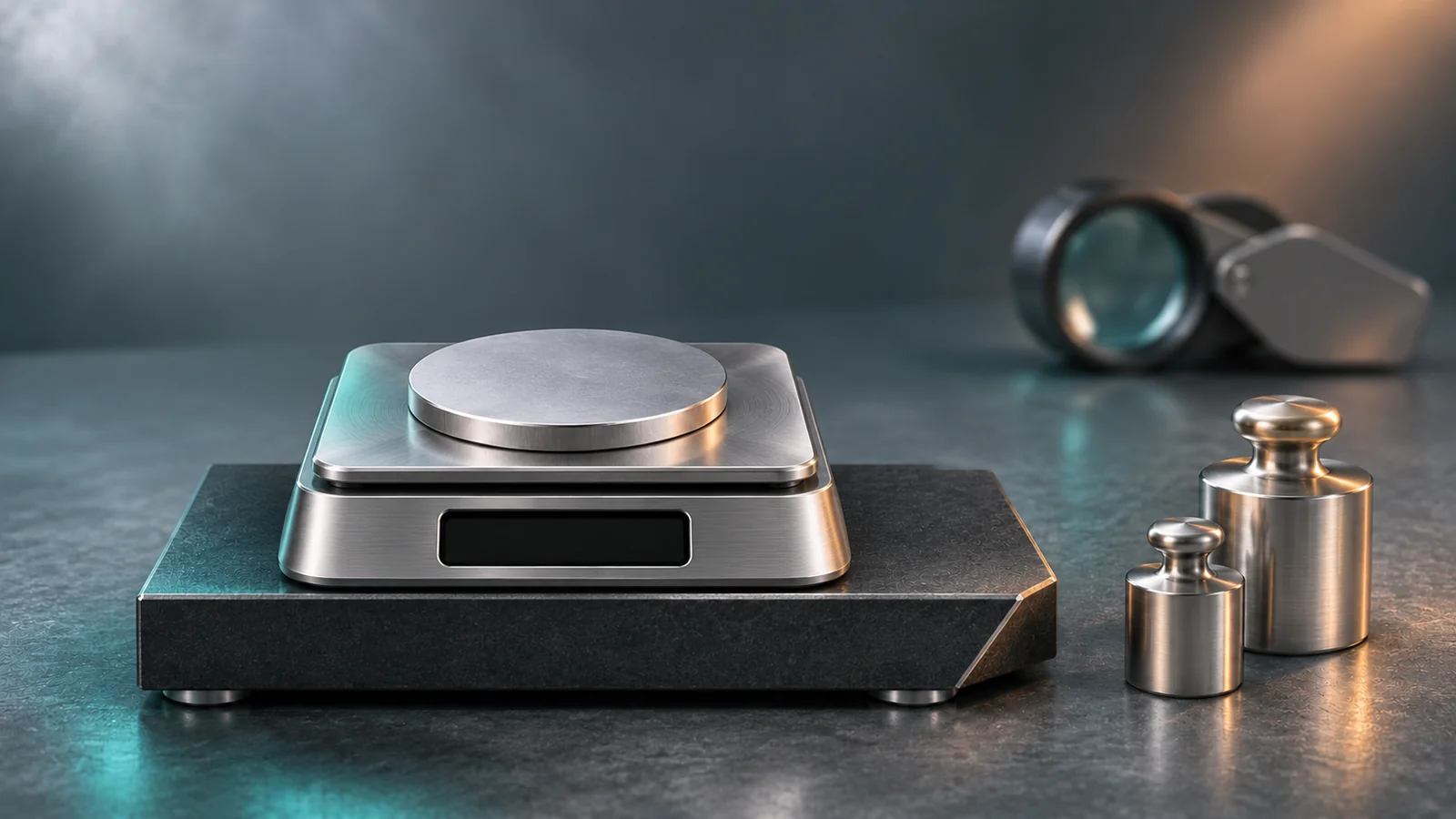
Before comparing two pieces, confirm the unit, the fineness, and what the weight includes. If your scale displays only oz, check its manual rather than assuming it means troy ounces. Using grams can make comparisons easier, provided the scale is suitable and its accuracy is checked.
Record the issuer's specification alongside your own measurement. A correct weight is one useful observation, but it does not prove authenticity. The small word troy prevents a large misunderstanding: two ounces with the same name can represent different amounts of metal.
About this edition
Original source and editorial notes
Adapted from original material by Rich Silver. Original source card: Silver fact — supplied original card (publication date not established).
Reviewed 2026-11-04. Expanded from the supplied original card. Qualified the Troyes origin account rather than presenting a single, universal medieval standard as established fact. Added verified mass conversions, the distinction between troy and avoirdupois pounds, and a separate explanation of gross weight and silver content. The original card has no verified publication date or public URL; neither has been inferred from file metadata.