A story written on the moon.
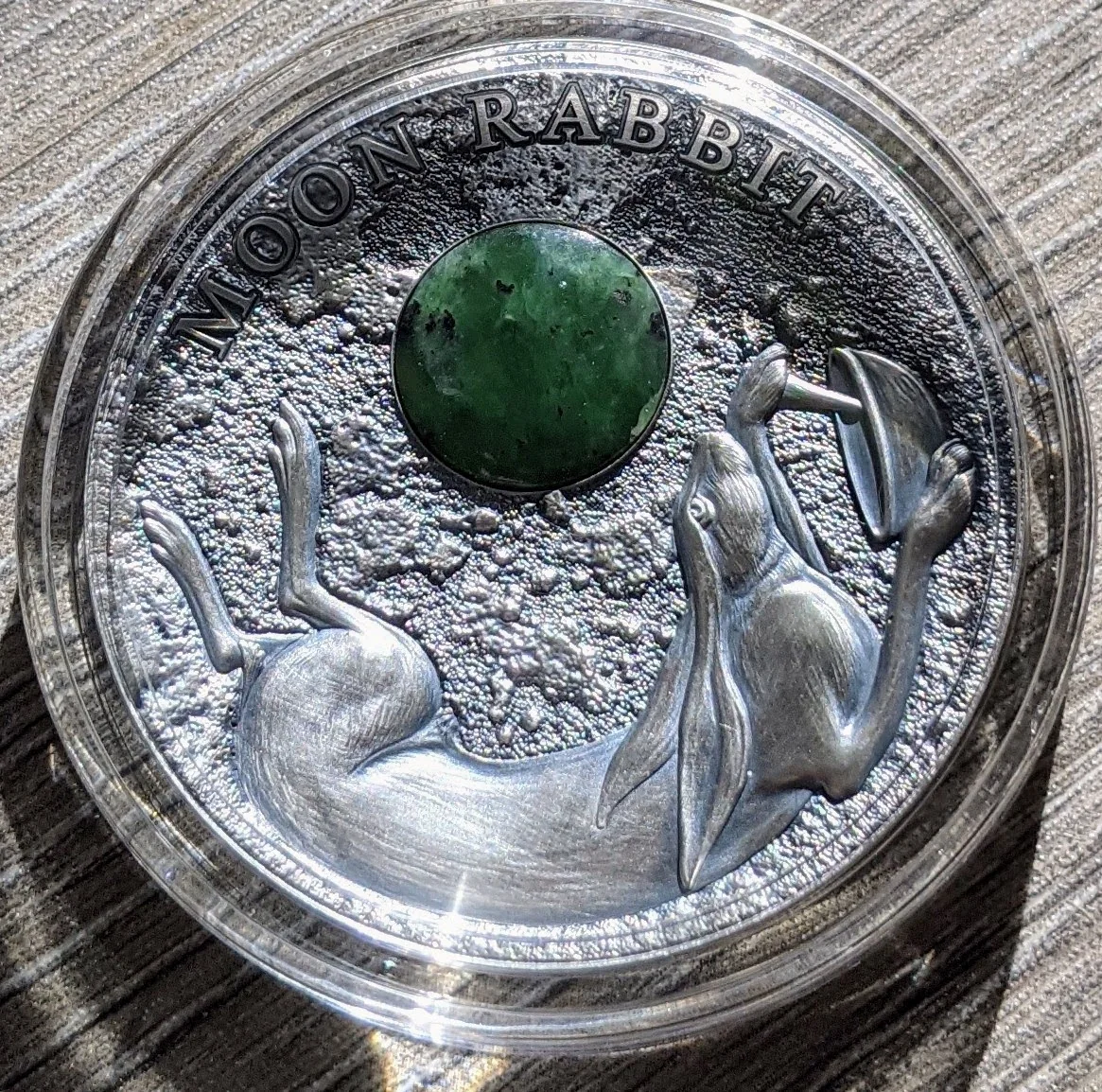
The Moon Rabbit appears in East Asian folklore, often working with a mortar and pestle. This coin brings that story to the lunar surface: the rabbit, the cratered ground, and the rounded green jade insert become parts of one small landscape.
The antique finish draws out the texture. Turn the piece over to see the portrait of Queen Elizabeth II, the Niue denomination, and a second moonlike surface.
The original collection notes include a presentation box, display case, and protective capsule. The gallery shows the coin from both sides, along with its packaging.
Which rabbit is this?
The mortar and pestle are a clue. MINT XXI identifies this as the Chinese moon rabbit preparing an elixir of immortality. The jade insert echoes its “jade rabbit” name.
The familiar image travels, but the task changes. A museum account of the moon rabbit distinguishes the Chinese elixir-making tradition from rice-cake-making versions in Japan and Korea. Knowing which version the maker intended helps you read the little scene without treating every rabbit on a coin as the same subject.
Follow the light around the coin.
In the collection photographs, the rabbit curves around a smooth green dome. Its long ears, raised limbs and mortar stand out against the closely worked ground. Look from the broad, bright surfaces of the animal to the darker recesses around it: the interest lies in how these different textures sit together.
The finish belongs to the design. MINT XXI lists this issue as antique-finished. Its darkened recesses should not automatically be read as dirt, damage or evidence of age. Compare the same details across several gallery photographs before judging a surface from one reflection.
The maker identifies the insert as jade. The public specification does not establish its mineral species or treatment, and a photograph cannot settle those questions. The coin can be appreciated as a composition while those material details remain open.
Turn it over, and keep looking.
The portrait side is the obverse; the rabbit side is the reverse. Here the obverse is more than a place for the denomination. The cratered surface continues around Queen Elizabeth II, so the two faces belong to the same small lunar world.
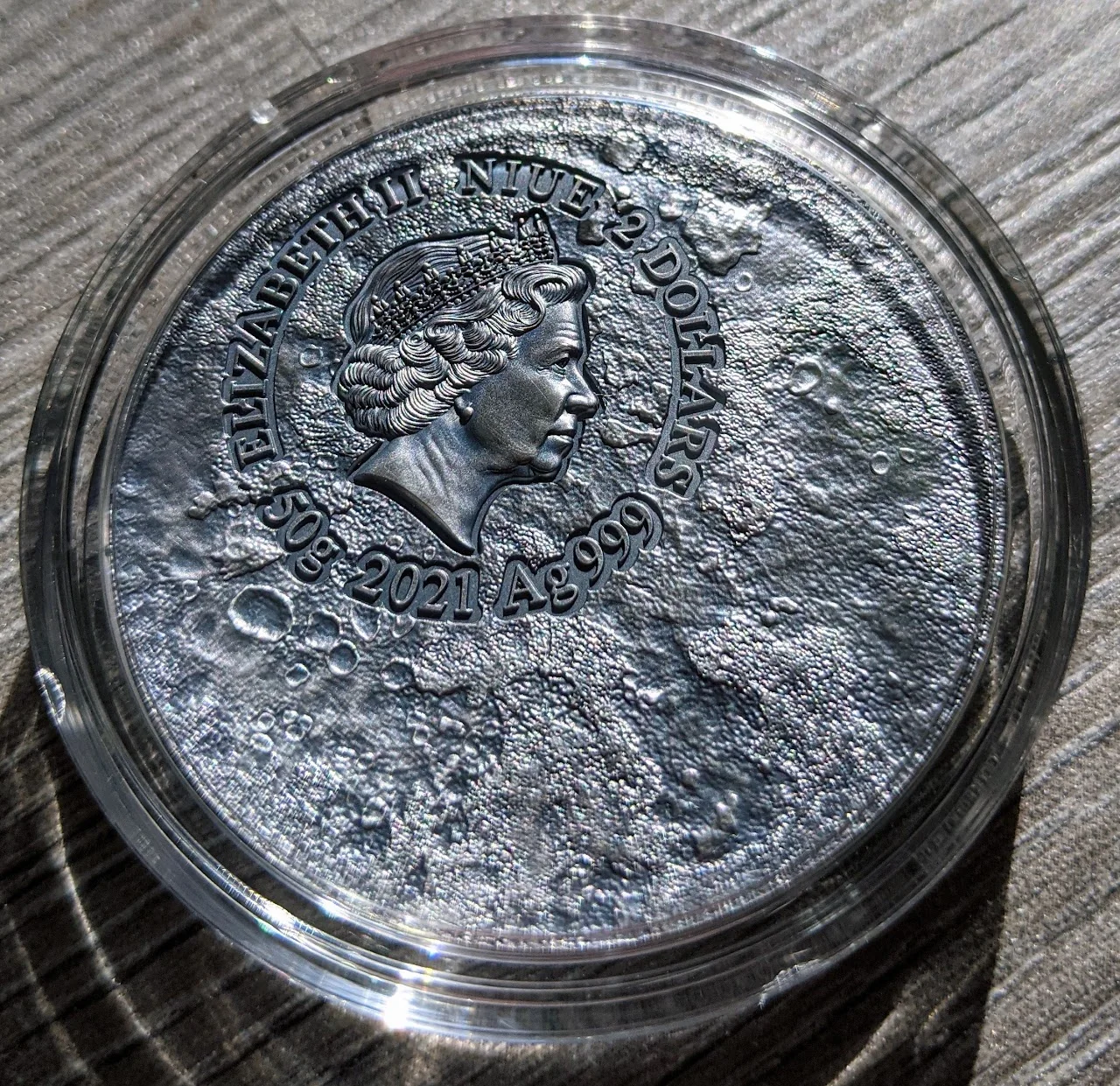
Read the inscriptions in groups: Niue identifies the issuing country, 2021 the issue year, and 2 dollars the face value. The 50 g and Ag 999 markings describe the stated weight and silver fineness. These are different pieces of information; the denomination does not tell you a collector’s purchase price.
MINT XXI’s maker profile follows the producer and its collections. For comparing issuing countries, denominations and dates across other pieces, use the world-coins guide. Keeping issuer and producer separate makes a collection record much clearer.
The box adds another layer.
The gallery moves from the coin to its capsule, illustrated box and display frame. On the blue packaging, the heading “Certificate of Authenticity” sits above the legend and specifications. It is useful evidence of how the maker presented this issue.
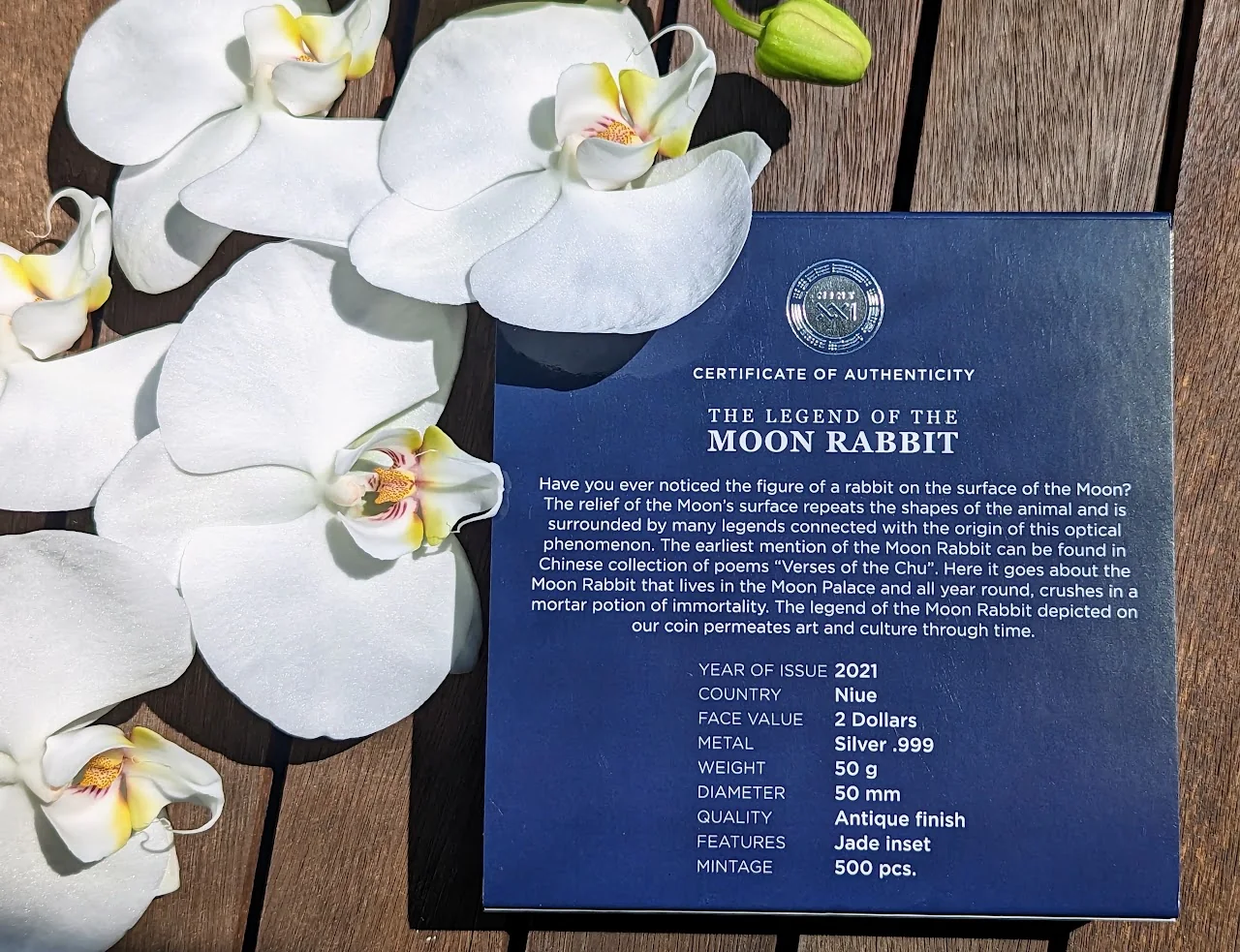
Record what survives with the particular example you are examining. A coin, capsule, box and display frame are separate components; a seller’s “complete” needs an explanation. The packaging’s stated mintage is not an individual serial number, and matching paperwork alone does not authenticate the object inside.
The object-record worksheet gives you a place to connect these photographs and notes. Preserve the maker’s stated specifications separately from measurements or observations you have made yourself.
Questions for another example.
- Do photographs show both faces, the edge and the insert clearly, without relying on one flattering angle?
- Are marks or scratches on the capsule, on the coin, or impossible to locate from the photographs?
- Which box, display components and documentation are actually included?
- Does the description match this 2021 Niue issue, rather than another coin with a rabbit or a green stone?
For the questions a photograph cannot resolve, continue with the authenticity guide’s comparison approach. A stated edition of 500 supplies context, not a promise of rarity in the market or future value.
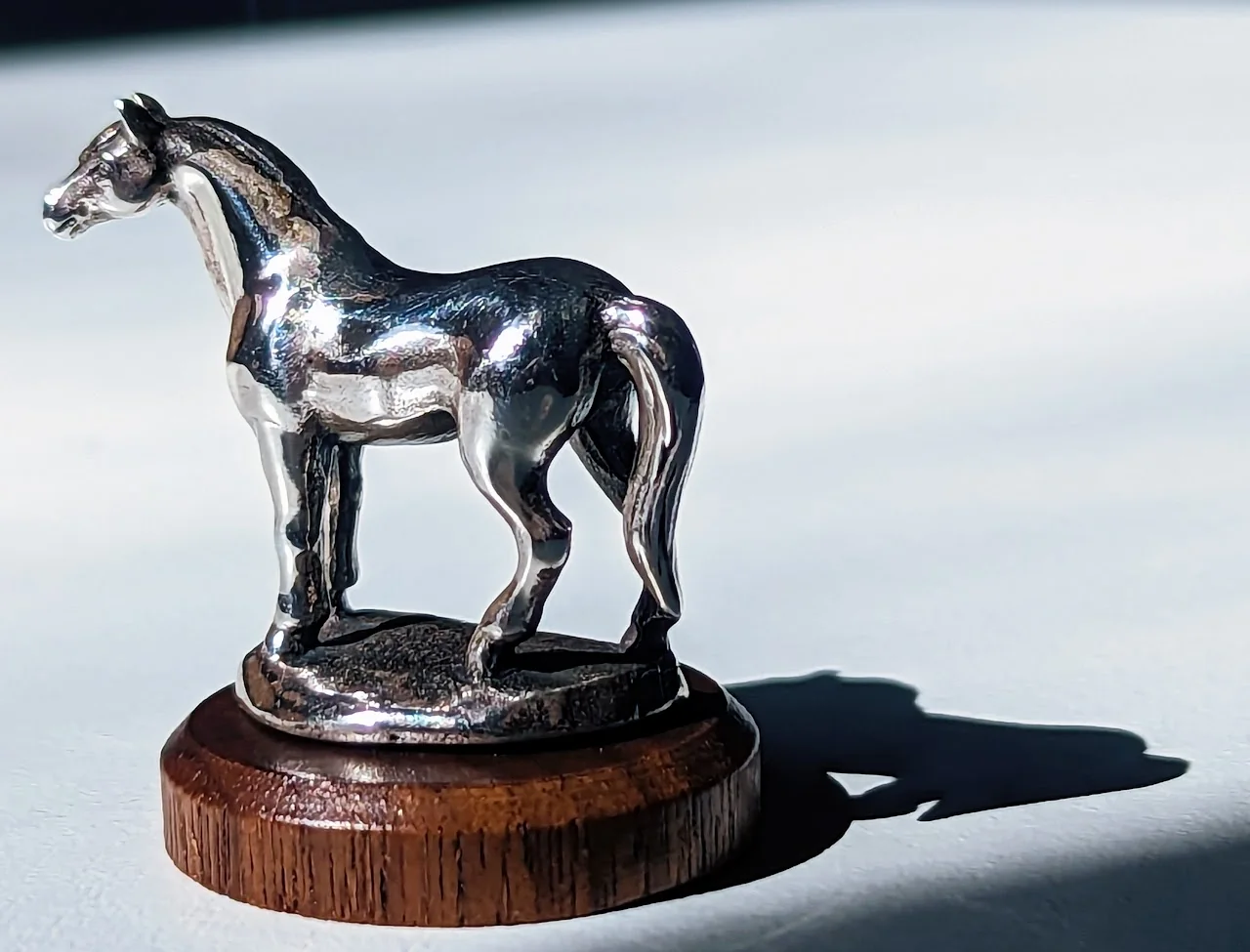
And if it is the modeled animal that first drew you in, compare it with the Kirk Stieff horse. The coin’s rabbit works within a circular surface; the little horse stands free of one. Following that difference is a natural route from coins into silver sculpture.
Sources & further reading
Reviewed 11 November 2026. The original collection notes and photographs remain above. MINT XXI supports the issue specifications and intended design; the museum account supports the cultural distinction. Close-looking prompts and collecting questions are Collect Silver’s editorial guidance.
- MINT XXI: Moon Rabbit, Oriental Culture Collection
- Asian Art Museum: Rabbit and Moon, by Watanabe Seitei (museum account on Google Arts & Culture)
The photographs document this collection example. They are not a laboratory assessment, an authentication certificate issued by this site, or evidence of current availability.