
Start with the marks.
Use clear close-up photographs or a magnifier to inspect purity marks, maker’s marks, dates, and any serial or edition information. Marks are clues to investigate; a stamp alone is not proof of authenticity.
| Mark or description | What it tells you |
|---|---|
| .999 / fine silver | 99.9% silver when accurately marked. |
| .925 / sterling | 92.5% silver alloy when accurately marked. |
| .900 | 90% silver when accurately marked. |
| EPNS / silver plate | A silver coating over another material. |
| Weighted sterling | Silver exterior with non-silver filling or support. |
Compare the whole piece.
Look beyond the hallmark. Compare design details, dimensions, weight, edge, and finish with reliable information for the exact issue. A discrepancy is a reason to investigate further; matching measurements alone cannot establish that a piece is genuine.
For antiques, try to identify the maker and relevant hallmark system. Construction matters: a wooden base or filled handle should not be counted as solid silver.
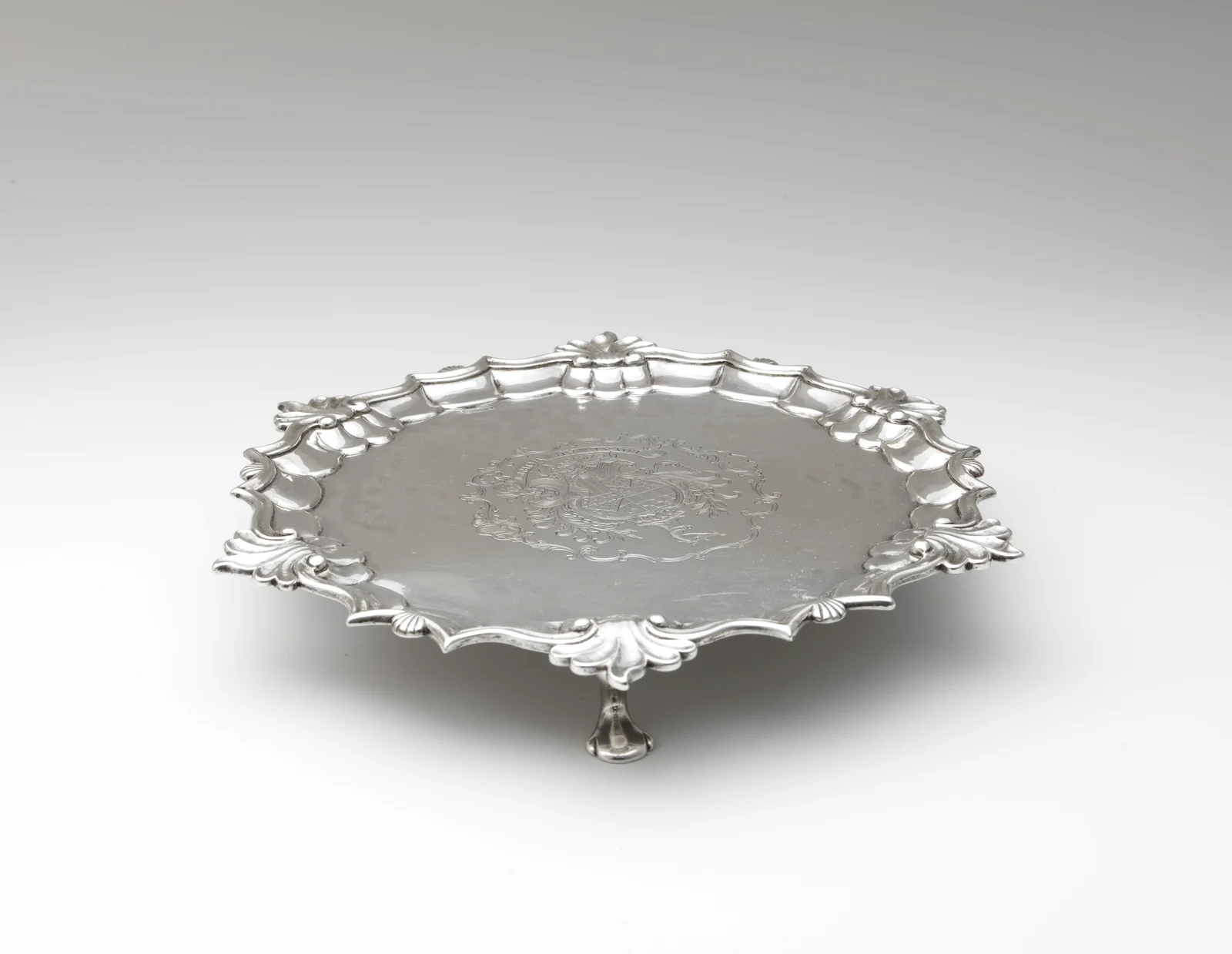
Nathaniel Hurd, Salver, ca. 1756. Silver; made in Boston. The Metropolitan Museum of Art, 2010.197.
The Met identifies this salver as Nathaniel Hurd’s work. Before zooming in, record its outline, rim, feet and central engraving. That whole-object view connects a tiny impression to the piece carrying it. A similar name on another object is a lead to investigate, not the museum’s attribution transferred to your purchase.
Read the museum record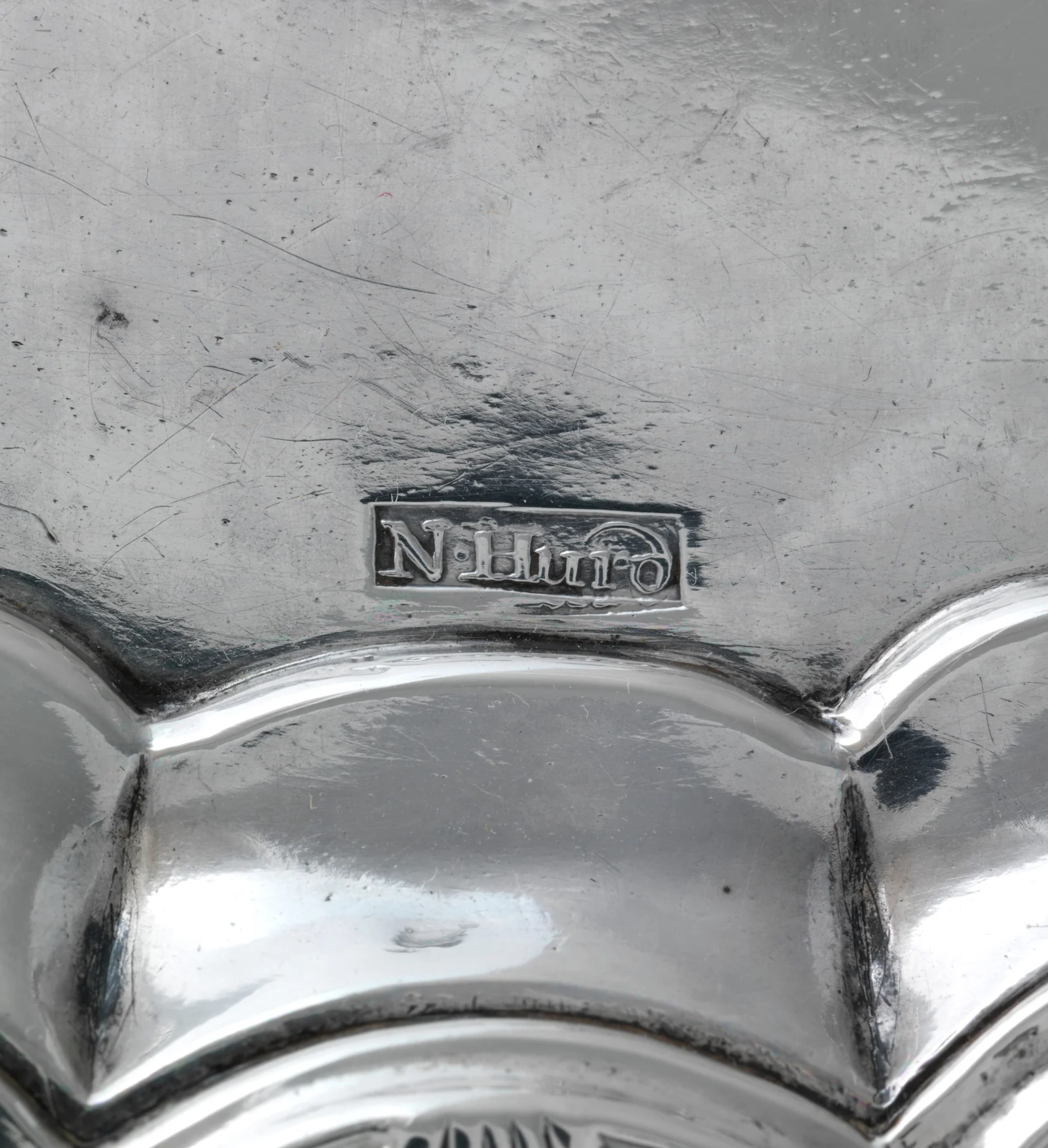
The N·Hurd mark on the same salver, near the rim. The Metropolitan Museum of Art, 2010.197.
Compare the lettering, the outline of the impression and the surrounding surface together. Keep this detail paired with the overall photograph and museum object number. The name does not state a numerical silver fineness, and scratches alone do not establish age or authenticity.
Read the museum recordAsk good questions.
- Are the photographs of the actual item?
- What is the basis for the stated metal purity?
- Is the recorded weight for silver alone or the complete object?
- What documentation or provenance accompanies it?
- What happens if the item is misdescribed?
Check seller history and return terms. For a significant purchase or an uncertain piece, consult an experienced dealer, jeweler, or appropriate authentication service.
Use the right reference.
Compare certification records, learn hallmark systems, and research metals and gemstones with established specialist organizations.
Open the collector’s reference deskAvoid damaging a piece to identify it.
Online “quick tests” can be misleading. A non-magnetic response does not prove silver content. A surface measurement may miss what is inside an object. Tests need to be appropriate to the piece and interpreted together.
Do not scratch, file, acid-test, or aggressively clean a collectible just to satisfy curiosity. Ask an experienced professional about suitable non-destructive examination first.
Keep the evidence with the object.
Keep receipts, product details, and original packaging. Handle collectible coins by the edges and use suitable holders. The U.S. Mint recommends a cool, dry environment and warns that polishing can reduce a coin’s value.
The Silver Mark Decoder.
Read a claim. Choose a safe next step.
No points, purity estimate or authenticity verdict. Select only marks you can read; a text label cannot authenticate an impression.
Identify the marked component and keep the whole object in view.
Select a readable mark to start.
Results explain the claim and its limits. They do not measure metal or identify a hidden core.
Educational reference only. No selection establishes authenticity, purity, legal compliance or value. Mixed construction and misleading marks require examination of the specific piece.
Ten clues, with their limits.
The original guide explored ten checks. Use them as prompts for further investigation, with the limits below.
Hallmarks
Look for purity marks and maker’s marks, then check them against reliable references. A stamp can be misleading or forged, so do not treat it as proof.
Magnet response
Strong attraction is a reason to investigate. A non-magnetic response does not establish that an object is silver; many other materials are also non-magnetic.
Ice and heat transfer
Silver conducts heat well, but an informal ice test is not a reliable assay. Do not expose delicate finishes, porous materials, packaging, or mounted pieces to water just to try it.
Tarnish
Surface color can be a clue, but polished silver, plated objects, and other metals can complicate the picture. Tarnish alone cannot establish the underlying composition.
Smell
Odor is subjective and affected by handling, cleaning products, and other materials. It is a weak clue, not a purity test.
Sound
A coin’s response to a gentle ring test depends on dimensions, condition, and construction. Do not drop or strike a collectible, and do not rely on sound alone.
Soft-cloth rub
A cloth may pick up surface tarnish, but that does not prove solid silver beneath it. Avoid rubbing collectible coins or intentional antique finishes; cleaning can change them.
Weight
Compare the exact object with reliable specifications. Wood bases, filled handles, weighted construction, and non-silver parts must not be counted as silver. Matching weight is not conclusive.
Edge wear
Examine existing wear under magnification for another material showing through. Do not scratch, file, or create a worn area to investigate a collectible.
Professional examination
For an uncertain or significant purchase, consult a qualified dealer, jeweler, or testing service. Ask which methods are appropriate and what their limits are. Surface readings alone may miss the interior; destructive tests can damage the object.
A quick hallmark reference.
Read the complete group and the component carrying it. A mark describes a claim; it does not authenticate the object.
| Mark | Reading limit |
|---|---|
| 925 / Sterling | A 92.5% silver-alloy claim when accurately used. |
| 999 / 950 / 900 / 835 / 830 / 800 | Fineness claims in the appropriate marking system, not automatic authentication. |
| EPNS / EPBM / EPC / Silverplate | Plating wording; non-attraction, ice and tarnish do not override it. |
| A1 / AI / 90 / 100 | Contextual trade or plating codes, not a universal fineness formula. |
| Alpaca / Nickel Silver / German Silver | Base-alloy names; plating or separate silver components may also be present. |
| Weighted / Sterling Handle | Check construction and which part is marked. Total object weight is not silver weight. |
Test your hallmark knowledge.
Which marking most strongly suggests sterling silver?
Choose an answer. A hallmark is a clue to investigate.
Keep exploring.
Continue with more collecting knowledge and closer looks at silver.