
Find your place at the table
A favorite spoon can be the beginning. So can a box of mismatched forks, a teapot with a story attached, or a serving dish whose shape is too interesting to leave behind. Table silver invites you to look closely because it was made to be used closely: passed from hand to hand, lifted to the lips, set down and picked up again.
This is the home for that part of collecting. Follow the object that catches your eye, or start with a practical question. You do not need a matching service to make a collection worth knowing.
A history in the hand
Spoons, forks, knives, patterns and place settings. Start with the pieces you hold.
Explore flatware & cutlery →Made for sharing
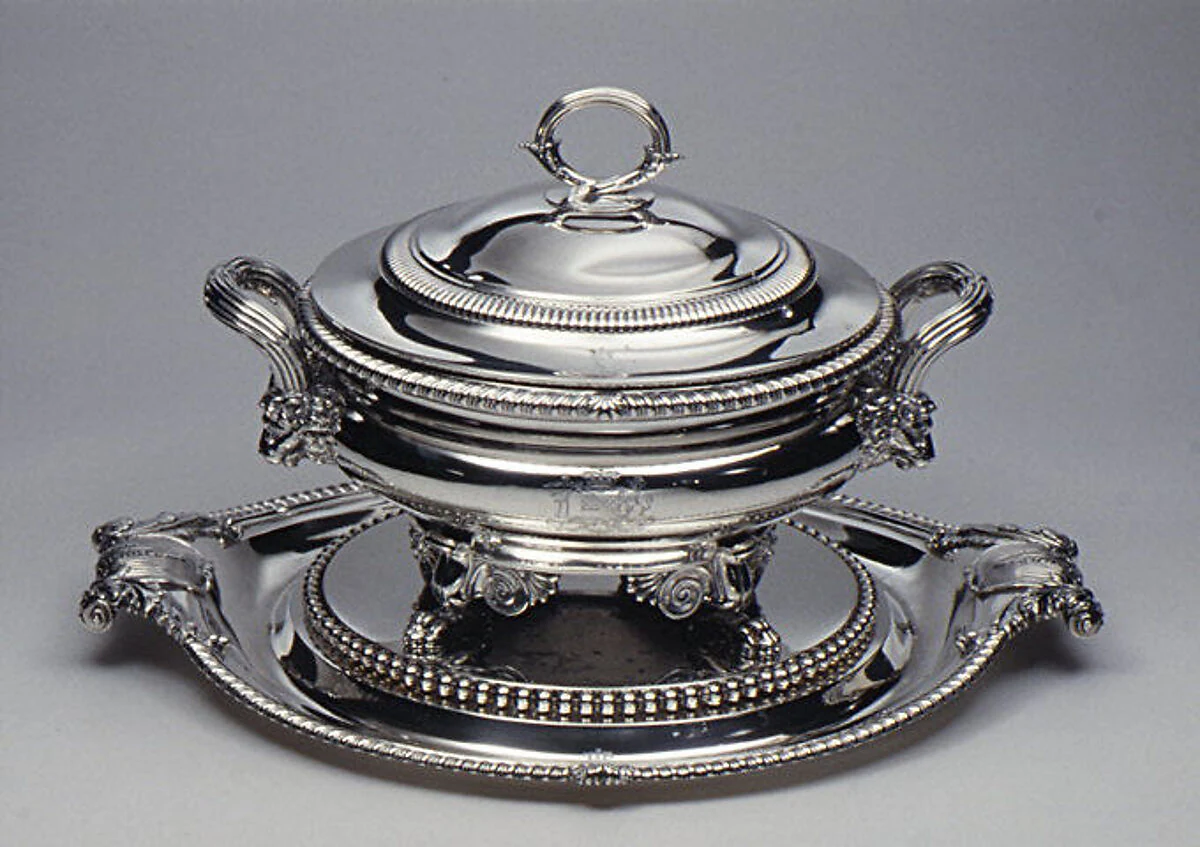
Tureens, baskets, trays and the utensils that move a meal from dish to plate.
Explore servingware →Stories on the tray
Seven connected guides to the vessels, traditions, makers and care of tea service.
Explore tea & coffee →Around the plate
Candlelight, condiments, wine and the small personal objects that complete a table.
Explore table objects →An object can remember more than a name
A monogram is a useful invitation to investigate. It may connect an object to a family, but initials alone do not prove who owned it. Wear can tell you where a piece was handled or polished; it cannot tell you exactly how many meals it served. The pleasure lies in keeping observation and imagination in conversation without confusing them.
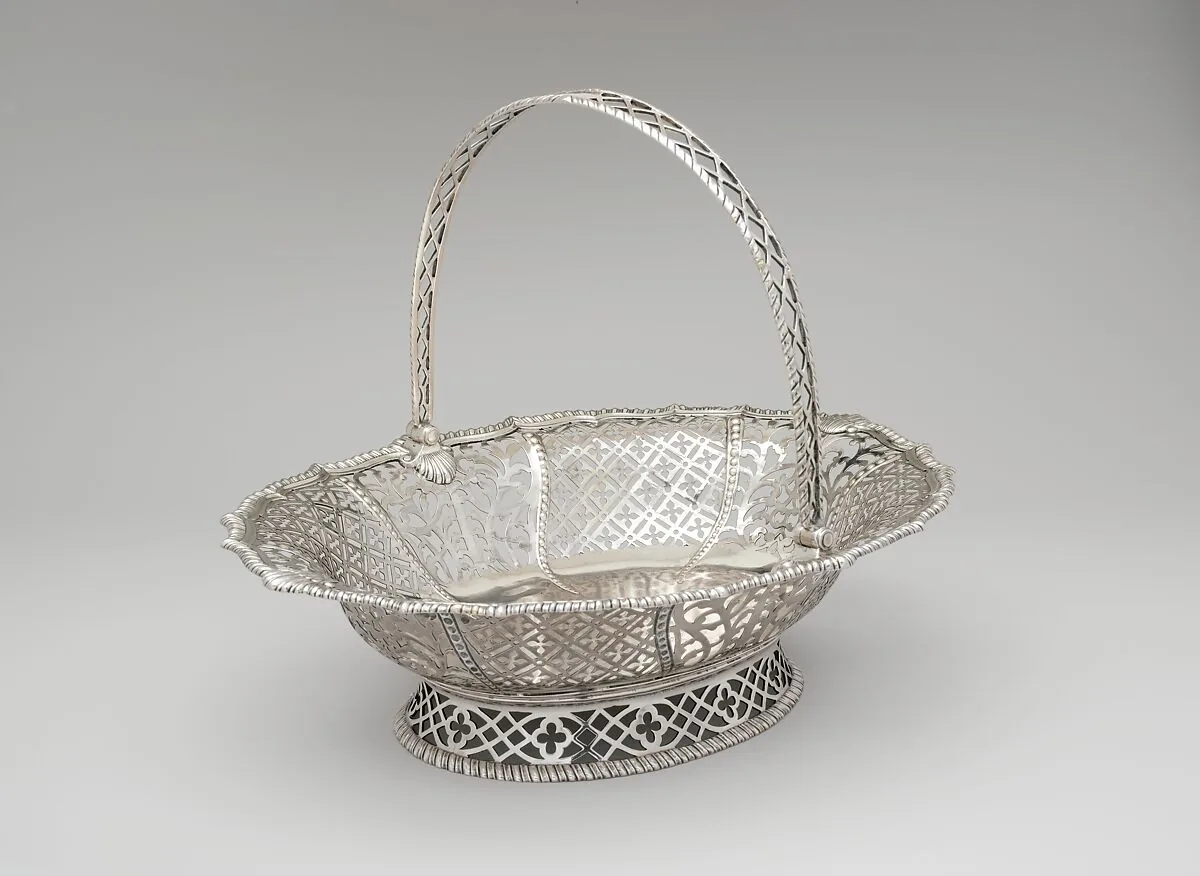
Myer Myers’s pierced basket offers a particularly satisfying example. The Met connects its interior monogram to Susannah and Samuel Cornell. An inscription underneath records a later gift to their daughter Hannah, who married Herman LeRoy in 1786. The record turns a beautiful basket into a documented family object. Look at the scrolling panels too: the museum’s curator describes their tiny fretsaw cuts.
For your own pieces, photograph the whole object, then its underside, marks, inscriptions and joins. Keep the family story with those pictures, naming who told it and what evidence survives. An unanswered question is worth recording.
A few words open a much larger cupboard
- Flatware & cutlery
- Spoons, forks, knives and related utensils. Usage changes across countries and older trade literature. Here, both words lead to the same collecting family.
- Servingware
- The dishes, vessels and utensils that present and portion food. A ladle belongs here by use and with flatware by form.
- Hollowware
- A workshop and museum word for hollow vessels, such as pots, jugs and kettles. It describes form, not silver purity.
- Silver plate & silver-gilt
- Modern silverplate has silver over a different metal. Silver-gilt has gold over silver. In older inventories, “plate” can also mean precious-metal objects themselves, so read the context.
A trade name is a starting point, not a verdict. A famous maker can have produced more than one material, and a marked handle does not identify a knife blade or its filling.
Meals changed. Silver changed with them.
Look at the gap between an individual spoon and a tureen made to command a room. Each answers a different question: how does a diner eat comfortably, and how does a host present a meal? Changing menus, fashions, trade and workshop techniques left evidence in both.
The Met’s Paul Revere spoon of 1770–80 shows how even a handle can register a change in table habits. Its catalogue connects a turned-back terminal with the move of engraving from the back to the front. Roettiers’s tureen of 1770–71 belongs to a very different scale: the Orloff service commissioned by Catherine the Great, with more than 3,000 pieces. These are documented examples, not a single timetable for the whole world.
Tea and coffee bring their own histories of trade, hospitality and labor. The tea-service history guide follows regional traditions and the people behind the ritual. The sculpture hub opens another door when a useful vessel becomes a sculptural performance.
Begin with the evidence. Then enjoy the silver.
Separate four questions: What is it? What is it made from? What condition is it in? What do you want to do with it? A place-setting fork, a filled knife handle and a weighted candlestick need different descriptions, even if all carry a sterling mark.
Choose a pattern if you enjoy the search for a missing piece. Choose a useful server if you want a small collection that comes to dinner. Keep an inherited group together long enough to photograph it and understand its connections before deciding what to sell.
For antiques, mixed materials or uncertain repairs, pause before cleaning or food use. Our care guide separates cautious conservation practice from a maker’s instructions for particular modern products. The value guide keeps metal calculations, asking prices and actual offers separate.
Sources & further reading
Reviewed 11 November 2026. Museum records support the named examples; care instructions apply only within the scope described by each institution or maker. They do not authenticate or appraise a privately owned object.
- The Met: Myer Myers, basket, 1770–76, including the curatorial audio
- Sheffield Archives: cutlery and silverware glossary and company records
- The Met: Paul Revere Jr., spoon, 1770–80
- The Met: Jacques-Nicolas Roettiers, tureen with cover and stand, 1770–71
- The Met: Paul Storr, soup tureen with cover and stand, 1806–8
- Canadian Conservation Institute: Silver, Care and Tarnish Removal (Note 9/7)
- Federal Trade Commission: silver-content descriptions, 16 CFR 23.5