
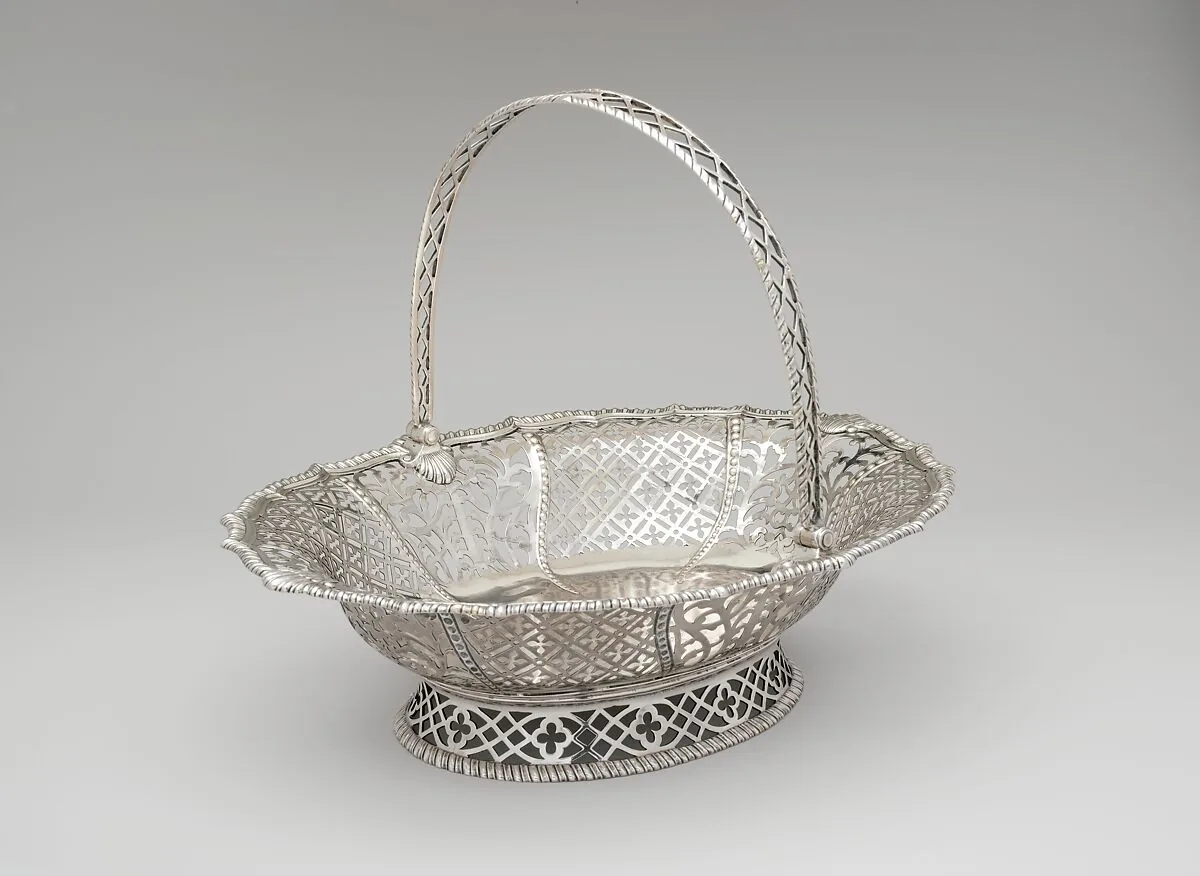
Pause long enough to know what you are cleaning
Before bringing out a polishing cloth, look for the parts that make the piece complicated: a hollow knife handle, a wooden finial, gilding, enamel, a weighted foot or an old repair. Check for loose fittings, cracks and exposed base metal. If construction or condition is uncertain, get advice before cleaning or food use.
The Canadian Conservation Institute places prevention ahead of repeated tarnish removal. Polishing can remove original metal and soften decoration. A darker recess may also be an intentional part of a design. More brightness is not automatically better preservation.
Can it go in the dishwasher? Ask about this exact piece.
For an antique, repaired, composite or unidentified object, cautious hand-cleaning is the starting point. That does not mean immersing it: hollow sections, wood, ivory, fillings and hidden iron can make even a bath unsuitable. A conservator can help decide what is safe.
Christofle’s current instructions are product-specific. Its guidance permits dishwashing its cutlery except Talisman, and separately requires hand washing for knives made before 1968. It sets a maximum of 65°C/149°F, specifies suitable detergent, and warns against contact between steel blades and silver. Read the complete current instructions for the actual product.
Georg Jensen’s United States FAQ gives different limits. Its cutlery guidance specifies a maximum of 130°F, non-citrus and non-abrasive detergent, and air drying without high heat or sanitizing cycles. A general modern cutlery FAQ should not be extended to an antique Jensen vessel or a piece with uncertain fittings.
These instructions do not establish a universal dishwasher-safe category called “sterling.” Material, construction, finish, age and condition all matter.
Cleaning after use
For sound table silver known to tolerate water, use warm water, a mild suitable dishwashing detergent and a soft cloth, then rinse and dry carefully. Avoid leaving food residues against the metal. Keep pieces from knocking together or rubbing against a hard sink.
Stop if a handle moves, water might enter a hollow space, or a surface has an unfamiliar coating. Do not tighten, dismantle or strip an antique simply to make cleaning easier. The tea-service care guide addresses handles, insulators and protected-material questions.
Commercial polish or conservation treatment?
The distinction is not “museums reject every commercial product.” CCI discusses gentle commercial liquids, pastes and foams as well as their limitations. Abrasiveness, ammonia, dried-out material and trapped residue can change the risk. Follow product instructions only where they suit the identified object, and remove residues as directed.
CCI’s separate note explains a precipitated-calcium-carbonate method with a scratch test and careful control. It is a conservation procedure, not permission to substitute coarse chalk or experiment with solvents on an heirloom. Fragile surfaces, gilding, deliberate dark finishes and uncertain repairs deserve specialist assessment.
Winterthur advises infrequent polishing and avoiding chemical dips. CCI explains concerns with chemical and electrochemical methods, including altered surfaces and liquid trapped in hollow components. An aluminum-foil bath or “instant” dip is a poor default for an unidentified antique.
Give the next polishing a reason to wait
Store clean, dry pieces so they cannot scrape one another. Suitable sulfur-free tissue and materials designed for silver storage help reduce exposure and abrasion. Keep rubber bands and unsuitable packing materials away from the metal. Follow the storage guidance for the whole object, including any wood, enamel or other components.
Check stored pieces periodically rather than polishing to a calendar. Photograph changes in condition and keep treatment notes. For the chemistry behind the dark layer, continue to Why Does Silver Tarnish?
This is general collecting guidance. It does not certify an individual object as safe for a treatment or for food contact.
Sources & further reading
Reviewed 11 November 2026. Museum records support the named examples; care instructions apply only within the scope described by each institution or maker. They do not authenticate or appraise a privately owned object.
- Canadian Conservation Institute: Silver, Care and Tarnish Removal (Note 9/7)
- Canadian Conservation Institute: precipitated calcium carbonate silver polish (Note 9/11)
- Winterthur Museum: Silver Treatment Advice, updated June 2026
- Christofle: current care guidance, with cutlery exceptions
- Georg Jensen: United States FAQ, cutlery care