
Recognize the job before naming the pattern
- Tureens & covered dishes
- A body, fitted cover and sometimes a separate stand or liner. Record each component and check fit, marks and repairs separately.
- Trays & salvers
- Broad surfaces for carrying or presenting objects. Handles, feet, galleries and any wood or other material beneath the silver all belong in the description. Historical names are not completely uniform.
- Baskets
- Open vessels for bread, cake, fruit or display. Piercing changes both their appearance and their strength: examine the narrow bridges between openings and the handle attachments.
- Sauceboats & jugs
- Pouring vessels whose lip, foot and handle matter as much as ornament. A repaired spout or unstable foot changes practical use.
- Serving utensils
- Ladles, tongs, slices and broad spoons move food from dish to plate. A pierced blade or unusual bowl narrows the search, but an exact catalogue match is better than guessing from shape alone.
A meal on a grander stage
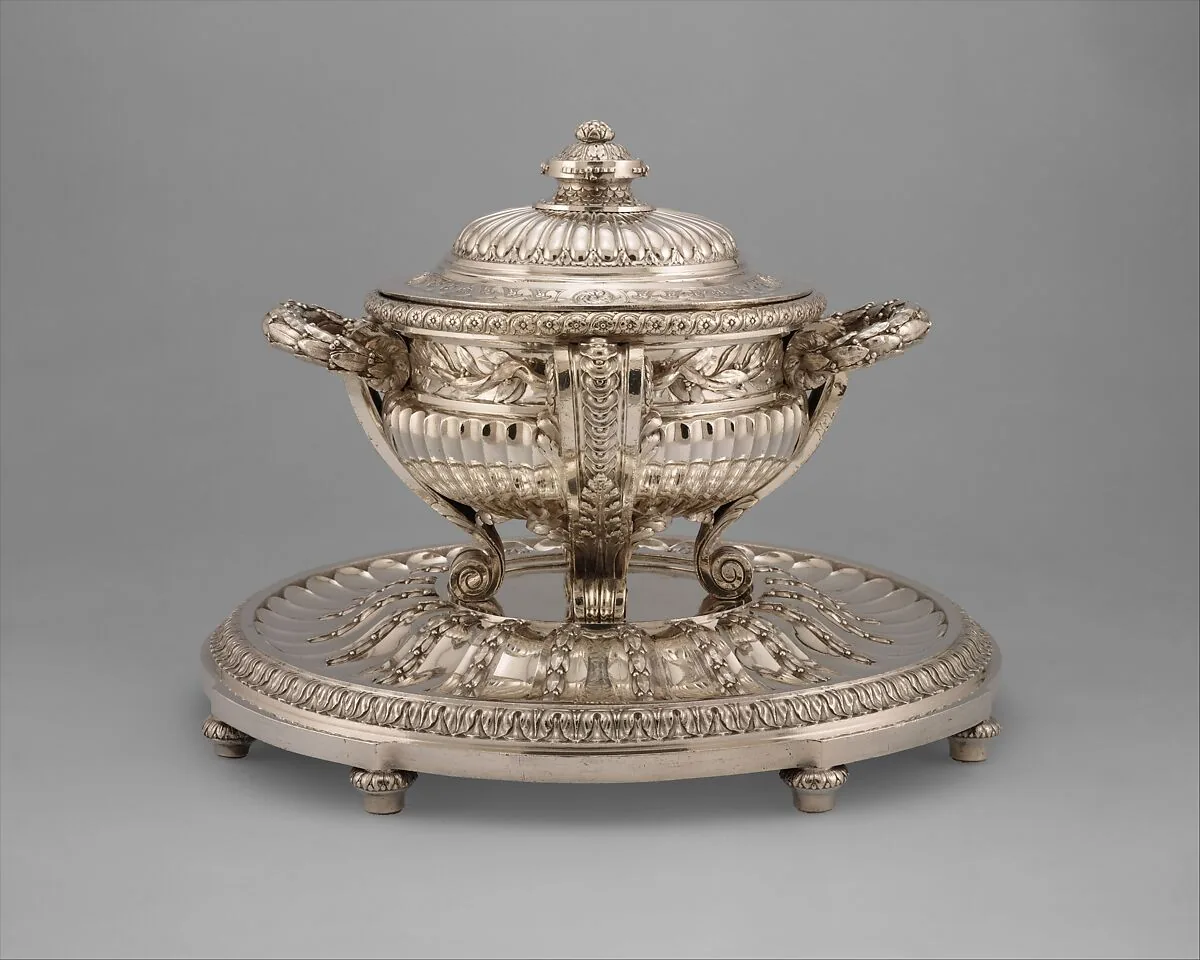
The Roettiers tureen pictured above is one of twenty-two in the Orloff service. The Met dates it to 1770–71 and describes a new arrangement in which large tureens and candelabra occupied space previously dominated by an elaborate centerpiece. The object was part of a carefully planned display, not an isolated bowl.
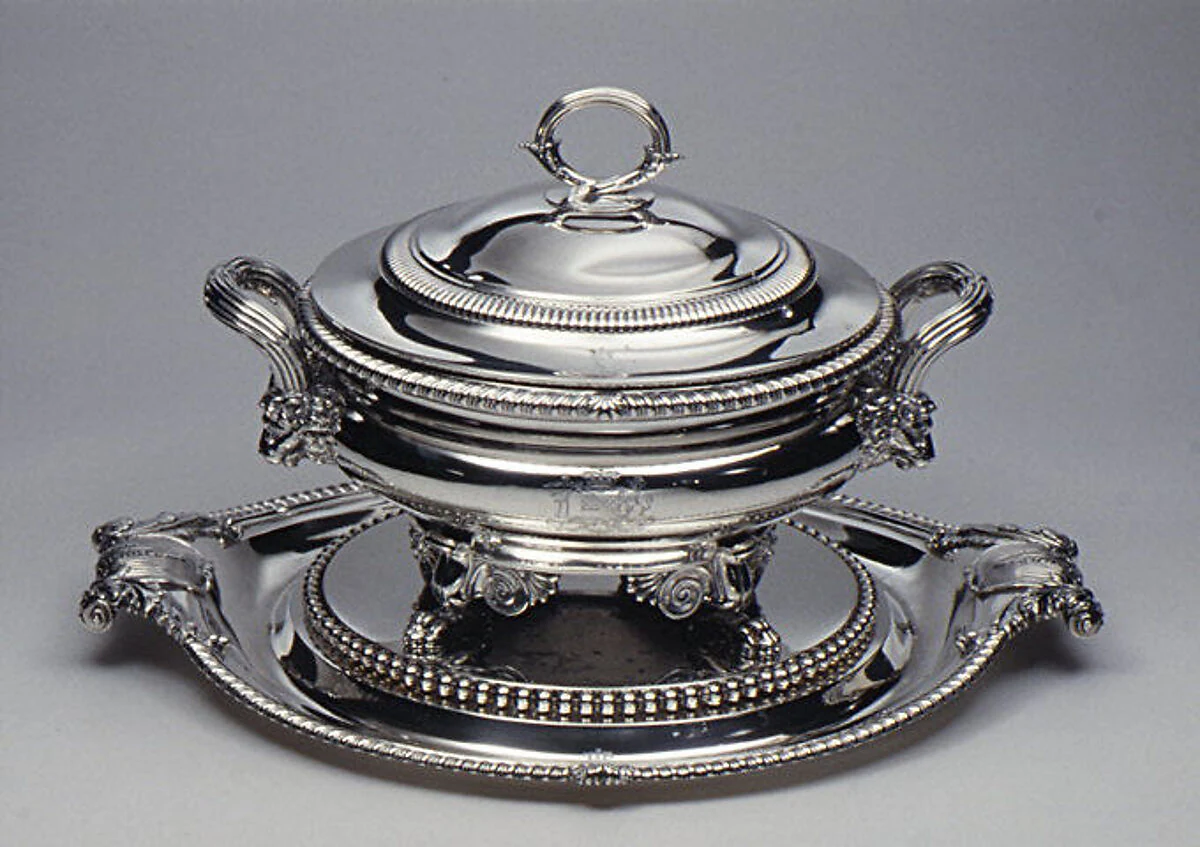
Paul Storr’s London tureen of 1806–8 offers another way to look. The Met identifies classical motifs in its lions’ heads, fluted borders and acanthus leaves. Follow those details across the lid, body and stand, then notice how the separate parts repeat a common design language.
That comparison is useful at a much smaller scale. When a cover looks almost right, compare its outline, decoration and marks with the body before calling it original. A later pairing can still be appealing if it is described honestly.
The work hiding in the open spaces
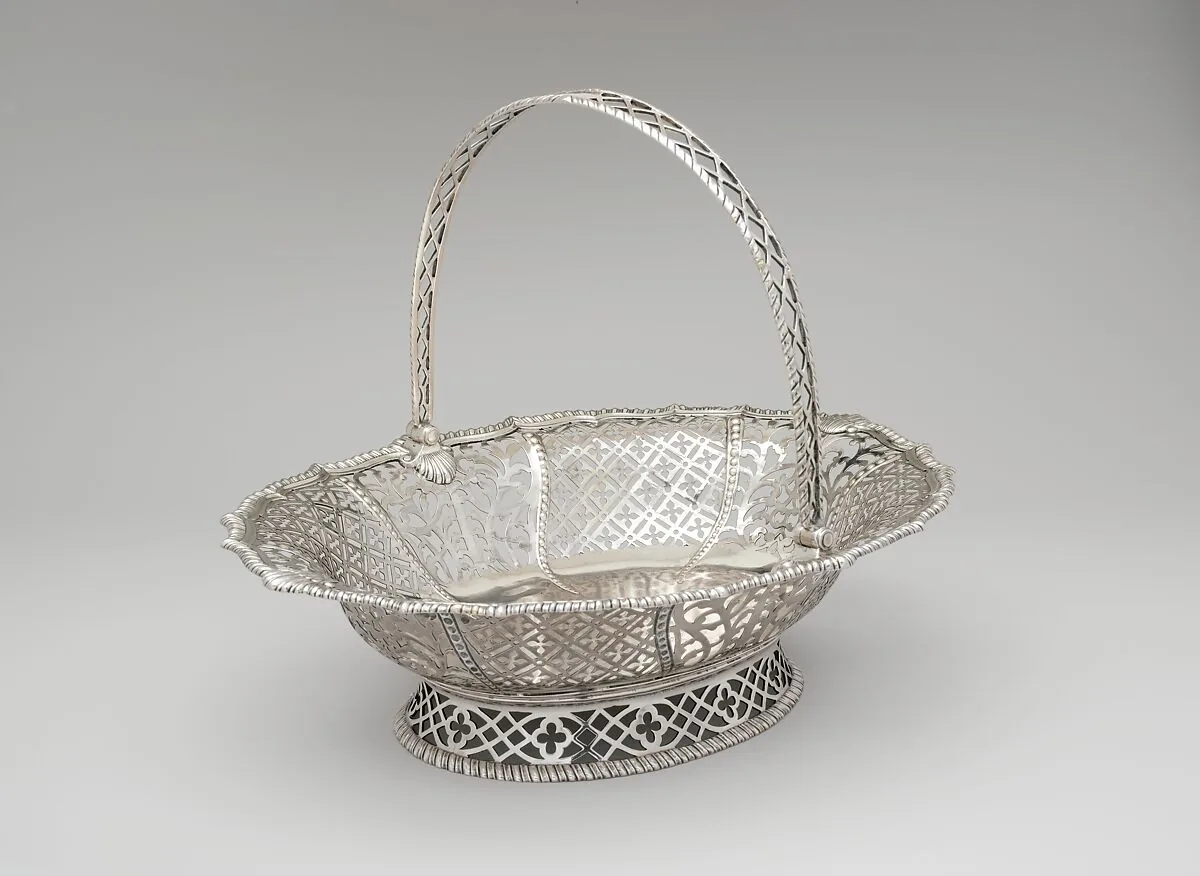
Myer Myers’s New York basket of 1770–76 looks airy because so much metal has been removed. Its curved panels were pierced with a small saw, according to the Met’s curatorial account. The surviving metal has to do the work: support the rim, connect the panels and carry the handle.
When examining an openwork basket, look along those connections in good light. Note breaks, uneven repairs, bent sections and patches that differ from their neighbors. Keep the handle supported rather than swinging an unfamiliar piece by it. The photograph can show the design; it cannot establish that your basket is structurally safe.
Five checks before a piece comes to dinner
- Keep the ensemble together. Photograph covers, liners, stands and loose fittings. A component list is more useful than a seller’s piece count.
- Read every material. Silver, plating, gilding, glass, wood, filling and repairs may all occur in one object.
- Look underneath. Record marks and construction without taking the object apart. A weighted base is not solid silver simply because it feels heavy.
- Inspect the joins. Loose handles, cracked feet, failing solder and exposed base metal deserve specialist attention before use.
- Decide on care last. CCI warns that hollow components and iron-reinforced rims can make immersion unsafe. Do not soak an unidentified piece to discover what happens.
Keep questions about old repairs, coatings or food-contact surfaces separate from questions about authenticity. A genuine antique can still be unsuitable for serving food without assessment.
Sources & further reading
Reviewed 11 November 2026. Museum records support the named examples; care instructions apply only within the scope described by each institution or maker. They do not authenticate or appraise a privately owned object.
- The Met: Jacques-Nicolas Roettiers, tureen with cover and stand, 1770–71
- The Met: Paul Storr, soup tureen with cover and stand, 1806–8
- The Met: Myer Myers, basket, 1770–76, including the curatorial audio
- Sheffield Archives: cutlery and silverware glossary and company records
- Canadian Conservation Institute: Silver, Care and Tarnish Removal (Note 9/7)
- Canadian Conservation Institute: precipitated calcium carbonate silver polish (Note 9/11)