
The silver table / A collecting direction
Silver flatware: history in the hand
A well-balanced spoon, an extravagant serving fork or an inherited place setting can start a collection. Flatware brings silver close enough to notice how it feels, how it was made and what its owners liked to eat.

 View the details
How will your table begin?
Open a collecting direction. Start small, then follow the details that interest you.
A single useful piece
Choose a spoon or server for a meal you enjoy. Check its balance, working end and condition before expanding the collection.
A place setting
List the utensils you actually use. Build one complete setting first, then compare replacement sizes and the cost of repeating it.
A pattern or maker
Follow a documented design across different forms, or compare one maker’s work. Keep an example’s date separate from a pattern’s introduction.
From the everyday spoon to the serving table
Here, flatware includes spoons, forks, table knives and serving utensils. Hollowware means vessels such as cups and bowls. Older references may reserve flatware for utensils without cutting edges and discuss knives separately as cutlery. Knowing the vocabulary helps you search without overlooking useful pieces.
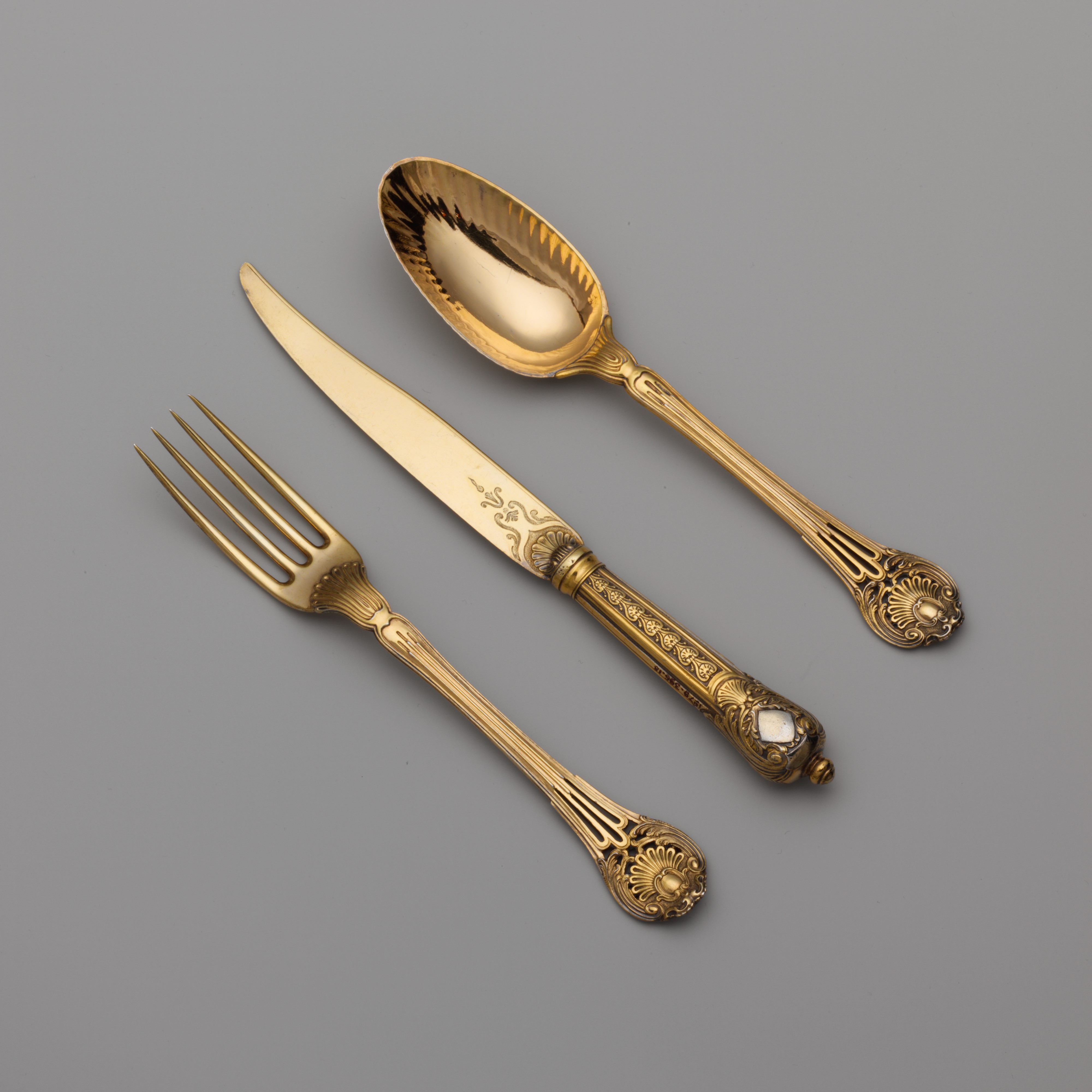
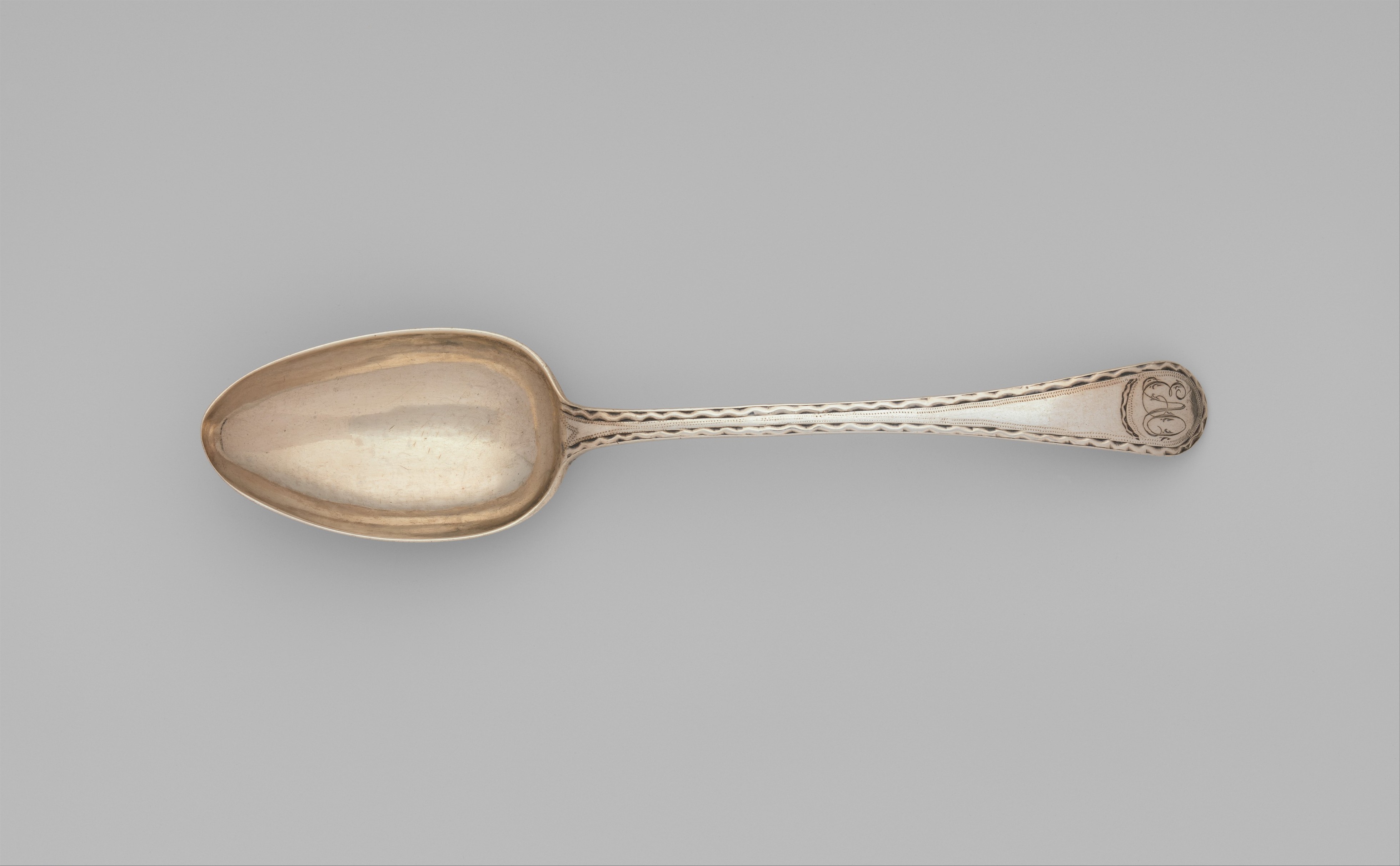
Measure the object rather than trusting a name such as dinner, luncheon or dessert. Record overall length, bowl or blade dimensions, and weight. The Met lists Louis-Joseph Lenhendrick’s silver-gilt spoons of 1767–71 at 19.1 cm and its Paul Revere Jr. spoon of about 1787 at 20.3 cm. These are individual catalog measurements, not universal size categories. Handle shape, balance and intended use matter alongside length.
Read the handle, neck and working end
Follow a spoon from its handle through the narrow neck to the bowl; on a fork, examine the shoulders and tines. Look for joints, added decoration and changes of material. A knife needs a separate description of handle, connecting collar and blade. A mark on one component should not automatically be applied to the whole object.
Sterling is 925 parts silver per thousand, or 92.5%. Silver plate is silver over another metal; silver-gilt, like the Lenhendrick group shown here, is gold over silver. A hollow handle can contain non-silver filling, and a silver-handled knife can have a steel blade. Record any stainless-steel marking separately. Neither filling nor a steel blade belongs in a calculation of sterling weight.
Photograph every mark and compare it with the appropriate reference. A modern UK hallmark combines sponsor, fineness and assay-office marks; a 925 stamp alone is not that complete hallmark. Other countries and periods require their own references.
The table acquired its tools gradually
The familiar matching place setting developed over time. The National Gallery of Victoria’s account of European dining describes guests bringing their own cutlery in the Renaissance. Later hosts supplied sets, while changing menus encouraged specialized utensils. This is one regional history, not a universal sequence for how people ate.
- Late 1600sSets of knife, fork and spoon for guests began to take hold in European dining.
- 1700sMore specialized eating and serving forms developed, and silver cutlery became common among the wealthy.
- About 1787Paul Revere Jr. made the pictured Boston spoon. The Met records it as one of a pair presented as a wedding gift in 1787.
 View the details
Follow a pattern, or let different pieces converse
A pattern gives related utensils a recognizable design, often concentrated on their handles. Compare the front, back and outline before naming it. Distinguish the maker from the source of a design: the Met connects Lenhendrick’s 1767–71 flatware with a dessert service made by Thomas Germain in 1744. Designs could travel between workshops, so visual resemblance alone is not a maker’s attribution.
For a matching service, inventory the exact forms and quantities you need before buying a large lot. Compare dimensions and marks as well as decoration when adding replacements. A deliberately mixed table can be equally satisfying: use a repeated outline, scale or motif to connect different pieces, and record them individually rather than describing the group as an original matched service.
Keep the detail, not just the shine
Inspect thin bowl edges, uneven tines, loose knife handles, cracks, exposed base metal and softened decoration. Ask about replaced blades, solder repairs and replating. Photograph monograms before considering alteration. The erased coats of arms on Lenhendrick’s flatware have left its original recipients uncertain: decoration can hold evidence. Ask a silver specialist to assess doubtful repairs before using the piece.
Polishing and chemical tarnish removal take away some underlying silver. Repeated brightening can sacrifice detail, while plating and gilding need particular caution. Identify construction before cleaning: hollow sections and mixed materials can make immersion unsuitable. Avoid general-purpose metal polishes, protect pieces from rubbing in storage, and seek conservation advice when finishes or repairs are uncertain.
Price the piece you are actually buying
Compare recent completed sales for the same maker, pattern and utensil, then check condition, monograms and repairs. A teaspoon, serving spoon and specialized piece are not interchangeable price comparisons. Keep asking prices separate from sale results, and include buyer’s fees, tax, shipping and any repair estimate in your budget.
Metal value is a separate calculation, not a promised resale price. Do not multiply a mixed lot’s total weight by 0.925, or treat silver plate as sterling. Keep receipts, photographs, measurements and the evidence behind each attribution. A carefully documented single piece is a useful collection already.