
Preserve the object before improving its shine
An inherited service does not need to be polished immediately. Take photographs and look for loose handles, cracks, corrosion, old repairs and mixed materials. Support a heavy vessel from beneath rather than trusting an unfamiliar handle. Keep loose parts safely with it.
Tarnish and dirt are not the same thing, and a darker recess may be intentional. A treatment that makes a plain modern spoon look bright may change the appearance of chased ornament, gilding or enamel. The appropriate finish is not always a uniform mirror.
Museum conservation guidance is a good starting point for preserving an object. It is not a certification that the vessel is safe for food or boiling water. Keep those two questions separate from the start.
Make storage do more of the work
Store the service clean, dry and protected from knocks. Suitable tarnish-reducing enclosures and carefully chosen packing materials can reduce the need for polishing. Avoid placing silver in direct contact with rubber and other materials that can release sulfur compounds.
Give lids and detachable pieces support of their own. Do not pack a heavy tray so that it bears on a delicate spout, and do not let a handle carry the load when moving the service. A note identifying which lid or burner belongs to which piece is useful for the next person who unpacks it.
Composite objects need particular thought. Wood, ivory, enamel, adhesives and metal may respond differently to changes in humidity and temperature. A conservator can recommend a storage or display arrangement for a vulnerable or valuable piece without asking it to look newly made.
Gentle does not mean risk-free
The Canadian Conservation Institute explains that repeated tarnish removal can remove silver and damage fine detail. Thin plating is especially vulnerable. Choose the least intervention that achieves a sensible purpose, and stop when the surface or construction is uncertain.
Do not default to chemical dips, aluminum-foil baths, dishwashers or immersion for an antique tea service. Liquids can become trapped in hollow parts, while wood, ivory, coatings and decorative finishes complicate the treatment. A popular online cleaning recipe does not account for those differences.
Avoid abrasive tests and household multi-metal products. For a sound, uncomplicated object, a conservation-informed cleaning method may be appropriate, but it must match the actual surface and materials. Seek specialist advice for flaking coatings, significant corrosion, enamel, fragile fittings or a historically important surface.
After any appropriate cleaning, residual product and trapped moisture are concerns in their own right. The goal is a stable, well-understood object, not simply a brighter photograph.
Can it serve tea again?
A hallmark establishes neither the condition of a handle nor the composition of an old repair. Do not fill an unfamiliar antique pot with boiling water as a test. Loose fittings, cracks, unknown solder, exposed base metal, corrosion or an unidentified interior coating are reasons to stop and have it assessed.
A qualified silversmith or conservator can examine construction and repairs. Food-contact suitability may require additional material testing or advice; a visual inspection alone cannot rule out every contaminant. Describe the intended use clearly when seeking help rather than asking only whether the pot is “real silver.”
Some services are better kept for display. That may be because of a fragile handle, enamel, original finish or historical significance, rather than the value of the silver alone. Choosing a modern vessel for daily tea can be the most practical way to keep enjoying the older one.
Small pale fittings can create a large question
Wooden handles and pale insulating rings are part of the working design. Pale material may be ivory, bone or a later substitute, and color is not enough to identify it. Keep any documentation of original materials and replacement work.
Do not remove or damage a fitting in an attempt to avoid wildlife rules. That can harm the object and its safe handling, and it does not establish that a proposed transaction is lawful. Ask a suitably qualified person to identify the material before you offer the service for sale or ship it.
Possession, inheritance, sale within a country and international movement are different activities. A rule allowing one does not automatically allow the others. A small quantity of ivory is not a universal exemption.
Check the rules for the actual transaction
Official guidance checked November 10, 2026. This is a starting point for research, not legal advice or a determination that a particular service qualifies.
In the United Kingdom, the Ivory Act restricts dealing in items containing covered ivory. One exemption concerns items made before March 3, 1947 with less than 10% ivory by volume where the ivory is integral, but qualifying objects must be registered before dealing. Do not infer eligibility merely because a tea service is old or its handle rings look small. Other exemptions have their own requirements.
In the United States, federal rules distinguish activities and circumstances, including interstate commerce and international movement. The antique and de minimis provisions are not interchangeable, and proof is needed to rely on an exception. State restrictions may add further requirements.
For a proposed sale, contact the relevant authority or a specialist familiar with the jurisdictions involved. Confirm identification, evidence of age, registration or permits, and the destination’s rules before listing, taking payment or shipping. The official sources below are the right place to recheck requirements when the transaction becomes real.
Keep exploring the silver table
Sources & further reading
Reviewed November 10, 2026. Museum records, official guidance and historical auction results answer different questions. They do not authenticate or appraise a privately owned object. Museum photographs used here are Public Domain under the Met’s CC0 Open Access terms. Images were resized proportionally without cropping or retouching. No institutional endorsement is implied.
- Canadian Conservation Institute: Care of Silver, CCI Notes 9/7
Conservation guidance, not a food-contact safety certificate for an individual vessel.
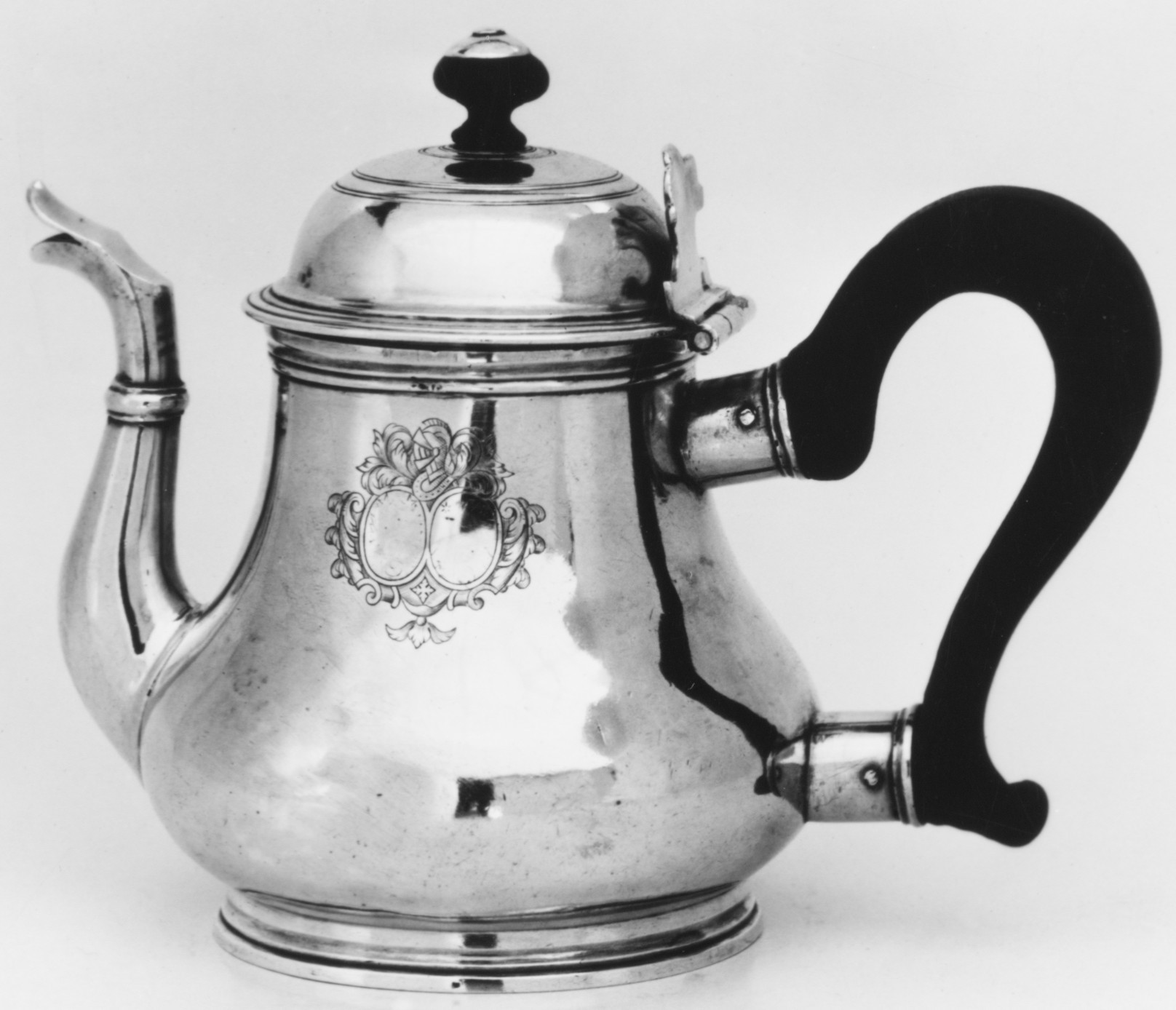
- The Met: Teapot, 1745–47
The Metropolitan Museum of Art. Bequest of Catherine D. Wentworth, 1948, 48.187.79. Public Domain. CC0. Resized proportionally; not cropped or retouched.
- FDA: Food Code 2022, sections 4-101.13–14
Food-equipment guidance on lead-bearing solder and copper/brass contact. It does not certify an antique vessel or determine the law applicable to every private owner.
- GOV.UK: Dealing in items containing ivory or made of ivory
Official guidance checked November 10, 2026. Eligibility, registration and cross-border requirements need individual review.
- U.S. Fish and Wildlife Service: African elephant ivory FAQs
Federal guidance; state rules and import/export requirements may also apply.