
Open the box before opening the polish
A family set can arrive with a reliable story, half a story, or no story at all. The first useful job is the same: keep the group together and make a record. Photograph the chest or tray as it arrived, then each form, the marks and any inscriptions. Keep receipts, labels and handwritten notes with the record.
Ask relatives what they remember, and record who supplied each detail. Separate a documented purchase from a family recollection. Both can matter, but they answer different questions.
Sort gently, without turning clues into verdicts
Make provisional groups for identified silver alloys, identified plate, steel and uncertain pieces. Read the whole mark and the construction. The FTC’s silver-description guidance distinguishes sterling from coin silver and plated products; a familiar manufacturer’s name on its own is not a fineness test.
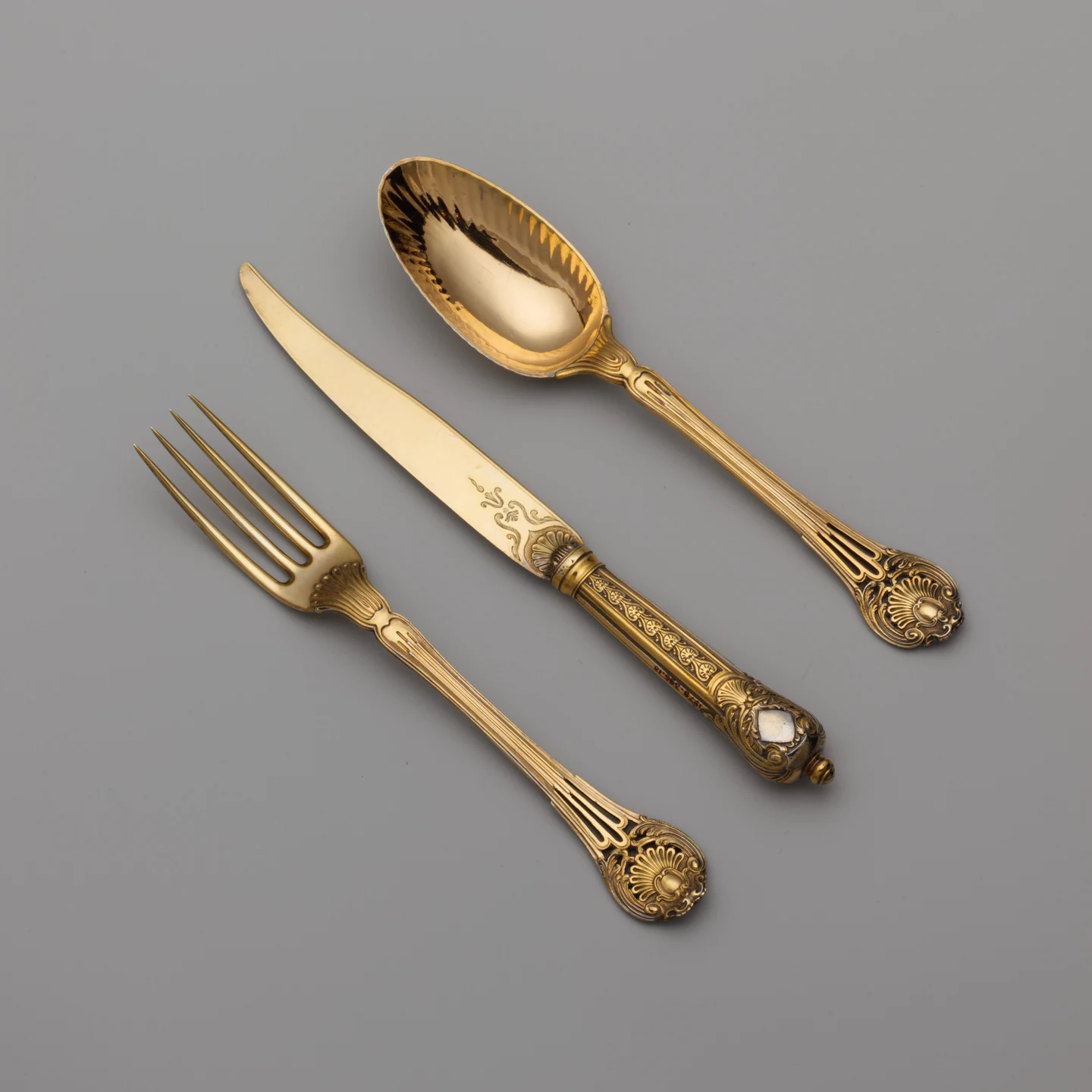
Keep hollow-handle knives, filled or weighted objects and mixed-material pieces separate from straightforward solid-alloy spoons and forks. Photograph their materials and gross weights if useful, but label those weights accurately. Do not dismantle a handle or peel a base to estimate silver content.
Set aside anything with suspected ivory, tortoiseshell or another potentially protected material before advertising or shipping. A small component can raise a separate trade question. Start with the existing guide and official regulatory sources, then obtain advice for the jurisdictions involved.
What the scale can and cannot tell you
For a known, unweighted, single silver alloy, fine-silver content is the supported alloy mass multiplied by fineness. Sterling uses 0.925. Grams avoid confusion between ordinary ounces and troy ounces; one troy ounce is about 31.1035 grams.
The difficult part is often the input. A knife’s steel blade and handle filling do not become silver because the handle is stamped sterling. A heavy weighted candlestick does not have a dependable universal silver percentage. This guide does not assign a standard silver allowance to either.
The contained-silver worksheet requires supported inputs and excludes weighted or mixed groups. It is a reference calculation, not an assay, appraisal or buyer’s offer.
Which price answers your question?
- Retail replacement
- What it may cost to buy an equivalent piece from a seller. Ask your insurer what valuation basis and documentation it requires.
- Completed sale
- A record of a transaction. Check the date, exact form, condition, quantity and whether the published result includes the buyer’s premium.
- Dealer offer
- What that buyer proposes to pay for your particular group on stated terms. Ask what is included and how the offer was calculated.
- Net sale proceeds
- What remains after applicable commissions, fees, shipping, insurance and other costs. Compare net figures before choosing a selling route.
- Metal reference value
- A calculation using supported silver content and a stated benchmark price. It is not a guaranteed minimum sale price or a promise that an object should be melted.
The selling-silver guide explains these distinctions in more detail. No fixed resale percentage can replace an actual quote for the objects in front of you.
A small record makes the next decision easier
For each piece or genuinely matching group, record an item number, object type, quantity, dimensions, marks, material evidence, pattern attribution, gross weight, composite parts, condition, inscriptions, provenance and photograph filenames. Leave unsupported fields blank.
Compare recent results for the same maker, pattern and form, allowing for condition and fees. Seek a specialist assessment before breaking up an important ensemble, removing an inscription or accepting a scrap offer for an unfamiliar object. Estate, tax and insurance purposes may require different professional valuations.
Keeping, using, gifting and selling are all possible outcomes. A useful first stage is simply to know what you have and to preserve enough evidence that the next person can understand it too.
Sources & further reading
Reviewed 11 November 2026. Museum records support the named examples; care instructions apply only within the scope described by each institution or maker. They do not authenticate or appraise a privately owned object.