
The miniature cabinet
Silver figurines.
Small worlds,
close looking.
A horse’s stance, a watchman’s raised arm, a tiny vessel with its lid still in place: small silver objects reward close attention. Collecting them brings together subjects, skilled hands and the evidence that survives with each piece.
Open the cabinet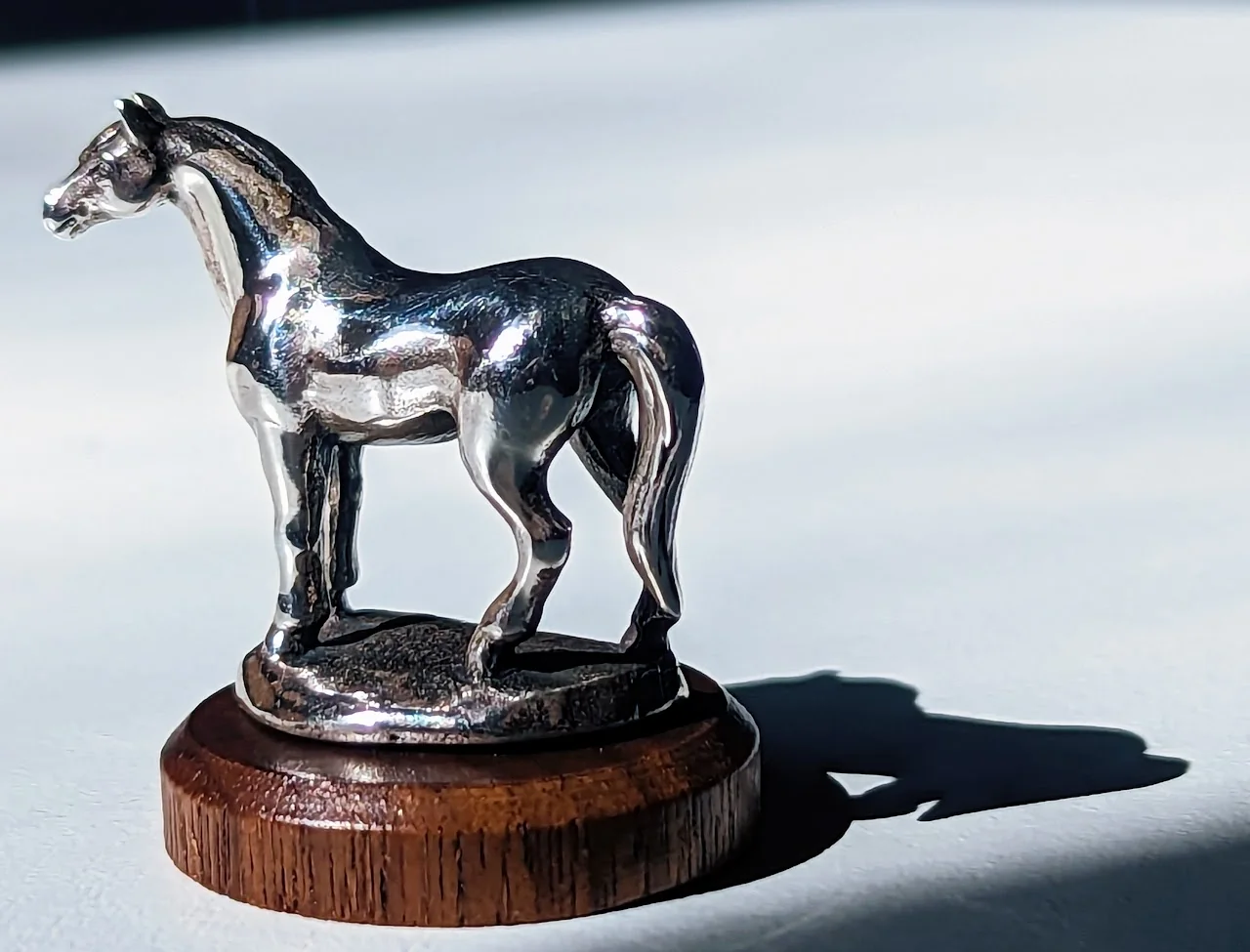
A small figure, its base and the space around it.
Original photograph by Rich Silver.Read the object recordFigures and miniature worlds
This guide centres on small figures of people, animals and characters, with domestic miniatures alongside them for comparison. Figurine, statuette and miniature overlap in collection descriptions. Use the actual dimensions and the maker’s terminology rather than imposing one universal size boundary. A miniature chair or kettle belongs to the wider miniature tradition without becoming a figurine.
Ask what the object represents and what it was intended to do. A display figure, a model of household equipment and a practical accessory in figural form deserve different descriptions. Our silver sculpture guide looks more broadly at sculptural construction and editions.
Small objects, substantial histories
The Metropolitan Museum describes specialist goldsmiths known as “toy men” who made miniature furniture and equipment for tea, coffee and chocolate. Dollhouses were probably their intended setting. Its silver urn with cover, dated about 1780 and catalogued under A. L. & W. L., preserves the equipment of a larger household in a compact form.
Other miniatures turn people and activities into little scenes. The Rijksmuseum records a mounted rider of 1757, attributed to Johannes van Somerwil I, and a watchman made by Arnoldus van Geffen in Amsterdam in 1769. These examples offer different routes into collecting: a subject, a workshop, or a miniature version of everyday life. They are individual historical examples, not a single origin story for every modern figure.
Give each name its proper role
Keep the sculptor, designer, manufacturer and later seller separate in your notes. The Boba Fett miniature, for example, identifies Alejandro Pereira Ezcurra as sculptor and New Zealand Mint as maker. Preserve qualifications such as “attributed to” when recording an older piece.
Marks need context too. London’s Assay Office explains that a UK sponsor’s mark identifies the person or company responsible for submitting the object, which need not be its manufacturer. Look at the complete marking group and use references appropriate to the country and period.
Record a reproduction’s date separately from the model it follows. The Met’s nineteenth-century electrotype saltcellar reproduces a sixteenth-century German original. A historical-looking design alone cannot establish the age of the object in hand.
Describe the silver and the support
Sterling’s standard is 925 parts per thousand silver (92.5 percent). Silver plate is a silver layer over another metal; a silver-coloured surface does not establish either description. Hollow construction, non-silver filling and a separate display base raise additional questions. London’s Assay Office uses FILLED for non-metallic filling under its applicable marking practice.
For a weighted base or mounted figure, ask which components the stated weight includes. Rich’s Kirk Stieff horse is recorded at 20 grams including its walnut base. That is a whole-object measurement, not a silver weight. Keep material claims and measurements separate, and consult the authenticity guide when evidence is incomplete.
Look for the smallest missing piece
Study ears, tails, fingers, reins, staffs and removable accessories, then inspect their joins and attachment points. The Rijksmuseum’s watchman record suggests that a bird or star once topped his staff. A figure can remain recognizable while losing a telling detail; do not reconstruct one from imagination.
Check for bent projections, loose fittings and repaired breaks without flexing them. Keep detached components identified with their object. Canadian Conservation Institute guidance emphasizes protection from knocks and rubbing, and warns that polishing removes surface material. Support fragile pieces during handling and give them separate padded spaces in storage. Seek conservation advice before treating uncertain finishes or repairs.
Build a group without inventing a set
Choose a connection you enjoy: animals, occupations, one maker, or domestic objects beside figures. Compare scale, bases, marks and accompanying parts before describing a group as an original set. Keep any later additions clearly identified.
London Museum’s David Clayton saltcellar belongs to the Blackett baby house. The museum suggests its silver accessories may have been collected before the house was assembled. A convincing miniature world can therefore contain objects with different histories.
Record each piece individually, then add a group record showing how it belongs. The collector’s object record helps keep photographs, observations and attribution evidence together. For miniature table equipment, the flatware guide provides a useful comparison with full-sized forms.
Keep collecting
Give each object a record.
Use the object stories and research guides to keep photographs, descriptions and evidence together.