
The table has a supporting cast
Before the first dish arrives, the table is already speaking. A candleholder sets the height of the light. A small stand gathers the condiments. A numbered napkin ring or wine label gives a name to something that would otherwise be easy to mix up.
These objects make an inviting collection because you can follow a form without assembling an entire dinner service. Start with what interests you: the geometry of a candlestick, the movement of a pierced border, or the character of a small engraved name.
An empty frame is still full of clues
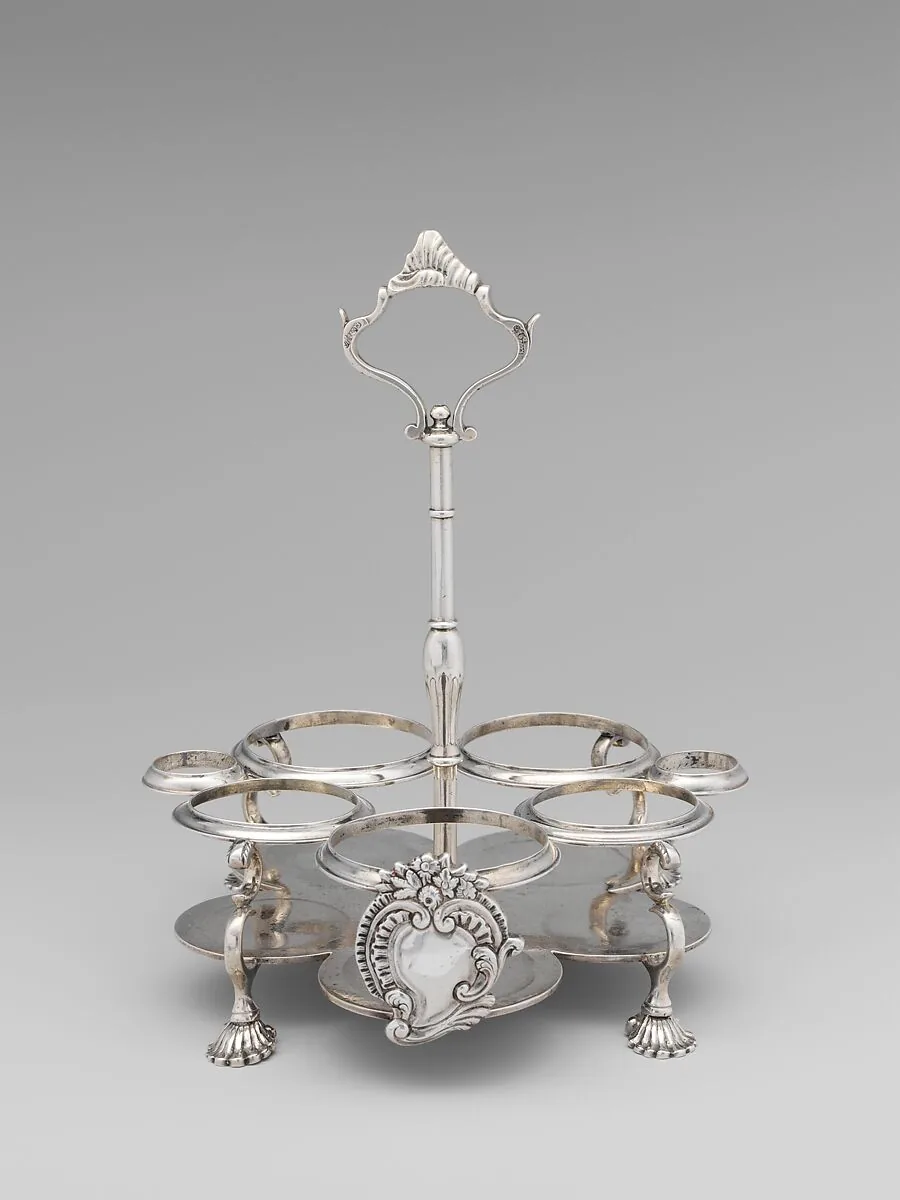
Myer Myers’s cruet stand, made in New York in 1765–76, held containers for the dinner table. The Met describes silver casters for sugar, pepper and other spices, alongside glass cruets for oil and vinegar. Its openwork handle, shell feet and asymmetrical cartouche belong to the Rococo design.
The photograph shows the frame without those containers. That is important: a museum photograph of a stand is not proof that a frame found elsewhere is a complete service. Compare the sizes and positions of the rings, then investigate what vessels were intended to fit. Glass replacements may be practical while still needing a separate description.
Four rewarding directions
- Candlelight
- Single candlesticks, branched candelabra and portable chambersticks. Count detachable nozzles and branches; inspect stability, sockets and repairs. Filled or weighted construction changes both care and weight calculations.
- Salt & condiments
- Open salts, casters and cruet frames. Note liners, lids and spoons individually. A liner is a component to identify, not a universal promise that an old vessel is ready for food.
- Wine & pouring
- Coasters, bottle labels, funnels and cooling vessels. Wooden bottoms and other mixed materials require different care from an uncomplicated metal object. Explore ewers, monteiths and urns for their particular histories.
- Personal places
- Napkin rings, knife rests and place-card holders. Keep inscriptions in the record. A tiny piece can carry useful evidence of a household, presentation or later change of owner.
Collect the relationships as well as the pieces
A matched pair is a claim worth checking. Set the objects side by side and compare height, construction, marks and wear. Similar decoration can conceal different dates or later additions. Record those differences without assuming they make the group less enjoyable.
Never use gross weight as silver weight for a filled candlestick or wood-bottomed coaster. Do not remove a base to find out what is inside. The weighted and composite silver guide explains why water and hidden materials can be a damaging combination.
For old wax, stubborn residues, fragile glass or uncertain coatings, ask a conservator or experienced silver specialist about the complete object. Household shortcuts designed for bare metal may harm the parts you cannot see.
Sources & further reading
Reviewed 11 November 2026. Museum records support the named examples; care instructions apply only within the scope described by each institution or maker. They do not authenticate or appraise a privately owned object.