
Wearable silver / A collecting direction
Silver jewelry: find your own way to collect
A favorite piece of jewelry can begin a collection: a chain you reach for every morning, a brooch with an intriguing mark, or a ring whose details reward a closer look. Silver jewelry offers many ways in. Start with the forms you enjoy wearing, then learn to describe what makes each object interesting.
 View the details
Start with the form, not the label
Rings, bracelets, earrings, necklaces and brooches offer different collecting pleasures. You might follow a repeated motif across several forms, compare the movement of linked bracelets, or concentrate on small pendants. A collection does not need matching pieces or an investment theme to have a clear direction.
A chain describes linked construction; a necklace describes something worn around the neck. A chain may be a necklace on its own or support a pendant, while a pendant is the suspended ornament rather than necessarily the whole necklace. When comparing listings, check whether the chain is included. For a brooch, look beyond the decorated face to the pin and catch. For earrings, establish the fastening type and whether the listing is for a pair.
Separate material from construction
Sterling silver contains 92.5% silver; 925 expresses that proportion in parts per thousand. Silver plate is a layer of silver over another metal. A gold-colored finish needs its own description: ask whether it is plating and what metal lies beneath it. These descriptions answer different questions from whether a piece is hollow, articulated or assembled from several components.
For jewelry described as fine silver, record the stated fineness and the evidence supporting it rather than filling in a number from memory. Ask what the description covers: the main body, chain, clasp and decorative additions may need separate entries. A polished appearance or a stamp is a starting point for investigation, not a complete authentication. Our authenticity guide explains how to build a fuller picture.
Look at fit and fastenings together
Measurements become useful when you connect them to use. For a necklace, note its length and where you want a pendant to sit. Check whether the pendant opening will pass over the chain’s end fittings. For a bracelet, ask how its stated length was measured and how the closure works. Try operating a clasp yourself where possible; a beautiful fastening still needs to suit your hands.
Shape can matter as much as size. Tiffany’s documented sterling-silver Elsa Peretti Medium Bone Cuff example specifies a 61 mm width and right-wrist orientation. It is a useful reminder to read the individual design’s details rather than assume every cuff is interchangeable between wrists. Our Tiffany profile provides the deeper catalog context.
Enjoy the design, then follow the evidence
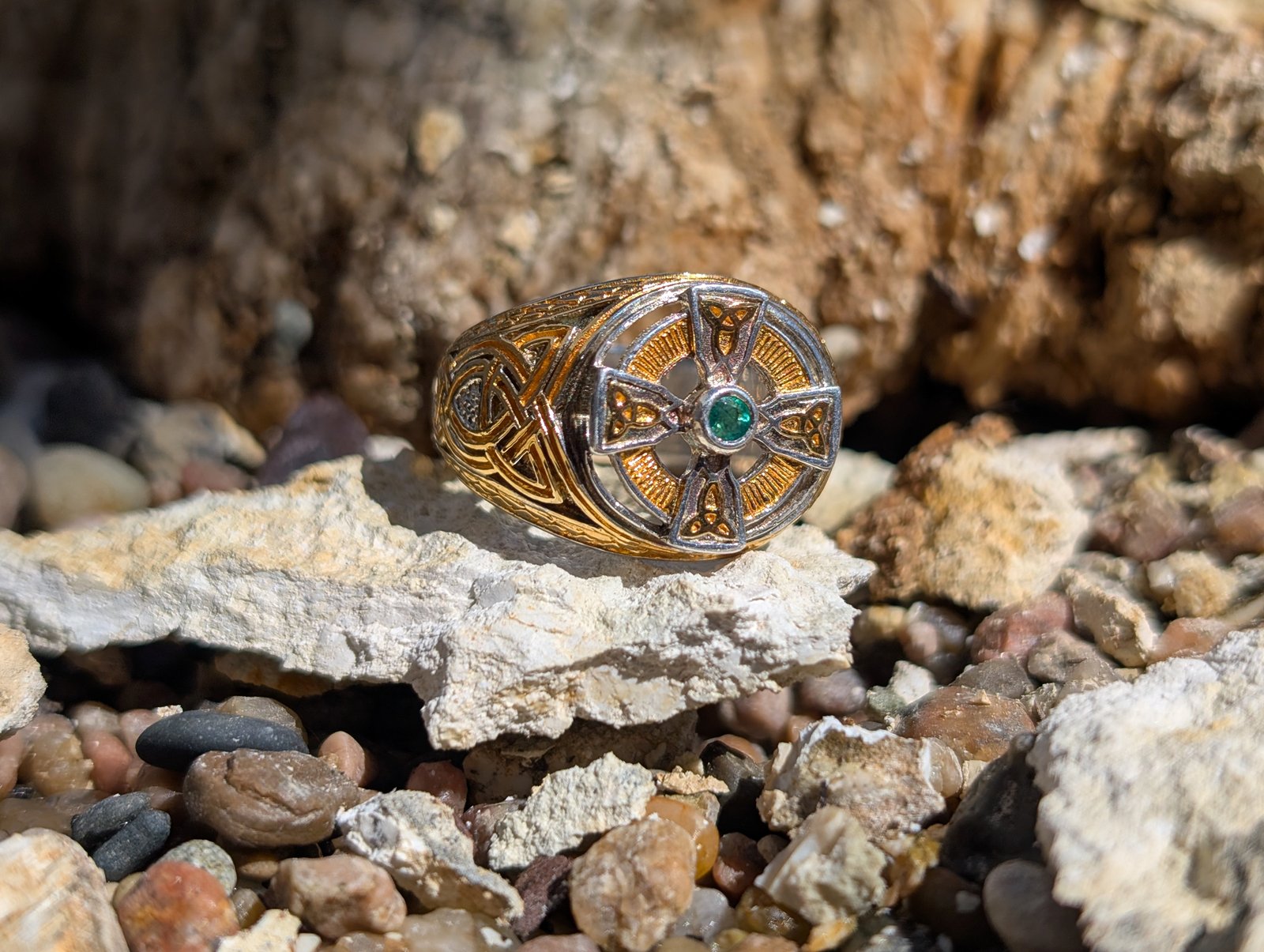
Look closely before reaching for a maker’s name. Describe the silhouette, repeated shapes, open spaces and contrasts in color or texture. Rich’s photograph of an ornate ring, with a green center and circular openwork face, offers a good exercise: those visible details can be described without identifying the metal, the green material or the maker from the picture.
Keep observation separate from attribution. Photograph marks clearly, transcribe them as seen, and distinguish a seller’s identification from a documented catalog match. Record the designer, manufacturer and retail house separately when the evidence allows. A familiar style is a reason to investigate, not proof of authorship.
Read condition before deciding how to clean
Inspect the places that do work: links, joins, hinges, catches and settings. Note distortion, loose components, worn decoration and visible repairs before wearing or cleaning a new acquisition. Ask a qualified jeweler to assess doubtful fastenings or settings rather than testing them by force.
Silver tarnish develops through reactions with sulfur-containing gases. Removing it by polishing also removes some silver, so constant brightening is not a harmless routine. Plating and gilding need particular caution. Identify nonmetal components and surface finishes before choosing a cleaning method; immersion is not suitable for every construction. When materials or repairs are uncertain, seek advice before treatment.
Keep the story with the object
Make a simple record while the details are fresh: photographs of front, back and marks; dimensions; measured weight; stated materials; seller and purchase date; receipt; condition; and any repairs. Label total object weight honestly. Stones and other components mean it is not automatically the weight of silver available for a metal-value calculation.
Your purchase price, a future resale offer and an estimate of metal content answer different questions. Keep them separate, and choose pieces you would still enjoy without a price rise. If metal content is central to your interest, continue to our investment-jewelry guide. Otherwise, let a shape, a maker or a memorable first piece lead the next step.