
A dark surface does not mean ruined silver
Silver’s bright surface is part of its appeal. It is also why a gray film or a dark patch can feel alarming when you open a coin box or take out a piece of family silver. The first question is often whether the object is dirty, damaged, or somehow no longer genuine. Appearance alone cannot answer those questions.
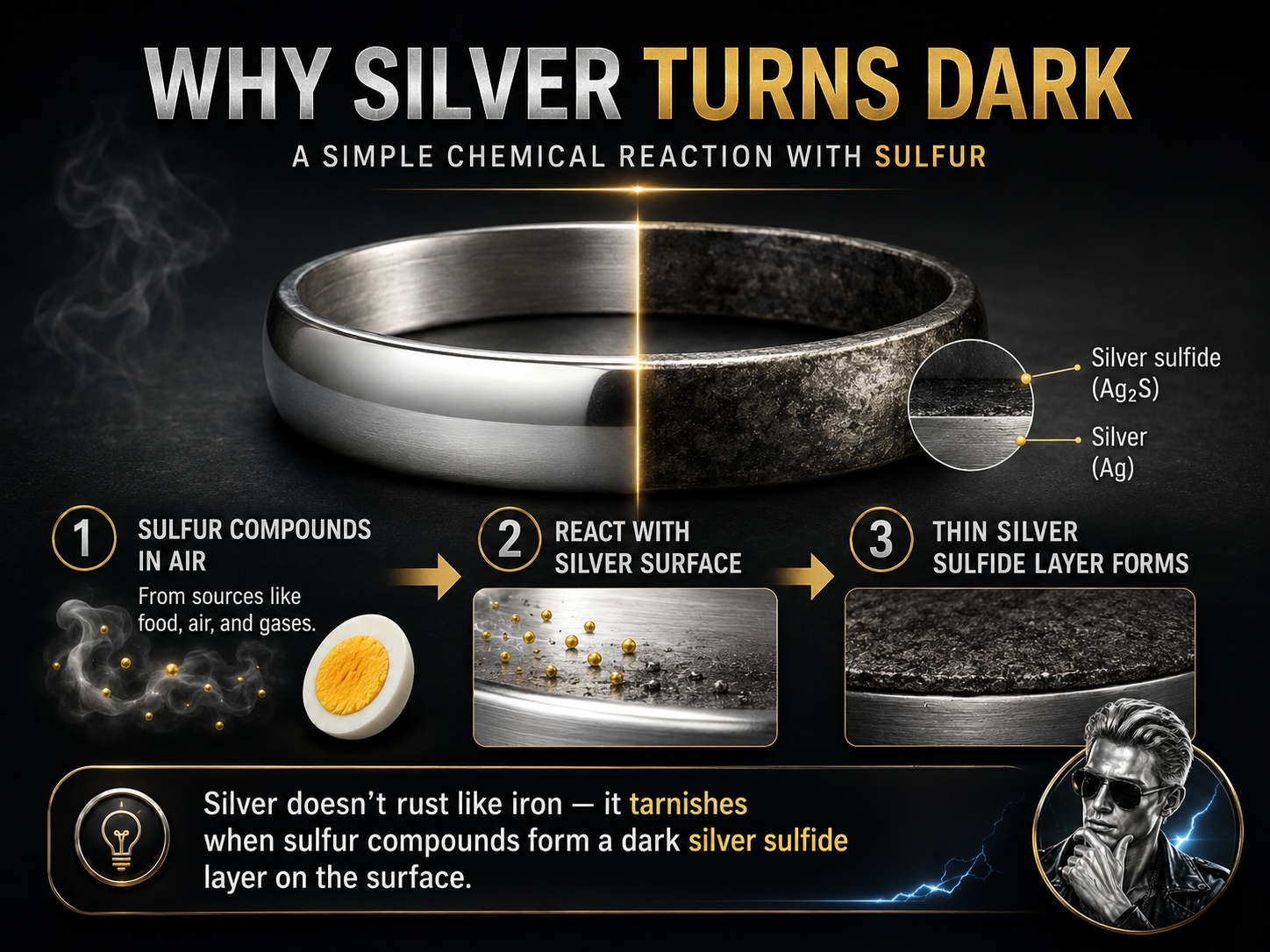
Ordinary silver tarnish is usually a thin layer of silver sulfide formed through reactions with sulfur-containing substances in the environment. It is not rust in the familiar iron-and-steel sense. That distinction helps explain the change without dismissing the importance of preserving the surface.
The chemistry behind the color
The Royal Society of Chemistry describes silver slowly tarnishing in air as sulfur compounds react with its surface to form black silver sulfide. Silver’s chemical symbol is Ag; the sulfide is written Ag2S. Sterling silver can have more complicated surface chemistry because it is an alloy, rather than pure silver.
Hydrogen sulfide is one important tarnishing gas. A hard-boiled egg releases sulfur-containing gases and is used in a Canadian Conservation Institute demonstration of tarnishing. That is an explanation of the chemistry, not an invitation to experiment with a collectible coin. Deliberately altering a collectible’s surface can create a problem that cannot simply be undone.
Tarnish need not begin as a black coating. Thin films can produce colors through interference of reflected light, and their appearance changes as the layer develops. The familiar word “toning” describes these surface changes in collecting. A color by itself does not establish the object’s age, authenticity, or the history of its treatment.
Why two pieces age differently
A silver object interacts with its surroundings. Exposure to sulfur-containing gases and moisture helps explain why one piece changes quickly while another remains bright. The materials inside a container matter too. A closed box cannot provide good protection if its contents release substances that react with the silver.
Rubber and some paints are examples of materials conservation guidance flags as possible sources of sulfur-containing emissions. Ordinary packaging should not be assumed suitable for long-term silver storage. The lesson is practical: choose the holder and its surrounding materials deliberately, rather than judging storage only by whether the lid closes.
Fine silver and sterling silver also need not behave identically. Copper in a silver alloy can contribute to tarnishing, and sterling tarnish may contain copper sulfide as well as silver sulfide. “Silver” covers objects with different compositions, finishes, and construction, so one care routine will not fit every piece.
Preserve the surface before chasing the shine
For collectible coins, brighter is not automatically better. The Canadian Conservation Institute notes that collectors may value toning and patina, and recommends leaving corrosion removal to a conservator. A proof finish, an original surface, or a pattern of natural aging can matter more than a freshly polished appearance.
Avoid treating coin cleaning as routine maintenance. Rubbing, polishing, and chemical treatments can alter surfaces or remove material. Tarnish removal is especially consequential for silver-plated objects because the precious-metal layer is thin. An approach that seems acceptable for one household item may be inappropriate for a coin, a plated heirloom, or an object with other attached materials.
If a piece is scarce, valuable, graded, historically important, or simply uncertain, get advice before treating it. The question to ask is what needs preserving, not just how to remove the dark layer. A professional assessment can distinguish ordinary tarnish from a condition that needs attention.
Make storage do the work
Store coins individually in suitable protective holders and minimize unnecessary handling. CCI identifies inert plastics, including polyethylene and polypropylene, as appropriate options, while warning against PVC coin flips. Handle coins by their edges so their main surfaces are not exposed to fingerprints or rubbing.
For silver objects more generally, CCI recommends prevention through suitable sealed storage and control of tarnishing gases and humidity. Appropriate conservation-grade materials matter more than a vague “protective” label. Check stored pieces periodically, and reconsider the enclosure if discoloration or other changes are developing rapidly.
What tarnish means for the metal
Tarnish is a chemical change involving silver at the surface, not simply dirt resting on it. A thin tarnish film on bullion usually has little practical effect on its underlying precious-metal value, but it is too absolute to say that nothing has happened to the silver. Repeated tarnishing and removal can cause cumulative loss.
The useful response is proportionate care. Do not assume dark silver is ruined, and do not assume every dark surface needs cleaning. Understand the object, protect its surroundings, and preserve the features that make it worth keeping.
About this edition
Original source and editorial notes
Adapted from original material by Rich Silver. Original publication: Why Does Silver Tarnish? ↗ (2026-06-28).
Reviewed 2026-11-04. Verified sulfide chemistry and storage guidance against Canadian Conservation Institute publications. Clarified that tarnish is corrosion involving surface silver, distinguished alloy behavior, and replaced absolute metal-content reassurance with a qualified explanation. No home-cleaning recipe is recommended.
Sources & further reading
- Royal Society of Chemistry: Silver, properties and uses ↗
- Canadian Conservation Institute: Understanding how silver objects tarnish ↗
- Canadian Conservation Institute: Silver, care and tarnish removal ↗
- Canadian Conservation Institute: Basic care of coins, medals and medallic art ↗
- Canadian Conservation Institute: Caring for metal objects ↗