
The short answer
Some low-E glazing systems contain very thin silver layers that help control radiant heat while transmitting visible light. The coating, climate, and complete window assembly determine performance; low-E does not mean every window contains silver.
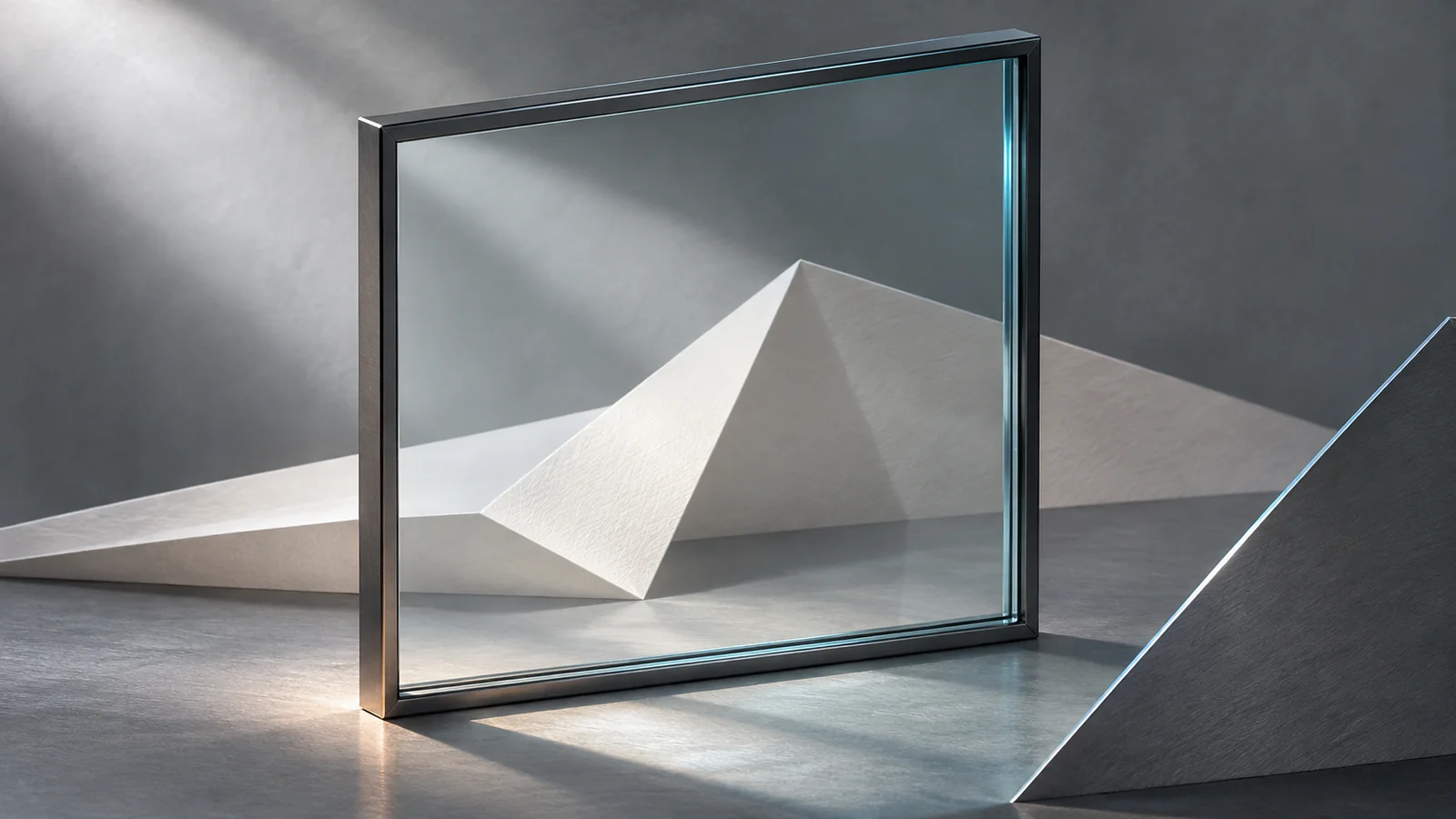
A transparent coating with a job to do
A silver mirror and a clear window may seem like opposites. Carefully designed coatings make the connection possible. Guardian Glass describes sputtered low-emissivity coatings that combine thin layers of different materials, including silver. The finished coating can admit useful daylight while changing how the glass handles infrared radiation.
Low-E means low emissivity. The U.S. Department of Energy explains that these microscopically thin coatings control heat transfer through insulating glazing. They may be metallic or metal-oxide coatings, so low-E is a performance description, not a guarantee that every such window contains silver. A named product specification is the place to confirm the composition.
Different kinds of heat control
The familiar idea of keeping warmth indoors describes part of the story. A low-emissivity surface reduces radiant heat exchange. Solar control is another design goal: limiting unwanted energy arriving from the sun while preserving daylight. Those goals can overlap, but they are not interchangeable measures of performance.
DOE distinguishes coatings designed for high, moderate, and low solar heat gain. A home that benefits from winter sunshine may need a different balance from a building dominated by cooling demands. Climate, window orientation, and the wider building design all affect the choice. Silver does not automatically make one glazing specification right everywhere.
Guardian offers a concrete illustration of the design possibilities: its high-performance ranges include single-, double-, and triple-silver coatings. These descriptions refer to silver layers within a coating system. They do not mean one, two, or three panes of glass, and they do not state the weight of silver in the finished window.
Look beyond the ingredient list
For a practical comparison, the National Fenestration Rating Council identifies several separate ratings. U-factor describes heat transfer, solar heat gain coefficient describes the fraction of solar energy admitted, and visible transmittance describes how much visible light passes through. Reading the measures together is more informative than looking for a silver label.
The glass is also part of an assembly. DOE points to frames, insulating spaces, gas fills, spacers, and air leakage as contributors to window performance. A clever coating cannot tell the whole story of a poorly matched or poorly performing window. Any claimed energy saving needs the circumstances of that comparison.
For a collector, the fascination is scale and purpose. Silver that appears bright and solid in a coin can play a useful role in a coating you can see through. Keep the manufacturer’s name and product documentation with any research notes. They connect a surprising materials fact to a verifiable example, without turning an invisible layer into a claim about bullion content.
About this edition
Original source and editorial notes
Adapted from original material by Rich Silver. Original source card: Silver fact: supplied original card (publication date not established).
Reviewed 2026-11-04. Qualified silver use as a feature of certain low-E coating systems rather than all efficient windows. Replaced the unconditional winter/summer slogan with distinctions among thermal insulation, solar heat gain, visible transmission, and whole-window performance. No universal savings percentage or silver quantity is asserted. The cards have no verified publication dates or public URLs; none have been inferred from file metadata. No source-card graphics are reproduced.