
Bacteria living together
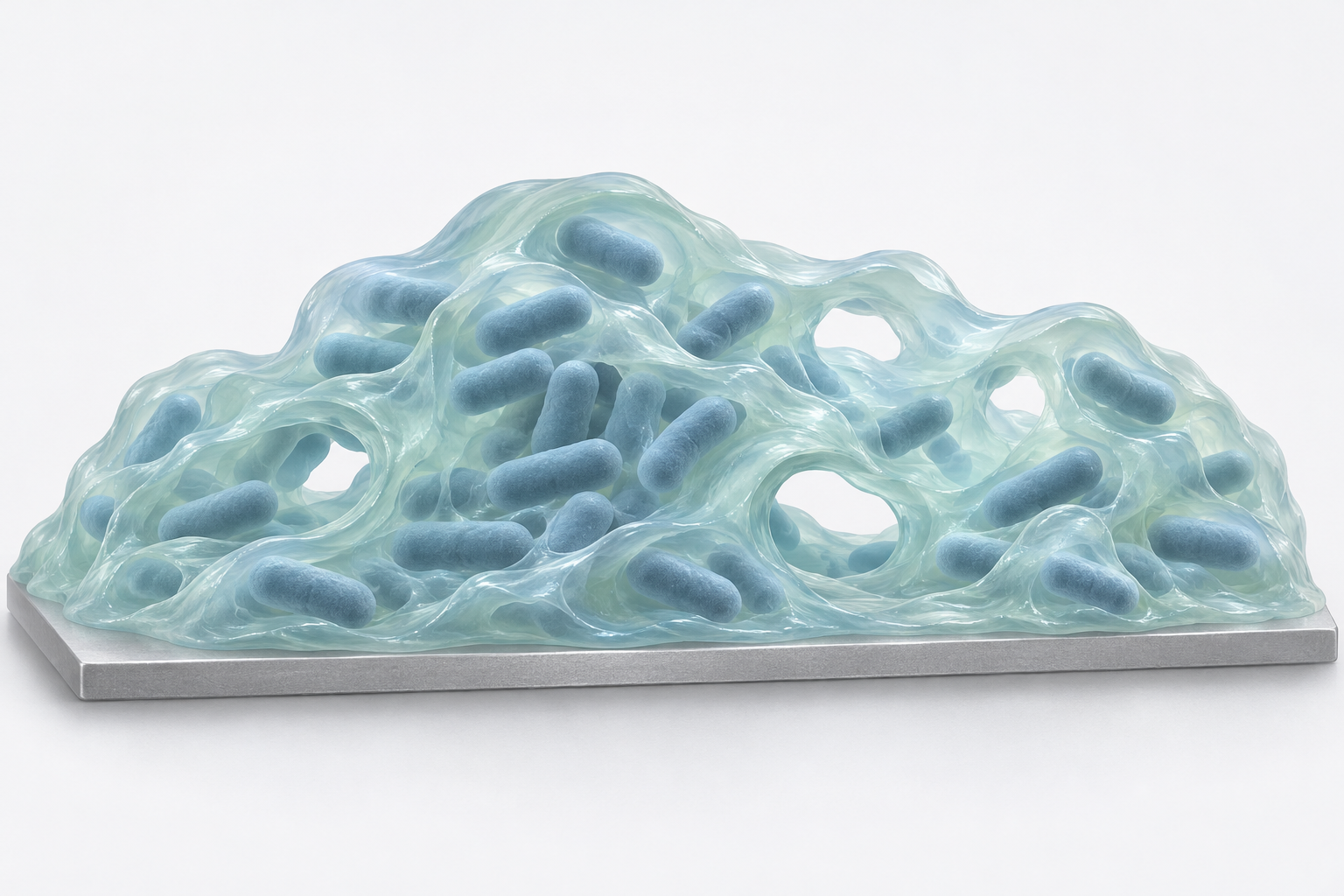
Silver is being studied against bacteria that live in communities called biofilms. In a biofilm, microbes gather on a surface within a surrounding material they produce. These communities can be difficult to control, making them an important target for researchers.
In a study published in 2016, researchers mixed silver nanoparticles, extremely small particles of silver, into gels made with a material called chitosan. They tested the gels against mixed bacterial biofilms grown in laboratory equipment. The formulations reduced biofilm formation and killed bacteria within established biofilms under the tested conditions.
The team also examined effects on human fibroblasts, cells involved in forming connective tissue. A material intended for a wound has to be assessed for its effects on human cells as well as bacteria. The researchers called for further development before clinical use.
Why getting inside is not enough
Biofilms are sometimes described as walls that antibiotics cannot penetrate. The reality is more interesting. In a separate laboratory study, two antibiotics entered biofilms but did not effectively kill the bacteria inside. Low oxygen and slow bacterial activity helped explain survival in that model.
That means reaching a biofilm and clearing an infection are different challenges. Silver’s laboratory results cannot tell us that every silver dressing will work, or that a wound will heal faster.
Research is not a home treatment
Current IWGDF/IDSA guidelines suggest against using silver preparations to treat diabetes-related foot infections. This is a conditional recommendation based on low-certainty evidence, specific to those infections.
Do not put homemade silver preparations on a wound or use them instead of medical care. The promising part of this story is the carefully tested material, not a general claim that silver cures infection.
About this edition
Original source and editorial notes
Adapted from original material by Rich Silver. Original source card: Silver fact: supplied original card (publication date not established); Silver fact: supplied revised card (publication date not established).
Reviewed 2026-11-05. Corrected the universal claim that antibiotics cannot penetrate biofilms. Replaced destroy-the-biofilm, faster-healing, infection-prevention, and where-other-treatments-fail claims with model-specific research and condition-specific clinical guidance. Preserved original and revised IDs; neither graphic is reproduced. No card publication date or public URL is verified or inferred. No treatment instructions or personal medical advice are provided. Reader-first revision: moves the silver discovery and necessary definitions into the opening, retains substantive limits in visible prose, and avoids a duplicated short-answer block. Source identity, original URLs and existing artwork are retained.
Sources & further reading
- CDC: Guidelines for Environmental Infection Control, Appendix C, Water and biofilms ↗
- Walters and colleagues: Antibiotic penetration, oxygen limitation, and low metabolic activity in Pseudomonas aeruginosa biofilms (2003), primary experiment ↗
- Pérez-Díaz and colleagues: Anti-biofilm activity of silver-nanoparticle chitosan gels and effects on human fibroblasts (2016), primary laboratory study ↗
- IWGDF/IDSA: Diabetes-Related Foot Infections guideline (2023), recommendation 23; current guideline checked November 2026 ↗