
A large bet on silver
During silver’s 1980 crash, the Hunt family and related interests faced cash demands they could no longer meet. They had built huge holdings of silver and futures contracts, partly with borrowed money.
A futures contract is an agreement to buy or sell a set amount of something, such as silver, for future delivery at an agreed price. A trader can close that exposure with an opposite trade rather than take the contract through to delivery.
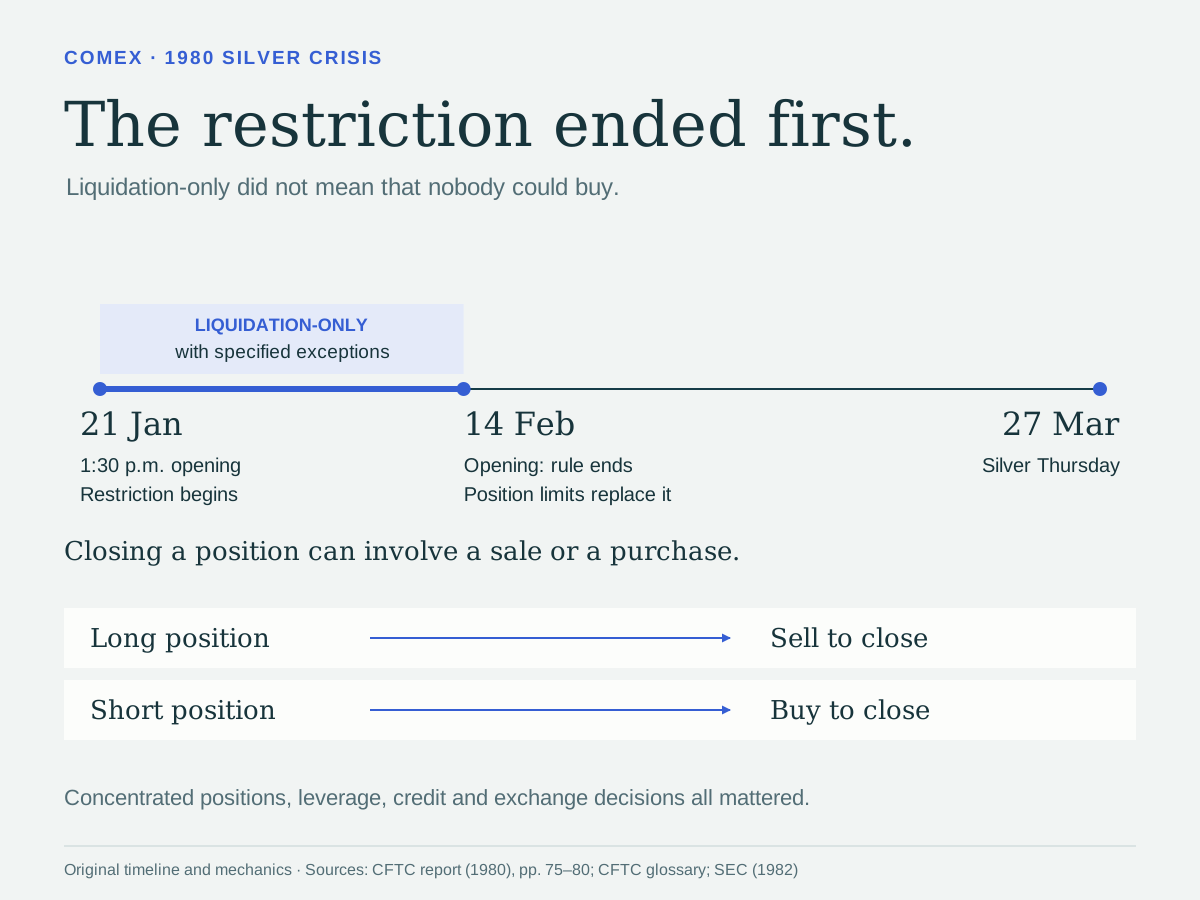
Closing a trade could mean buying
COMEX, a commodity exchange, restricted silver trading on January 21, 1980. Its “liquidation-only” rule generally allowed traders to close existing positions rather than open new ones, with specified exceptions.
A long position begins with buying a futures contract; closing it means selling an offsetting contract. A short begins with selling; closing it means buying one back. So liquidation-only did not mean that buying was impossible. Chicago’s Board of Trade restricted certain silver contracts the following morning.
The January rule ended in February
At the opening on February 14, COMEX ended the blanket liquidation-only rule. New positions were allowed within strict position limits, caps on the number of futures contracts a trader could hold. The broad January restriction therefore ended before March 27, the day remembered as Silver Thursday.
Why a price fall demanded cash
Falling silver prices triggered margin calls: demands for funds to support futures positions. They also reduced the value of silver pledged as collateral, property securing a loan.
By late March, the Hunts’ inability to keep meeting those demands threatened their brokers as well. The episode shows how borrowing, concentrated holdings, credit conditions and exchange decisions can reinforce one another. One trading rule alone does not explain the whole crisis.
About this edition
Original source and editorial notes
Adapted from original material by Rich Silver. Original source card: Silver fact: supplied original card (publication date not established).
Reviewed 2026-11-05. This edition distinguishes closing long and short positions and preserves the rule’s exceptions and February 14 end date. Exchange policy, leverage and credit conditions are separate parts of the crisis. Reader-first revision leads with the financial stakes, then defines futures, long/short positions, liquidation-only, position limits, margin calls and collateral. Retains exceptions, the February 14 termination and March 27 distinction. Does not restore the original card’s sell-only claim, unqualified price series or unsupported simple margin-change-to-crash causal chain.
Sources & further reading
- Report of the Commodity Futures Trading Commission on Recent Developments in the Silver Futures Markets (May 1980) ↗
- The Silver Crisis of 1980: A Report of the Staff of the U.S. Securities and Exchange Commission (October 1982) ↗
- CFTC Futures Glossary: Closing Out, Cover, Liquidation, Offset and Forced Liquidation ↗