
A precious metal with practical jobs
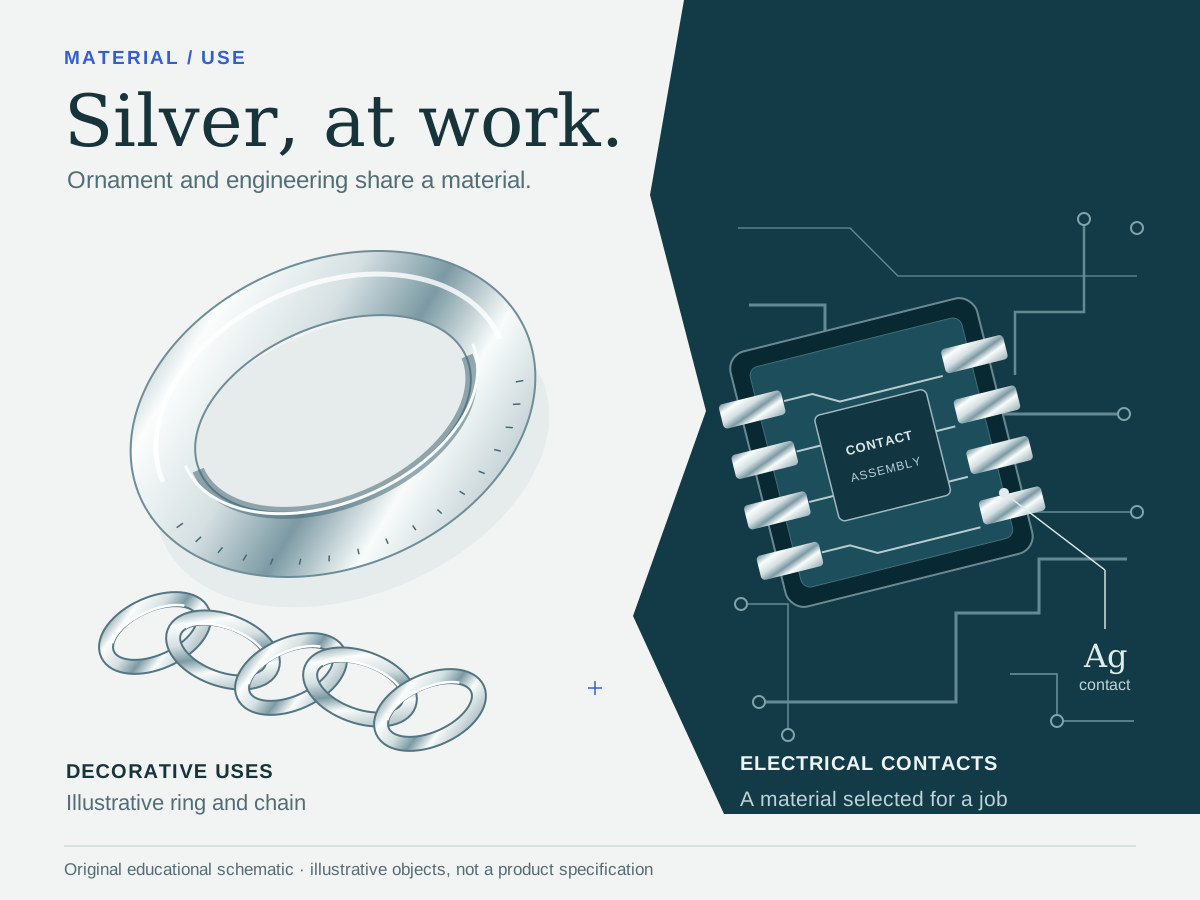
Silver does useful work in places where its appearance hardly matters. It carries current at electrical contacts, forms conducting paths in printed circuits and helps make the reflective surfaces of mirrors. The same metal can be a collectible object or a carefully placed part of a machine.
An electrical contact is the point where a connection is made. A printed circuit puts conducting paths onto a surface. Silver’s ability to carry electricity makes it useful in those jobs, while its ability to reflect light gives it a different role in optics. The Royal Society of Chemistry also lists batteries and metal-joining alloys among its uses.
How much goes into industry?
World Silver Survey 2026 estimates that industry used 657.4 million troy ounces of silver in 2025. A troy ounce is the weight unit commonly used for precious metals.
The total covers several kinds of manufacturing, including electrical and electronic products, solar cells and materials used to join metals. Solar cells are also called photovoltaics: devices that turn light into electricity. These uses help explain why silver demand depends on manufacturing as well as coins and jewelry.
The metal can return
Silver used in a product is not necessarily lost forever. The survey records 197.6 million troy ounces recovered through recycling in 2025. That is recycling across sectors, not just silver recovered from the same year’s industrial products.
These are estimates for a particular year. They show silver’s practical reach, but usefulness alone cannot tell us what its market price should be or where that price will go next.
About this edition
Original source and editorial notes
Adapted from original material by Rich Silver. Original source card: Silver fact: supplied original card (publication date not established); Silver fact: supplied revised card (publication date not established).
Reviewed 2026-11-05. This edition distinguishes observed industrial uses from demand and price forecasts. Demand figures refer to the stated reporting year; selected medical uses do not establish a general health benefit. Reader-first revision: Opens with familiar technical uses and defines contacts, printed circuits and photovoltaics. Retains dated demand/recycling totals and distinguishes all-sector recycling from industrial-product recovery. Removed unsupported source-card product counts; no medical benefit or price prediction added.