
The short answer
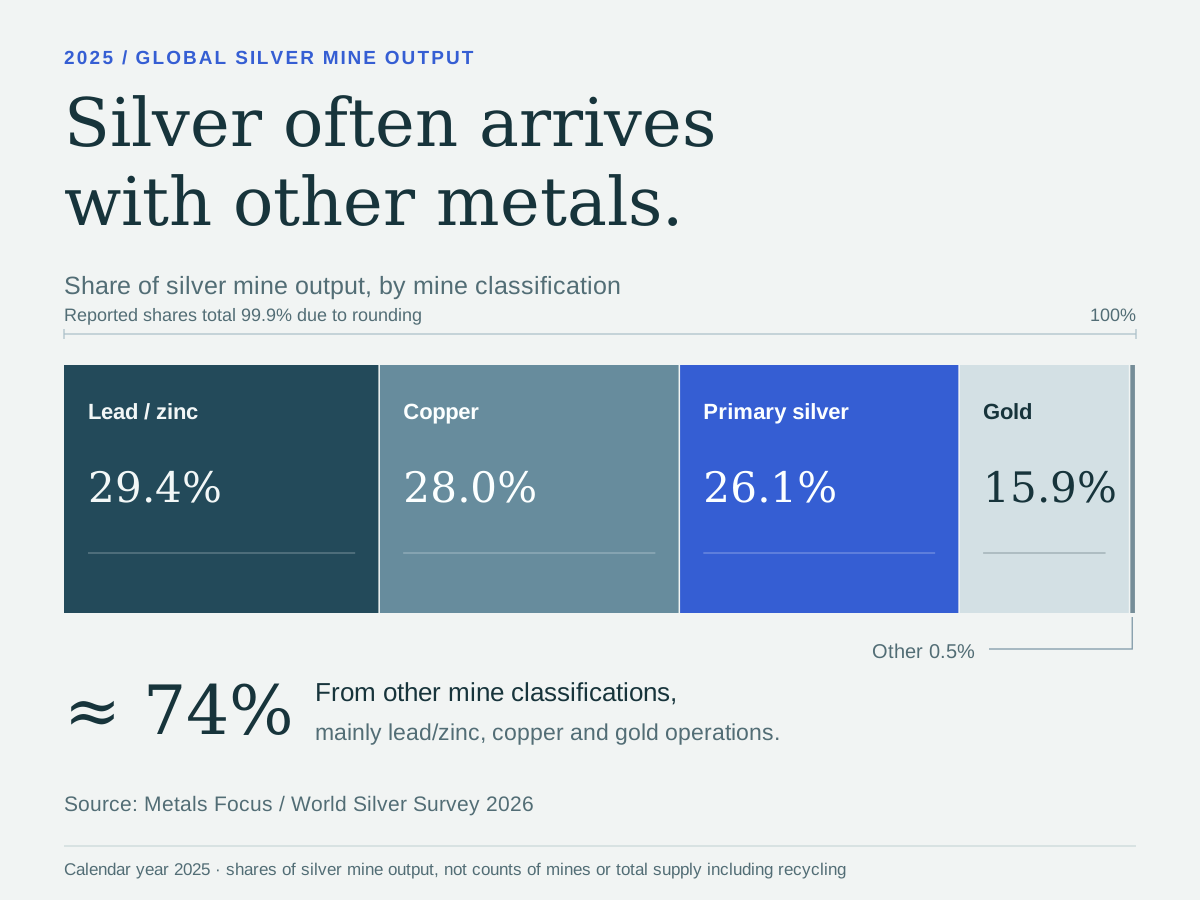
Primary silver mines supplied 26.1% of 2025 silver mine output in World Silver Survey 2026. Most of the remainder came from lead/zinc, copper and gold operations.
A dated production picture
Most newly mined silver comes from operations where another metal is the main product. World Silver Survey 2026 reports that primary silver mines supplied 26.1 percent of global mine output in 2025. The remaining share, about 74 percent, came mainly from lead/zinc, copper and gold operations. These percentages describe silver output, not the number of mines.
A by-product is still valuable
Silver occurs alongside other metals in many ore deposits. Recovering it can contribute to an operation’s revenue, even when it is not the principal product. Calling it a by-product does not mean miners find it by accident, obtain it for free, or ignore its price. The distinction also involves economics, and definitions of by-products and co-products can vary.
Supply has several drivers
This connection helps explain why silver production cannot be understood from the silver price alone. Changes in host-metal production and in the decision to recover associated silver can affect output. A rise in silver demand does not by itself establish how quickly mines will respond. Source-metal shares are useful context for studying supply, rather than proof of a future shortage or price increase.
About this edition
Original source and editorial notes
Adapted from original material by Rich Silver. Original source card: Silver fact: supplied original card (publication date not established).
Reviewed 2026-11-05. This edition uses the 2026 survey’s calendar-year 2025 mine-output breakdown. Shares refer to silver output, not mine counts or total supply including recycling. The chart preserves the report’s rounded figures.