
Before the silver pot
A chocolate pot begins with a drink whose story is much older than European silver. Cacao was cultivated in Mesoamerica; Maya and Aztec peoples valued it and made drinks from its beans. Some drinks were frothed by pouring between vessels. Cacao had social and cultural meanings of its own, and Indigenous chocolate traditions continue today.
Europeans adapted cacao into different recipes and habits, including sweetened hot drinks. In the Atlantic world, the fashionable cup depended on colonial trade and labor, including the forced labor of enslaved people in plantation economies. The gleaming vessel tells only one part of that history.
The little opening in the lid
Early drinking chocolate was made from ground chocolate rather than today’s familiar instant powder. Fat and particles could separate or settle. A wooden stirring rod, called a molinet or molinillo, could be rotated between the hands to mix and froth the drink before pouring. The lid could remain closed around the rod, helping keep the contents warm.
A removable finial or a small swiveling cover can reveal the opening. Look for the mechanism, its hinge or chain, and signs of later alteration. A surviving rod is unusual; absence alone does not prove that a pot is incomplete. Not every chocolate pot has the same arrangement, and not every side-handled pot is a chocolate pot. Compare the whole form, lid, marks and documentation before assigning a name.
Dighton: a Chinese vase translated into silver
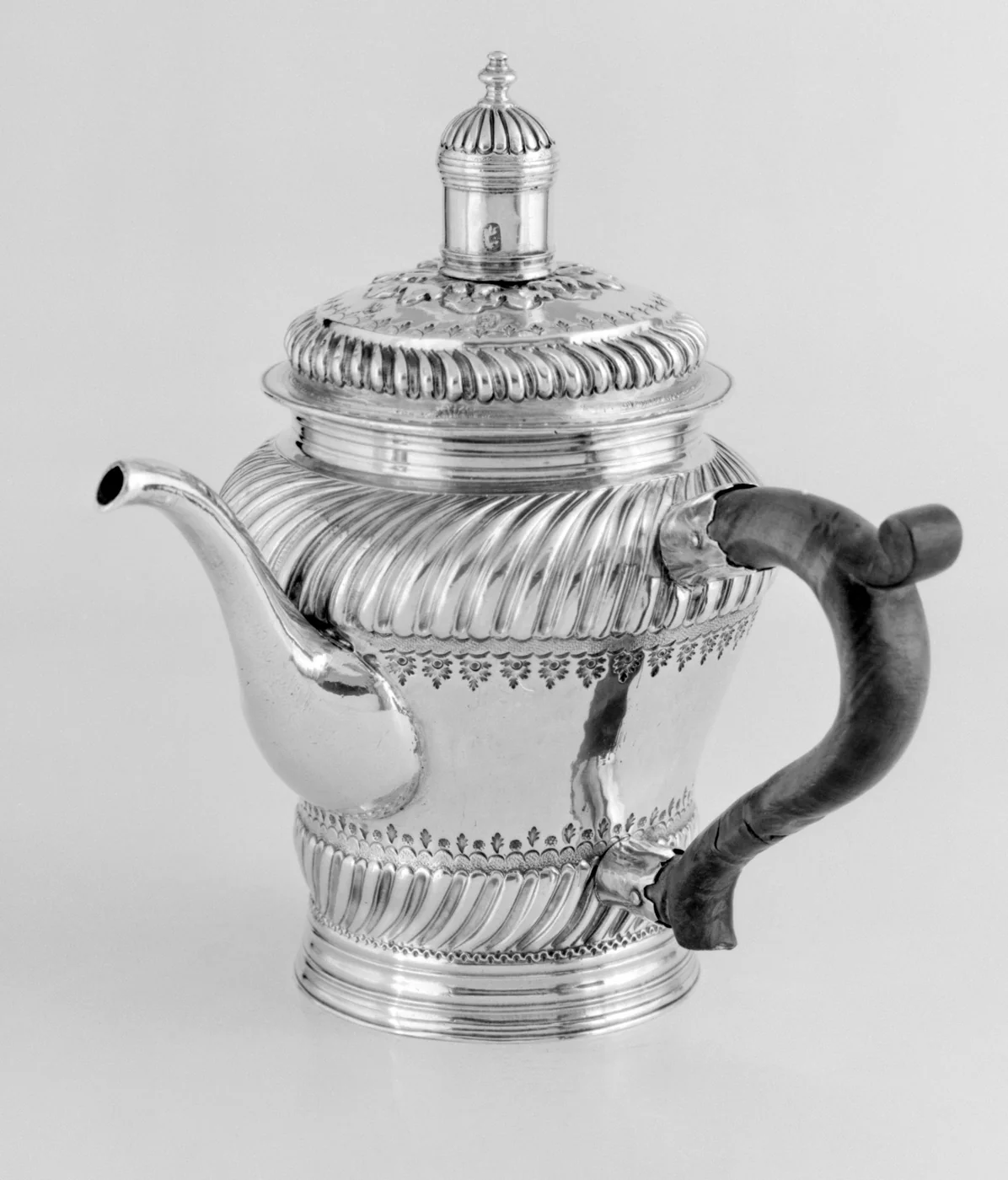
Isaac Dighton’s London pot of 1697–98 has broad shoulders, a short neck and a low domed cover. The Met relates its rare early form to a Chinese vase. The raised detachable cap accommodates a stirring rod. Follow the rhythmic fluting from shoulder to foot and compare its squat profile with Winslow’s upright Boston pot: both are catalogued as chocolate pots, but they solve the visual problem very differently.
Dighton was active from 1673 to 1707. The museum records the pot as silver and credits it to the 1943 gift of George O. May. Its documented classification and construction provide a stronger identification than the handle alone.
Winslow: a Boston merchant’s possible connection
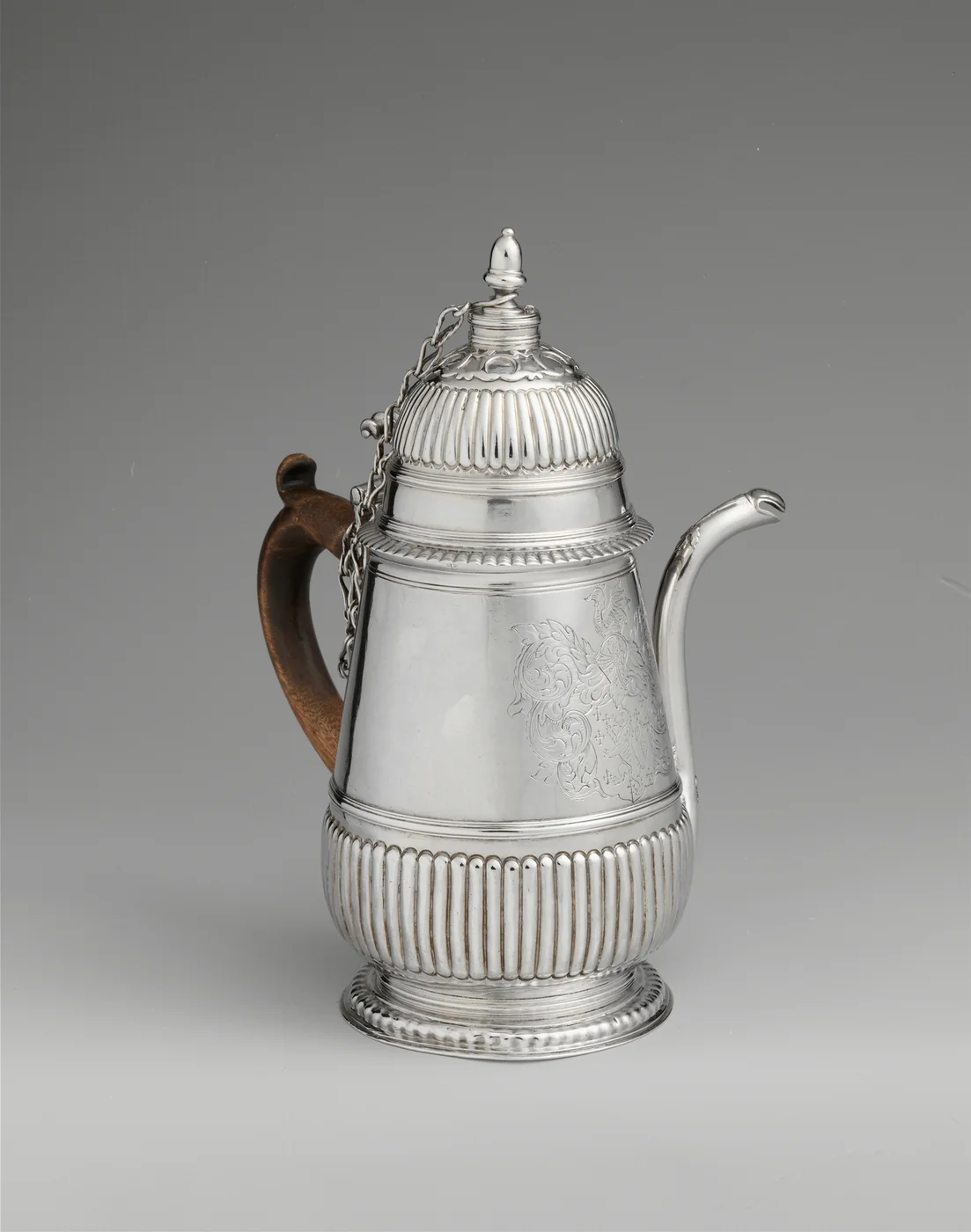
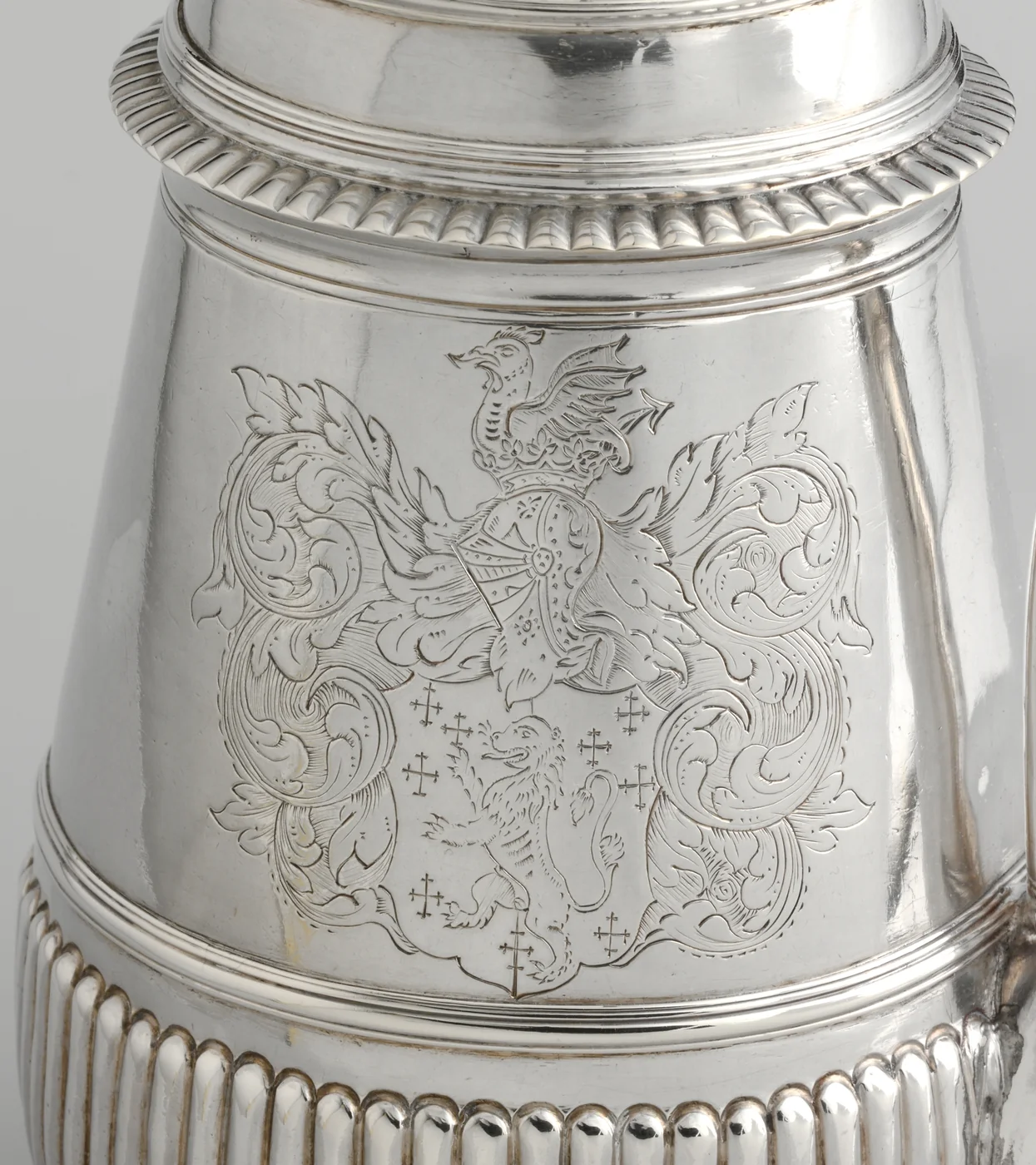
Edward Winslow’s Boston pot, made about 1700–1710, stands tall on a circular foot. Its detachable acorn finial is attached by a chain; removing it opens the lid for a rod. The engraving rewards a closer look: The Met says the Hutchinson arms are probably those of Thomas Hutchinson, a Boston merchant and legislator. That is a reasoned attribution, not proof of every stage of the pot’s ownership.
The museum received it through Alphonso T. Clearwater’s 1933 bequest. Photograph an inscription or coat of arms in context before interpreting it: an engraving may be original, later, altered or connected to a subsequent owner. Preserve the distinction between what can be seen and what can be established.
Germain: a lid that moves
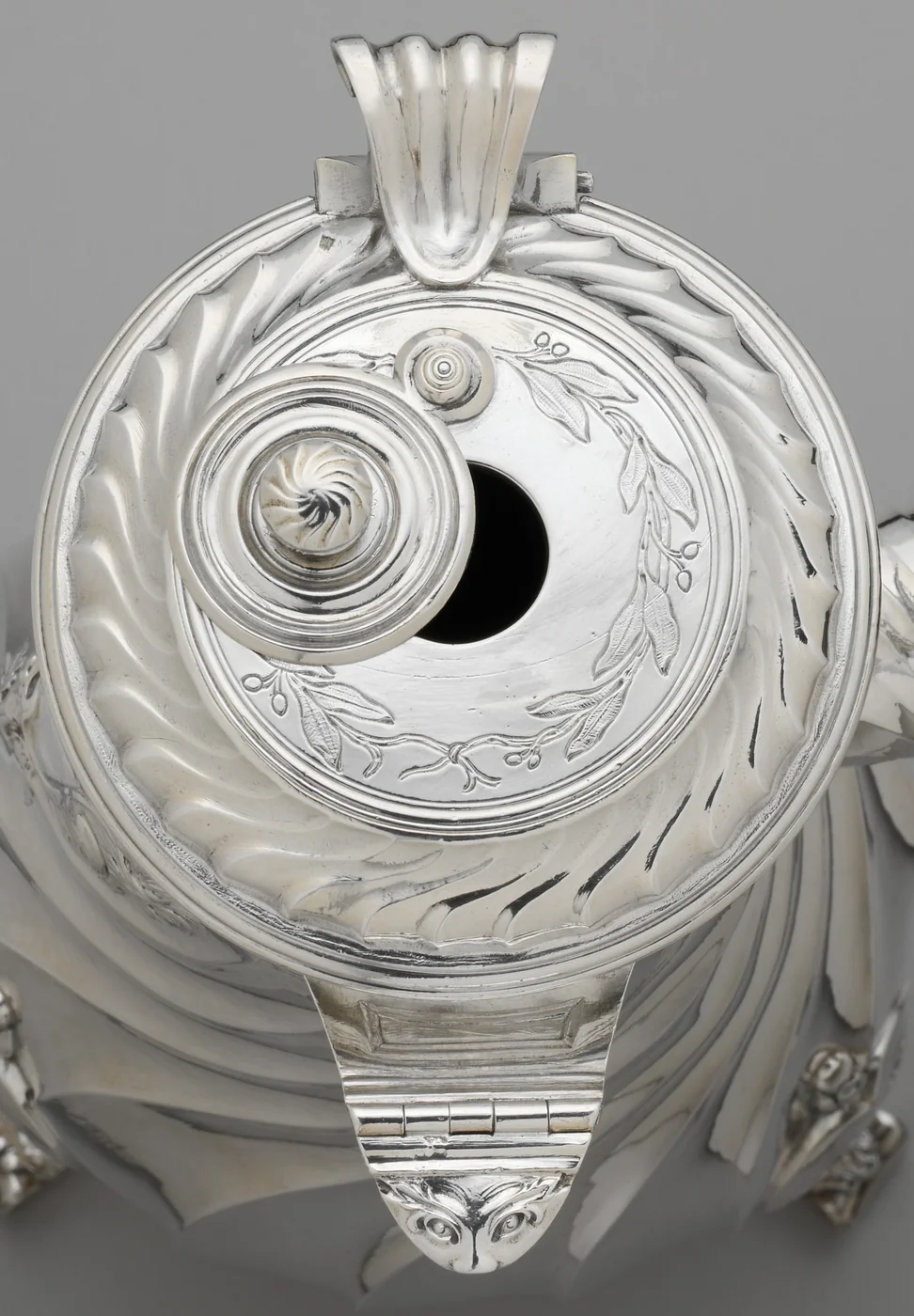
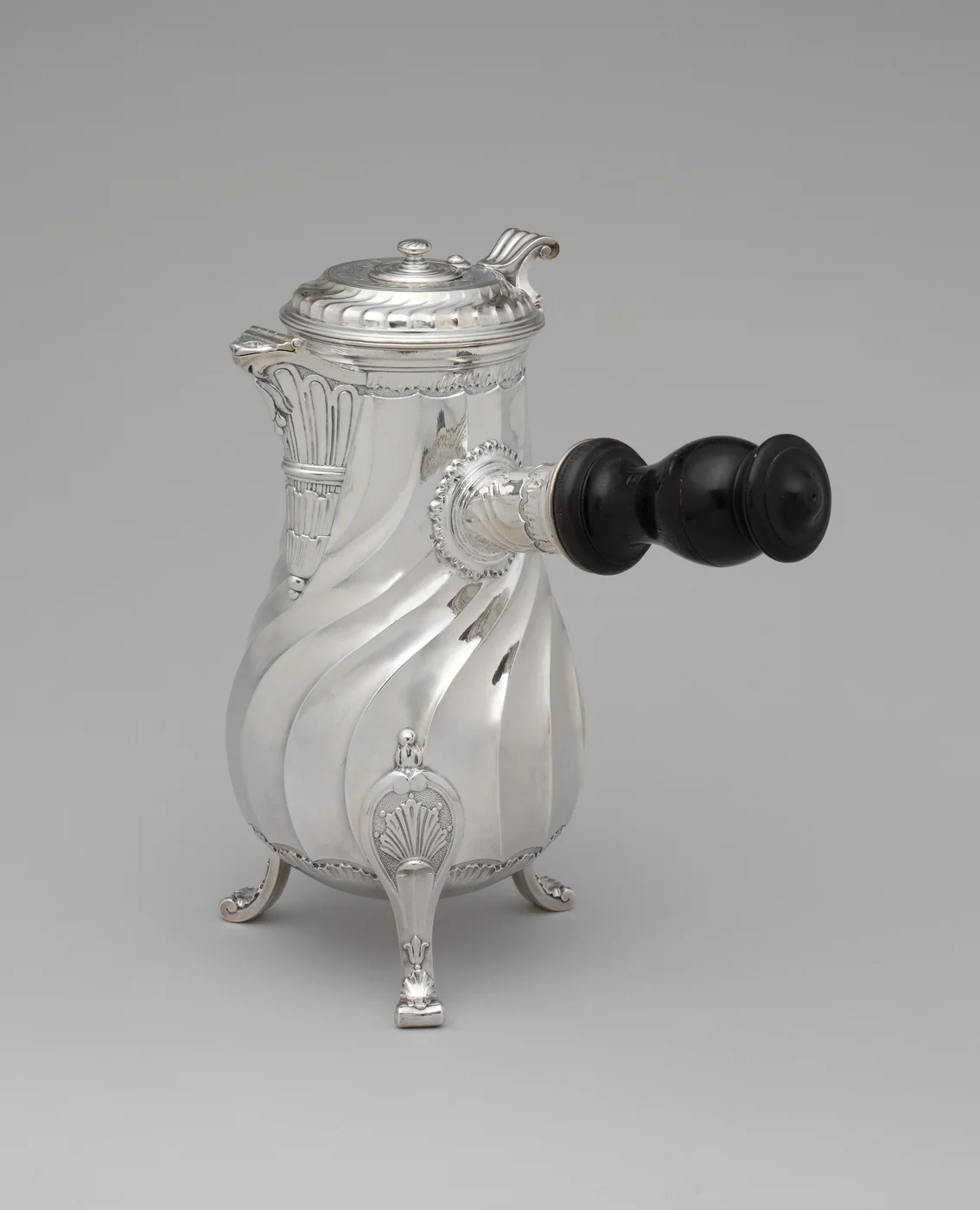
François Thomas Germain’s Paris pot of 1765–66 brings a different silhouette: a swelling body on three feet, flowing channels and a projecting ebony handle. Look down on the cover and the small swivel moves aside to expose the rod opening. The Met calls the design Transitional: Rococo movement meets a more symmetrical, emerging Neoclassical vocabulary.
The Met compares it with Germain’s earlier coffeepot, a useful reminder that a family resemblance does not establish function. The chocolate pot’s lid is evidence to read alongside the museum record. Ebony is part of the object’s material history; the entire gross weight is not silver. It entered the museum in Catherine D. Wentworth’s 1948 bequest.
Tiffany and Osborne: a different kind of brilliance
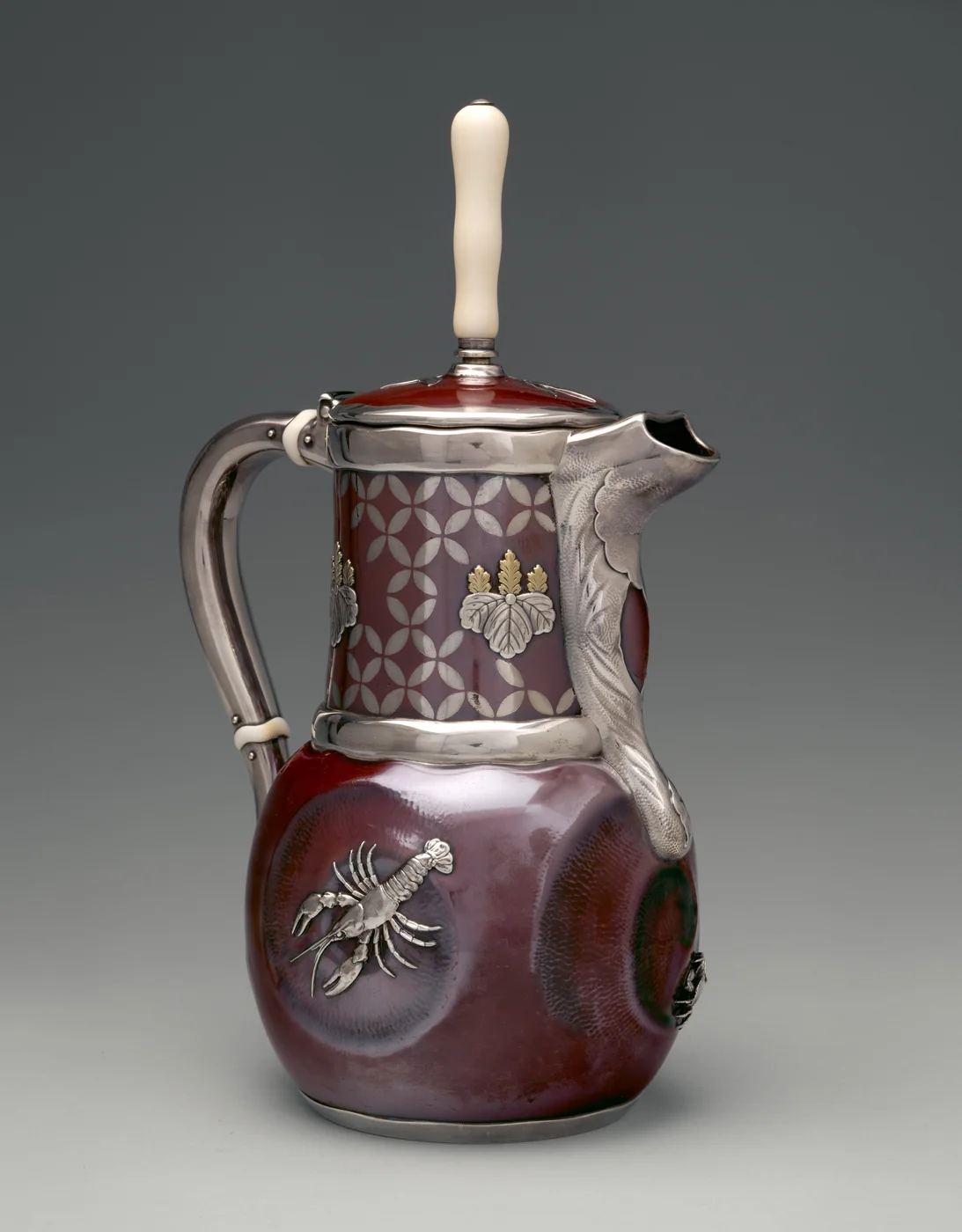
By 1879, Tiffany & Co. and designer Charles Osborne gave the form a dramatically different surface. Spirals and chased leaves meet cast crustaceans, while the red patinated copper plays against silver and gold. The Met identifies the materials as silver, patinated copper, gold and ivory. Its records describe a “Big Belly” chocolate pot offered in more than one version.
Osborne worked with Edward C. Moore at Tiffany; the museum connects their inventive work with an interest in Japanese objects. The piece came to The Met by purchase in 2017 with gifts from the Louis and Virginia Clemente Foundation and Emma and Jay A. Lewis. Its contrasting surfaces are part of the design, not dirt to be polished away.
What to notice before buying or caring for one
Start with the lid and its fit. Is there a documented aperture, a movable cover or a detachable finial? Ask for photographs of the opening, underside, marks, handle junction, spout, foot and any repairs. Compare with dated examples from the same maker and place. A hole or side handle is a clue, not a certificate of identity.
Record material claims for each component. Wood, ebony, ivory, mixed metals, solder and replacements complicate both care and silver-weight calculations. Do not force a stuck mechanism or polish patinated surfaces. Seek a conservator’s advice when surfaces or fittings are fragile; check applicable ivory rules before any sale or shipment.
Ask whether a lid, finial, chain or rod is included and whether its association is documented. Missing and replaced parts are worth describing accurately. A maker’s mark, provenance, condition and quality of workmanship can matter as much as weight. Enjoy the difference between a well-supported story and a confident sales label.
Sources & further reading
Reviewed November 15, 2026. Museum records, official guidance and historical auction results answer different questions. They do not authenticate or appraise a privately owned object. Museum photographs used here are Public Domain under the Met’s CC0 Open Access terms. Images were resized proportionally without cropping or retouching. No institutional endorsement is implied.
- Smithsonian: The Power of Chocolate
Cacao and its Mesoamerican history.
- Smithsonian: Chocolate and Other Colonial Beverages
Changing recipes and settings for drinking chocolate.
- The Met: Coffee, Tea, and Chocolate in Early Colonial America
Beth Carver Wees, 2003. Beverage forms and the late-eighteenth-century American matched service.
- Smithsonian: Chocolate Preparation
Historical preparation and milling.
- The Met: Germain Lid photograph and object record
Public-domain work and image; Met Open Access, CC0. See the object record for the full catalogue.
- The Met: Dighton photograph and object record
Public-domain work and image; Met Open Access, CC0. See the object record for the full catalogue.
- The Met: Winslow photograph and object record
Public-domain work and image; Met Open Access, CC0. See the object record for the full catalogue.
- The Met: Winslow Arms photograph and object record
Public-domain work and image; Met Open Access, CC0. See the object record for the full catalogue.
- The Met: Germain photograph and object record
Public-domain work and image; Met Open Access, CC0. See the object record for the full catalogue.
- The Met: Tiffany photograph and object record
Public-domain work and image; Met Open Access, CC0. See the object record for the full catalogue.