
Silver is part of the whole
Silver can be a line, a dusting of light or a carefully shaped fitting. In Japanese decorative arts, it often works in conversation with dark iron, lustrous lacquer, gold or ceramic. These small objects reward a collector’s eye for surface and construction as much as any solid silver vessel.
The selections below are individual museum objects, not a survey of every Japanese tradition. Their dimensions are modest: the gourd box is 9.2 cm long, the porcelain burner only 6 cm high with its cover. Scale turns tiny differences in texture and reflection into the subject.
Iron, silver and the gourd
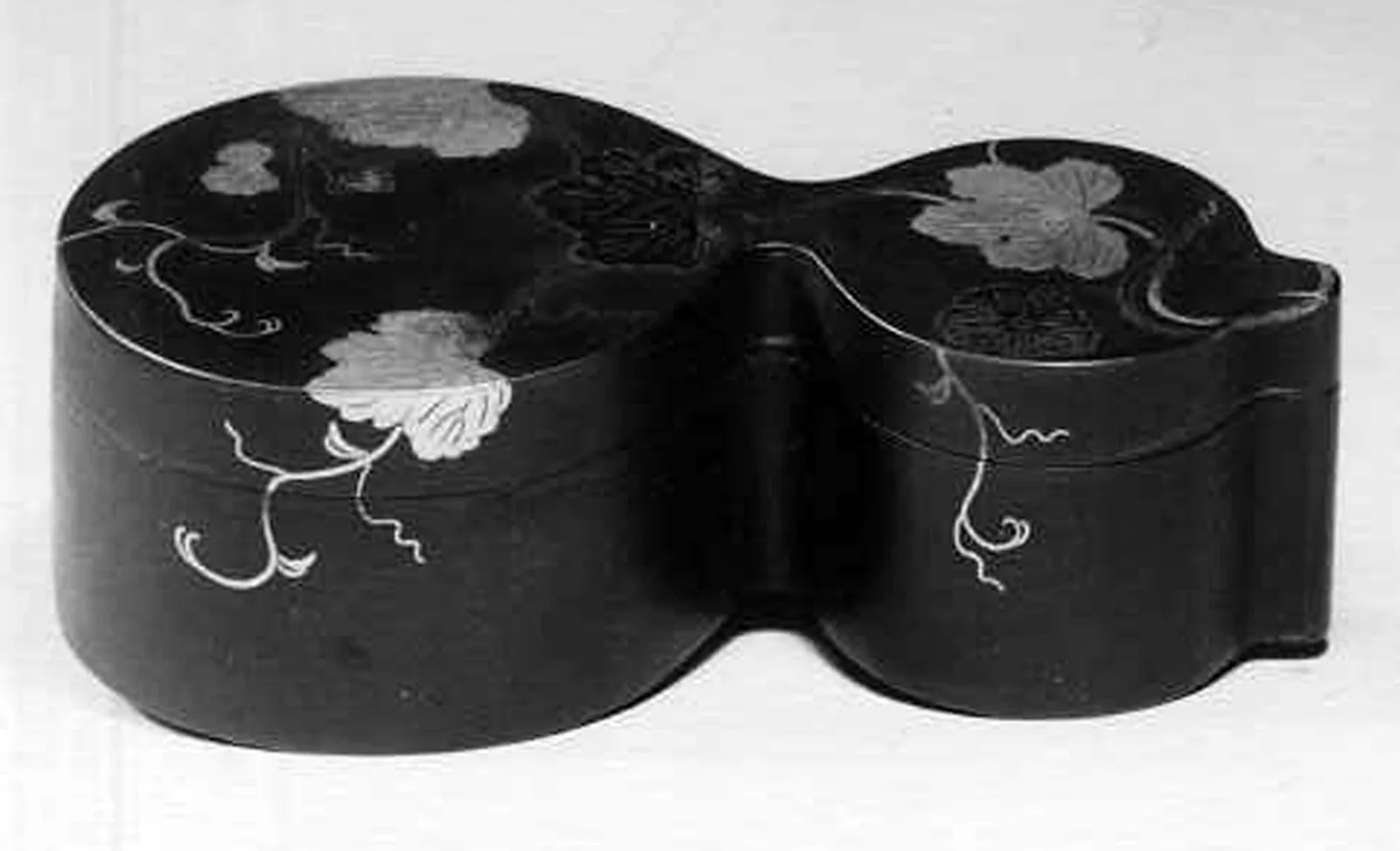
On the gourd-shaped box, the maker cut fine crosshatching into iron and hammered sheets of gold and silver of varying compositions into the prepared design. The result lies flush with the surface. Silver is inlay in an iron box, not the material of the whole object. The Met compares the effect to sprinkled-gold lacquer.
Metal in lacquer
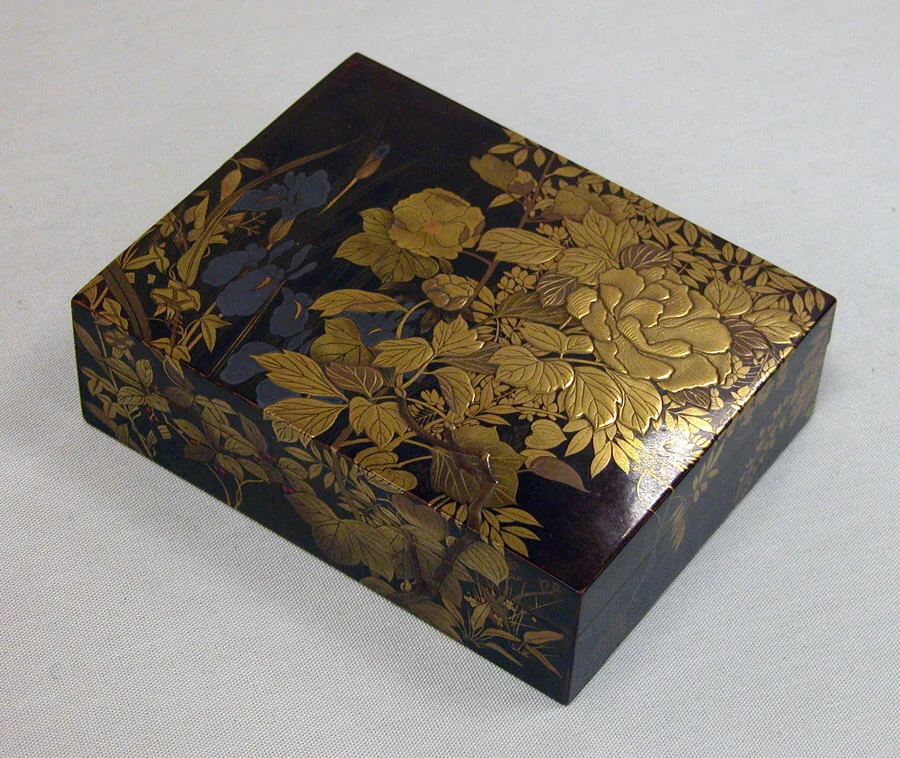
In maki-e, often translated “sprinkled picture,” gold or silver powder is sprinkled onto lacquer while it is still damp. Here silver and gold are part of the lacquer decoration, not a separate solid-metal case. The Kajikawa School box carries peonies, iris, morning glories and wisteria; The Met identifies it as 19th century and Meiji period.
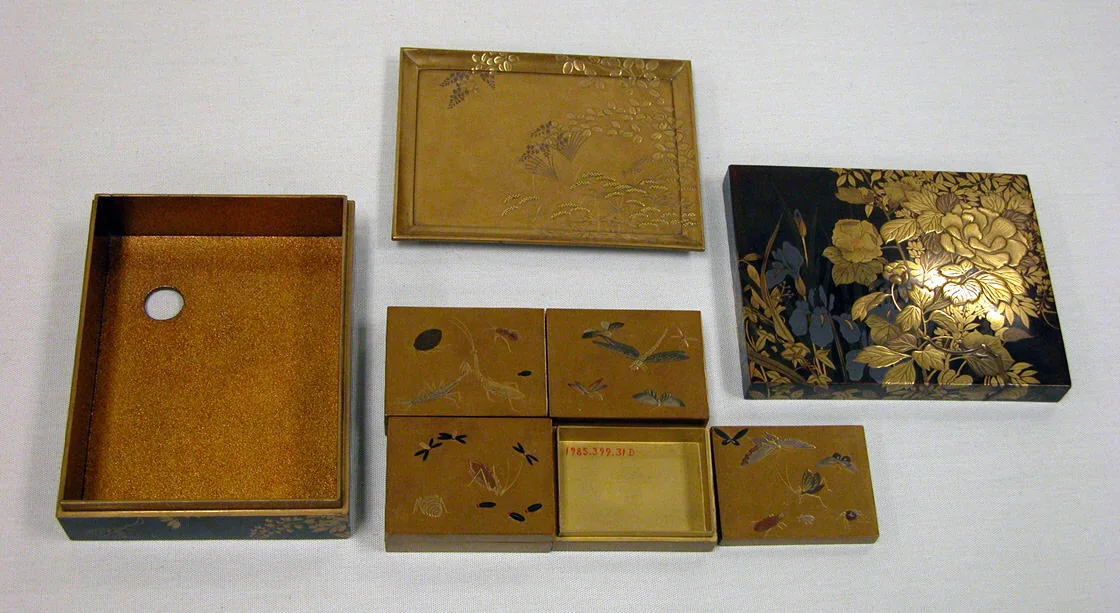
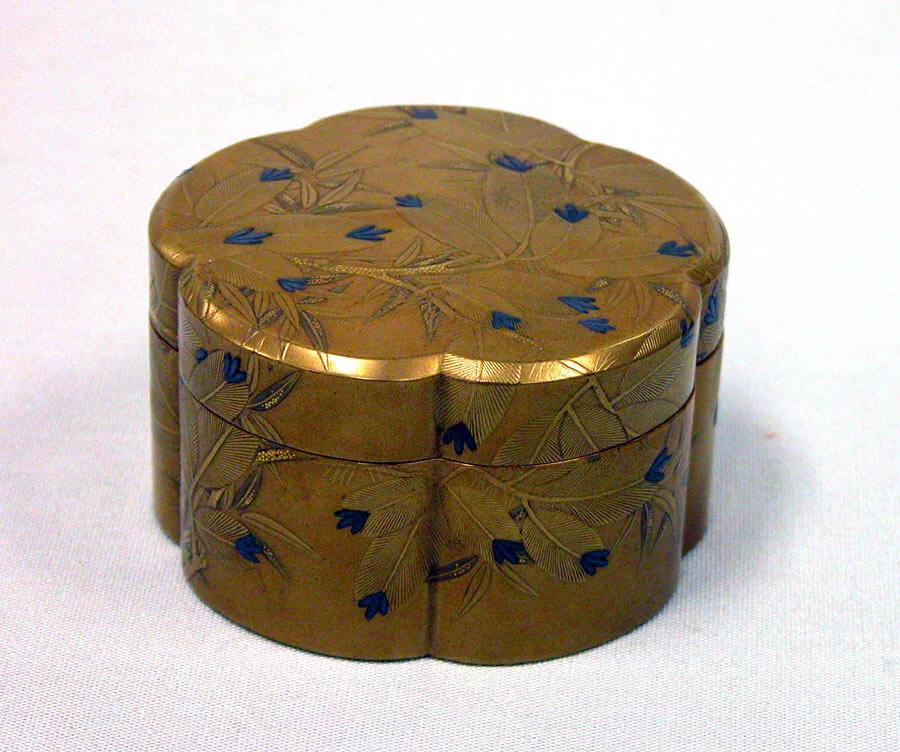
On the pine box, the museum identifies hiramaki-e (flat sprinkled decoration) and takamaki-e (raised sprinkled decoration), as well as cut-out gold foil. Flat and raised areas offer different ways to catch light. The record lists both gold and silver in its medium; it does not map every metal to a specific visible branch.
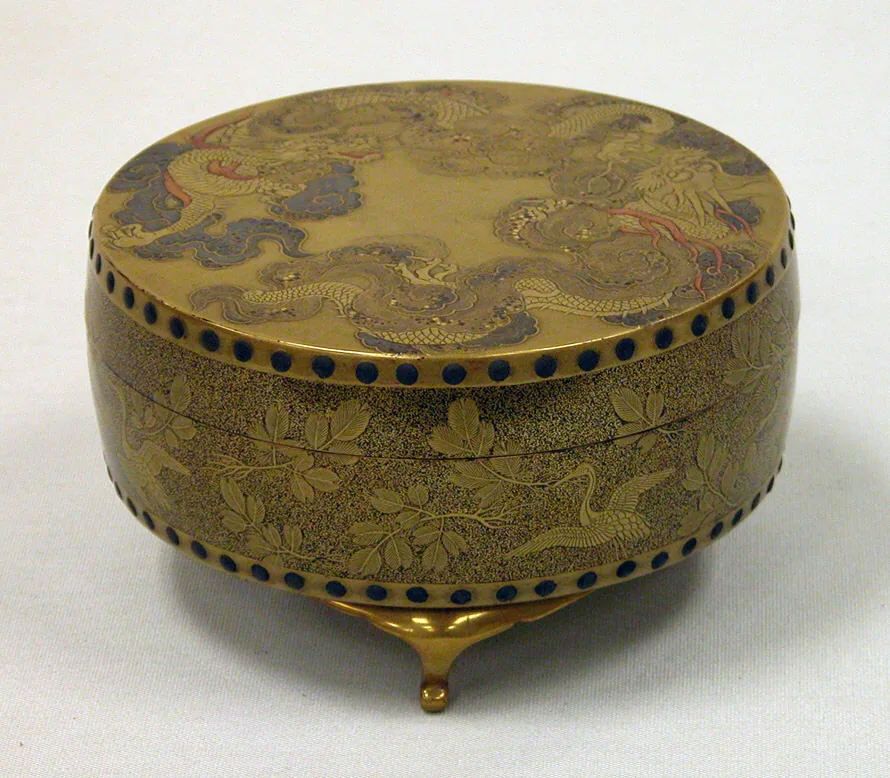
The round incense box and tray is also lacquer with gold and silver. Its full material description matters: a gleaming gold-colored field is not evidence that the body is gold, nor does a cool detail alone establish its composition.
A writing desk in a box
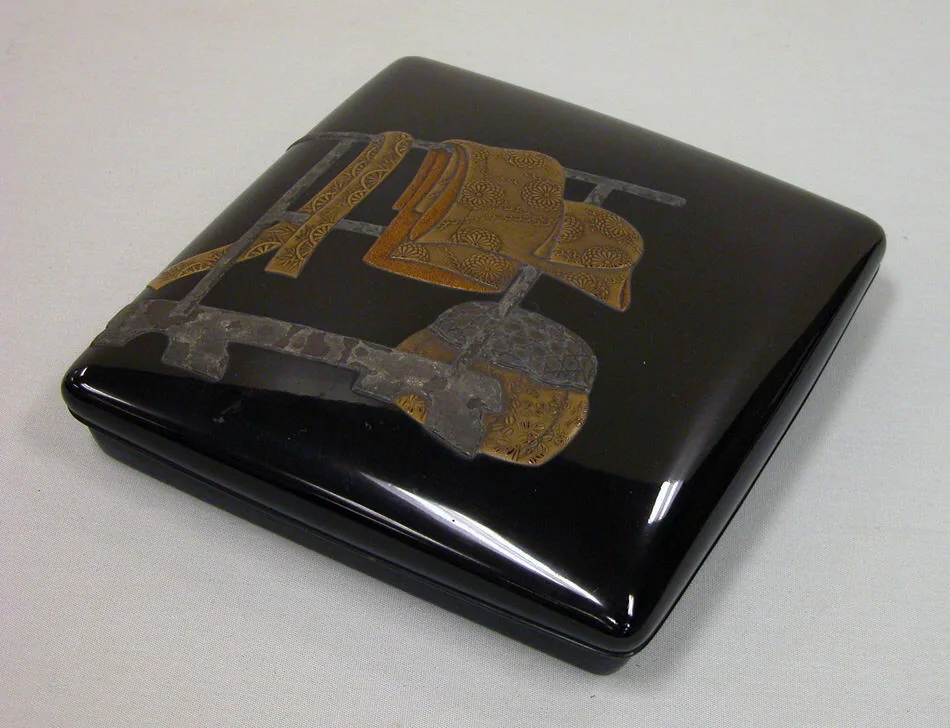
This lacquer box depicts a kimono on a rack and an incense burner. Its contents, including a tray, water container, ink tray and brushes, make it a miniature working environment. The museum records lacquer with silver and gold without identifying the composition of each motif or fitting.
Ceramic and silver together
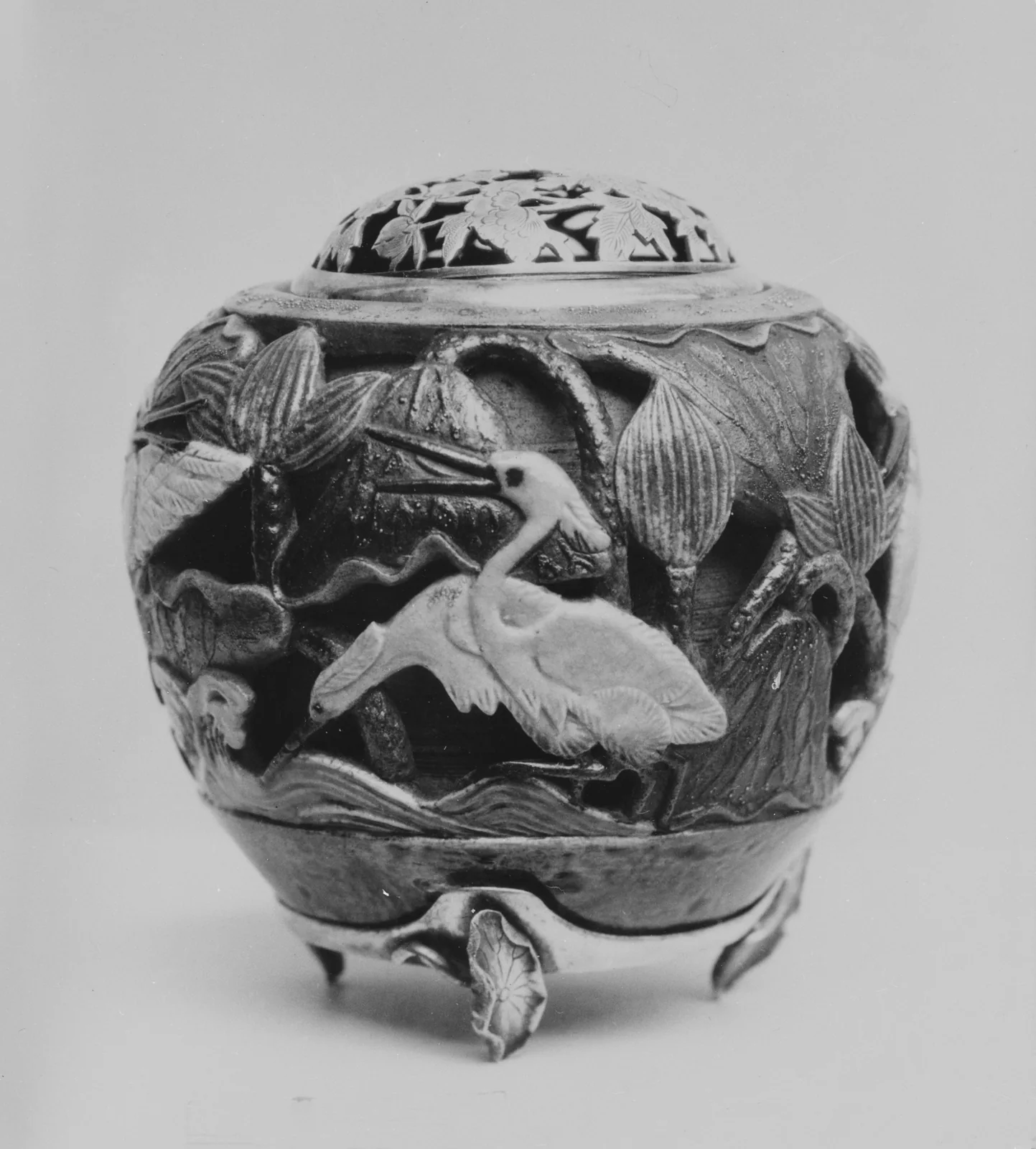
The body of this incense burner is porcelaneous ware; its stand and cover are silver. The metal gives the ceramic a supporting frame and a distinct lid. Compare the dark patterned body with the lighter openwork cover and feet. The museum’s approximately 1780 date is an estimate, not a precisely documented year.
Incense objects can belong to varied social and artistic settings. A function involving incense does not by itself establish a religious use for any one of these examples.
What to record
Record each material, the object’s dimensions and which parts are present. A box, its lid and an interior tray can be separated over time; photographs of the exterior and interior make a useful record. Ask for provenance and condition information, especially around edges, joins, lacquer losses and metal inlay.
Do not apply silver polish to a composite surface: lacquer, ceramics and adjacent metals may react differently. Consult a conservator experienced with the materials. Continue with materials and construction, the care guide, and object-record worksheet. For another Japanese metalworking tradition, see articulated animals; compare trade and workshop context in Chinese export silver.
Sources & image rights
The Met’s object records identify the works and mark these photographs Public Domain. Its Open Access policy permits unrestricted commercial and noncommercial use of public domain images. Dates and descriptions follow the museum as checked 15 November 2026.
- Gourd-shaped Incense Box · 68.26.1a, b
- Incense Burner · 25.60.21a, b
- Box for Writing Implements with Design of Kimono on Rack and Incense Burner · 57.110a–h
- Box for Incense with Design of Peonies, Iris, Morning Glories, and Wisteria · 1985.399.31a–g
- Incense box with pines · 14.40.829a, b
- Incense box with tray · 29.100.698
- The Met: Lacquerware of East Asia and techniques
- The Met: image resources and Open Access