
A shape and a surface
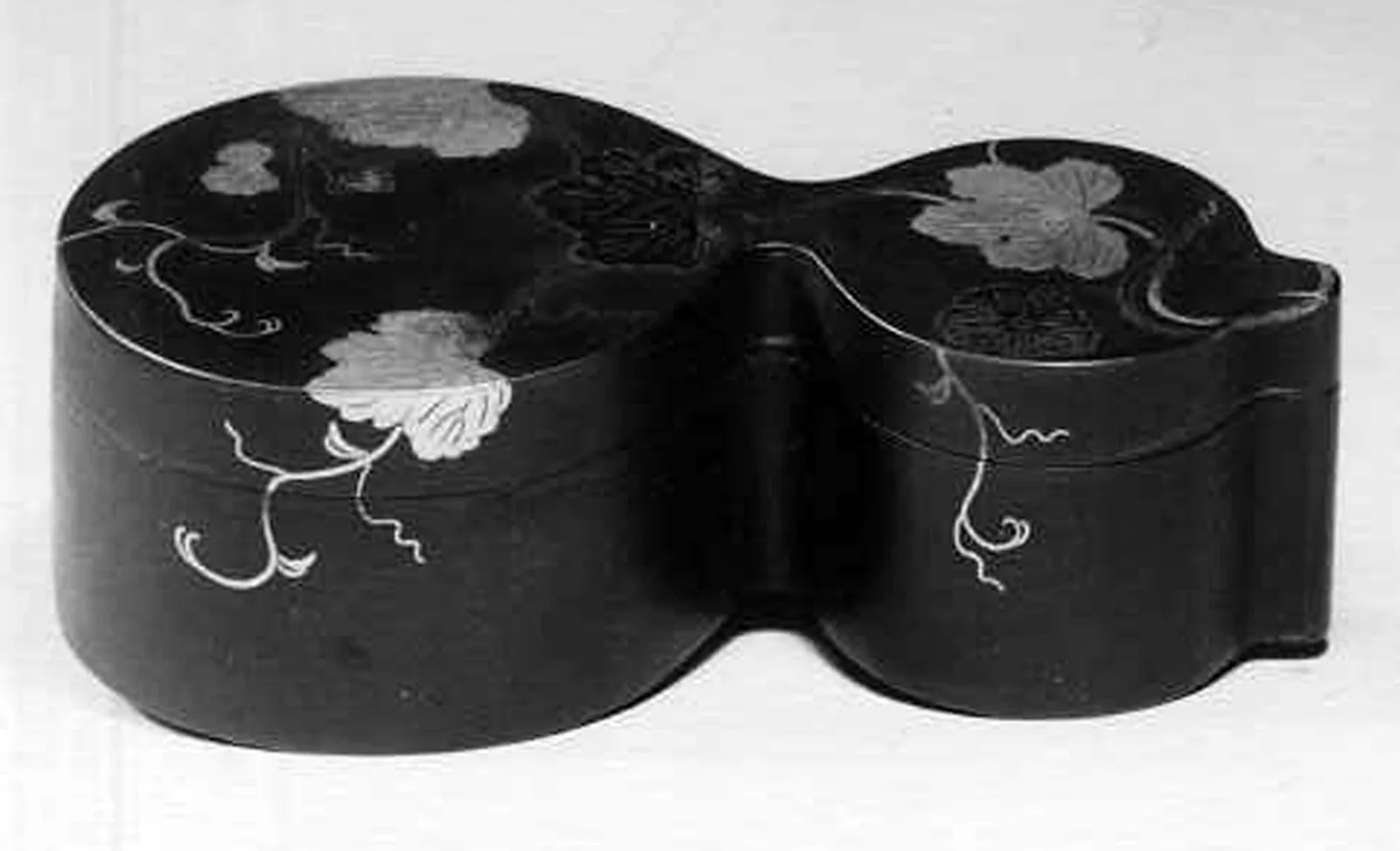
The Met dates this Japanese incense box to the 18th century. At 9.2 cm long, it is a compact piece of metalwork. The double gourd is an auspicious form; a flowering vine travels across the lid and sides, connecting the shape to its decoration.
How the silver meets the iron
Look closely at the pale lines against the dark metal. The museum describes fine crosshatching chiseled into the iron, followed by sheets of gold and silver, in varying compositions, hammered into the prepared areas. That mechanical grip allows the inlay to sit flush. The contrasts are made from different materials, not simply an engraved line catching light.
This is a useful comparison with lacquer. The Met says the finished surface recalls gold-sprinkled lacquer, but the box itself is iron with metal inlay. Similar visual effects can arise from very different construction.
Reading an example
Photograph lid, sides and interior, and record the box and cover together. Examine inlay edges and areas of loss in good light; a dark patch may reflect condition, finish or photography, and cannot be diagnosed from a single image. Keep the museum’s material description intact and avoid assigning a fineness or silver weight the record does not provide.
Return to the lacquer comparisons or explore materials and construction.
Sources & image rights
The Met’s object records identify the works and mark these photographs Public Domain. Its Open Access policy permits unrestricted commercial and noncommercial use of public domain images. Dates and descriptions follow the museum as checked 15 November 2026.
- Gourd-shaped Incense Box · 68.26.1a, b
- Incense Burner · 25.60.21a, b
- Box for Writing Implements with Design of Kimono on Rack and Incense Burner · 57.110a–h
- Box for Incense with Design of Peonies, Iris, Morning Glories, and Wisteria · 1985.399.31a–g
- Incense box with pines · 14.40.829a, b
- Incense box with tray · 29.100.698
- The Met: Lacquerware of East Asia and techniques
- The Met: image resources and Open Access