
One metal, many histories
A pierced pin, a vessel that whistles and a cup with official marks ask us to look at silver in different ways. Some clues explain how an object worked. Others connect it to a workshop, a ceremony or a person. The most interesting detail is often the one that makes a familiar label feel incomplete.
These six museum objects offer a focused route through parts of the Andes, colonial Mexico and colonial New York. They are not a single tradition or a complete history of the Americas. Their dates, communities and circumstances differ, and a modern country name does not identify an individual maker or Indigenous community.
Follow three questions as you look: What could this object do? How was it made? What evidence supports its name? The photographs show whole objects as well as one close view of marks. Each caption links to the exact museum record so that a short description can lead to fuller research.
A garment pin with an uncertain origin
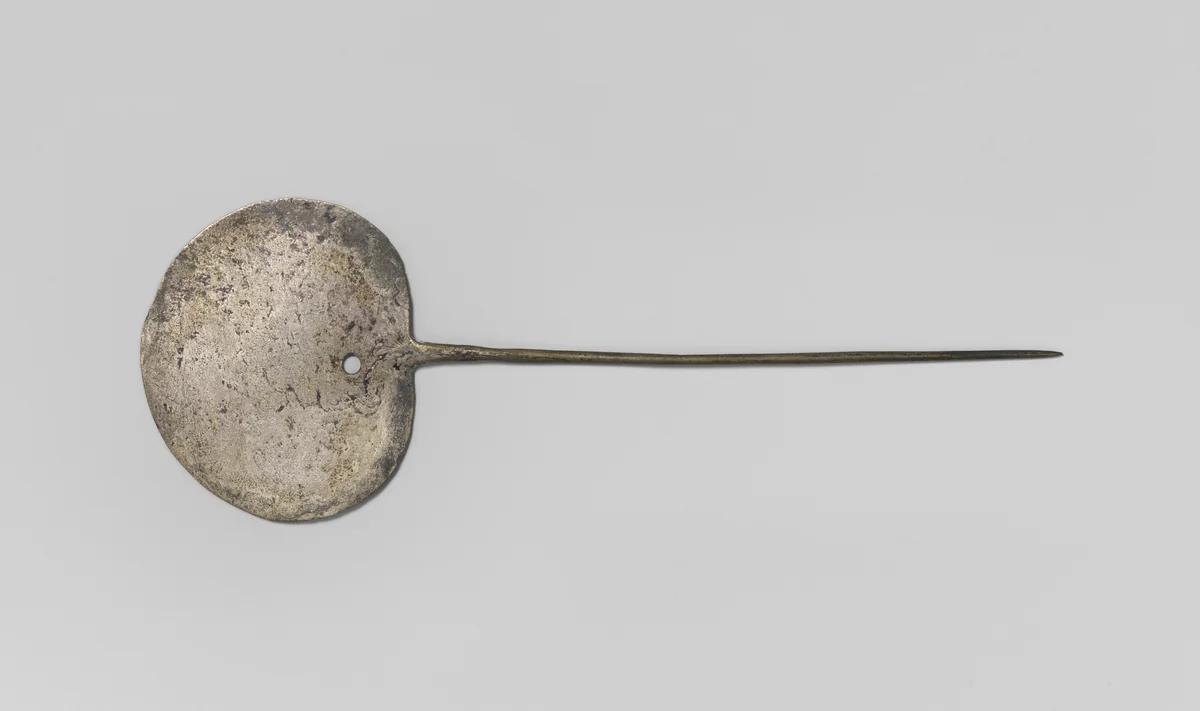
The small hole in the broad head gives this silver pin a useful clue. A cord could pass through such perforations; the pointed shaft fastened a textile garment. The Met describes this tupu as hammered from one piece of metal, with the head flattened and the hole punched afterward. Heating between bouts of hammering was likely part of the process.
The museum catalogues it as Wari or Inca, before the sixteenth century. Its curatorial essay makes the uncertainty explicit: this form occurs widely across the Andes, its archaeological context is unknown, and even a specifically Peruvian origin cannot be assumed. A possible relationship with another museum pin does not establish that the two were excavated or worn together.
Keep that broad attribution intact. The undecorated head offers evidence about construction and use, but it cannot supply the name of a community. Compare the later Peruvian ttipqui: its spoon-shaped head belongs to a garment fastener too. A silhouette can invite a comparison without settling an identification.
A vessel that could make a sound
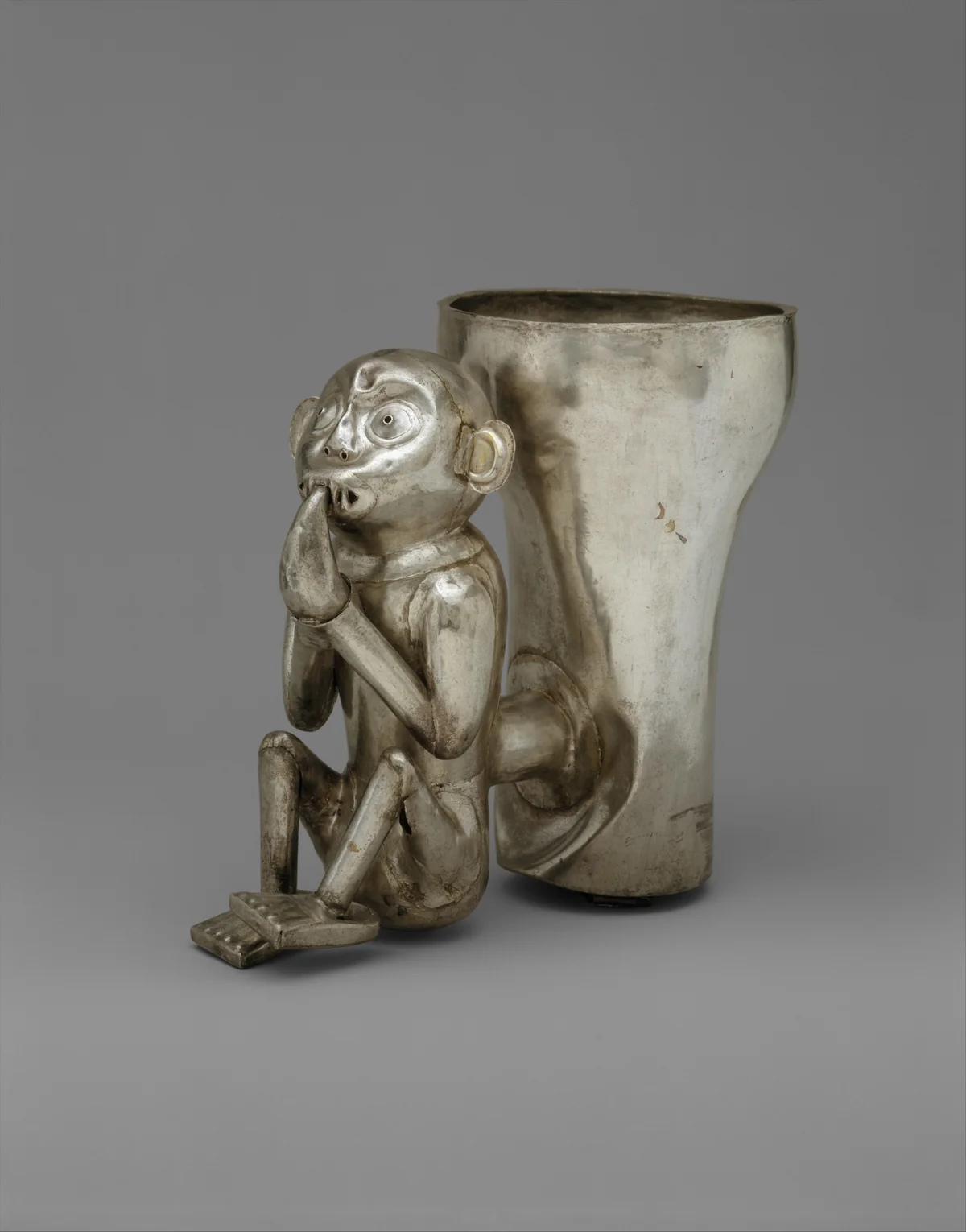
A short tube joins the beaker to the seated monkey. The smooth outline conceals an elaborate assembly: the Met records twenty-four pieces of silver sheet, joined mechanically and with solder. Both chambers are hollow. Moving liquid displaced air through a whistle inside the head, with sound emerging through openings in the monkey’s face.
Chimú artists on Peru’s North Coast made the vessel in 1350–1470 CE. The museum considers chicha, or maize beer, its likely contents and places vessels of this kind within ceremonial drinking. The monkey’s precise significance remains uncertain, and the reported group find is not a securely documented excavation context.
This is a good object for separating construction from interpretation. Its hollow body and whistle explain a working mechanism. A particular feast or a fixed meaning for the animal requires different evidence. Compare the Chimú beaker with a human face, or follow the construction study to see why hollow silver can demand considerable skill.
Mexican chalices: the history of an attribution
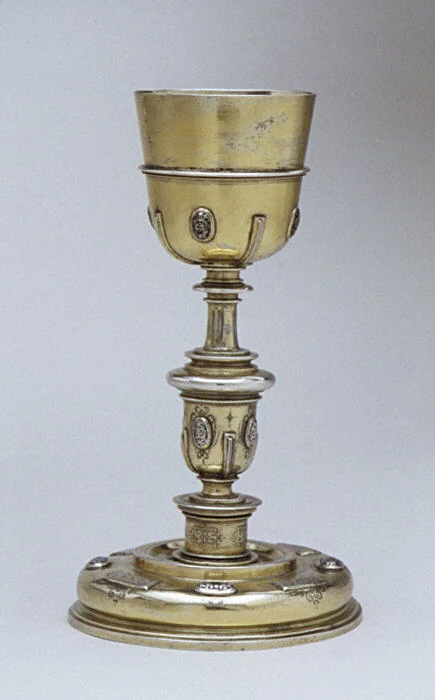
Oval enamel ornaments interrupt the gilded surfaces of this mid-seventeenth-century chalice. Its cup, stem and stepped foot make a measured sequence of expanding and narrowing forms. The material description matters: silver gilt is silver with a gold surface; the yellow appearance is not evidence of a solid-gold vessel.
The Met now identifies the chalice as Mexican, having formerly considered it made in Madrid. That changed attribution is part of the object’s history. Shared styles across the Atlantic can make a confident-looking visual identification misleading. An unfamiliar mark or a later catalogue entry may change the answer.
A chalice belongs to the equipment of Catholic worship. It should not be confused with the monstrance attributed to Diego de Atienza, which displays the consecrated Host and is catalogued as Peruvian, probably Lima. Similar materials and related ornament do not make the two forms interchangeable.
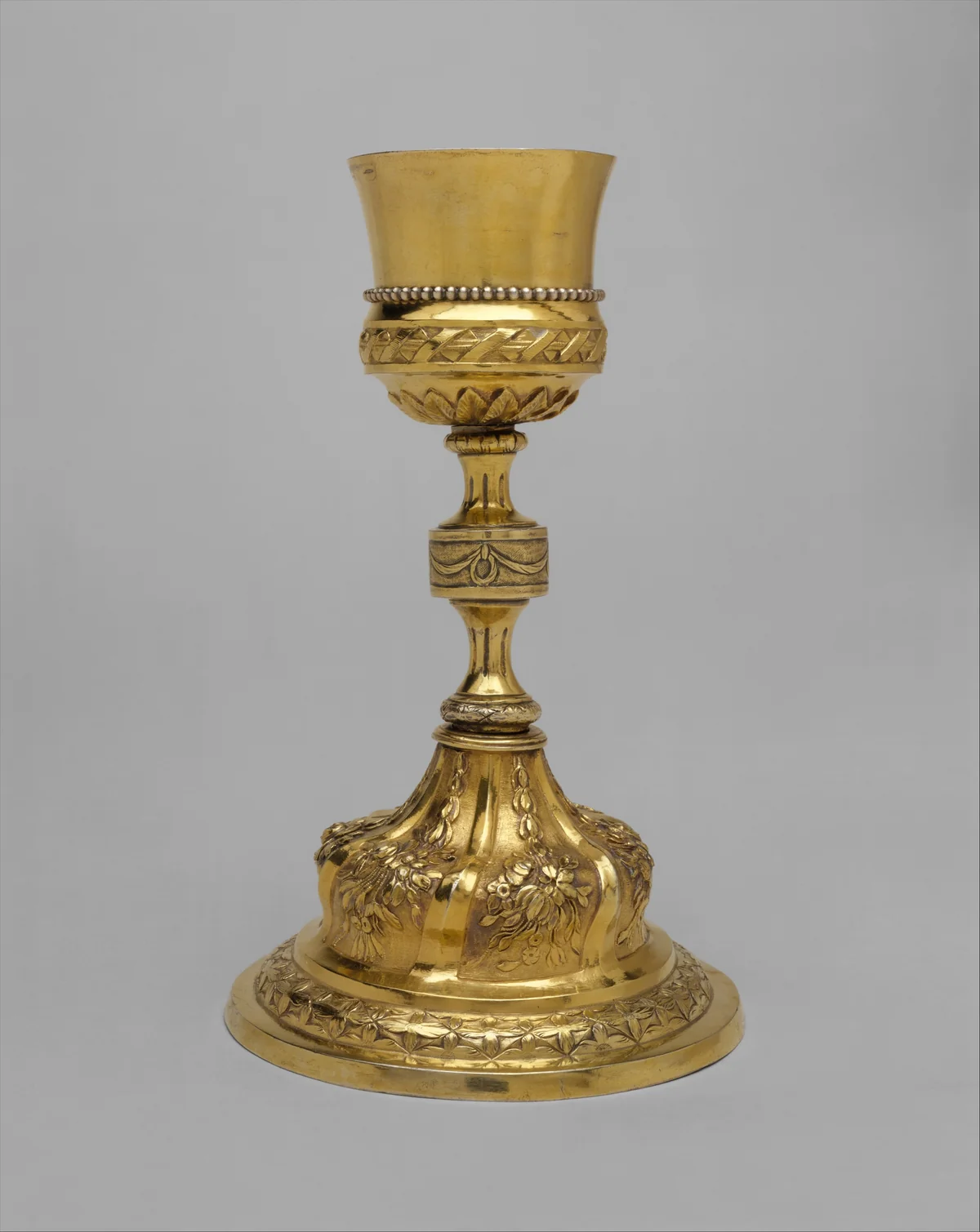
The later Mexican example above appears in the museum under the title Chalice and Paten; this photograph shows the chalice. Dated to the late eighteenth and early nineteenth century, it combines a beaded band around the cup with a substantial central knop and a richly worked foot. Look next at the marks rather than assigning the object to the first named person in its record.
An assayer’s name is a different kind of evidence
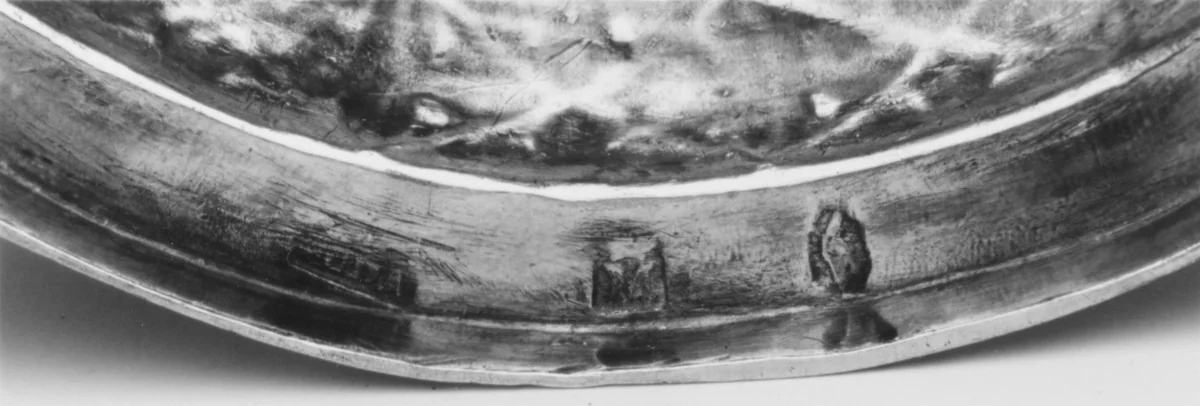
The close photograph shows three marks on the later chalice’s foot. In her study of the object, curator Johanna Hecht identifies a crowned M, an eagle and FCDA, associated with Antonio Forcada y la Plaza, assayer in Mexico City from 1790 to 1818. The marks helped correct an earlier Madrid attribution.
The museum names Forcada as assayer. That role concerns official examination of the metal; it does not establish that he designed or made this chalice. Record the role with the name. A worn stamp also deserves a photograph of the complete group and its position on the object, not a transcription stripped of context.
For a different unresolved clue, see Robert Cruickshank’s Montreal salt. Its engraved arms remain unidentified. The maker can be known while the original armorial identity remains an open question.
A small cup, a particular drinking tradition
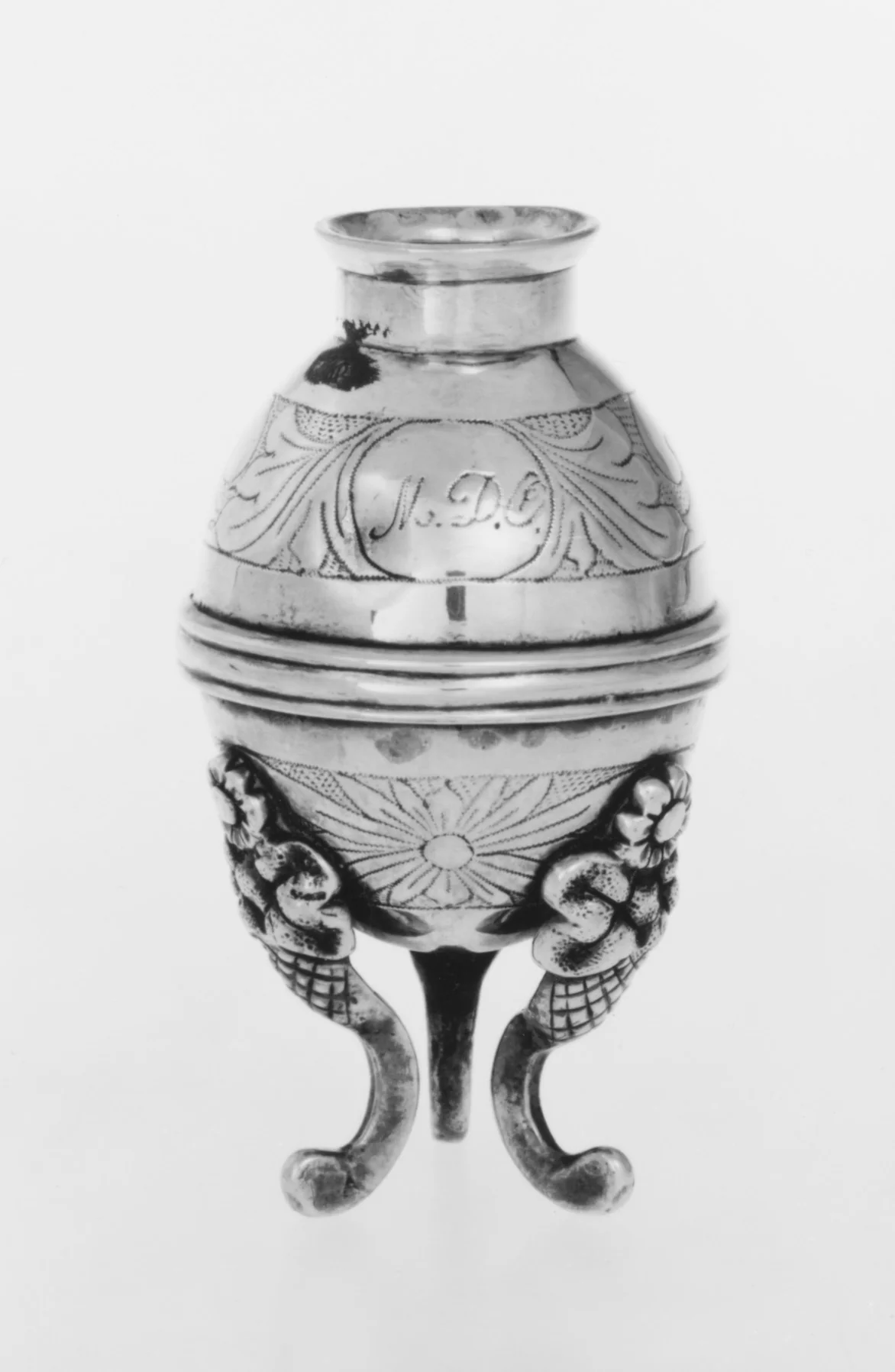
A narrow opening, rounded body and three curved feet give this cup a very different shape from an open drinking bowl. Engraved foliage and a lettered area remain visible in the museum’s black-and-white photograph. The Met catalogues it as a Bolivian silver maté cup of the late eighteenth century, 11.4 centimetres high. It does not name a maker or original owner.
Maté is a plant infusion traditionally sipped through a bombilla, a specialized straw with a strainer. That general description explains the vessel type; no matching straw is shown or documented with this cup in the record used here. Nor does the catalogued national attribution identify its maker’s community.
For a collecting record, begin with the narrow mouth, the supports, the engraved decoration and the measurements. Keep any proposed reading of the letters separate from a claim about ownership. A useful description can remain detailed even when a personal name has not been recovered.
A New York bowl for a shared occasion
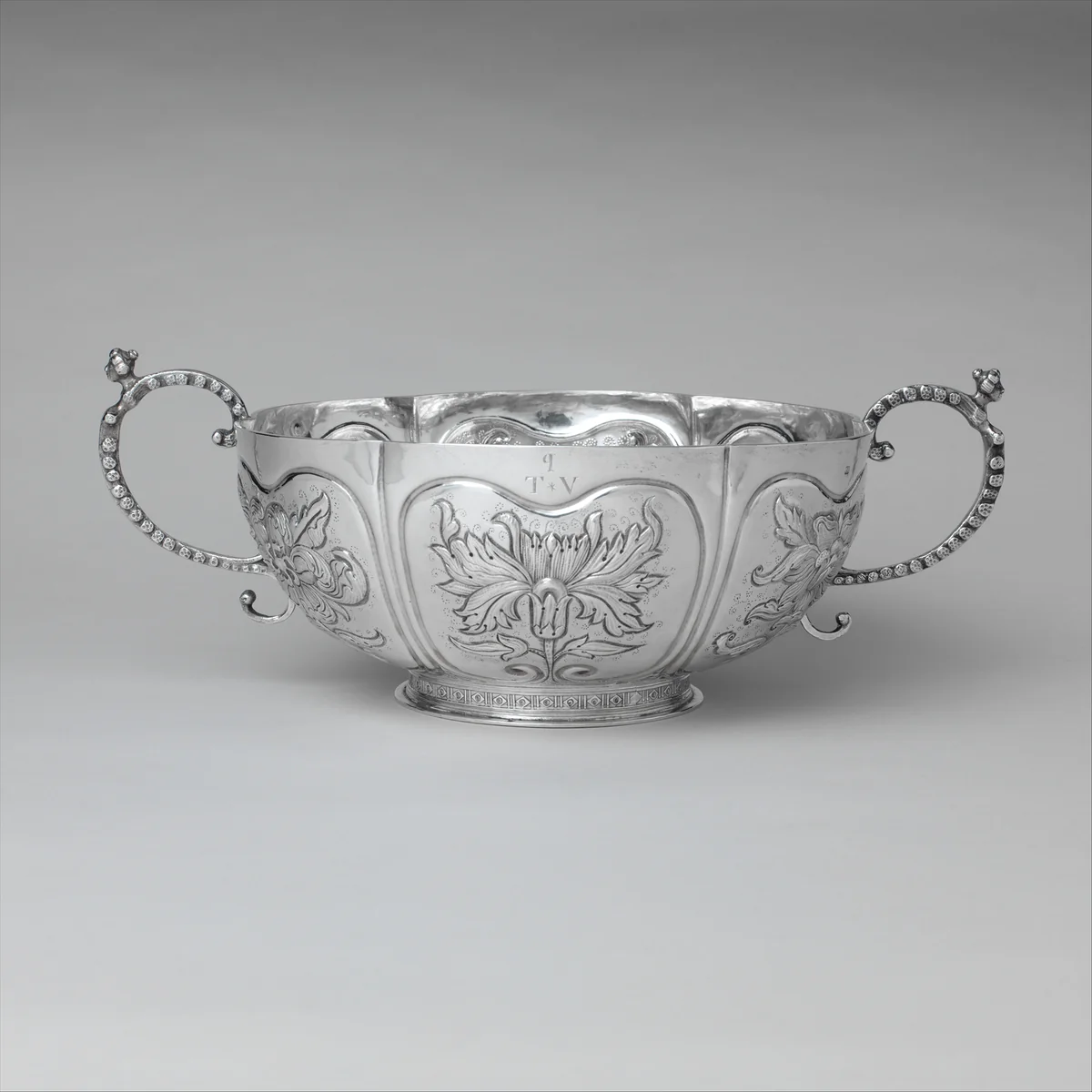
Flowers fill the shaped panels of Cornelius Kierstede’s silver bowl, made in New York in 1700–1710. The Met describes chased floral decoration and cast caryatid handles. The combination is worth noticing: one vessel can bring together worked sheet surfaces and separately cast parts.
The museum connects this form with brandywine bowls passed among guests, holding raisins and brandy. One associated Dutch custom was the kindermaal, a gathering to welcome a newborn child. This explains a tradition, not a documented occasion on which this particular bowl was used.
Here the museum does identify owners: Theunis Jacobsen Quick and Vroutje Janse Haring. That is a different evidential position from the unnamed owner of the maté cup. Record what survives without filling every gap by analogy. The servingware study places the bowl beside other forms made for sharing.
Keep the evidence with the silver
A good object record lets someone else follow your reasoning. Give it room for the photograph, exact wording of inscriptions and marks, dimensions, condition, previous ownership documents and the source of an attribution. Date your notes so that a revised museum record can be compared with the version you consulted.
- Describe first. Record visible features before deciding what they mean.
- Name each role. Maker, assayer, owner and later donor answer different questions.
- Keep uncertainty visible. Retain words such as “or,” “probably” and “attributed to.”
- Preserve the history. A record of ownership or archaeological context needs its own evidence; an old object’s appearance does not supply it.
These museum photographs are useful comparisons, not certificates for similar objects on the market. For archaeological material, investigate documented provenance and the applicable ownership and export history before considering acquisition. Museum ownership and permission to reuse a photograph do not resolve those questions for another object.
Continue with documenting a collection, the Mexican and Taxco jewelry guide, or individual Indigenous North American artists. Those histories deserve their own names and context.
Sources & photograph notes
Open the source records
Reviewed November 13, 2026. The six object records are linked in their captions. Their curatorial essays and catalogue qualifications take precedence over abbreviated labels. The pin’s chronology remains broad: the museum discusses comparisons beginning around 300 BCE and dates this example before the sixteenth century; the gallery uses that broad comparative span, not an exact manufacture date.
- Johanna Hecht, New Identities for Some Old Hispanic Silver, Metropolitan Museum Journal 29 (1994) — changing attributions and the chalice marks, especially figures 16–17.
- The New York Historical: Maté and Bombilla — general context for the infusion and strainer straw; a different object, not evidence of this Bolivian cup’s ownership.
- The Met’s image-use policy — the selected photographs are Open Access, released for unrestricted commercial and noncommercial use under CC0.
Photographs retain their complete source frames and were resized for the web. The earlier enamelled chalice has a smaller original photograph and is presented at a compact size. The close view of marks is a separate museum photograph of the later chalice. Museum credits are retained with each image.