Silver jewelry / A closer look
Silver jewelry: history and makers
Follow an object, a construction method or a workshop through time. Silver jewelry has many connected histories, not one universal progression.

Silver jewelry / A closer look
Follow an object, a construction method or a workshop through time. Silver jewelry has many connected histories, not one universal progression.
A form can connect objects made far apart in time, but resemblance is not a complete history. A ring, an armlet or a suspended ornament may have served different people and purposes. Start with the catalog’s material, place, date range and attribution, then ask how the object was assembled and used. Retain uncertainty where the record retains it.
Use a museum accession number to keep the comparison traceable. Distinguish an excavated context from a later collector’s provenance and an institution’s current attribution. The examples here are specific starting points for looking. They do not stand for every tradition of silver jewelry, and they cannot authenticate a piece merely because it looks similar.
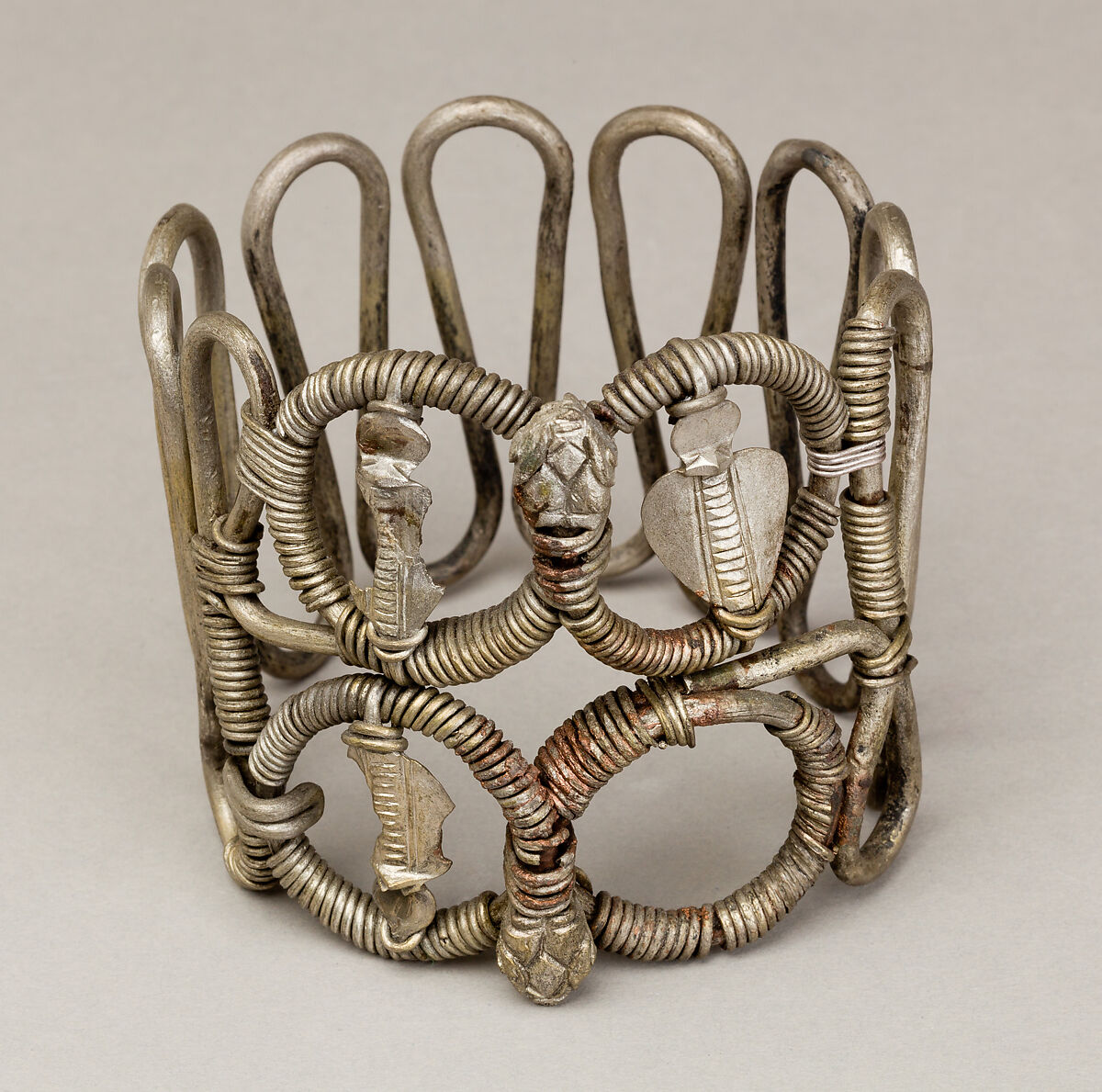
The Metropolitan Museum of Art dates its bracelet or armlet with uraei, accession 26.7.1454, to Roman-period Egypt, 30 BCE–364 CE. Substantial wires are held together by thinner wire bindings. Upright cobra ornaments give the construction a distinct silhouette; one of the original four is missing. The surviving object invites attention to the joins as well as the decorated ends.
The Met notes that the construction could have been achieved without heat or solder. That is a possibility, not proof of the actual manufacturing sequence. The collecting lesson is to look carefully at how parts meet and to keep an interpretation separate from an observed feature. A modern seller’s word “handmade” would not settle those questions by itself.
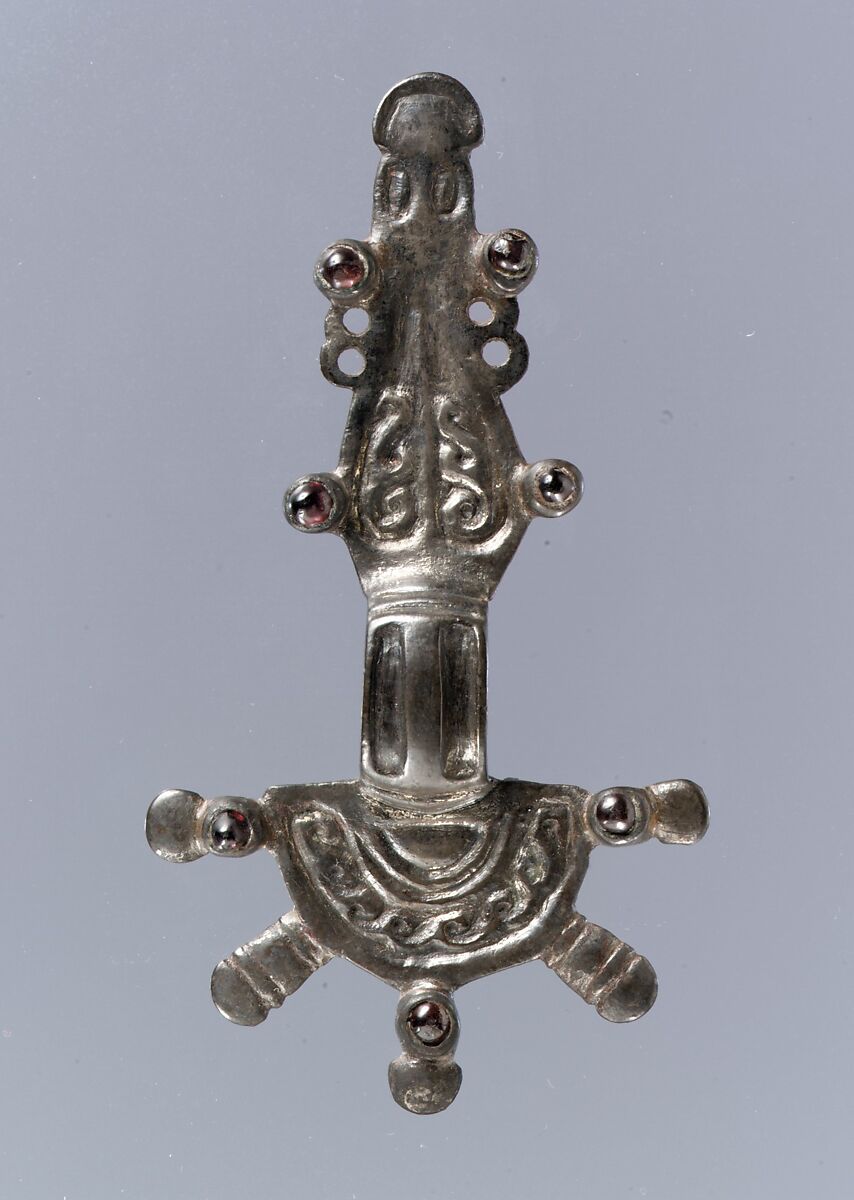
The Met’s Ostrogothic bow brooch, 17.192.150, is dated to the first half of the sixth century and associated with Italy. Its cataloged materials are gilded silver, garnets and cabochons. The decorated front is only part of the object’s design: the raised bow and fastening arrangement also relate to the clothing it held.
Brooches therefore reward a reverse view. Examine what survives of the pin, hinge or catch and note repairs or missing parts. A fitting can be replaced; a single catch style is not a reliable date for every brooch. Our brooch guide follows the relationship between ornament, structure and condition without turning a mechanism into an automatic dating chart.
George W. Shiebler & Co.’s necklace and bracelet at the Met, 2009.110 and 2009.111, are both dated about 1880. Classical profiles appear as repeated ornaments. The necklace’s medallions imitate ancient coins; they are not presented by the museum as ancient coins mounted in a modern necklace. The bracelet uses five panels linked into an articulated band.
These objects show why subject and date must be recorded separately. An ancient-looking head can belong to a later revival design. Before describing coin jewelry, establish whether the component is a struck coin, a replica, an engraved token or a medallion made for ornament. That distinction changes both the historical question and the consequences of mounting or repair.
A designer, workshop, retail house and hallmark sponsor can be different people or businesses. Record each role when it is documented. A familiar house name can cover many collaborators, decades of production and later editions. A design date and the manufacture date of the example in hand need not be the same.
Georg Jensen’s house offers a path through documented collaboration and changing design. William Spratling and Taxco lead into a different workshop history. Tiffany’s record includes the contributions of named designers as well as the retail house. Read these as specific histories, rather than using a national or regional style as a substitute for a maker’s identity.
Regional style alone does not establish an artist’s cultural affiliation. Keep a seller’s attribution separate from a documented mark, provenance or museum comparison. When a name or community cannot be established, record the uncertainty. The deeper guides and profiles below provide sources for further comparison rather than a checklist that certifies an unfamiliar object.