Silver jewelry / A closer look
Silver jewelry: design, attribution and evidence
An interesting shape starts an investigation. A useful attribution depends on the evidence that survives with the particular object.

Silver jewelry / A closer look
An interesting shape starts an investigation. A useful attribution depends on the evidence that survives with the particular object.
Look closely before reaching for a maker’s name. Describe the silhouette, repeated shapes, open spaces and contrasts in color or texture. Rich’s photograph of an ornate ring, with a green center and circular openwork face, offers a good exercise: those visible details can be described without identifying the metal, the green material or the maker from the picture.
Keep observation separate from attribution. Photograph marks clearly, transcribe them as seen, and distinguish a seller’s identification from a documented catalog match. Record the designer, manufacturer and retail house separately when the evidence allows. A familiar style is a reason to investigate, not proof of authorship.
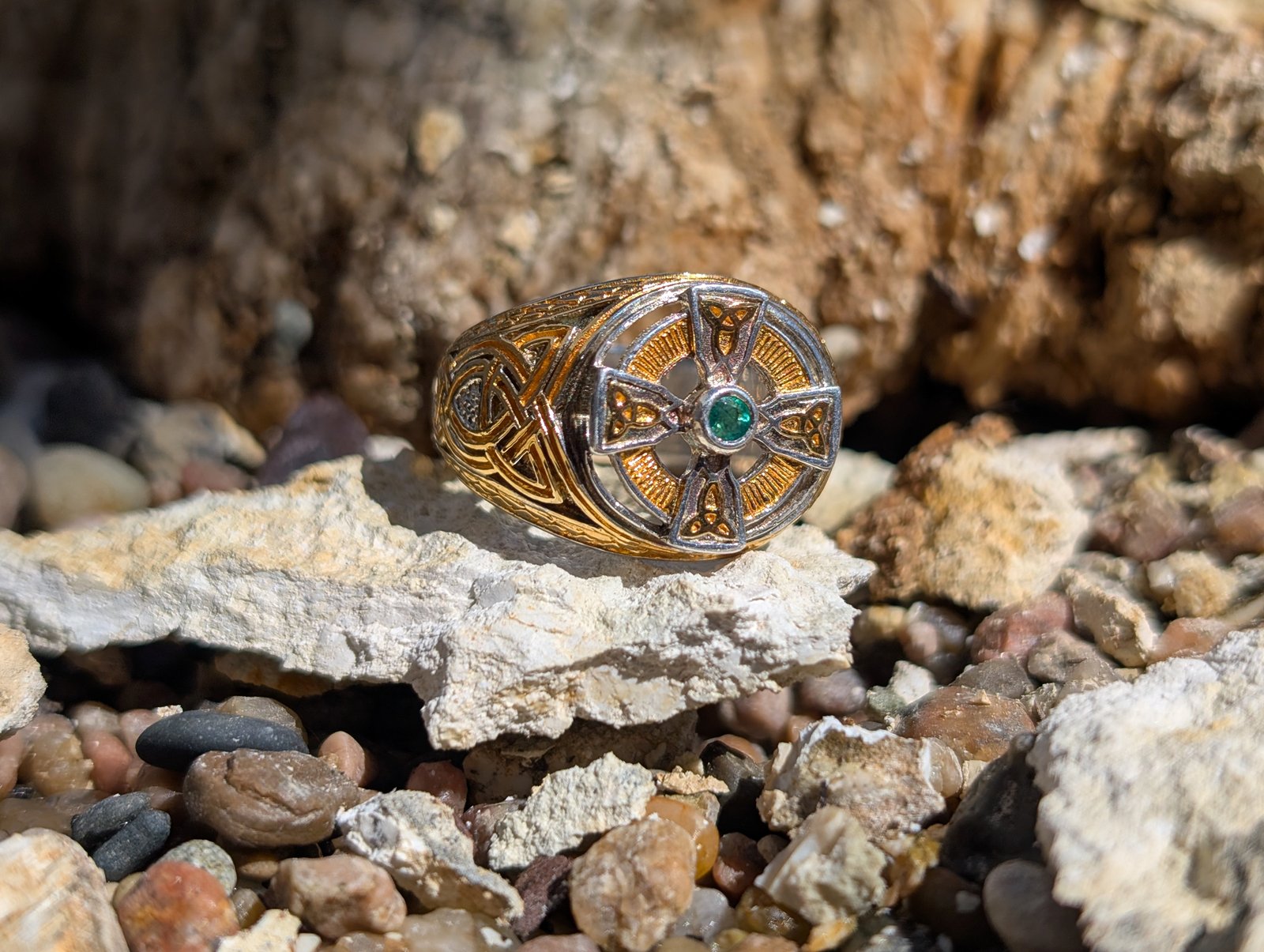
Start with an account that another person could use to recognize the piece: its overall outline, arrangement of parts, dimensions and distinguishing features. Describe the central element, the spaces around it and the way the ornament meets its fastening. For a pair or set, say how many pieces are present and where they differ. Neutral words such as green, transparent, textured or hollow-looking are useful when the material or construction has not been established.
Photograph the face, reverse, edges and each mark. Add a view with a scale, without covering the part being measured. Keep the original files alongside any cropped close-ups. Raking light can help reveal relief, but a photograph made to emphasize texture should not replace a straightforward overall view. Do not polish away a surface simply to improve a picture.
A museum comparison is strongest when you can name the object record and compare specific features. Record the accession number, the institution’s attribution and the date you consulted it. Keep qualifications such as “attributed to,” “about” or a broad date range. A database is evidence to cite, not permission to silently convert uncertainty into a precise maker and year.
The brooch photographs below show why a reverse matters. The front supplies the decorative arrangement; the back supplies the fastening and assembly evidence. Neither view alone establishes that a superficially similar brooch came from the same workshop. Compare dimensions, construction, marks and documented provenance as well as the decorative motif.
A house name and an individual designer answer different questions. An object may have been designed by one person, made by a workshop, sold through a retailer and later repaired by someone else. A sponsor’s mark identifies a responsibility within its marking system; it is not automatically the name of the bench worker. Give each documented role its own line.
Keep the date of a design separate from the production date of the object in hand. A successful design can remain in production or be reissued. A museum’s mid-century design date does not make a newly manufactured example a mid-century object. The modernist guide follows this distinction through documented workshop and designer examples.
For each attribution, write who made it and why: a seller’s description, a legible mark, a catalog illustration or a specialist opinion. A matching initial is not enough if several makers used it. If a mark is incomplete, transcribe the visible part instead of supplying the missing letters. Save the wider photograph so that scale and placement remain available.
When the evidence does not settle the question, an honest description is still useful. “Unidentified maker; seller attributed it to…” preserves the lead without presenting it as fact. ICOM’s Object ID framework offers a helpful baseline for identifying an object through photographs, measurements, materials, markings and distinguishing features. Your research notes can then develop without losing the original observation.