
Before the familiar pocket watch
The early watch was as much a precious portable object as an instrument. Small spring-driven movements allowed timekeeping to travel beyond the room, but their owners were not consulting a modern precision device. The Met’s history of seventeenth-century watches describes the later balance spring as a decisive improvement in their ability to keep time.
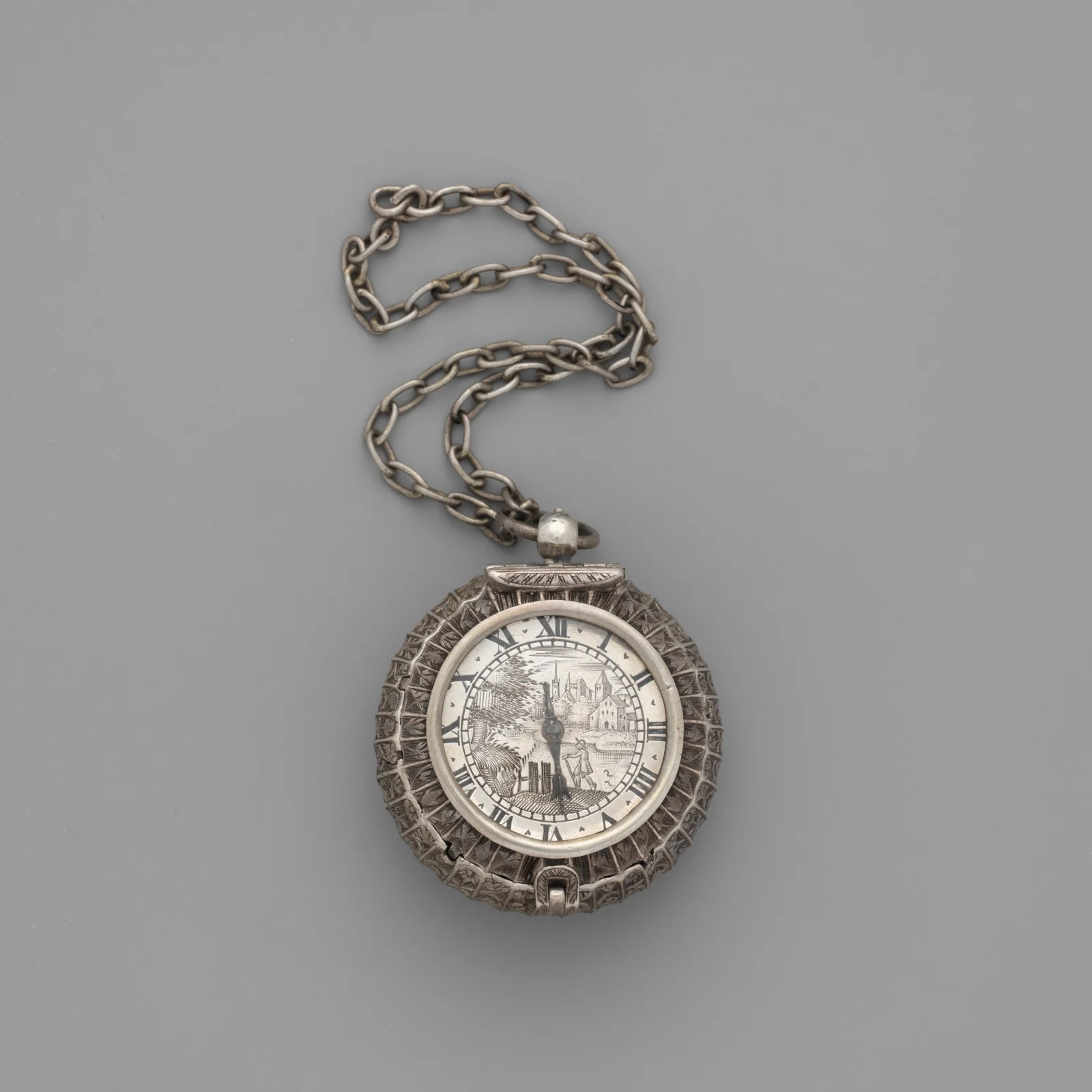
Silver made an expressive setting for that mechanism. Edward East’s London watch and key, dated about 1640, is only 3.3 centimeters across. Its compact scale invites close looking: the loop, the relationship between case and dial, and the separate key are all part of the design. It is not simply a modern watch made old-fashioned by ornament.
When collecting, let early pieces keep their own character. The absence of features expected on a later watch is not necessarily a fault. A specialist can distinguish a period arrangement from a later loss or alteration far better than a checklist built around modern wristwatches.
Read the case shape
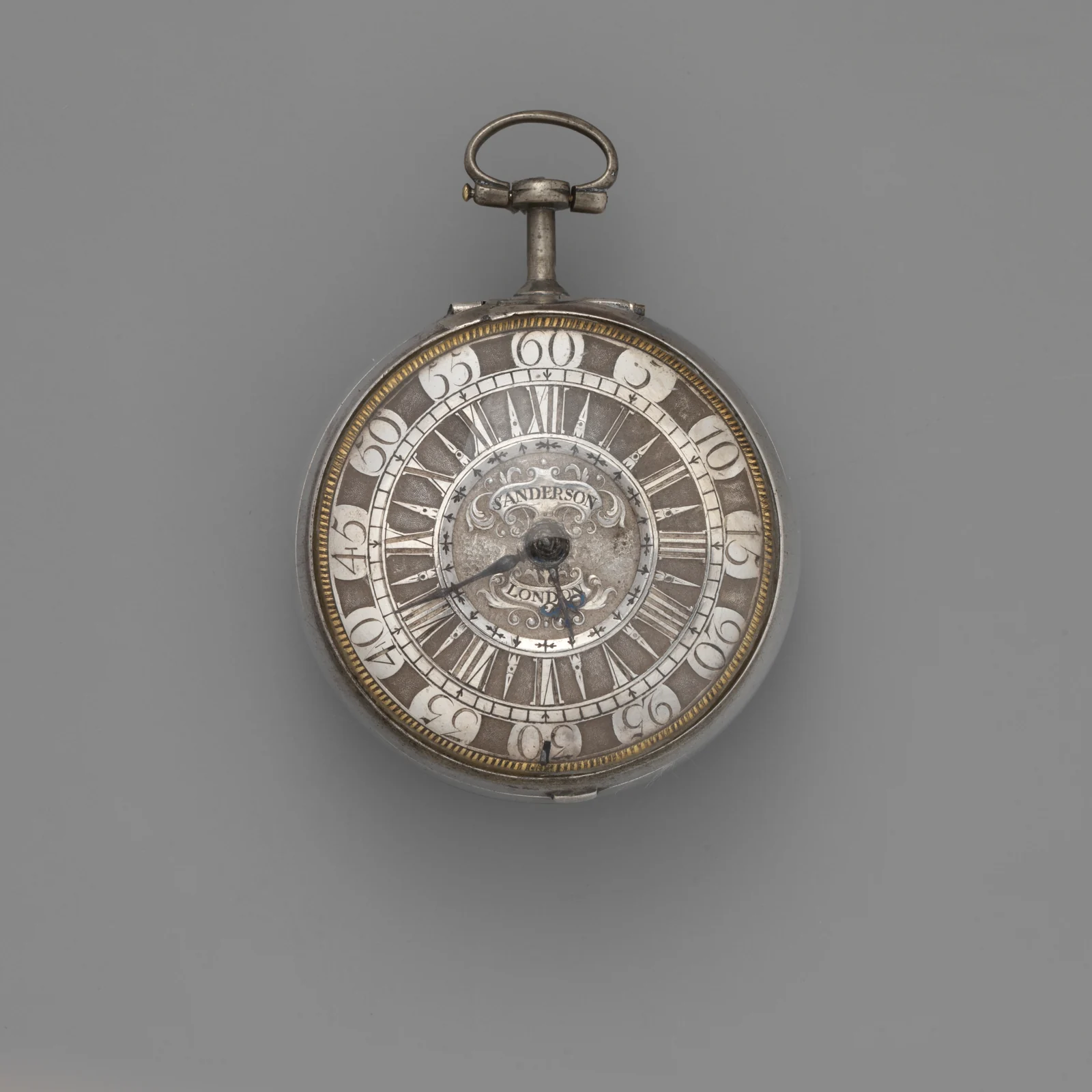
The word pair-case describes two nesting cases: an inner one carrying the watch and an outer one around it. The outside offered another protective layer and another surface for decoration. The Met catalogues Robert Sanderson’s silver watch of 1749 as a pair-case example; the dial view shown here is one view of that assembled object.
Other terms describe how the dial is covered. An open-face watch has no hinged metal front lid over its crystal. A hunter has a protective lid; a half-hunter has an opening through which the hands can be read without opening that lid. These are descriptions of construction, not guarantees of a particular date, country or alloy.
Do not infer an opening method from the broad category. Covers can hinge, snap or screw into place. A worn edge is not an invitation to insert a knife, and a key beside a watch is not proof that it fits. For an unfamiliar piece, have a watchmaker identify the construction before opening it.
The surface is part of the story
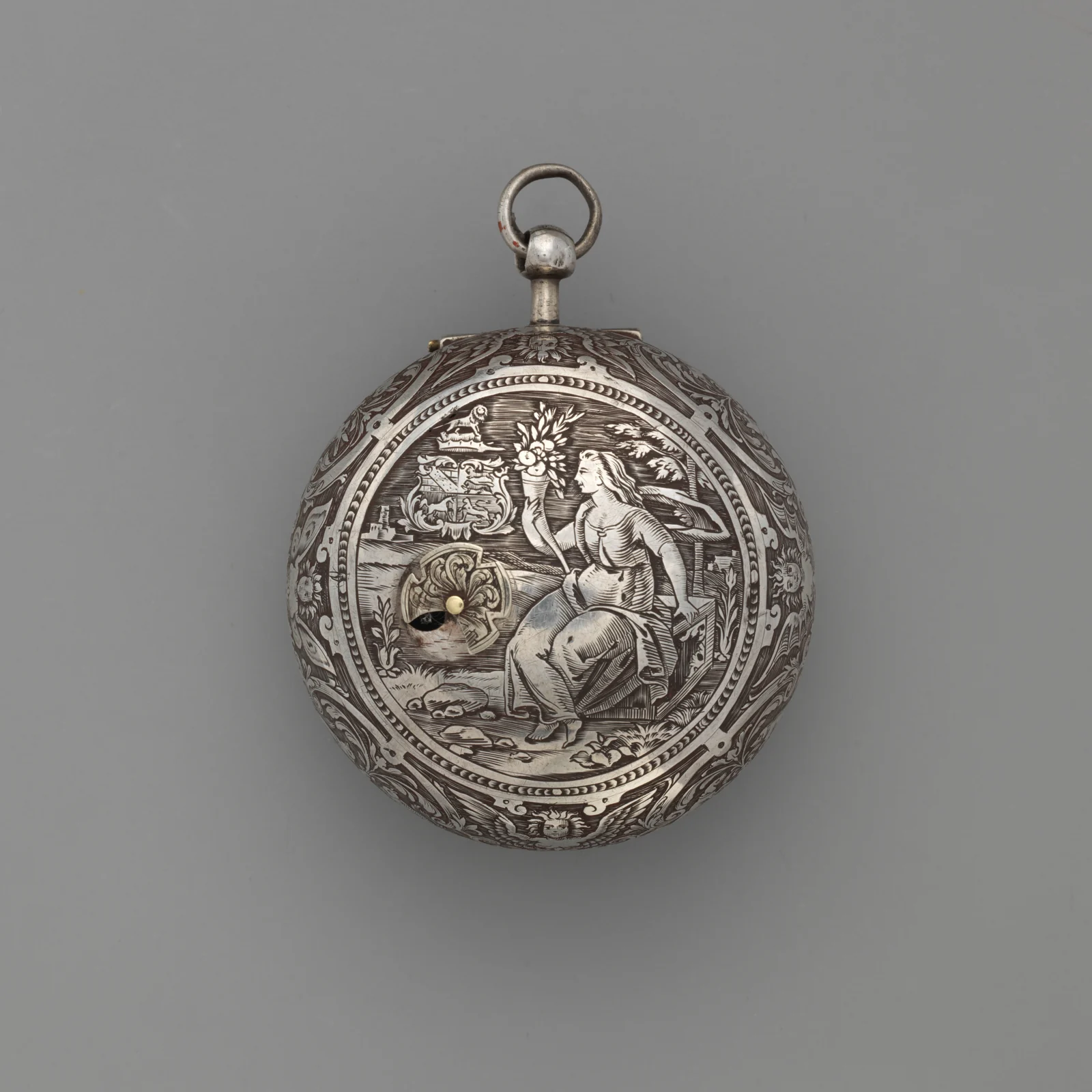
A watch case offers a small but demanding canvas. Engraving cuts a design into the surface; relief decoration gives that surface depth. Piercing opens it up. On some striking watches, pierced casework also allows sound to escape. Decoration and function can be the same decision.
John Bushman’s seventeenth-century watch, catalogued by The Met as silver and niello, is a reminder that darkness can belong to the design. Niello provides a dark contrast within worked ornament. Treating every dark area as tarnish to remove would miss what makes the surface distinctive.
Look at the highest points and the protected recesses together. Are the details still crisp? Does a smooth patch seem to belong to years of handling, or to a later alteration? A photograph in raking light can reveal more than an aggressively polished shine. Record what you see before deciding what, if anything, should be done.
Marks, names and mismatched dates
The name on a watch and the marks inside its case answer different questions. A case hallmark can provide evidence about the silver under a particular assay system. A movement signature concerns the clockwork or the name under which it was supplied. Neither automatically dates every part of the assembled object.
The Met’s Delander watch of about 1715–19 identifies William Jaques as its case maker. It is a useful model for a collector’s record: give the mechanism and case their own attribution fields, then explain how the evidence connects them. Where a museum uses “possibly” or “attributed to,” retain those words.
Different dates do not prove wrongdoing. Cases, dials, hands and movements can have repair and replacement histories. But those histories matter. Before paying a premium for a fully original watch, ask what supports that description and whether the seller’s photographs show the relevant components.
Use the authenticity guide for the limits of material tests, and the markings hub for reading punches in context. Testing the metal is not the same task as authenticating the assembled watch.
Before you buy or restore
A good description should tell you more than “working” or “silver.” Ask for the case diameter, visible marks, movement identification where available, condition of the dial and crystal, and any known repairs. Ask whether a service record exists. Separate evidence from reassuring adjectives.
For a family watch, decide whether the aim is preservation, occasional demonstration or regular use. Those are different projects. Discuss them with a qualified horologist before work begins, including whether replaced parts will be retained and whether the intervention will change the appearance.
Keep original boxes, keys and notes together without letting loose metal attachments rub against the case. Photograph the watch before and after professional work and keep the invoice with its record. The next owner should not have to reconstruct decisions that you can document now.
Sources & further reading
- The Met: Seventeenth-Century European Watches
- Edward East: watch and key
- Robert Sanderson: pair-case watch
- John Bushman: silver and niello watch
- Daniel Delander and William Jaques: pair-case watch
- Pocketwatch 101: identifying watch-case types
- Canadian Conservation Institute: basic care of clocks and watches