
More than a dial
A clock gives a room a point of attention. Even when it is silent, its face suggests an ordered day; its case tells us how that order was meant to look. Silver can make the housing restrained and luminous or turn it into an intricate piece of decorative architecture.
The boundary between a watch and a clock is not always as neat as modern names suggest. Historical collections include clock-watches, portable timekeepers with striking functions, and substantial traveling watches. Their cases invite the same close looking as a pocket watch, but their scale and functions lead toward the room, the journey and the sound of time.
For the silver collector, this is not a separate world so much as a meeting place. The work of a silversmith can surround a mechanism supplied by a clockmaker, while enameling, stone cutting or sculpture contributes another layer.
A case made for sound
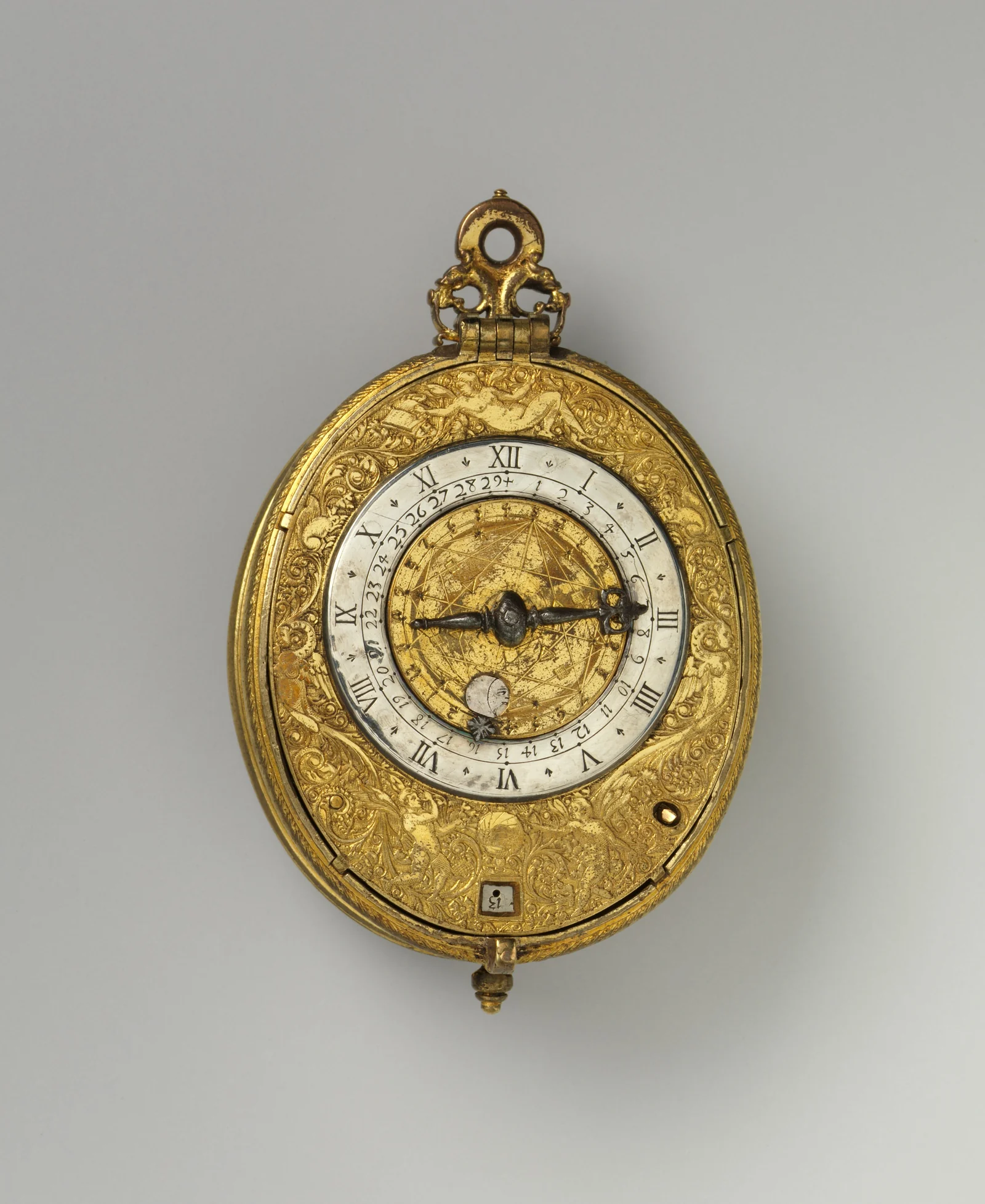
Nicolas Forfaict’s Paris clock-watch of about 1600–1610 gives the case more than a protective role. The Met explains that its pierced band allows the striking bell to be heard. Its dial combines an applied silver chapter ring with lunar indications: a portable object concerned with more than the hour alone.
Its materials are equally instructive. The museum identifies brass, silvered brass and silver in the case and dial, alongside the materials of the movement and hand. Calling the entire object a solid-silver clock would lose that distinction. Its appeal lies partly in how those materials work together.
Daniel Delander’s small London clock-watch of about 1705 offers another close encounter with silver and silver gilt. A case that seems simple from the front rewards a second view of its depth and worked edges. The useful collector’s question is not only “What does the dial say?” but “What does the housing allow the mechanism to do?”
Time on the road
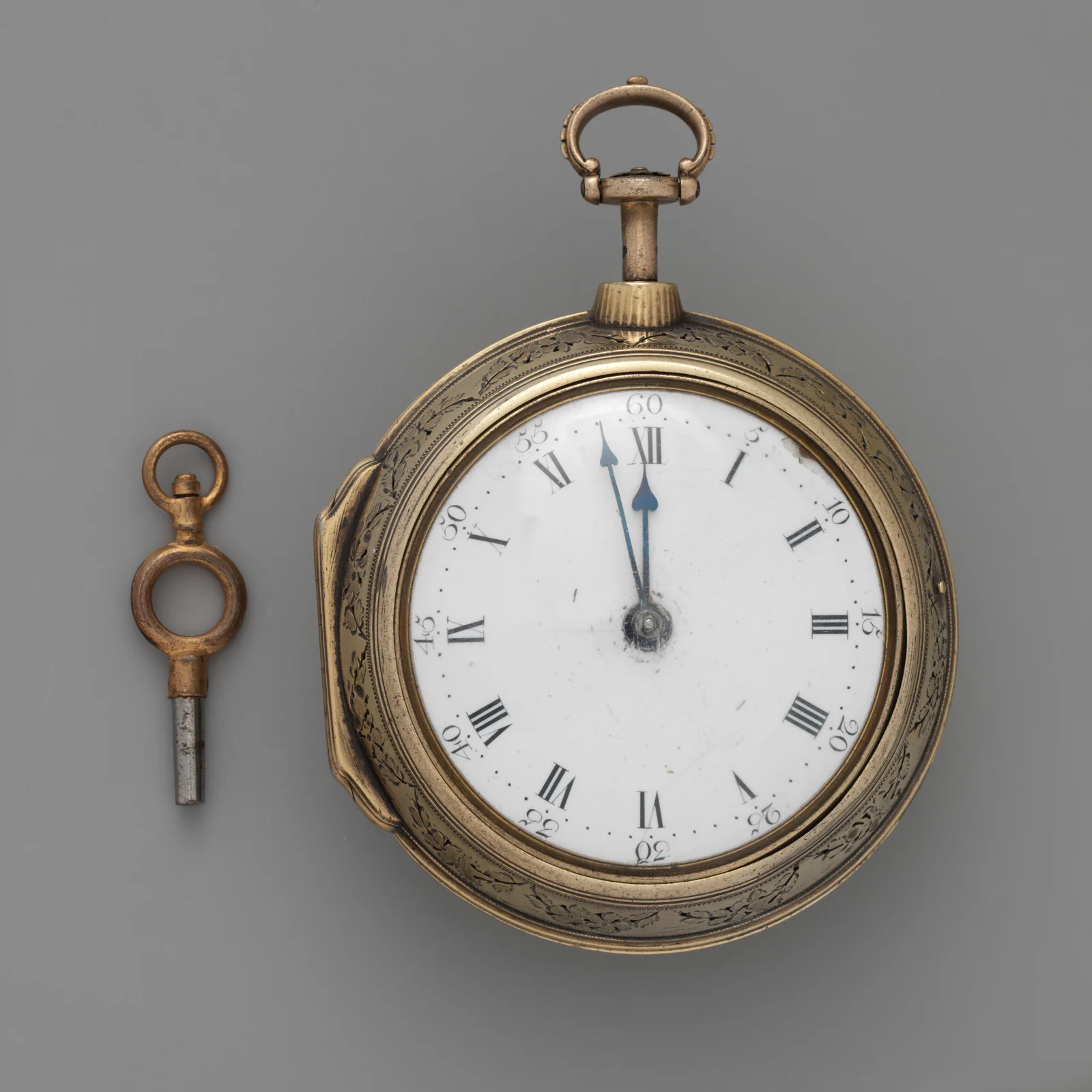
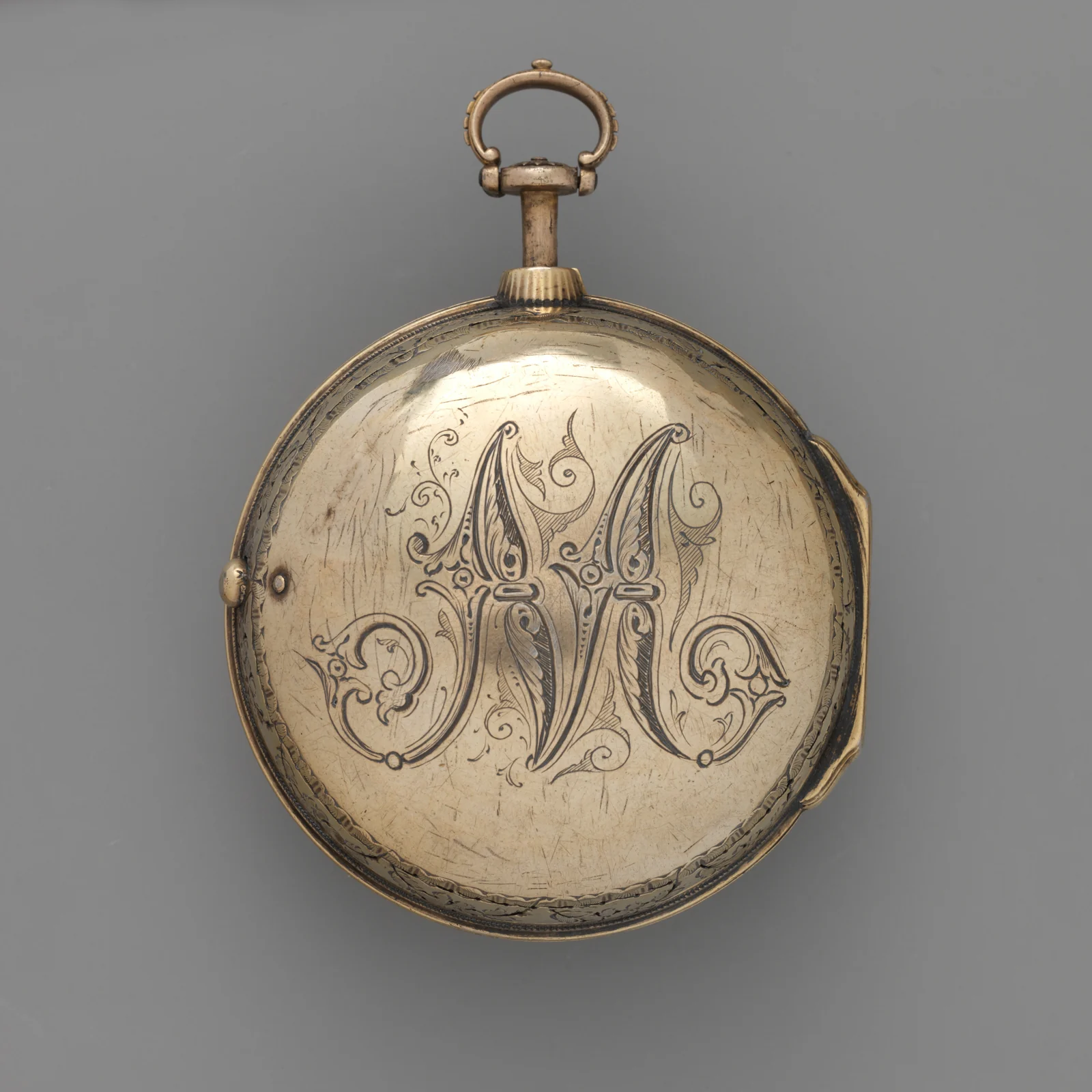
Thomas Tompion’s traveling clock watch with alarm, dated about 1680, is a much larger proposition than a small pendant watch. The Met gives an overall case height of 14.6 centimeters and names Nathanial Delander I as the case and dial maker. Silver belongs to the exterior and dial; the movement brings together gilded brass, partly blued steel and silver.
That separate credit is worth pausing over. A celebrated name on the mechanism can dominate the way a timepiece is remembered. Yet the person responsible for its case determined the object’s outline, surface and physical encounter with its owner. A good description makes room for both.
When looking at a traveling clock today, record its scale and supporting or carrying arrangement as carefully as its dial. A photograph without measurements can make a substantial object look like a pocket watch, or a miniature look like a mantel clock.
A miniature building
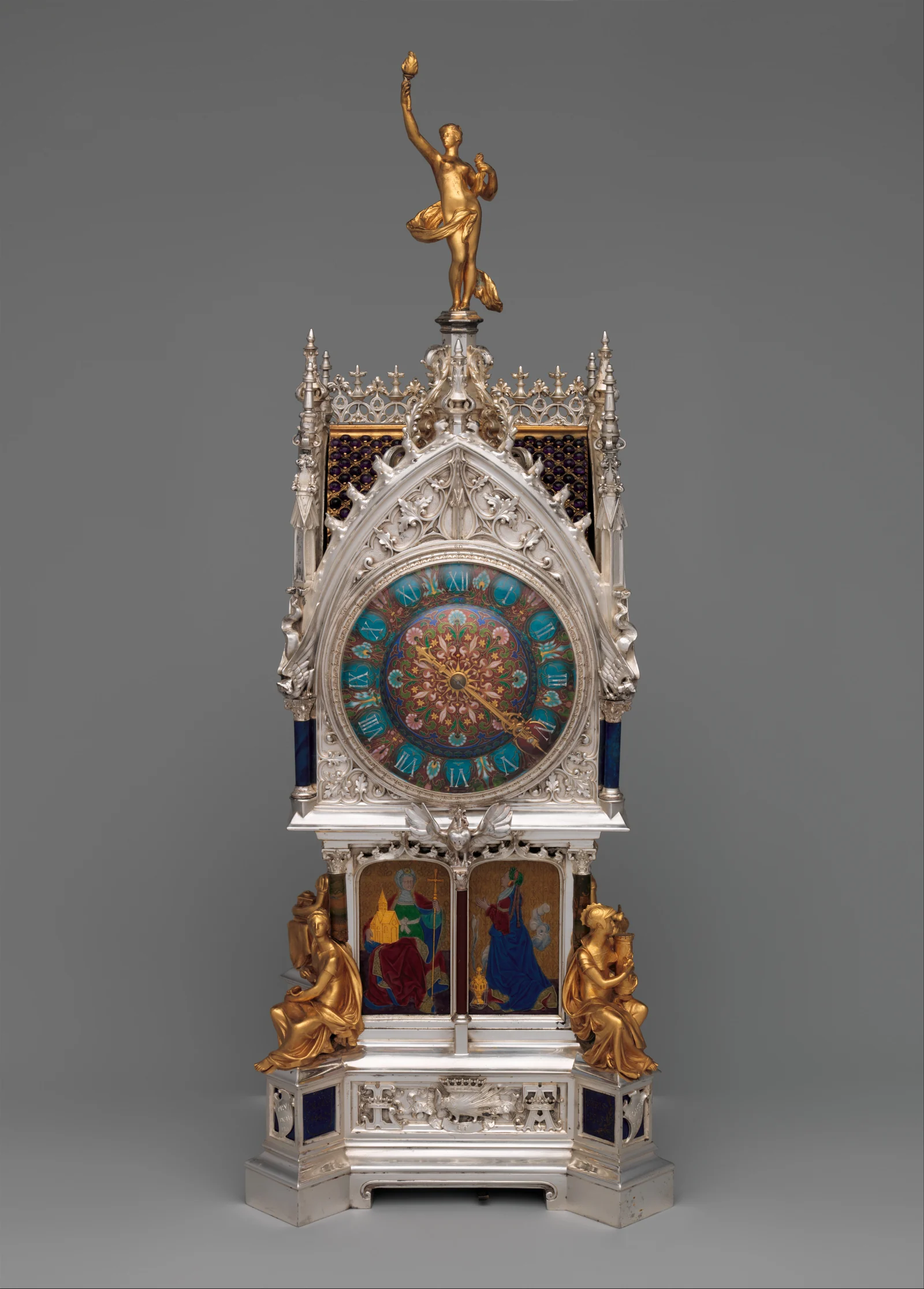
The table clock made in 1881 for Alfred Morrison brings that collaboration into spectacular focus. The firm of Lucien Falize designed its case and enamel work, while Le Roy et Fils supplied the clockwork. At 47 centimeters high, it evokes a small Gothic tower rather than a simple box around a dial.
Silver shares the case with gold, hardstones, rock crystal, amethysts and diamonds. The elaborate appearance belongs to the nineteenth-century Gothic Revival, not to a surviving medieval clock. That distinction lets the object tell the right story: a later patron and workshop reimagining an older visual language.
For a collector, the lesson scales down to less extravagant objects. Style, material, maker and date are separate observations that need to be brought together. A Gothic shape is not a medieval date, and a prestigious retailer’s name is not automatically the name of every craftsperson involved.
Collecting and caring for silver clocks
Begin with construction. Is the silver a structural case, a fitted front or an applied ornament on another material? Where does it end? Does the base contain a support, lining or weight? The face of a clock may conceal more than a photograph of its front can explain.
Keep the mechanical assessment separate from the decorative one. A clock can have a beautifully preserved case and a movement in need of work. Another can run while carrying substantial replacement parts. Ask what has been serviced, repaired or replaced and keep that information with the object.
For historic clocks, operation is a conservation decision rather than an automatic goal. The Canadian Conservation Institute notes that repair may compromise a rare object. Discuss whether yours should run, and under what conditions, with a qualified specialist. Do not add household oil or apply silver-cleaning solutions near the dial and mechanism.
Display should let the object be seen without making it vulnerable. Support the whole base, avoid vibration and unstable conditions, and keep loose keys from scratching adjacent surfaces. Sometimes the best first act of care is to leave a clock quiet while its history and condition are understood.