
Begin with the shape
An animal miniature is an invitation to look closely. The turn of a head, the curve of a back or the distance between two feet can give a small figure character. Before reading a name or number, describe what is in front of you. Is it naturalistic, stylized, comic, heraldic or imaginary?
Then examine how the maker translates the animal into metal. A smooth body can place the emphasis on silhouette. Texture can suggest fur, feathers or scales. Darkened recesses and polished highlights can strengthen that effect, so an all-over bright finish is not automatically the intended appearance.
A subject alone rarely identifies a maker. Horses, dogs, cats and birds recur across many workshops and periods. Begin with marks and construction evidence rather than attributing an unsigned figure because it resembles a familiar catalogue image.
Miniature does not mean trivial
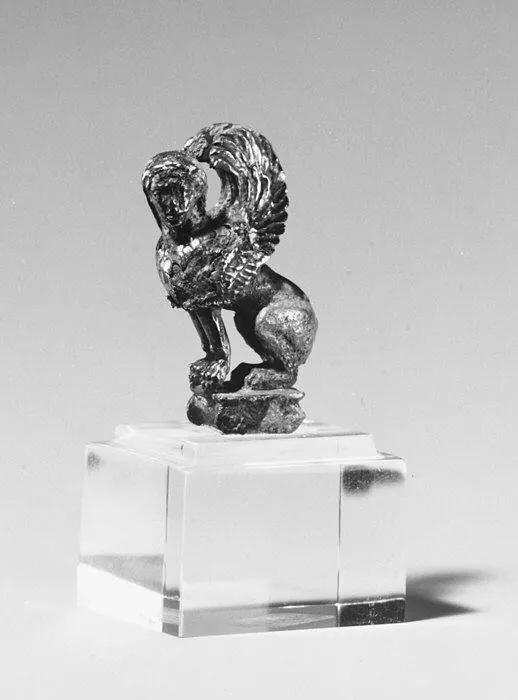
The Greek silver sphinx in the Met is only 3.2 cm high, yet the creature’s wings, face and crouching posture form a complete sculptural idea. The Inca camelid elsewhere in this hub has a very different cultural setting and manufacturing history. Neither needs to be described as an ancestor of a modern desk ornament to deserve close attention.
Scale changes how a work is encountered, not necessarily its importance. A small figure might have carried religious, social or personal meaning that a modern decorative label cannot capture. Read the object record before deciding that something was simply a toy or souvenir.
For a contemporary cabinet, this is a useful collecting habit: let the individual object explain its role. A model animal, a vessel in animal form and an ornament meant to hang are related forms, but their supports, openings and vulnerable areas may be quite different.
When the animal can move
A miniature’s pose need not be fixed. Japanese articulated ornamental figures, known as jizai okimono, make joints part of the sculptural idea. The Asian Art Museum’s silver praying mantis by Takase Kozan is one documented example. Other articulated animals were made in iron, copper or mixed alloys, so this is a form of metalwork rather than a silver standard.
For the collector, a moving limb adds another detail to record: how it joins the body, what is present and what the maker or museum says about its intended movement. Begin with photographs rather than testing an unfamiliar joint. The Japanese object studies follow the mantis into its wider history, then compare it with a stationary dragon-and-crystal composition. Both invite you to look beyond the label “silver animal.”
A horse and its evidence
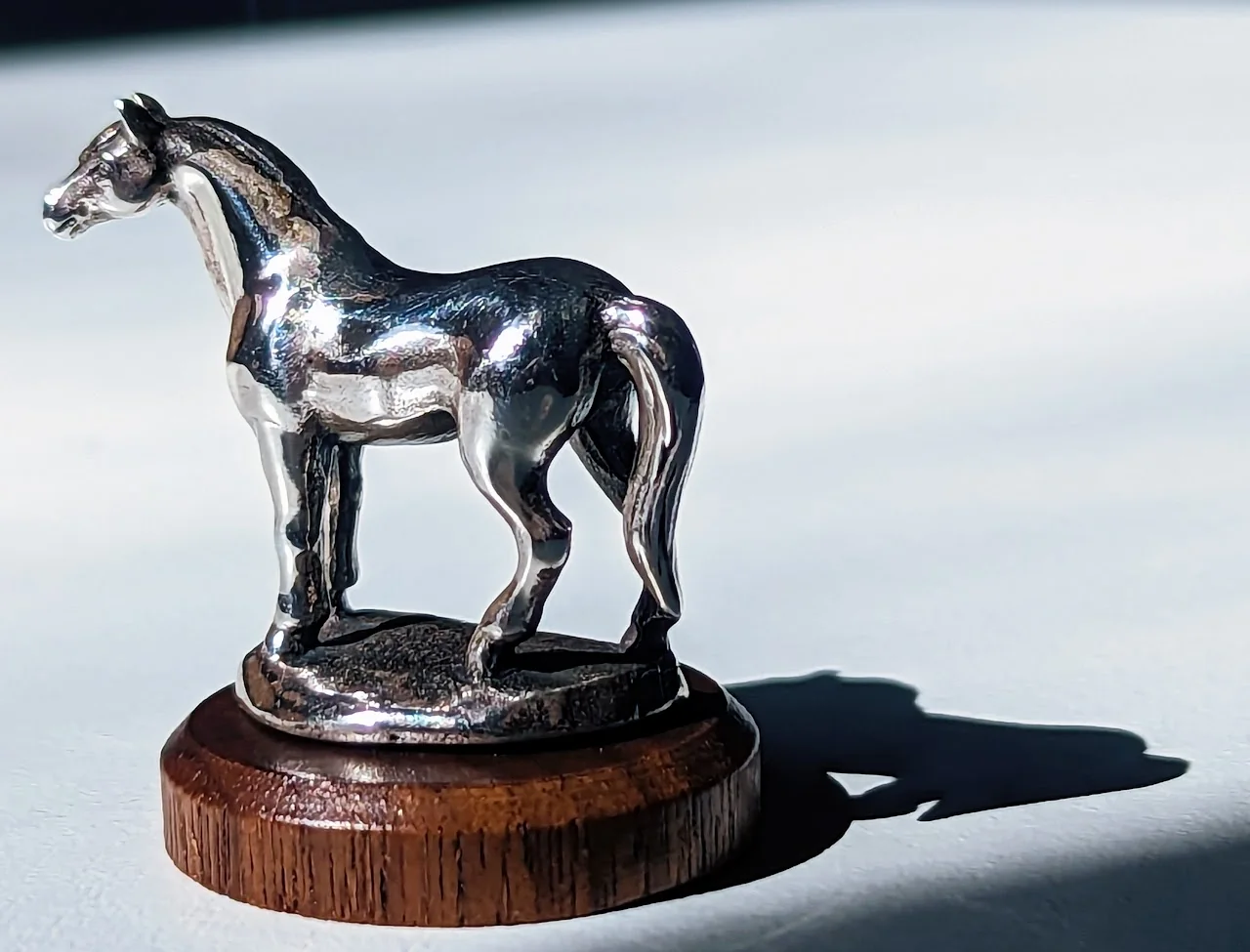
Rich’s Kirk Stieff horse anchors the collection’s animal studies. Its photographs invite you to move from the whole figure to the details and underside. Keeping those views together is more useful than relying on a single attractive silhouette.
For a mounted horse or another standing animal, study how the feet meet the base. Look for movement, missing fittings or distortion, but do not dismantle it merely to see how it works. Record whether a quoted weight includes the support. A wooden plinth contributes to gross weight without contributing the same silver content.
The collection’s existing horse record remains the reference for this particular example. This guide does not assign a new date, silver-only weight or manufacturing process from photographs alone. A clearly stated unknown is preferable to a confident attribution borrowed from a similar listing.
For the name behind the object, continue with the Kirk Stieff maker profile.
Three maker-led paths
Buccellati. The official Furry collection provides a route into textured animal forms. Its squirrel, reference SAGDEC010582, is listed as sterling silver, 925/1000, with a listed dimension of 13.3 cm. The catalog does not identify that measurement as height. Use the reference to match the precise model rather than applying its size or material to another squirrel or another item in the collection.
Saturno. The Italian maker’s company account describes its specialization in silver miniatures and its adoption of enamel in the late 1980s and early 1990s. The figurine catalogue makes colour an important part of the animal’s character. Do not infer the exact enamel chemistry or firing process from appearance alone.
Patrick Mavros. The maker’s female tortoise no. 4 offers an identifiable example of sterling animal sculpture and lost-wax casting. Compare the documented model with the offered object, including its dimensions and any signature, rather than treating every small tortoise as equivalent.
These are starting points, not endorsements of an individual seller. Collections change, makers offer variants, and an official photograph does not authenticate a secondhand example. Save the precise product page and relevant description when building your own record.
The Patrick Mavros maker profile offers further context within Collect Silver.
Pairs, families and small scenes
Animal figures are often displayed in groups, but a pleasing arrangement is not evidence of an original set. Check whether the maker sold the pieces together, whether their model references belong to a defined series and whether sizes or finishes were intentionally varied.
A family of animals may be designed as related individual models rather than one indivisible group. Conversely, a scene with a shared base may depend on a missing figure or accessory for its intended composition. Describe what is present and what the source says should be present.
When comparing examples, note the direction of the head, stance, base shape and position of marks. Small differences can identify a variant or a different model; they do not automatically prove a forgery. If evidence remains incomplete, state the uncertainty and keep the photographs that led to it.
For a display assembled over time, there is nothing wrong with an eclectic group. Calling it “a collection of five animal figures” is simply clearer than implying it is a factory-issued set.
Protect the details you collect for
Ears, tails, antlers and slender legs deserve deliberate protection during handling and packing. Enamel introduces another material with its own vulnerabilities. Keep hard edges from knocking together and do not let soft packing snag on projections.
Before purchase, request views of the highest points, underside and any colour losses. Distinguish a visible chip from a shadow or darkened recess by asking for a clearer image. Do not recommend polishing away colour or dark texture until the finish has been identified.
Choose a stable display with room around each figure. A crowded shelf can hide both the artistry and the vulnerable points. Keep a record of the arrangement, individual labels and detachable bases so that moving the collection does not separate objects from their histories.
Continue with the figurines cabinet guide for scenes, completeness and documentation, or the materials and care guide for hollow and composite construction. The appeal of a miniature is the attention it rewards; a careful record helps keep that attention with it.
Sources & further reading
Object identifications and image rights were checked against the named institutions. Maker descriptions are attributed to the maker; they are not independent appraisals. Sources checked 11 November 2026.
- Buccellati: Furry squirrel, exact model
- Saturno: company history
- Saturno: silver figurine catalogue
- Patrick Mavros: Tortoise, female no. 4
- Rich’s Kirk Stieff horse: collection photographs and record
- Tokyo National Museum: jizai okimono and their history
- Asian Art Museum: Takase Kozan’s silver articulated praying mantis, 1990.67
Illustrated museum objects
Museum inclusion does not imply endorsement.