
Our Christofle profile describes an electrotype after a Renaissance cup. Our Elkington shell-cup story separates a nineteenth-century reproduction from its seventeenth-century model. But the unfamiliar word deserves its own explanation. Is an electrotype just silverplate? And why would a museum collect a copy?
The short answer: making a form versus coating one
- Electroplating
- A metal layer is deposited onto an existing object using electricity. When the layer is silver, the surface can look like silver while the body beneath it is another material.
- Electroforming or electrotyping
- Metal is deposited in a mold until it forms a substantial wall. The resulting metal form can reproduce the mold’s fine detail. In historic museum collections, “electrotype” often identifies a reproduction made this way.
The distinction is between what the deposited metal is doing: providing a coating, or building the form itself. The V&A’s metalworking guide explains the two processes separately. The Met’s Bryant Vase pattern record also describes the progression from a thin deposited layer to a substantial wall made in a mold. Neither term alone tells you the object’s silver content.

Dresser’s rack is a useful place to start: the Met records electroplated silver, not an electrotype reproduction. Its light, open design gives us something worth looking at without imagining a solid-silver body. The record does not identify the underlying metal or coating thickness, so we do not supply them from its appearance.
Can one object be both electroformed and plated?
Yes. Elkington’s large dish makes the distinction visible in a single museum description: electroformed copper, silver plated and gilt. Its body and its finish answer different questions. Copper is the formed material; silver plating and gilding describe surfaces. A label does not need to choose only one of those facts.

The museum dates this reproduction to the nineteenth century and its model to 1674. The earlier object was in the Kremlin treasury when it was reproduced. At about a metre across, the copy is not a small souvenir. Its intricate relief asks us to separate the successful transmission of a design from the age and material of the object transmitting it.
For the more general distinction between gold color and material, continue to the guide to gilding. Gold on a surface does not turn the whole object into gold.
Why would a museum want a copy?
A copy can make a distant object available for study. In its account of the 2011–12 exhibition Victorian Electrotypes, the Met explains that reproductions were among its early European decorative-arts acquisitions in the 1870s and 1880s. They introduced visitors to ambitious historical metalwork and supplied examples for artists and manufacturers.
The same account describes an international reproduction initiative associated with the South Kensington Museum, now the V&A, and a convention signed in 1867. These were not necessarily failed attempts to acquire originals. They served an educational purpose of their own.
That changes the question we bring to them. Rather than stopping at “not the original,” ask which design was selected, who made the reproduction, and what audience it was meant to reach. A later object can be evidence of a later technology, taste and collecting practice. None of those interests is the same as a claim about today’s market price.
A reproduction needs its own date
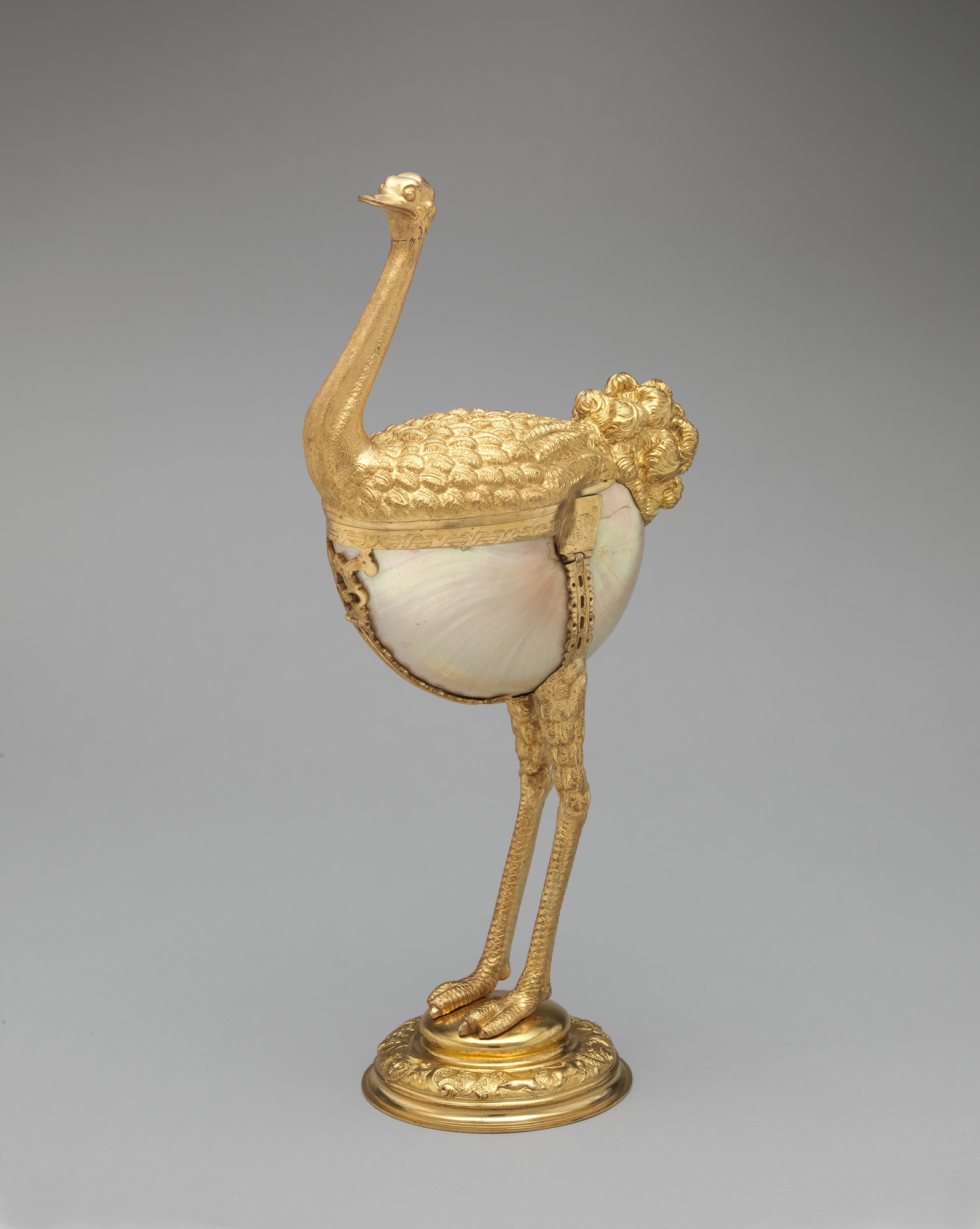
The bird-shaped cup is a nineteenth-century electrotype, according to the Met, after a seventeenth-century original in Moscow. The material record includes a nautilus shell as well as silver on base metal. An electrotype label therefore need not mean that every part of an assembled object was produced by one process.
Keep three entries distinct: this object’s manufacture, the model it follows, and its materials. “After a seventeenth-century original” describes a relationship; it does not date the reproduction to that century. Our closer study of this cup explores the comparison without mistaking a different surviving nautilus cup for its model.
A pattern is another kind of object again
The Met preserves a Tiffany & Co. pattern for the front half of the Bryant Vase, catalogued around 1875 in copper, metal alloy and lead. The record explains that electroformed patterns could produce negative molds for copies. That workshop object is distinct from the original Bryant Vase, catalogued in silver and gold, and from a finished facsimile. Read the pattern’s own record before collapsing those different stages into one object.
Can I recognize an electrotype from a photograph?
A photograph is a starting point, not a verdict. In her Met conservation study of an electroformed mask replica, Dorothy H. Abramitis discusses documentary evidence, surface inspection and radiography. The study explains how the mold-facing surface and the reverse can preserve different textures, but also why technical examination matters. Its findings concern the examined replica, not a universal at-home identification test.
- Read the full description. Distinguish electroformed copper, silverplate, gilt silver and an unspecified base metal.
- Keep maker and model separate. A maker’s name on the copy does not identify the maker of the original.
- Record all dates. Label the model’s date as the model’s date, not the age of the object you own.
- Ask for useful views. The reverse, underside, edges, joins and marks may raise questions the presentation view conceals. Do not dismantle a fragile object to obtain them.
- Do not test by damage. Scratching through a surface can destroy evidence and finish. Seek suitable professional examination when the distinction matters.
Use the collection-record guide to preserve the evidence, and the authenticity guide for the limits of individual clues. For interpreting material and weight claims, continue to what a stated weight includes.
A faithful copy is not the same thing as a dishonest description. The useful boundary is between accurately explaining what an object is and allowing the age, material or prestige of its model to stand in for its own history.
Sources and image rights
Definitions follow the V&A and the Met’s Bryant Vase pattern record. Historical context follows the Met’s 2011–12 electrotype exhibition; identification limits follow its conservation study. Object dates, makers, materials and accession numbers follow the linked museum records, checked November 2026. All three photographs used here are marked Public Domain. The Bryant pattern is linked as a text source only; its restricted photograph is not reproduced.