
The Antioch “Chalice”
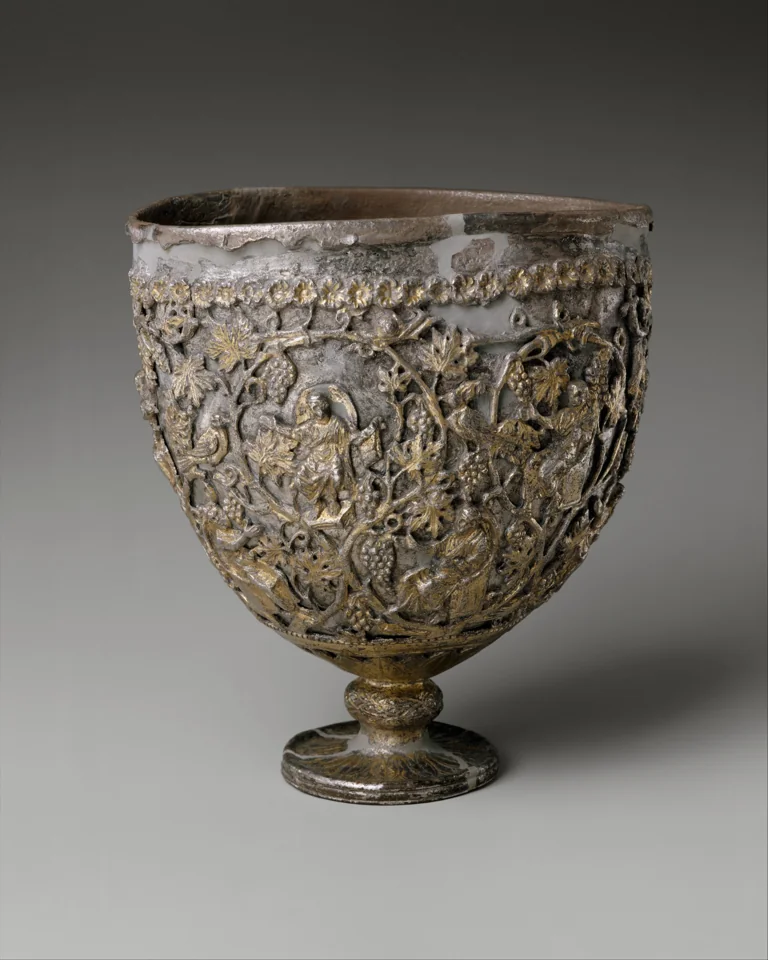
The name sounds certain; the object’s history is more complicated. Its openwork outer shell frames figures among vines around a plain inner cup. The Met’s account describes the long-standing name “Antioch Chalice” and notes a more recent interpretation of the form as a standing lamp. Scholars have also argued over its findspot. Neither the name nor a resemblance alone settles every question of use.
Earlier publicity connected the object with the Holy Grail. The museum dates it to the first half of the sixth century, centuries after the time in which that story is set. A famous claim is part of the vessel’s reception history, not proof of its original identity.
Objects in Christian practice
Christian communities have used different vessels and materials in worship across time and place. A chalice, for example, can serve the Eucharist; its form and material should be considered alongside an inscription, documented context, and the relevant community’s practice. The Met’s Antioch object invites caution precisely because appearance and an inherited title are not conclusive evidence of function.
Explore the site’s existing Mexican chalice studies and the Atienza monstrance image, a distinct object used to display the Eucharist in Catholic tradition.
Devotion and the museum record
Religious objects can have lives in worship, family care, institutions, and museums. The existing Meuse arm reliquary and boxwood and gilded-silver rosary bead show different forms of Christian devotion. Their materials and dates are specific to those objects; their presence in a museum does not exhaust their religious significance.
Collectors should document custody and condition and consult a qualified conservator or relevant community when an object’s sacred status or contents are uncertain.