
A king on the hunt
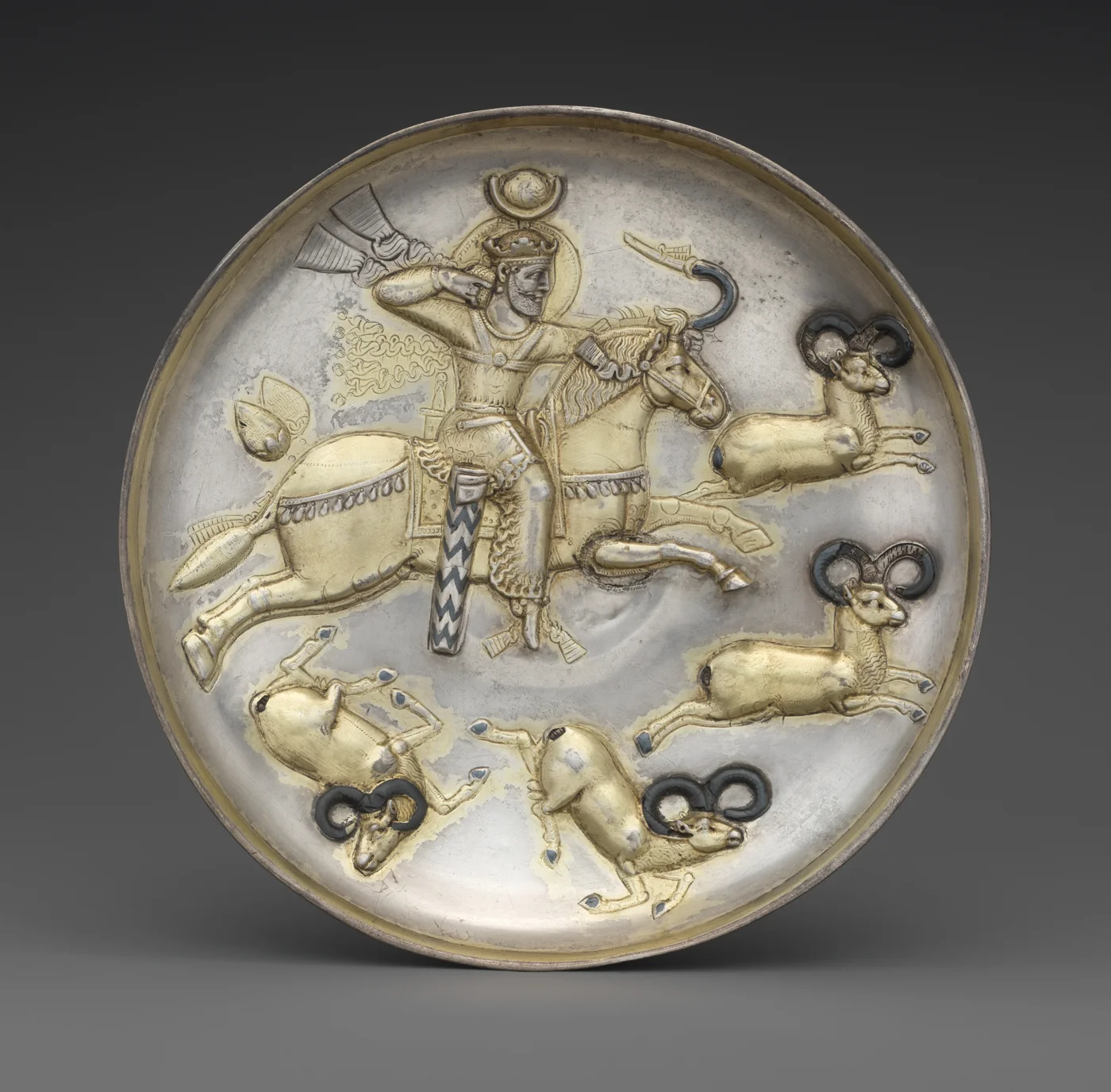
A horse rises across a circular field, its rider aiming at rams. Gold catches the raised forms while dark inlay articulates details. The Met dates this Sasanian silver plate to roughly the mid-fifth through mid-sixth century CE and attributes it to Iran. Its maker inserted separate pieces of silver to build the relief, then used mercury gilding and niello to add contrasting surfaces.
The crown suggests two possible kings, Peroz I or Kavad I, according to the Met; the identification is not settled. Royal hunting imagery conveyed power, and plates of this kind were often sent as gifts to neighboring courts. That general practice does not establish a particular recipient or journey for this plate.
At acquisition in 1934 the plate was said to have been found at Qazvin. The museum presents that as a report, not an archaeological findspot. The circumstances and date of discovery and the plate’s earlier owners are not established by that statement.
David and Goliath in silver
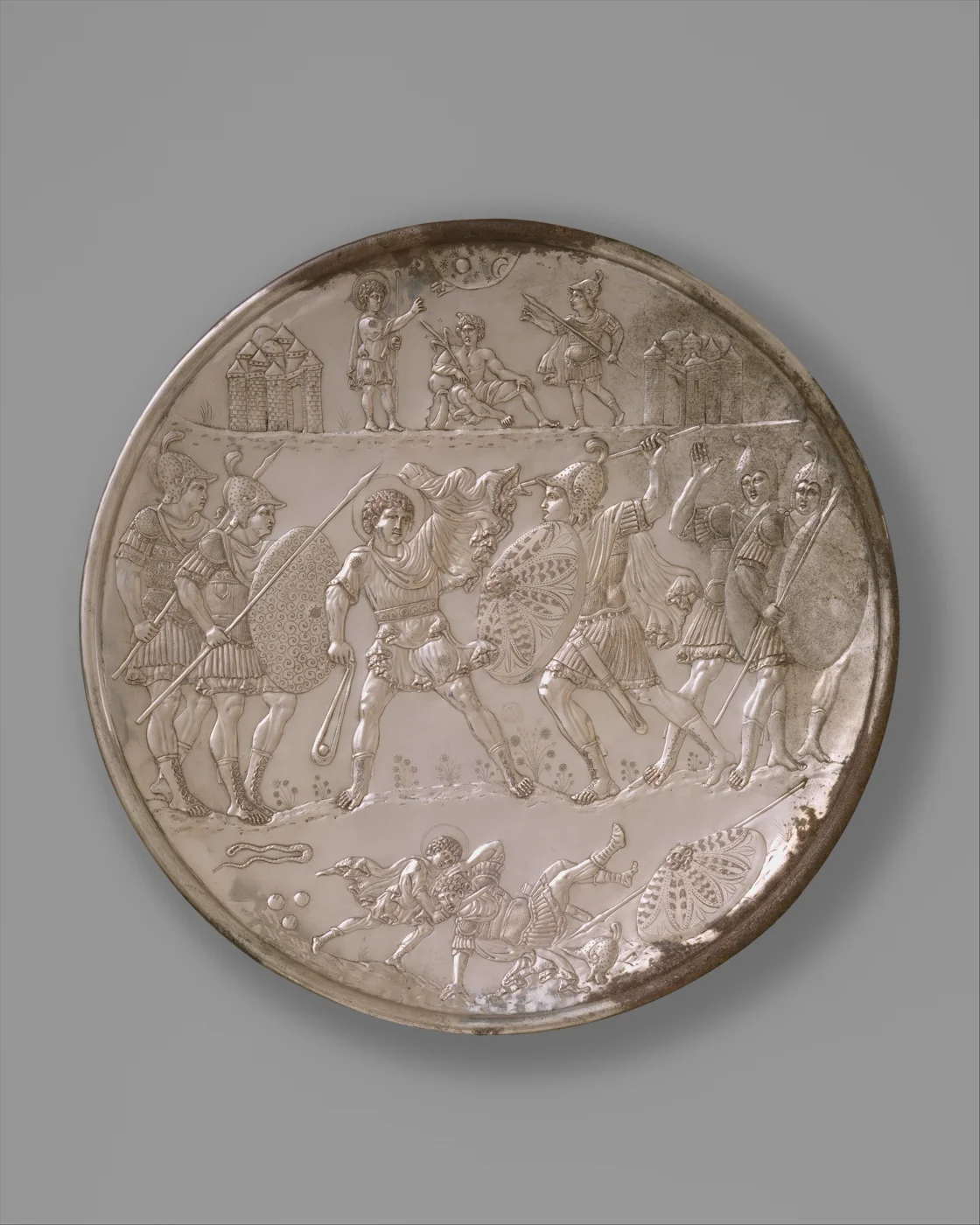
A single silver surface tells a story in stages: David confronts Goliath above, the armies meet in the middle, and David defeats him below. Nearly half a meter across, this is the largest of nine plates depicting episodes in David’s life. The Met dates its manufacture in Constantinople to 629–630 CE; imperial control stamps on the set belong to the reign of Herakleios.
The plates were discovered together in Cyprus in 1902, many centuries after they were made. Six are now at the Met and three at the Cyprus Museum. A Met study suggests the group may have been hidden during mid-seventh-century attacks on Cyprus; that is a proposed context, not a documented date or motive for concealment.
Scholar Steven Wander proposed that the imagery may commemorate an event in Herakleios’s reign. The museum also describes a possible connection between the biblical ruler and the emperor’s authority after war with Persia. These readings illuminate the imagery but do not prove who commissioned the plates or the route by which they reached Cyprus.
A palace in miniature
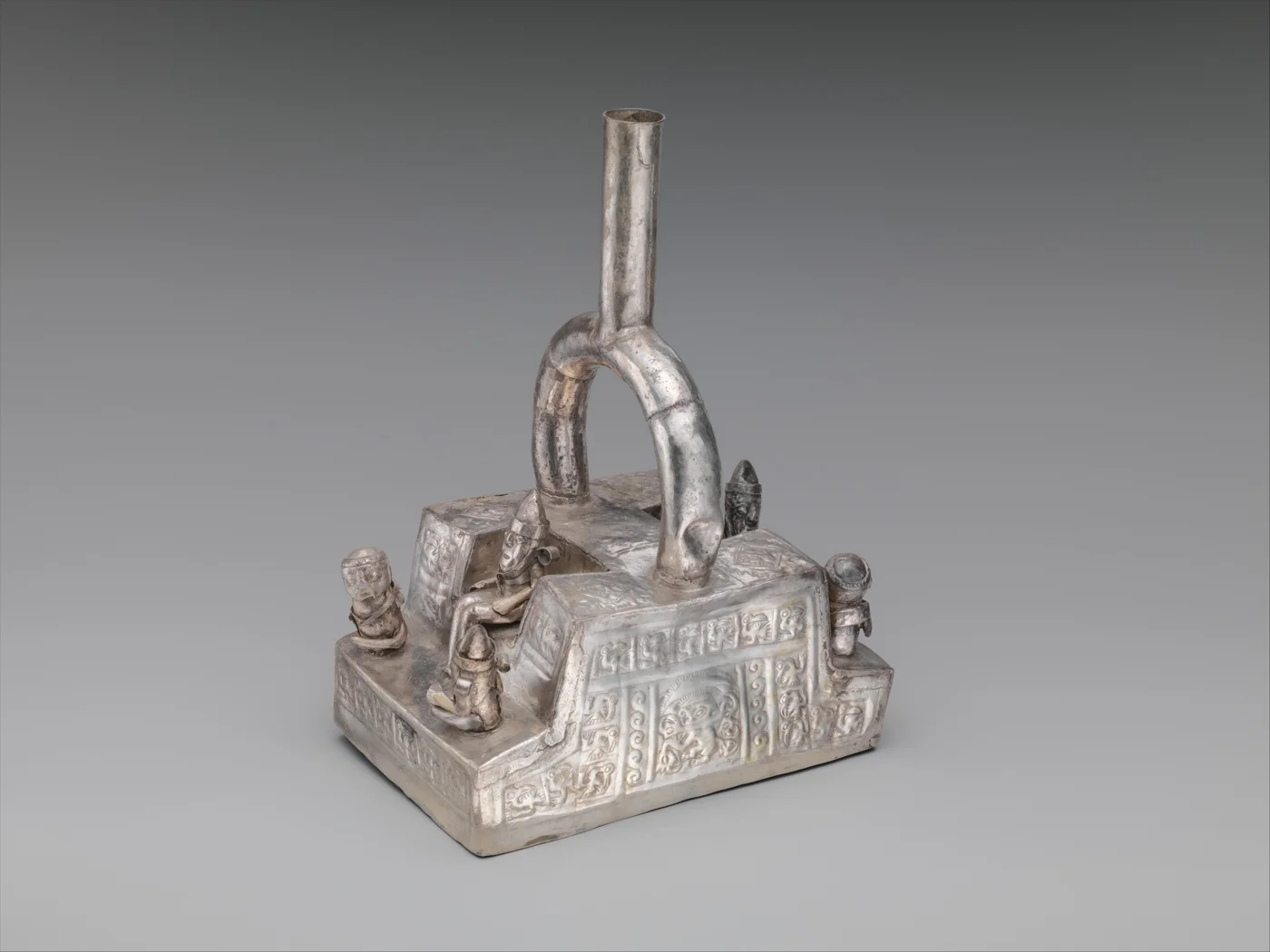
A spout rises from a tiny architectural world. Seated figures face one another inside a platform whose walls bear reliefs of figures and marine birds. Chimú artists cut, embossed and soldered sheets of silver to create this bottle, which the Met dates to 1000–1470 CE on Peru’s North Coast.
Curator Joanne Pillsbury connects the vessel’s U-shaped spaces and decorative vocabulary with the palaces of Chan Chan. A seated figure wears a conical headdress; one visitor carries what may be a sack. Pillsbury asks whether the figure represents a long-distance trader or a bringer of tribute. The object invites both possibilities without resolving them.
The bottle is a rare survival of a celebrated tradition. Following the Inca conquest around 1470, the Met’s account says Chan Chan metalworkers were taken to Cusco and pressed into service. The bottle’s production range is not a discovery date, and its own find context and earlier history remain uncertain in the published record.
A bird and the changing sources of silver
A small bird ornament in the Met’s collection offers another perspective on exchange in the Fon kingdom, in present-day Benin. The museum dates this silver-alloy object broadly to the nineteenth through mid-twentieth century. Its date does not establish whether it was made before or after the French colonial conquest of Abomey in 1894.
Curator Enid Schildkrout describes a change in the composition of Fon silver: earlier alloys resembled the metal in coins and ornaments supplied through European trade, while twentieth-century work generally contained more copper. This is evidence about a broader tradition, not an assay or a documented source for this particular bird. The museum records a 1988 gift; the object’s earlier history is not specified here.