
At a glance
A silver rattle, a shallow feeding vessel and an inscribed cup can carry different kinds of history: what an object did, what a giver hoped for, and what a family remembered. Understanding childhood silver means keeping those stories connected without treating them as interchangeable.
Begin with the object and its materials. Record inscriptions separately from maker's marks. Preserve uncertainty where it exists. Above all, collect historic rattles and feeding equipment as objects to study and display, not as equipment for a baby to use.
A rattle with more than one purpose
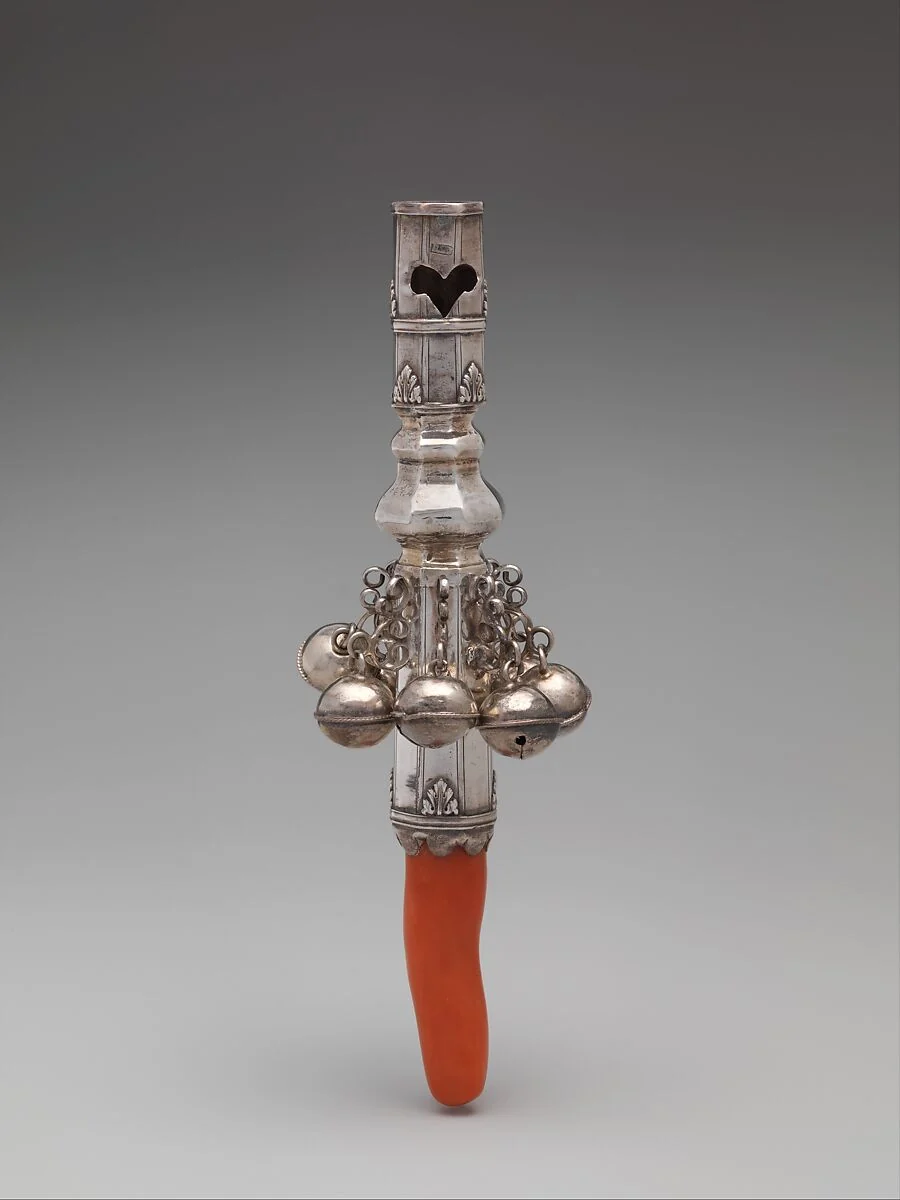
The Metropolitan Museum of Art's Rattle, Whistle, and Bells, made in New York in 1735–45, combines silver and coral. The museum describes amusement, teething and protective belief as parts of its historical use: coral was thought to guard against disease and enchantment. This explains an old belief, not a medical benefit.
Its maker attribution is equally important. The museum lists Richard Van Dyck or Peter Van Dyck. That is an unresolved alternative, not evidence of a partnership. A label should preserve the “or,” rather than quietly choosing a name.
Put the object back into a human setting
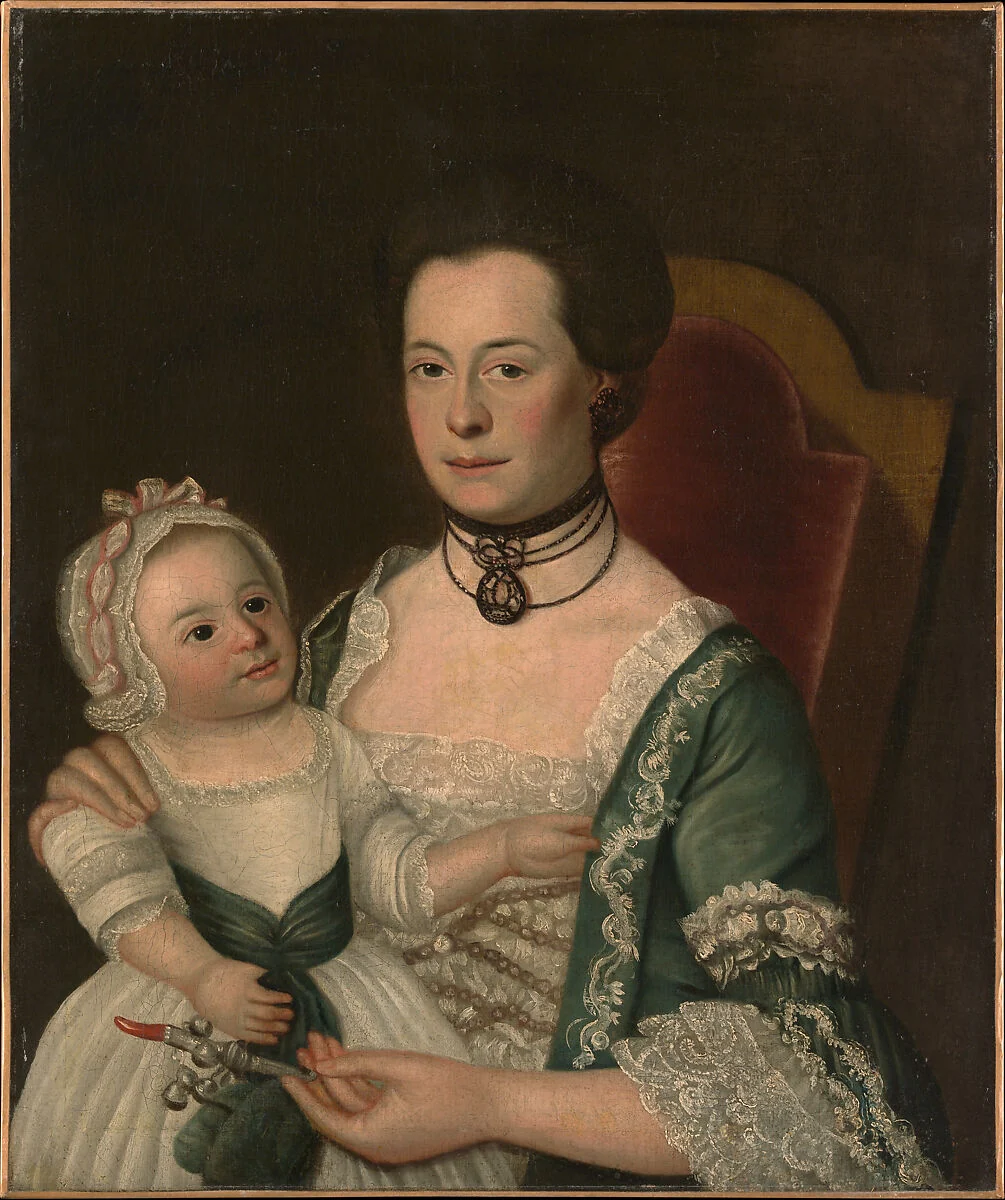
In the portrait, the rattle is not isolated against a museum backdrop. It lies beside a child's hand, held within the embrace of an adult. William Johnston's Mrs. Jacob Hurd and Child, about 1762, offers that second perspective. The Met connects the whistle, coral and bells represented in this portrait with protection and prosperity.
The painting supplies context, not a proven owner for the surviving Van Dyck rattle. Its own history has changed with research: formerly attributed to John Singleton Copley, it is now credited to Johnston. The Met identifies the child as probably the Hurds' son Jacob, rather than naming him with certainty.
Placed alongside a rattle, a portrait invites a better question than “How much silver is there?” It asks why an object was worth including in a family's image of itself.
What is a pap boat?
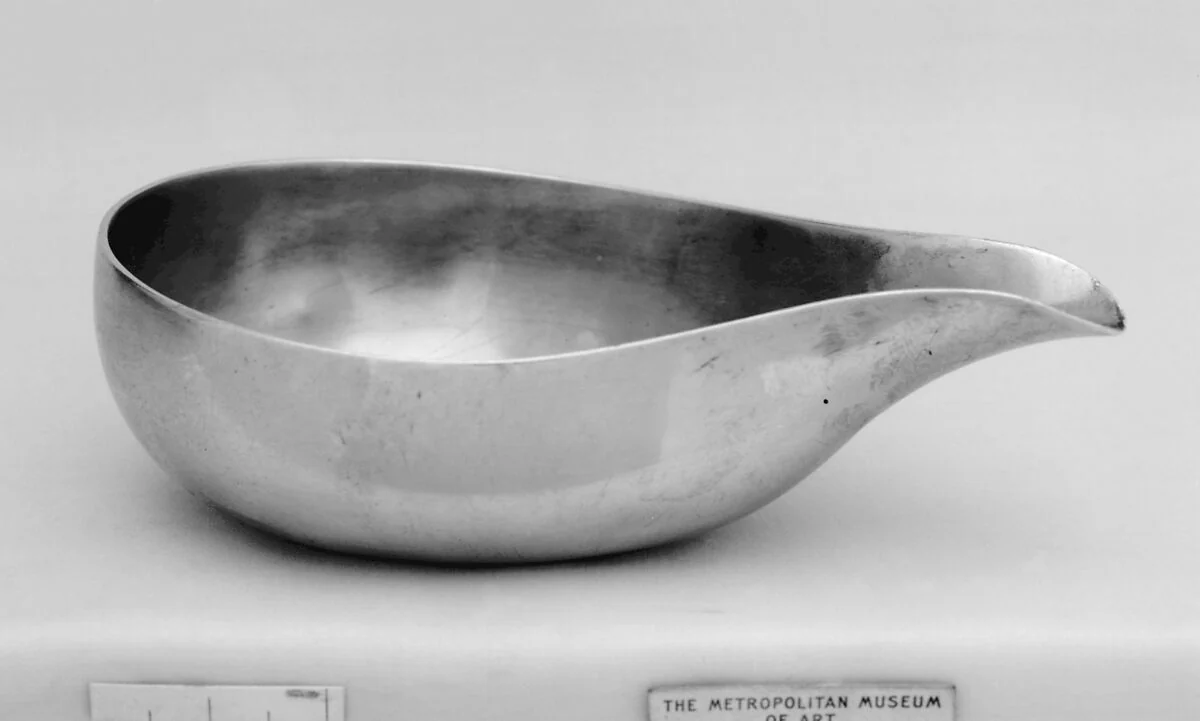
A pap boat is a feeding vessel, not a miniature sauceboat identified only by its size. The Science Museum Group explains its use for soft food, including bread softened in milk or water, given to infants and to people needing assistance with feeding. That history is not a recommendation to reproduce the practice today.
The Met's example was made in London in 1764–65. It is silver with a gilded interior, measuring about 11.4 centimetres long. The catalogue does not name its maker or identify an original child or household. Its form can tell us something about its intended function without supplying an ownership story that has not survived.
Porringers and the meaning of a gift
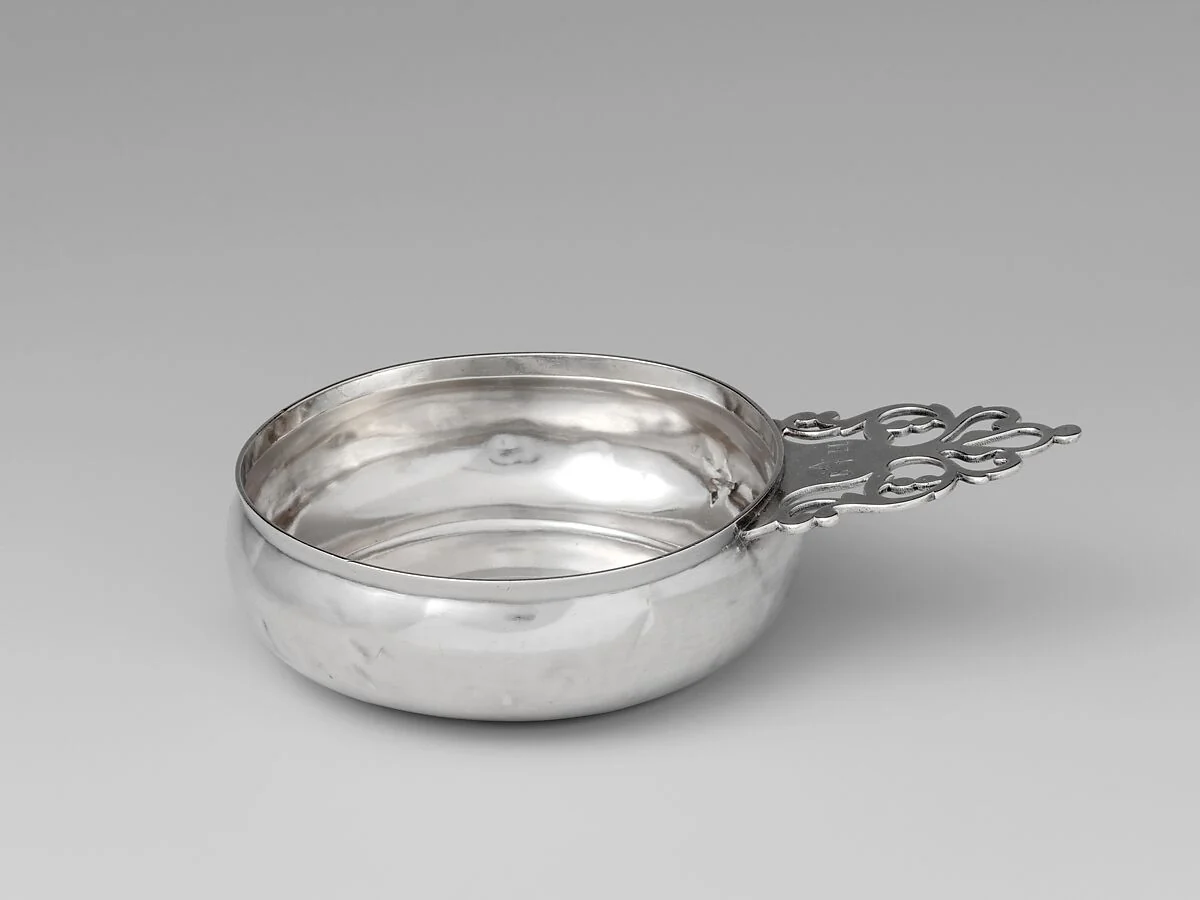
Not every piece associated with a child began as dedicated baby equipment. The Met describes eighteenth-century silver porringers as presentation gifts marking marriages and baptisms, as well as gifts to children. Its example by Paul Revere Jr., made in Boston about 1760, has the pierced handle known as a keyhole pattern.
That context does not identify the occasion for every surviving porringer. A catalogue's explanation of a tradition and an object's documented personal history are different kinds of evidence. A small bowl is not automatically a christening gift, and an attractive first name is not proof of the first owner's identity.
Read the inscription before writing the story
An inscription is a starting point for research. Photograph it clearly and transcribe it exactly before expanding initials or interpreting a date. Keep a second field for your interpretation, so that a promising theory does not become indistinguishable from the original lettering.
Three dates may need separate places in a record: when an object was made, the date commemorated on it, and when an inscription was added. They are not necessarily the same. A later gift can use an older piece of silver.
Family recollections deserve preservation too. Write down who supplied the story and when, alongside documents or photographs that support it. “My aunt remembered this as her grandmother's cup” is valuable evidence in its own right; it does not need to become an unsupported certainty about a maker or year.
Do not erase an inscription simply because its meaning is unclear. It may be the most specific surviving connection between the object and a person. Its effect on market value needs individual assessment, not a rule that engraving always helps or always hurts.
Historic childhood objects are not modern toys
Treat an antique rattle as a collectible. Do not give it to a baby to shake, chew or mouth, or test a historic whistle by blowing into it. Small components, old repairs and unknown treatment history require a more cautious approach than their original purpose might suggest.
Likewise, a silver mark is not a certification that an old feeding vessel is suitable for present-day use. Do not turn a museum description of historical feeding into nutritional advice or a claim that silver makes an object hygienically safe.
This distinction need not make the collection feel remote. A carefully displayed object, a photograph and a recorded family story allow it to remain part of family life without putting it back into service.
Preserve the whole object, not just the shine
Silver may be only one material in a childhood object. Coral, gilding and other components change what a cleaning method can safely do. The Canadian Conservation Institute recommends examining construction and mixed materials before choosing treatment; polishing removes material and may damage gilding, while immersion is unsuitable for many composite or hollow objects.
For a rattle, support the object without loading its delicate attachments. Do not pull a loose bell to see whether it is secure. If there is damage, instability or uncertainty about a previous repair, seek individual conservation advice rather than applying a dip or a general polishing recipe.
The aim is a legible, well-supported object with its history intact. A uniformly bright finish is not the only measure of good care.
Follow the connections
Childhood silver belongs beside family archives as much as beside other metalwork. The inherited-silver guide helps with sorting and recording a group of heirlooms. The Silver Table and flatware sections explain related eating vessels and utensils. Maker profiles can deepen a documented attribution without substituting a famous name for missing evidence.
Start with what can be seen, add what can be verified, and leave room for what may still be discovered. That is how a small piece of silver becomes a useful family record rather than just an appealing old object. Our family-archive guide helps keep the letters, photographs and recollections alongside it.