
01 · Look closely
Fifteen figures, many stories.
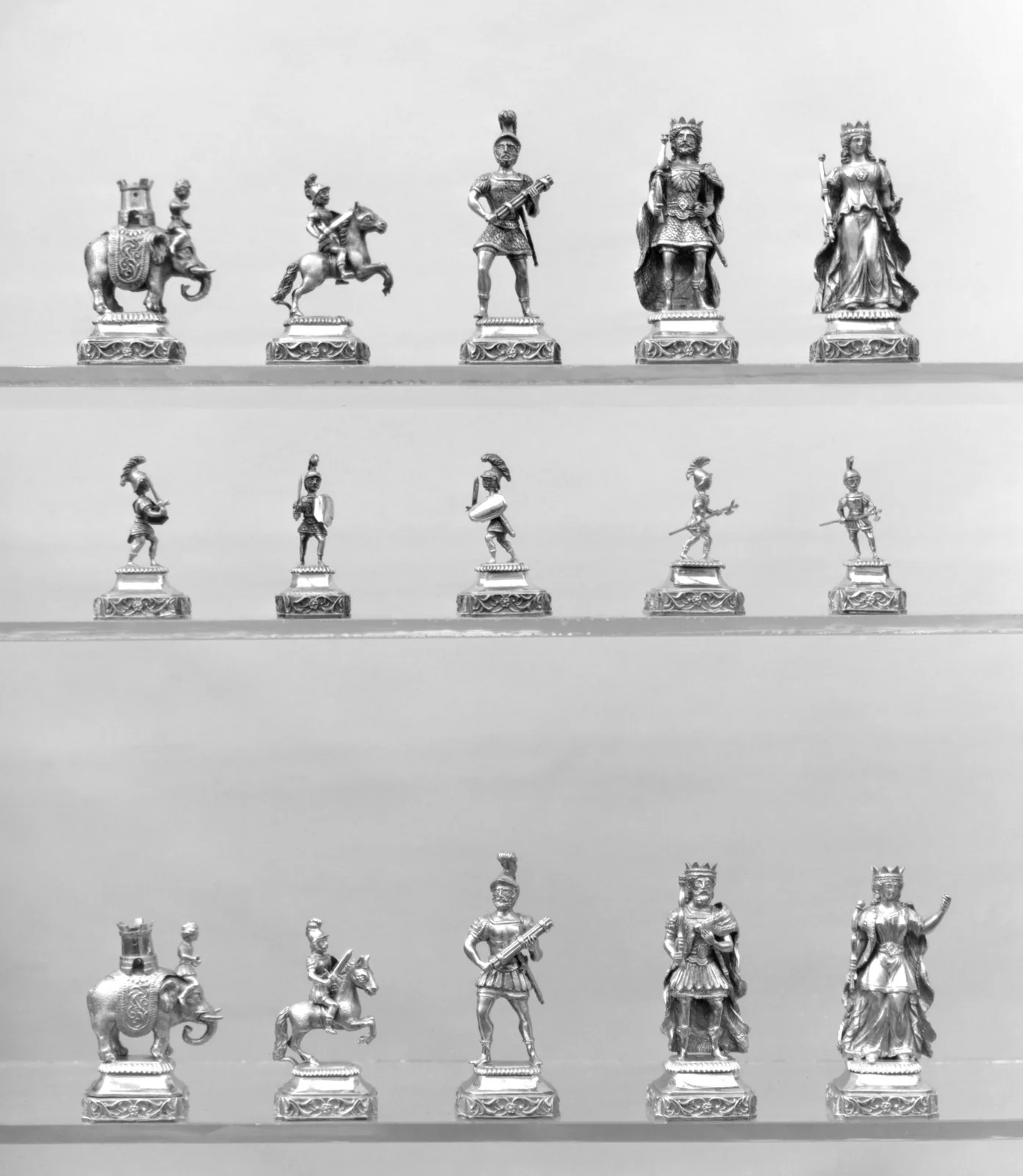
In the Met’s photograph, elephants carry towers, riders lean forward, and crowned figures stand above patterned bases. It is tempting to imagine a whole battle from this small company. The photograph is monochrome and shows a selection: it cannot establish the appearance or color of every piece in the set.
The museum records an Italian chess set of about 1830 in silver, silver-gilt and mother-of-pearl. Its listed king is 8.3 cm high and its pawn 5.1 cm. The catalog also records a board, 34.3 cm square. The photograph above concentrates on chessmen; consult the museum’s record for the object and its other view.
Gustavus A. Pfeiffer gave the set to the Met in 1948. The gift identifies a point in its ownership history, not a complete chain back to its maker.
02 · A set with a question
Animals enter the game.
The hunting pieces invite the eye to travel from tall, restrained bases to a busy world above them: deer, camels, mounted figures and winged creatures. The Met catalogs the German chessmen as polished and oxidized silver, probably from the first half of the 19th century.
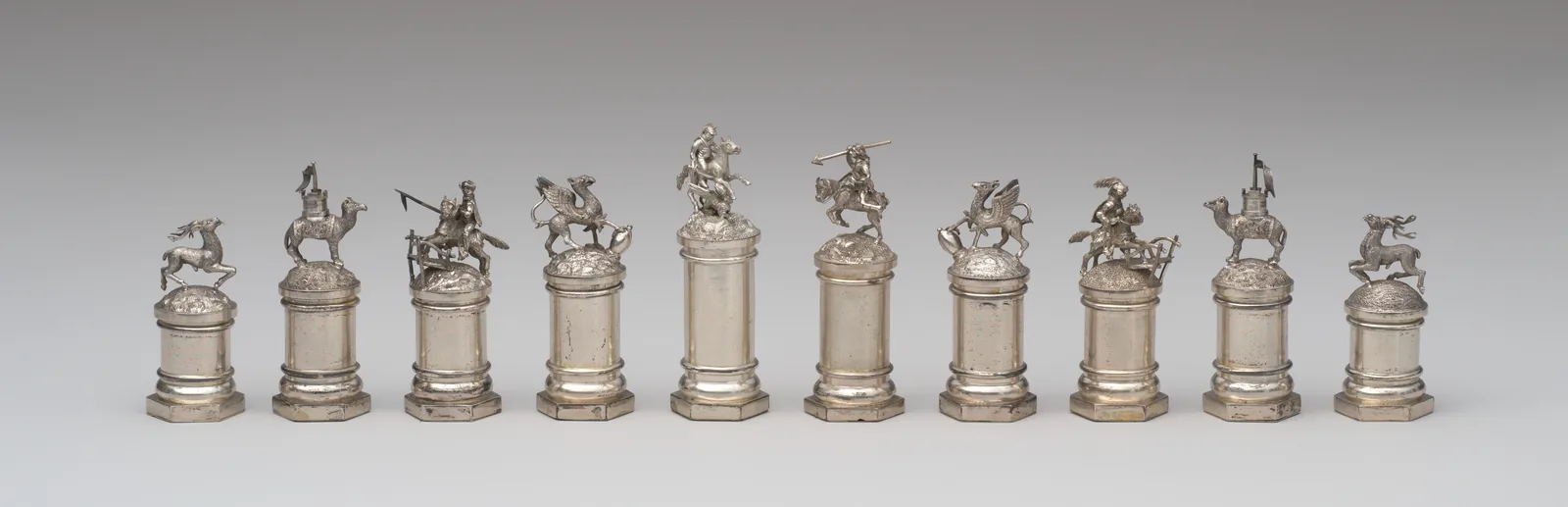
There are 32 chessmen in the museum’s record, but completeness is only the first question. The Met says the ensemble appears to draw on two different sets, one hunting and one military, possibly from the same workshop; it also says there is no evidence that the chessmen always belonged with their box. A matching-looking group can have a more complicated history.
03 · Original and interpretation
One queen, two dates.
This seated queen has the authority of a much older figure. The Met identifies her as an electrotype by Elkington & Co., made in the third quarter of the 19th century after a German 17th-century original. Her 6.8 cm height and silver-gilt medium are recorded by the museum.
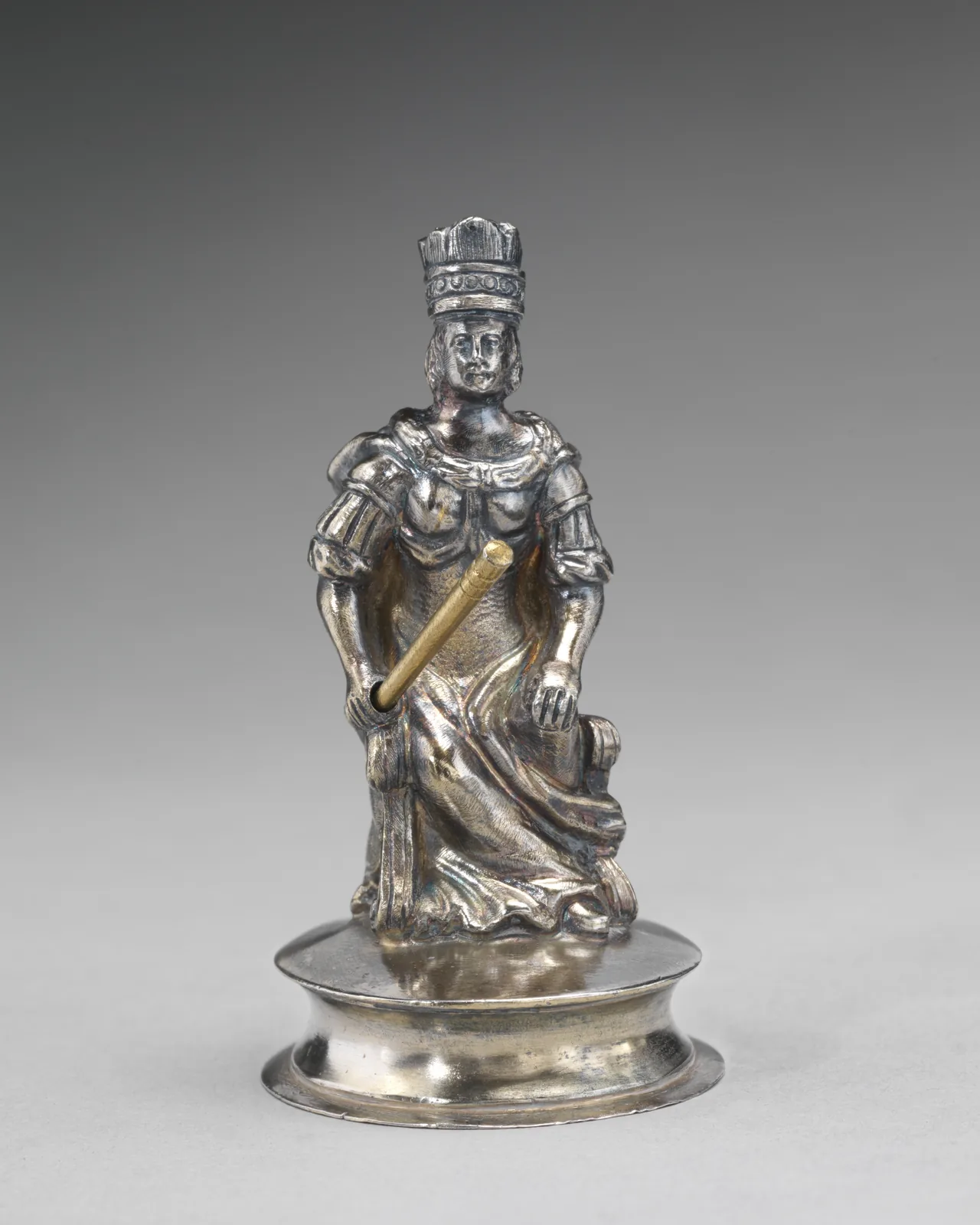
A reproduction can be a collectible and a historical object in its own right. Describe its own maker, date and process alongside the earlier model; a 19th-century electrotype should not become a 17th-century original in a listing.
A collector’s field notes
Before you make a move.
- Count and compare. A conventional chess set has 32 pieces, but other games and historic variants differ. List each role, side and piece; compare sizes, bases and details, and ask whether the board, box or substitutes belong together. A matching count alone does not establish original association.
- Ask what the silver describes. Silver, silver-gilt, plate and an electrotype are different descriptions. Request clear photographs of marks and undersides, and evidence for fineness or construction. A silver-colored finish or total weight including a base does not establish silver content.
- Study vulnerable details. Check projecting weapons, ears and finials, joins, wear, repairs and losses; request views from several angles. Distinguish an intentional darkened finish from dirt or damage with specialist help.
- Keep the group and its record together. Save invoices, provenance, images and any edition paperwork. Support figures individually so delicate projections cannot collide. For gilded, plated, hollow or mixed-material objects, avoid routine polishing or immersion; consult a conservator before treatment.
For more on construction, see materials and care; for another small silver figure, explore the Kirk Stieff horse.
Sources & further reading
- The Met: Italian chess set
- The Met: Bear and deer hunt chessmen and box
- The Met: Elkington chessman (Queen)
- The Met: Carving Out a Collection
- Canadian Conservation Institute: Silver — Care and Tarnish Removal
Museum inclusion does not imply endorsement.