
A letter in parts.
Before writing could travel in a pocket as a screen, it traveled as a collection of tools. A pencil needed a point and a reserve of writing material; a pen needed ink; a letter might need a seal. Silver made some of those parts durable and attractive, but the objects were often assembled from several materials and made by different hands.
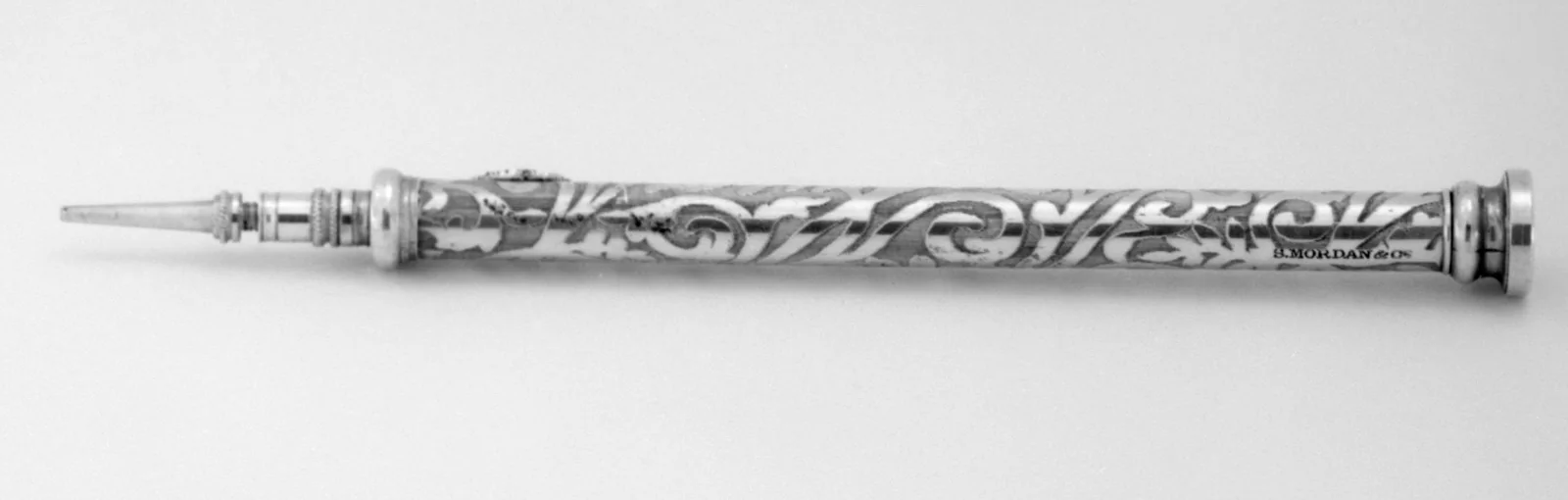
The Metropolitan Museum of Art’s pencil is only 4 7/16 inches long. S. Mordan & Co. made it with an eraser and lead holder as part of a larger fitted set dated 1848–49. Its patterned silver barrel is the visible part of a tool with several components; a loose cap or missing interior mechanism changes what survives.
Ink for the road.
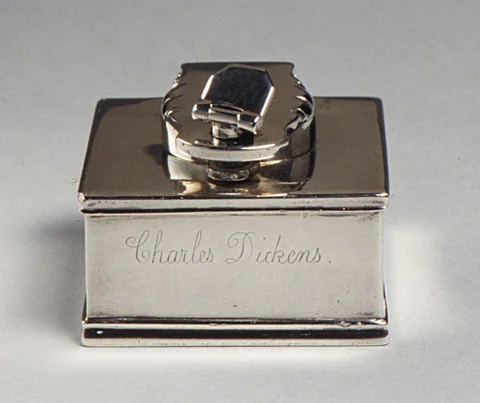
A traveling inkstand could make a portable supply of ink into a compact object. The Met’s London example, dated 1814–15, measures less than two inches across. Its hinged fitting and close-set body invite a collector to look at the closure and interior as carefully as the engraved exterior. The museum does not name a maker in this record.
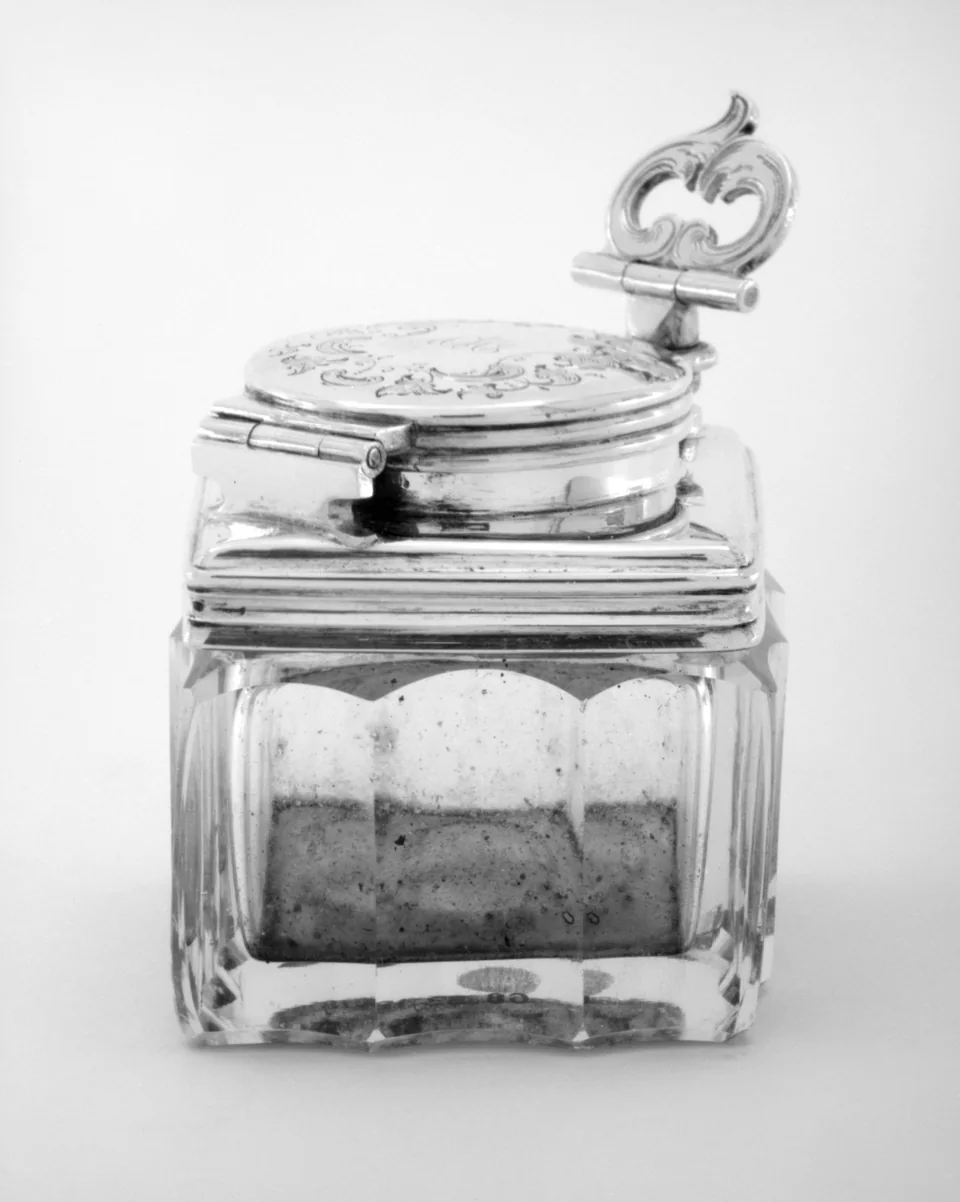
The ink bottle below belongs to the same large set as the Mordan pencil. Its crystal body, silver fittings and cork show why “silver” may describe only part of an object. The donor’s family associated the set with travel in Russia; the Met presents that account as family tradition. The St. Petersburg firm Nicholls & Plincke was a retailer of luxury goods; the pencil’s named maker was S. Mordan & Co.
At the desk: ink, pounce and wafers.
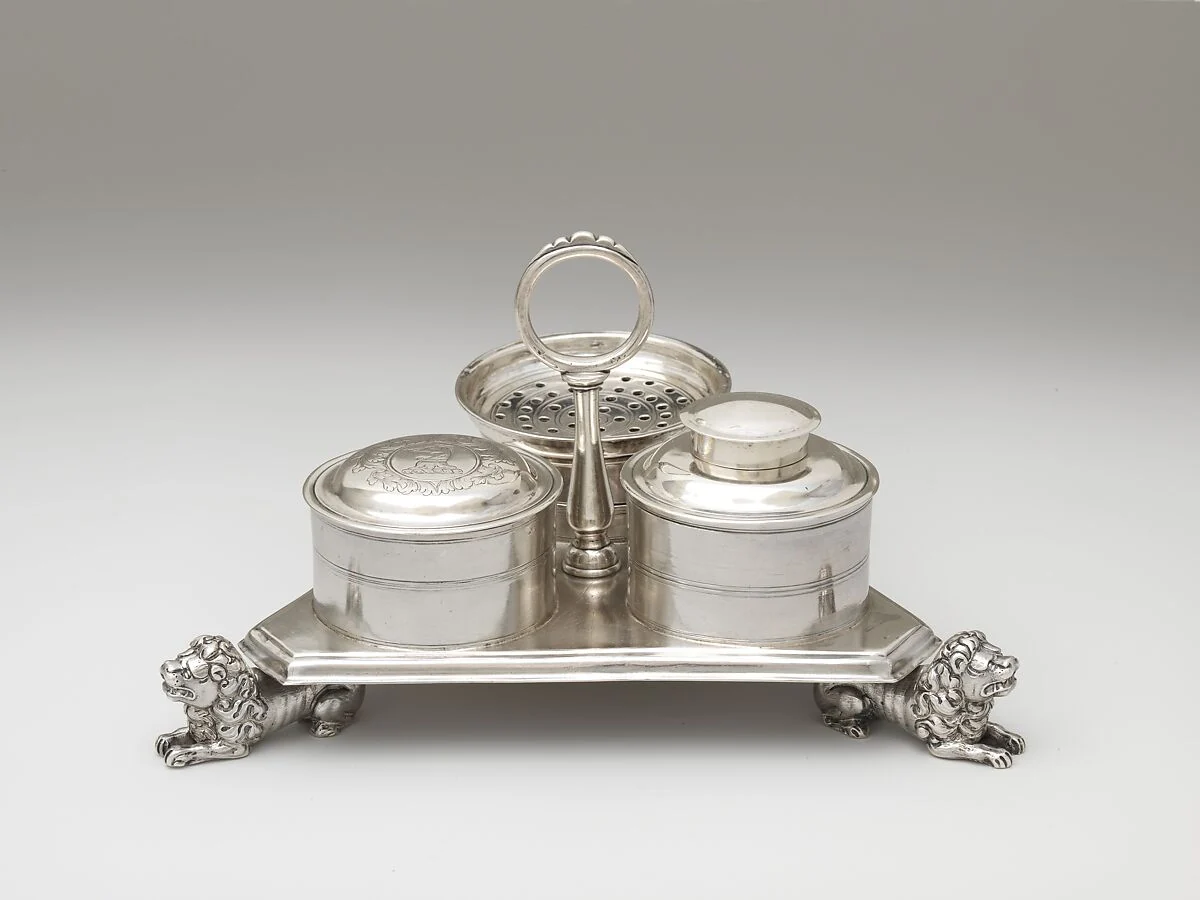
Not every writing object was made for a pocket. John Coney’s Boston inkstand of 1710–20 brings several vessels together on a triangular silver stand with cast lion feet. The Met records a glass ink pot with silver cover, a pounce pot and a wafer-pot cover among its parts.
Pounce was a powder used to smooth rough paper or dry wet ink; wafers were used to seal letters. The names of the compartments matter: a surviving pot or lid might be a replacement, and a set that looks complete at first glance may have a complicated history.
Closing the letter.
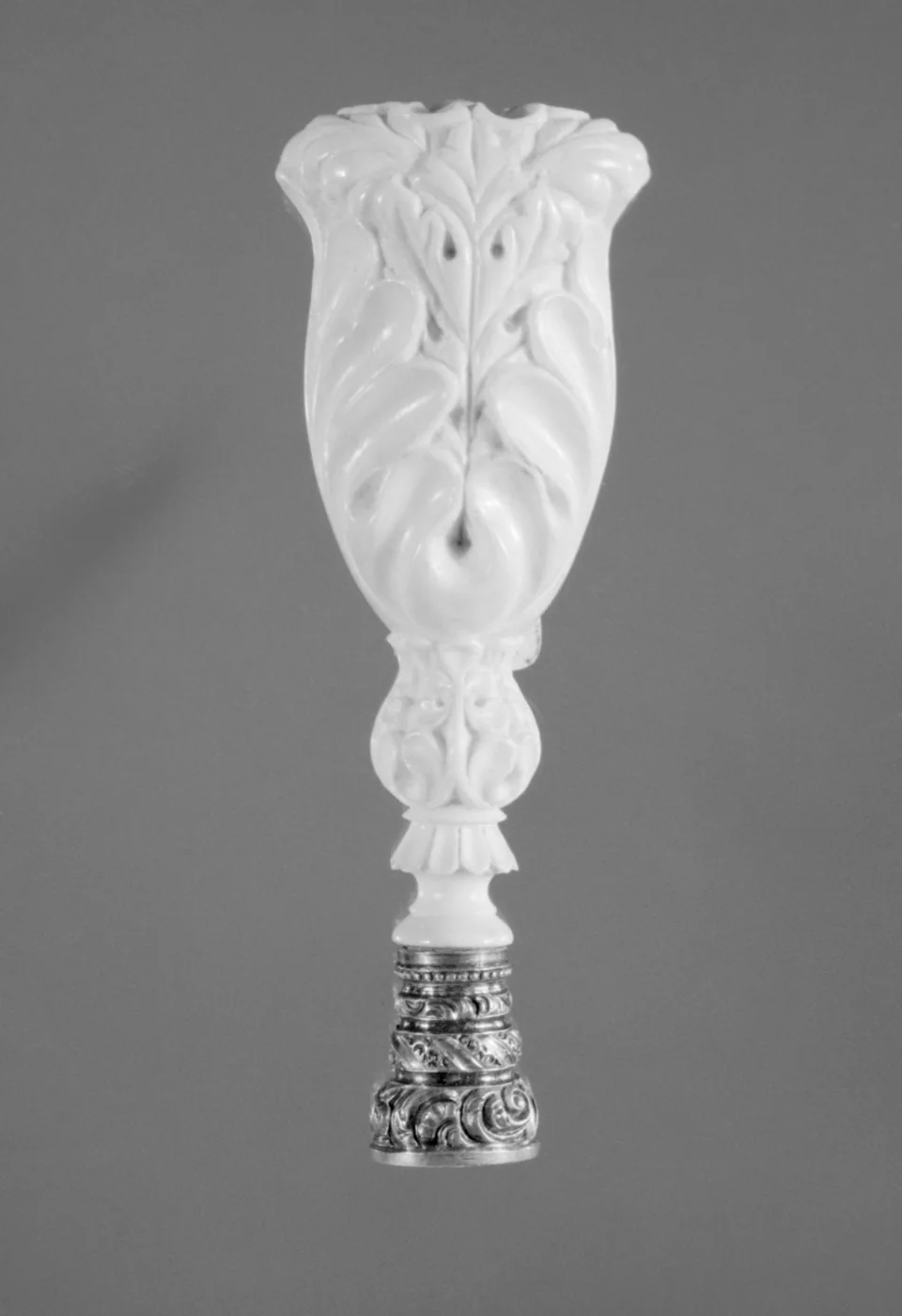
A seal gave a finished letter a personal mark. This example from the Ingersoll set is catalogued as silver and ivory, not as an entirely silver object. The museum dates it 1848–49; it does not name its maker. The mixed materials are part of the evidence, and ivory can bring legal restrictions as well as conservation concerns.
Questions to ask before buying.
Ask for clear photographs of every component, including the point, cap, interior, ink container, stopper, lids, hinges and underside. Compare them with documented examples, but do not assume that every surviving set originally contained identical parts. A mechanism that will not move may be damaged or simply fragile: do not force it.
Photograph marks at their actual size and ask what each one establishes. A retailer’s name is not automatically the maker’s mark, and a mark on a detachable fitting may tell a different story from one on the body. Ask about repairs, replacement glass or stoppers, cracks, altered inscriptions and wear through raised decoration.
Identify silver, glass, cork, steel, ivory and other materials before choosing any treatment. Avoid soaking, dips or abrasive polishing on composite or fragile objects; liquids can reach joints and delicate interiors. A qualified conservator can advise on unstable parts and historic surfaces. Consult a specialist about uncertain marks or regulated materials before purchase or transport.
Sources & image credits
Reviewed November 14, 2026. Institutional records support the named examples; they do not authenticate or appraise a privately owned piece. Historical beliefs are described as history, not medical advice. Check current official requirements for regulated materials.
- The Metropolitan Museum of Art: Pencil with eraser and lead holder (part of a set)
Collection record for 68.33.34a–c; 1848–49.
- The Metropolitan Museum of Art: Traveling inkstand
Collection record for 10.65; 1814–15.
- The Metropolitan Museum of Art: Ink bottle (part of a set)
Collection record for 68.33.18; 1848–49.
- The Metropolitan Museum of Art: Inkstand
Collection record for 24.109.36a–d; 1710–20.
- The Metropolitan Museum of Art: Standish with pounce pot, wafer box, and inkwell
Explains the uses of pounce and wafers; the illustrated standish is enamel on copper.
- The Metropolitan Museum of Art: Seal (part of a set)
Collection record for 68.33.33; 1848–49.
Museum photography
These photographs are museum-supplied Open Access or public-domain images. They have been resized proportionally and converted to WebP; the pencil photograph is cropped around the object. No retouching was applied. The credits identify the object and institution; no endorsement is implied.
- The Metropolitan Museum of Art, Gift of Ralph McAllister Ingersoll, 1968 (68.33.34a–c). Public domain. Image rights
- The Metropolitan Museum of Art, Gift of Mrs. John C. Gray, 1910 (10.65). Public domain. Image rights
- The Metropolitan Museum of Art, Gift of Ralph McAllister Ingersoll, 1968 (68.33.18). Public domain. Image rights
- The Metropolitan Museum of Art, Bequest of Charles Allen Munn, 1924 (24.109.36a–d). Public domain. Image rights
- The Metropolitan Museum of Art, Gift of Ralph McAllister Ingersoll, 1968 (68.33.33). Public domain. Image rights