
A low bowl presents an open, crown-like rim and ring handles at the ends. One of a matching pair, it has a broad, smooth body that offers little clue to the intended use. The answer lies at the top: those repeated openings are more than an ornamental border.
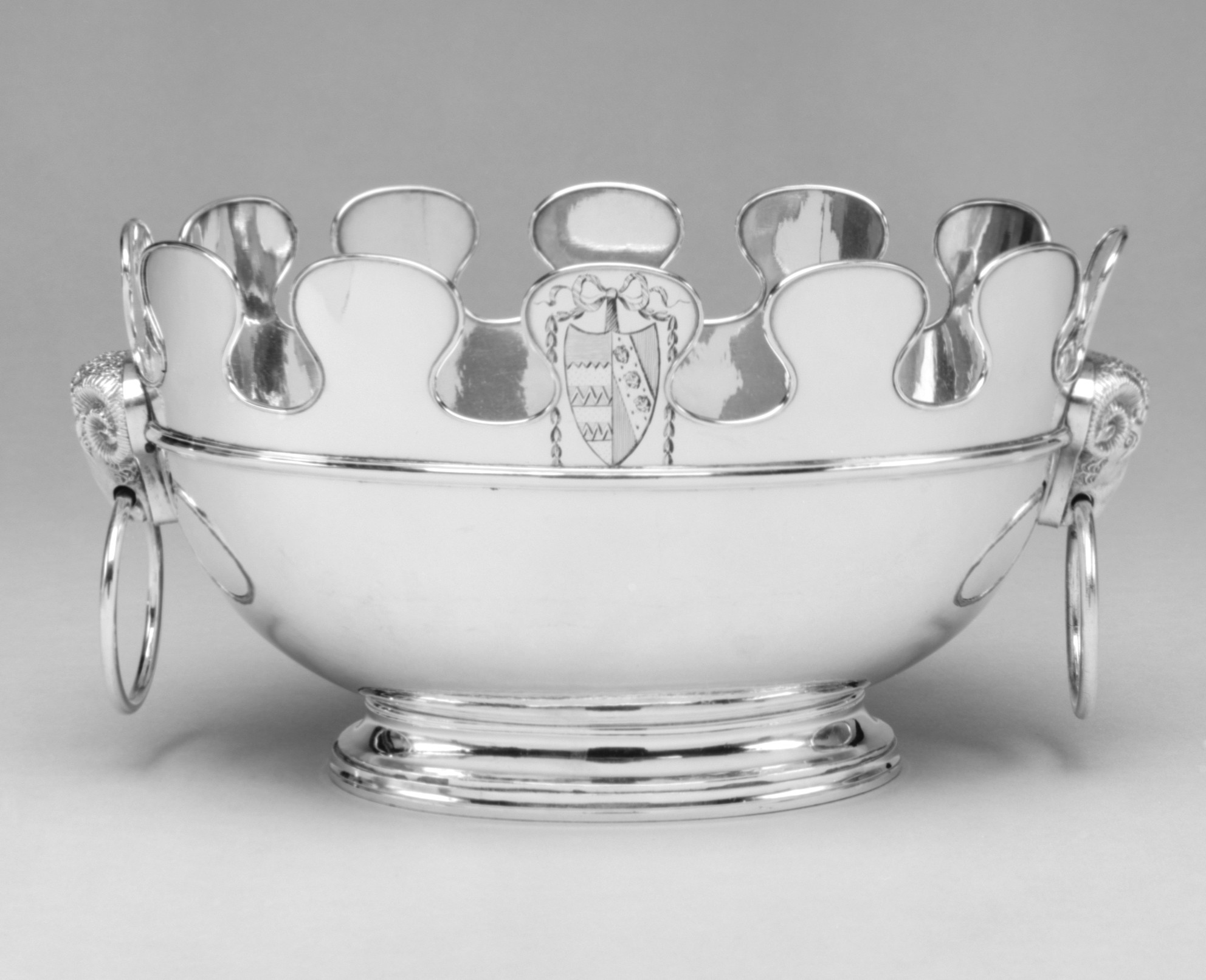
The rim explains the object
The Met explains that verrières cooled wineglasses in ice water. An inverted glass rested at a notch with its foot outside the vessel. The low oval form developed from the deeper, round monteith. The museum dates this British pair to about 1775 and identifies its material as Sheffield plate.
Imagine the rim with glasses in place rather than empty. A puzzling silhouette becomes a practical arrangement: repeated openings organize separate objects around a shared bowl. The empty vessel in the photograph preserves the pattern while leaving us to reconstruct that use.
Plate, but not electroplate
In the historic fused process, silver and copper were joined by heat, then rolled into a sheet that could be shaped. The V&A’s guide to metalworking techniques distinguishes this Sheffield plate from later electroplating. In electroplating, an electrical process deposits a metal coating rather than starting with a heat-fused composite sheet.
That distinction matters here. The museum is not describing a solid sterling-silver body, and “plated” alone would leave out the particular manufacturing tradition. A photograph cannot establish the thickness or remaining quantity of the silver layer.
A probable commission, not a signed maker
The museum identifies the engraved arms as those of John Sawbridge and his wife, Anne. Sawbridge served as London’s Lord Mayor in 1775–76. The love knot above the shield leads the museum to suggest that the pair was probably made for the Lady Mayoress. “Probably” is important: it remains an interpretation, not a surviving commission quoted here.
The Met also reports that the pair has no manufacturer’s mark. That absence does not tell us why it was left unmarked, or provide a universal rule for identifying Sheffield plate. The museum record supplies the object-specific evidence.
Look again at the silhouette: the spacing of the openings, the small foot and the quiet expanse of the body. This is silver collecting beyond metal content, where a design feature can preserve an unfamiliar table habit. Continue with the guide to silver decoration to compare surface work with the construction beneath it.