
Closed, the object has a clear, tapering upper form, a rounded lower section and a small loop at the top. Green enamel bands mark the meeting edges. Open, it presents something quite different: a circular, pierced surface filled with colored ornament. The second photograph changes how we read the first.
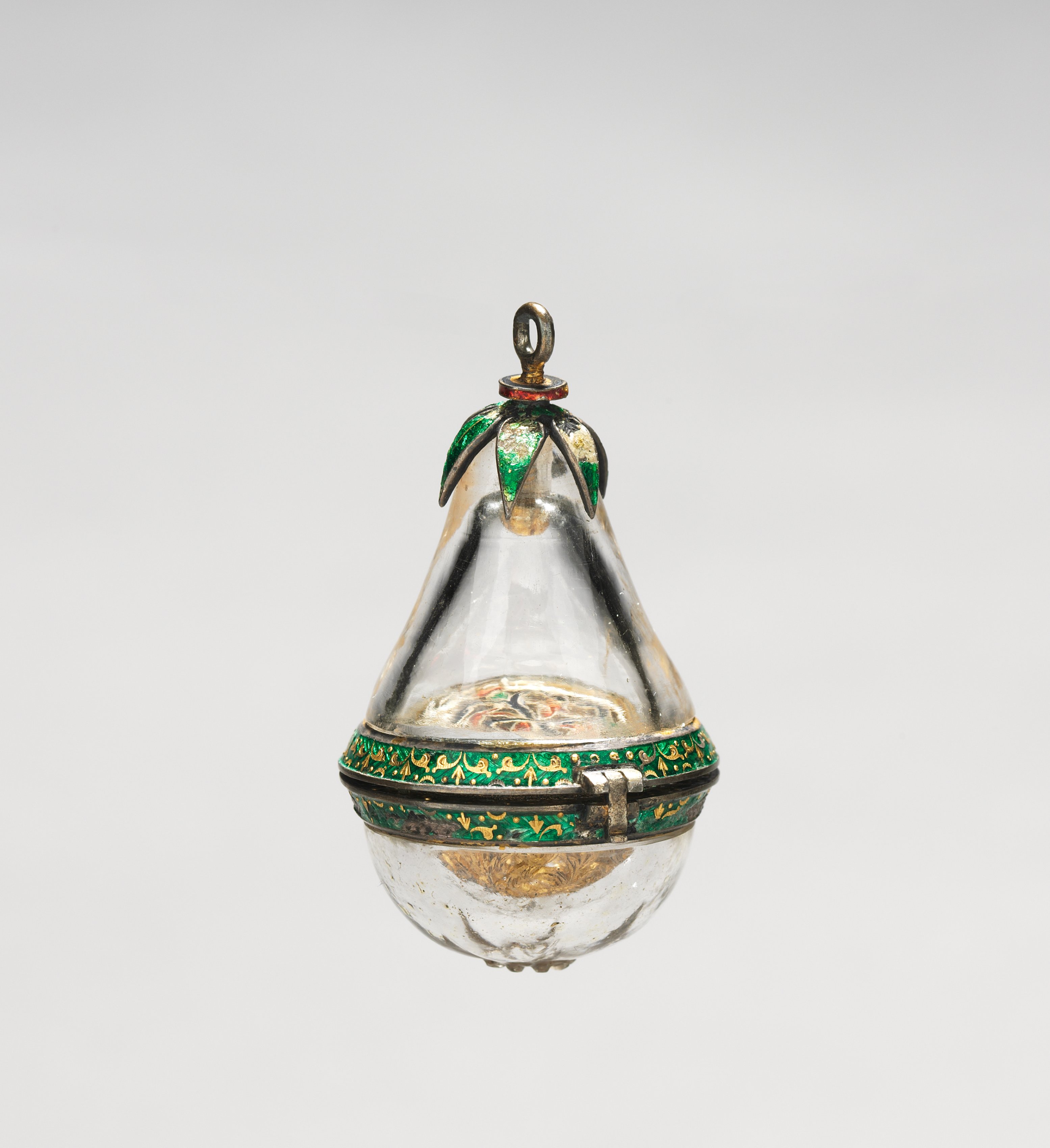
Worn, then opened
The Cleveland Museum of Art describes a small pear-shaped vial tied to a sash, intended for scented water or oil. Opening the lid reveals a perforated sprinkler embellished with filigree and enamel. The recorded overall dimensions are 4.5 by 3.2 cm: a small accessory, despite its enlarged appearance on screen.
The loop and closure draw attention to two different actions: carrying and opening. Neither photograph supplies a named wearer or an account of a particular occasion. What the pair does give us is a direct comparison between the compact outer silhouette and the decorated working surface within.
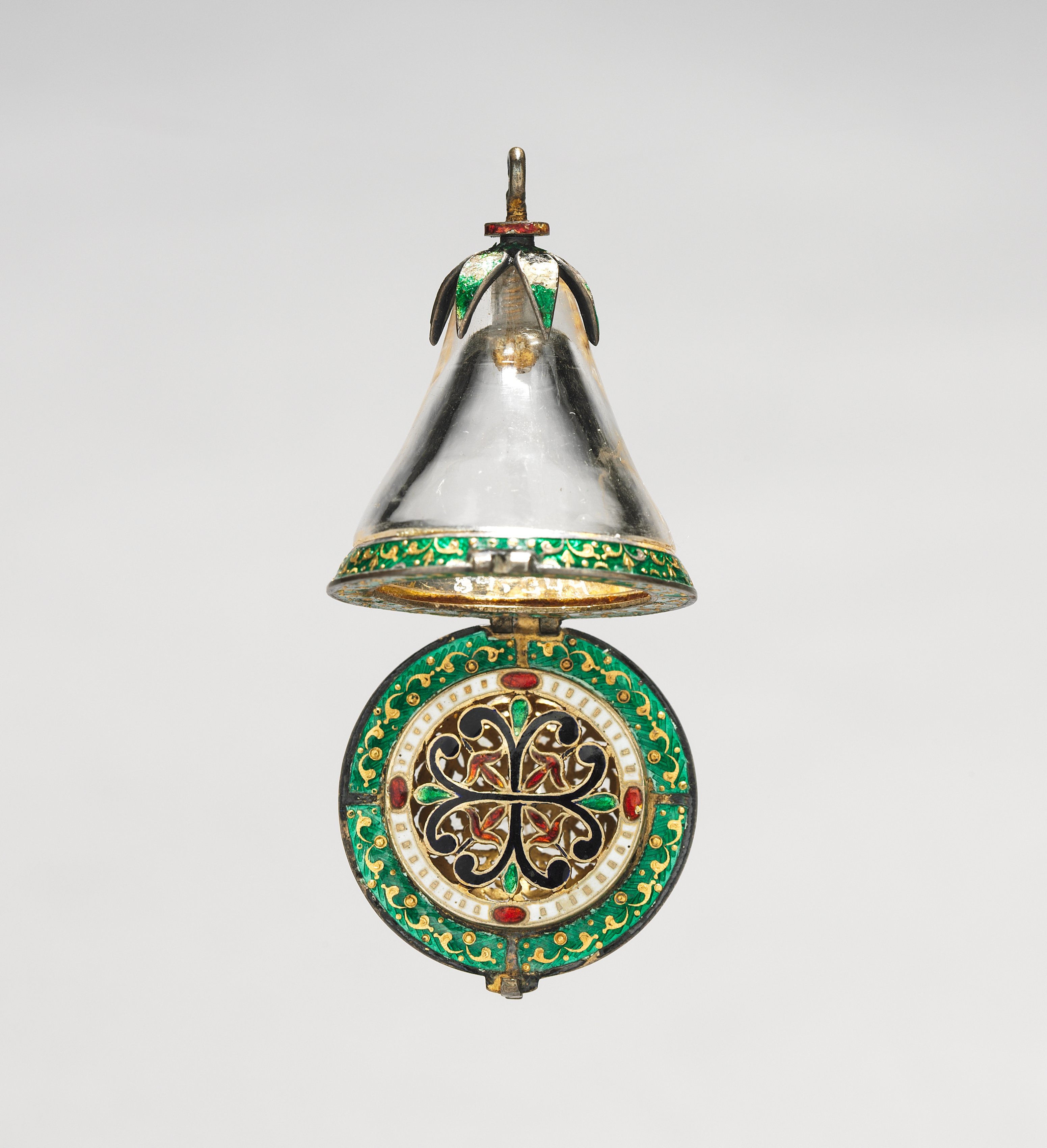
Decoration around openings
In the open view, dark curling forms radiate around the center, interrupted by red and green details. A pale ring separates them from the wider green border. Follow the openings between the shapes: they belong to the design as much as the colored surfaces do. The hinge links this circular arrangement to the clear cover above it.
These photographs support a description of the fittings, not an identification of surviving contents. The museum mentions rose attar as a popular scent in its historical explanation; it does not establish that this particular vessel still contains rose oil.
Keep the object’s name with its fittings
The museum calls this object a pomander. That label should remain attached to this documented example rather than becoming a rule that every pomander has the same form or held the same material. Compare the fittings with the vinaigrettes and snuffboxes in our pocket-silver guide, without treating the names as interchangeable.
A paired record is especially useful here: one image for the closed profile and suspension loop, another for the open sprinkler and enamel layout. Together they explain more than a list of materials alone. Place, period, dimensions and intended use above follow the Cleveland Museum of Art record.