
An object, up close · 1917
A web of silver, enamel and light
Augustus F. Rose’s necklace brings a shimmering opal into a delicate network of silver and color. Look closely and a piece of wearable design becomes a lesson in movement, materials and craftsmanship.
The object
A jewel that moves
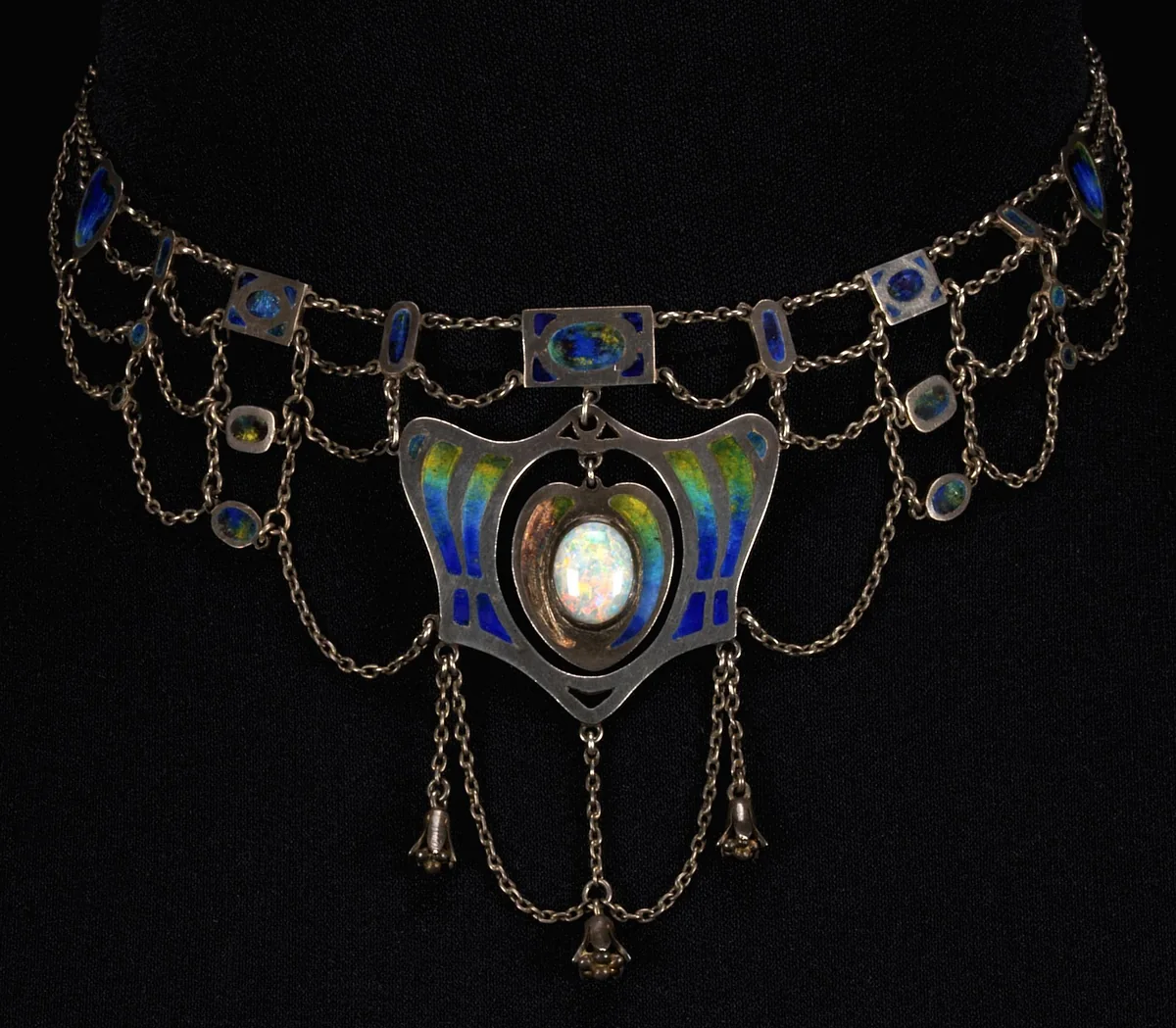
The Smithsonian dates this necklace to 1917 and records its materials as sterling silver, blue enamel and opal. Its listed dimensions are 17.1 × 12.0 × 0.4 cm. Those are the museum’s object dimensions, not a wearable chain length.
Small silver elements connect through fine chains. Scalloped swags and suspended drops give the composition a rhythm that would change as the wearer moved. At the center, a luminous opal sits within an open frame; enamel pulls blue and green through the surrounding silver. The museum likens the looping lines to a spider’s web and the enamel to drops of water. This is an interpretation of the design, not a claim about the maker’s stated intention.
Materials & design
Color held in silver
Sterling describes the alloy, while enamel supplies a glassy colored surface and the opal gives the center its shifting play of color. Each material contributes differently: silver forms the links and framework, colored areas punctuate the sequence, and the stone draws the eye inward. The museum describes Rose joining enameled pieces with tiny chains and links; its record does not specify every forming or enameling technique.
The necklace belongs in a wider Arts & Crafts conversation about skilled making and designs inspired by nature. It is also an individual work: handmade appearance, a natural motif or a cabochon alone cannot authenticate a jewel or identify its maker. Compare the open lines here with the documented jewelry and metalwork in our Charles Robert Ashbee and Kalo Shop profiles. Their different workshops should not be collapsed into one style or attribution.
A collector’s eye
Read the whole construction
Start with a complete front and reverse, then ask for sharp photographs of each connection, the clasp and any marks. Look for worn or stretched links, irregular solder, a replaced clasp or drops that may no longer match. A repair is part of an object’s history; its effect on value and safe wear depends on its quality and disclosure.
Inspect enamel for chips, cracks, losses or later restoration, and the setting for movement or damage. Ask whether the stone has been identified and whether treatments or replacements are documented. A photograph cannot establish a stone’s identity. Record dimensions, total weight and materials separately: the weight of a composite jewel is not its silver content.
Keep the maker claim, marks and provenance distinct. Compare a proposed attribution against documented examples and seek specialist advice when the evidence is incomplete. Avoid immersing or aggressively polishing a mixed-material jewel; consult a conservator or qualified jeweler about its particular condition. Our jewelry care guide and collection record guide offer useful next steps.
A wider view
Another way to organize silver
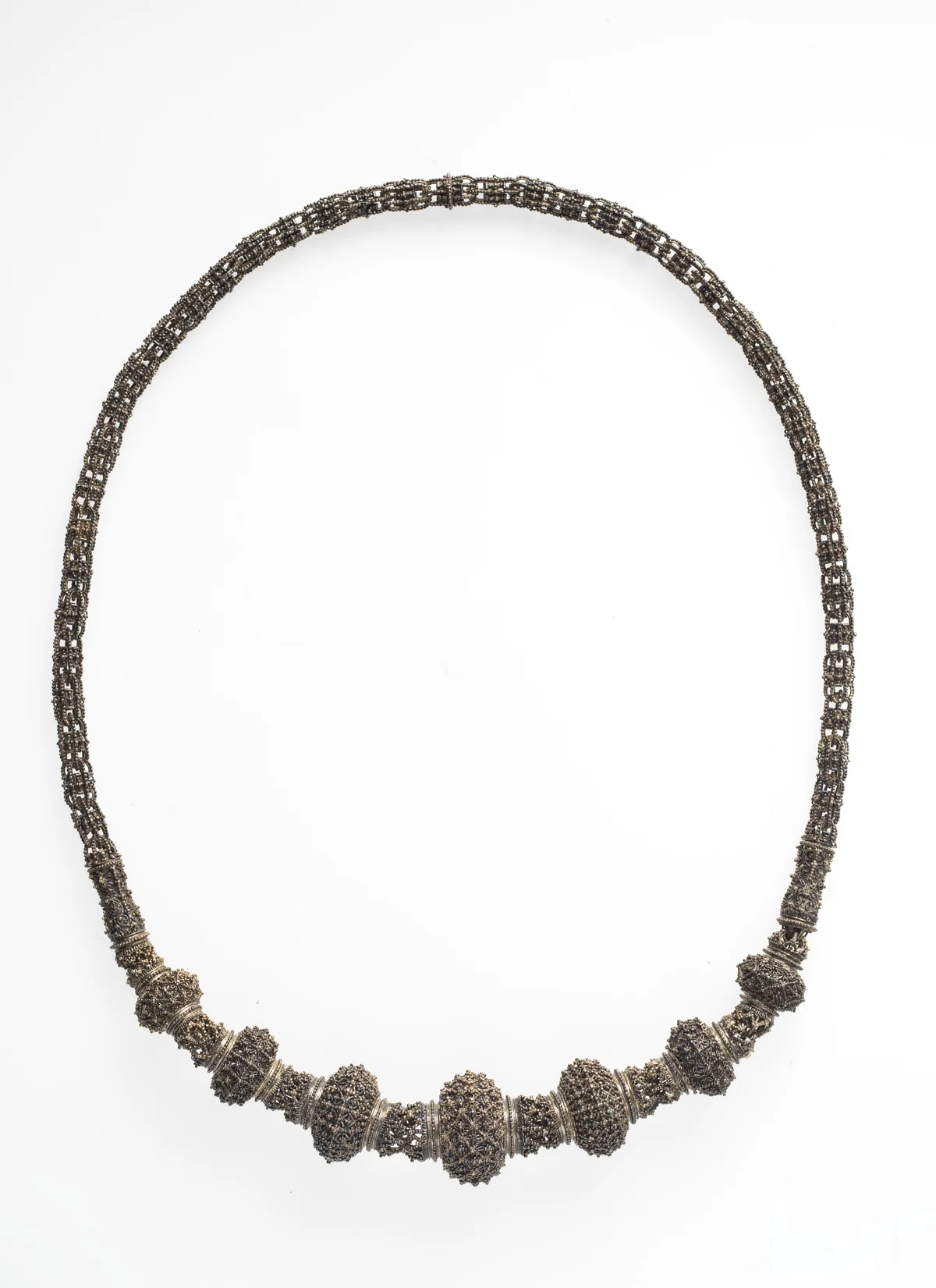
This necklace, attributed by The Met to Sri Lanka and dated to the 18th–19th century, is not an Arts & Crafts work. Its dense, patterned elements and extended chain offer a different way to study repetition, scale and the transition between a necklace’s front and its flexible strand. The museum identifies its material as silver; its record does not name a maker. Visual similarities alone do not establish influence between the two objects.
Continue with the necklace guide to compare shape, fit and fastening, or explore the silver gallery for more objects in context.