

Colonial silver · New York
At the table and in the synagogue
Start with the light. A tall silver candlestick reflects it; a pierced Torah finial lets it pass through. Myer Myers (1723–1795) belongs in both the history of the American table and the history of Jewish ceremonial art.
Registered as a goldsmith in New York in 1746, Myers developed a workshop known for domestic and religious silver. Curator David L. Barquist’s research traces a shift toward elaborate rococo forms in the 1750s and a broader range of production before the Revolution.
His apprenticeship master is not documented. Barquist proposes Charles Le Roux as a possibility from the early silver’s forms and style, not from a surviving apprenticeship record. Keep that distinction when telling the story.
The museum records below credit Myers as maker. That identifies the silversmith associated with an object, but it does not document the individual hand behind every workshop operation. Begin with the named object and its evidence, then widen the comparison.
From the museum collection
Light, ceremony and the evidence beneath the surface
Two museum photographs introduce the work. Two further studies connect religious use and authentication, with links to the institutions’ own records.
A candlestick: look from the foot to the socket
The Met’s silver Candlestick, 1755–60, was made in New York and is catalogued to Myer Myers. Object 1972.3.1a, b is 25.9 cm high overall; the record lists the removable bobeche separately.
The broad, shaped foot and rising stem make a useful exercise in looking. Trace the silhouette before the ornament. Then compare the upper fitting with the rest of the object, rather than assuming that every detachable part has always belonged together.
When documenting a similar candlestick, photograph it assembled, its underside and any safely accessible separate parts. Do not force fittings apart. Note repairs and replacements individually; an elegant outline cannot establish completeness.
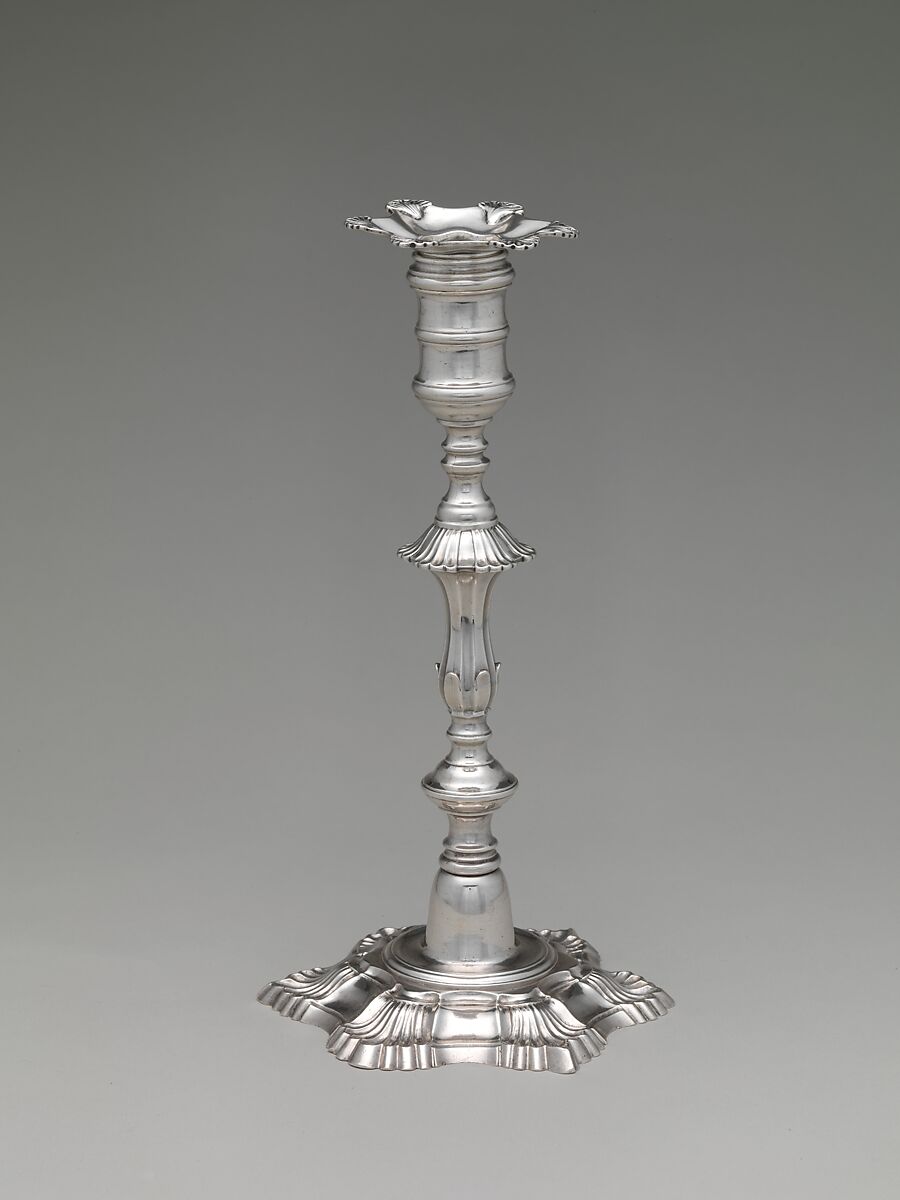
Myer Myers, Candlestick, 1755–60.
The Metropolitan Museum of Art.
View the museum photographA cann: an unidentified crest is still evidence
The Met calls this silver drinking vessel a Cann, dates it 1765–76 and names Myers as maker. Object 33.120.277 was made in New York and is 13.3 cm high. The museum explicitly leaves its engraved crest unidentified.
The photograph lets you compare a smooth swelling body, a prominent scroll handle and the low circular foot. The crest is a starting point for research, not permission to attach a family name without evidence.
Another Met comparison is the Creampot, 1772–76, accession 2012.244.2. Its record again names Myers as maker and lists silver as the material. It provides a comparison of forms; the record does not identify it as part of the cann’s service.
Keep separate notes for the object’s shape, its maker’s mark and its ownership engraving. Each asks a different question. A family tradition or a familiar pair of initials should be recorded as a claim until supporting evidence is found.
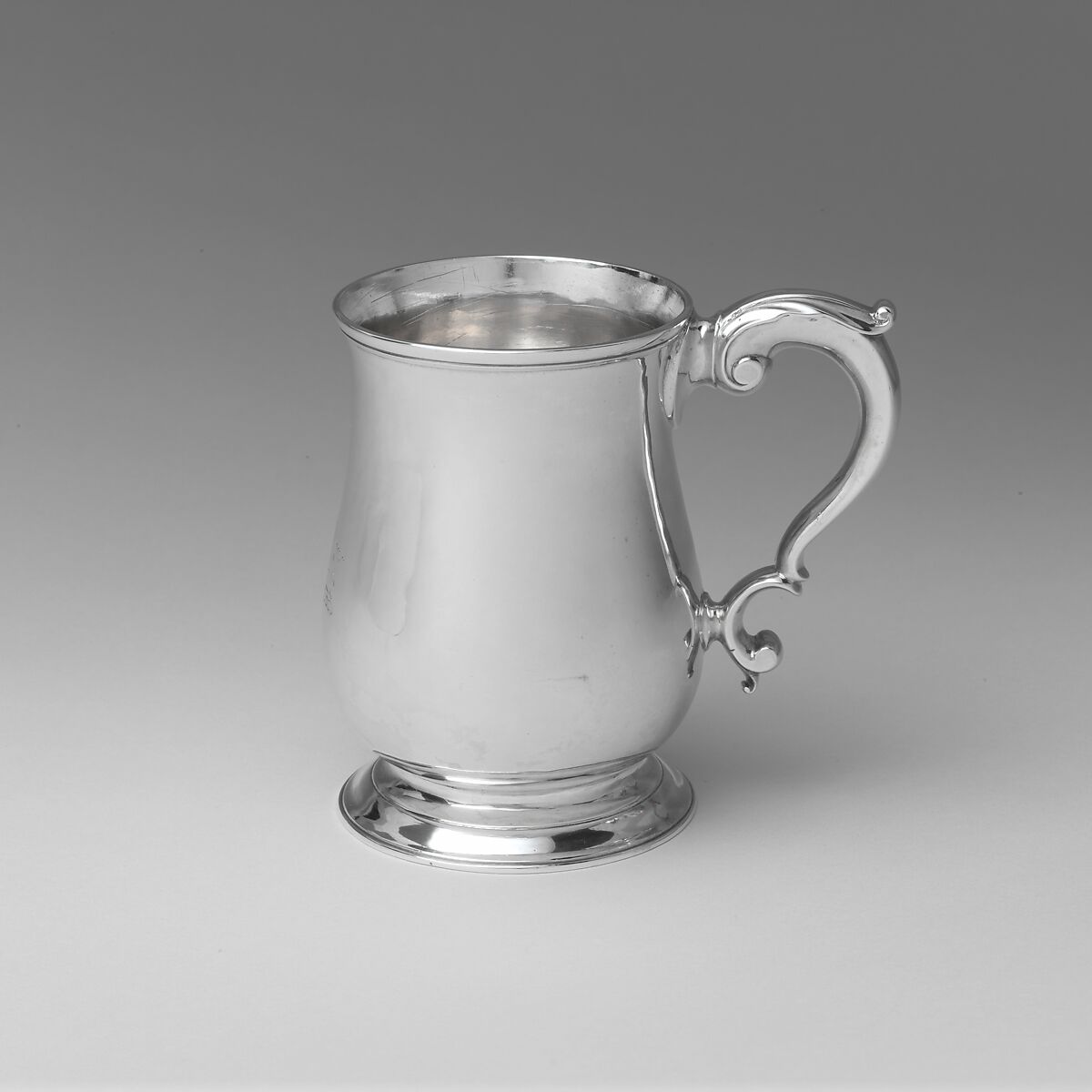
Myer Myers, Cann, 1765–76.
The Metropolitan Museum of Art.
View the museum photographTorah finials: silver made for a living tradition
Princeton’s 2016 exhibition account identifies Myers’s Rimonim, or Torah finials, dated 1765–76, from Congregation Shearith Israel in New York. The paired ornaments decorate the staves of a Torah scroll. The account connects Myers with this congregation throughout his life.
Each is listed as 36.5 cm high, in silver and brass with parcel gilding. Preserve the full material description: this is not a claim that every component is solid silver. The photograph and exhibition context can be explored through the research link below.
Study ceremonial objects through their function and community as well as their ornament. Record the specific congregation named by the source, rather than merging different surviving pairs into a single object. This example is not presented as a museum-owned purchase or an item for sale.
A genuine mark can belong to an altered object
Winterthur’s Treasures on Trial examines a spice tower whose base bears a genuine Myers mark. A concealed seam and analysis showing different silver purity in the upper section exposed a composite object. The museum says the parts were almost certainly joined to deceive.
That tower is a warning, not an intact authenticated Myers work. A genuine old component does not authenticate everything attached to it. The museum’s case study brings construction and material evidence into the same investigation as the mark.
For a prospective purchase, ask for clear underside, joint and mark photographs, the provenance trail and any specialist report. If the attribution carries a substantial premium, seek qualified examination before committing. No image on this page authenticates an object offered elsewhere.
Names & chapters
How the story developed.
- 1746
Registered in New York
Myers registers as a freeman with the profession of goldsmith.
- 1755–60
Silver for the table
The Met dates its candlestick to this period.
- 1765–76
Two settings for silver
The cann and Shearith Israel finials share this catalogued date range.
- 1772–76
Later table silver
The Met’s separate Creampot, 2012.244.2, documents another form before the Revolution.
Follow an interest
What to explore.
A historical research profile of Myer Myers (1723–1795), not a current business listing. Object credits, approximate dates and uncertain identifications retain their qualifications. No physical object has been examined or authenticated, and no signature or hallmark is redrawn.
Check the details
Before you buy.
Look at the whole object before trusting a famous name.
Open the references
Research this name.
- Museum collection
Study the Met candlestick
Check the maker credit and separate component measurements.
- Museum collection
Read the cann’s record
See the crest that remains unidentified.
- Museum collection
Compare the later creampot
Follow another table form into the 1770s.
- Museum exhibition
Explore the Torah finials
Find the Shearith Israel pair in Princeton’s exhibition account.
- Museum case study
Follow the Winterthur investigation
Learn why a genuine marked base did not settle the attribution.
- Curatorial scholarship
Read Barquist’s career study
Follow the workshop’s development through surviving objects.
- Museum guide
Visit the Met’s American silver
Continue through the collection and its research resources.
- Museum guide
Explore Winterthur
Connect decorative arts with conservation and object research.
- Collecting guide
Build an authenticity checklist
Keep material tests, construction and provenance in proportion.
- Collecting guide
Read marks in context
Distinguish the different information marks can provide.
- Related maker profile
Compare Paul Revere Jr.
Explore another early American silversmith; this is a comparison, not a claimed partnership.
Sources & further reading
- Myer Myers: Jewish Silversmith in Colonial New York, by David L. Barquist Incollect; article by Yale University Art Gallery curator David L. Barquist · Curatorial scholarship: registration, workshop and qualified apprenticeship proposal
- Candlestick, 1755–60; 1972.3.1a, b The Metropolitan Museum of Art · Object record: maker, date, materials, components and public-domain photograph
- Cann, 1765–76; 33.120.277 The Metropolitan Museum of Art · Object record: maker, date, dimensions, unidentified crest and public-domain photograph
- By Dawn’s Early Light: Jewish Contributions to American Culture from the Nation’s Founding to the Civil War Princeton University Art Museum · Exhibition account: Shearith Israel finials, function, date and materials
- Myer Myers: Treasures on Trial Winterthur Museum, Garden & Library · Construction and analytical evidence in an altered spice tower
- Creampot, 1772–76; 2012.244.2 The Metropolitan Museum of Art · Independent later object record supporting sustained practice
Sources checked November 11, 2026. Approximate dates and uncertain identifications retain their qualifications. Photographs: The Metropolitan Museum of Art.