
Collector’s guide · Light & image
When silver held the light
A photograph can be a mirror, a paper print or a picture on glass. Learn to look past the scene and read the object that carries it.
Compare the formats ↓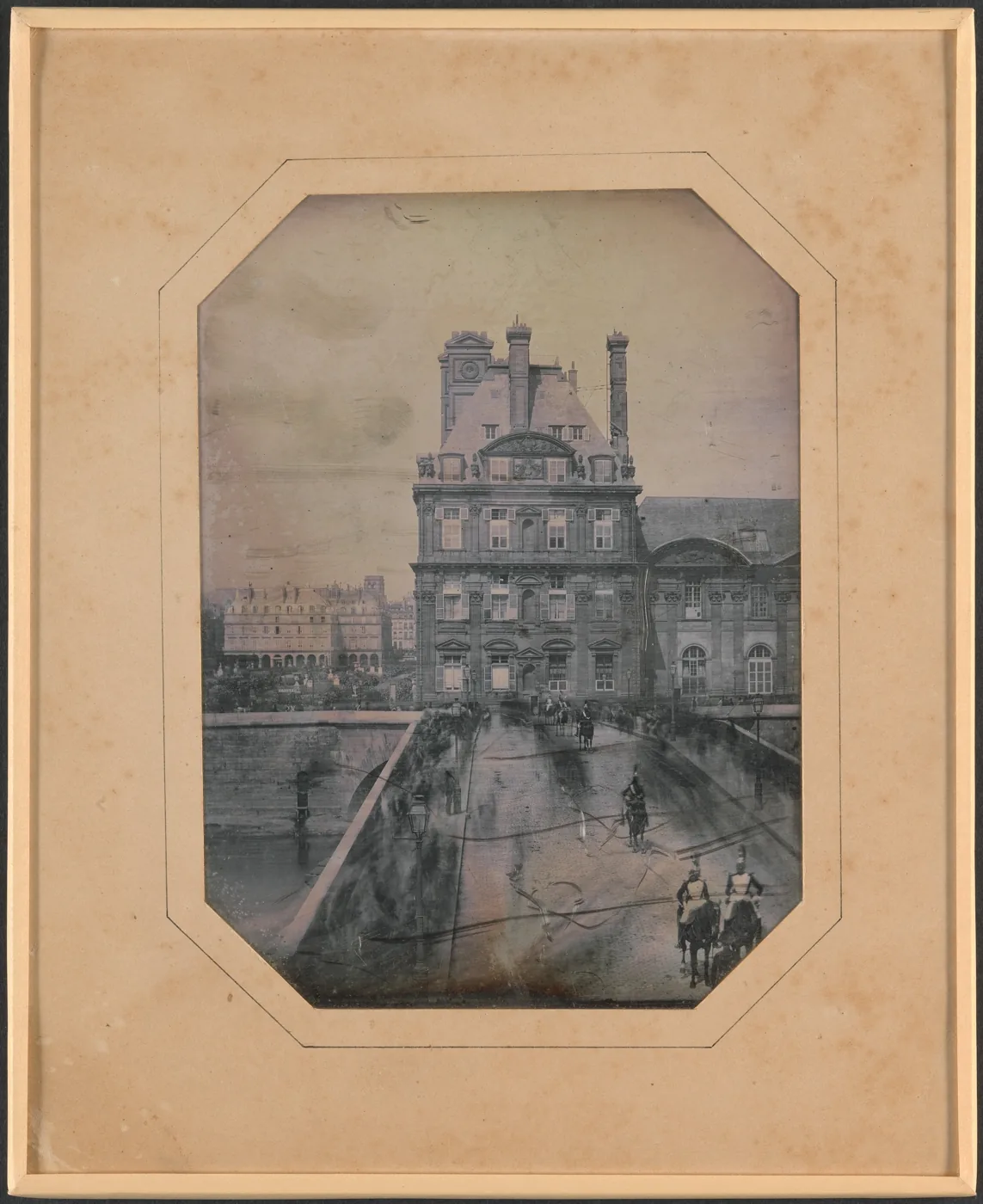
Silver’s role changes with the process. In a daguerreotype it is part of the plate itself; in an albumen or gelatin-silver print it helps form the picture on paper. A photograph of a photograph can flatten these differences, so begin with the complete object and its documented history.
At a glance
Three ways silver makes a picture
| Format | Silver’s role and support | Useful clues |
|---|---|---|
| Daguerreotype | Silver-plated copper supports an image of microscopic silver-mercury amalgam particles. A direct, usually unique image. | Mirror-like surface can shift from positive to negative with viewing angle; often behind glass in a case. |
| Albumen silver print | Silver image in an egg-white coating on paper, generally printed from a negative. | Often warm-toned, finely detailed and mounted on card; color and mount are clues, not proof. |
| Gelatin-silver print | Metallic silver image particles in a gelatin layer on paper, commonly printed from a negative. | May be glossy, matte or textured; no one surface or tone identifies it. |
Dates overlap and later prints can be made from earlier negatives. Ask separately when the negative was made, when the print was made and what the scene depicts. The existing Silver Fact on gelatin-silver photography explores the light-sensitive chemistry and the Princeton landscape in more depth.
01 · A singular surface
A mirror with a memory
The Met dates the photograph above to May 1, 1844. The scene and the plate belong to that moment; the modern digital reproduction is a separate image. Stationary guards register clearly while moving traffic blurs. The museum describes the makers’ shorter exposures as a way to record an event in progress.
A daguerreotype is a direct image on silver-coated copper, usually protected by a cover glass and often a decorative case or frame. Its image can reverse in appearance as the viewing angle changes. Look gently through the intact cover; do not open the sealed package to test it. A digital reproduction cannot reproduce the full experience of the reflective surface.
02 · A picture that could travel
Paper, binder and silver
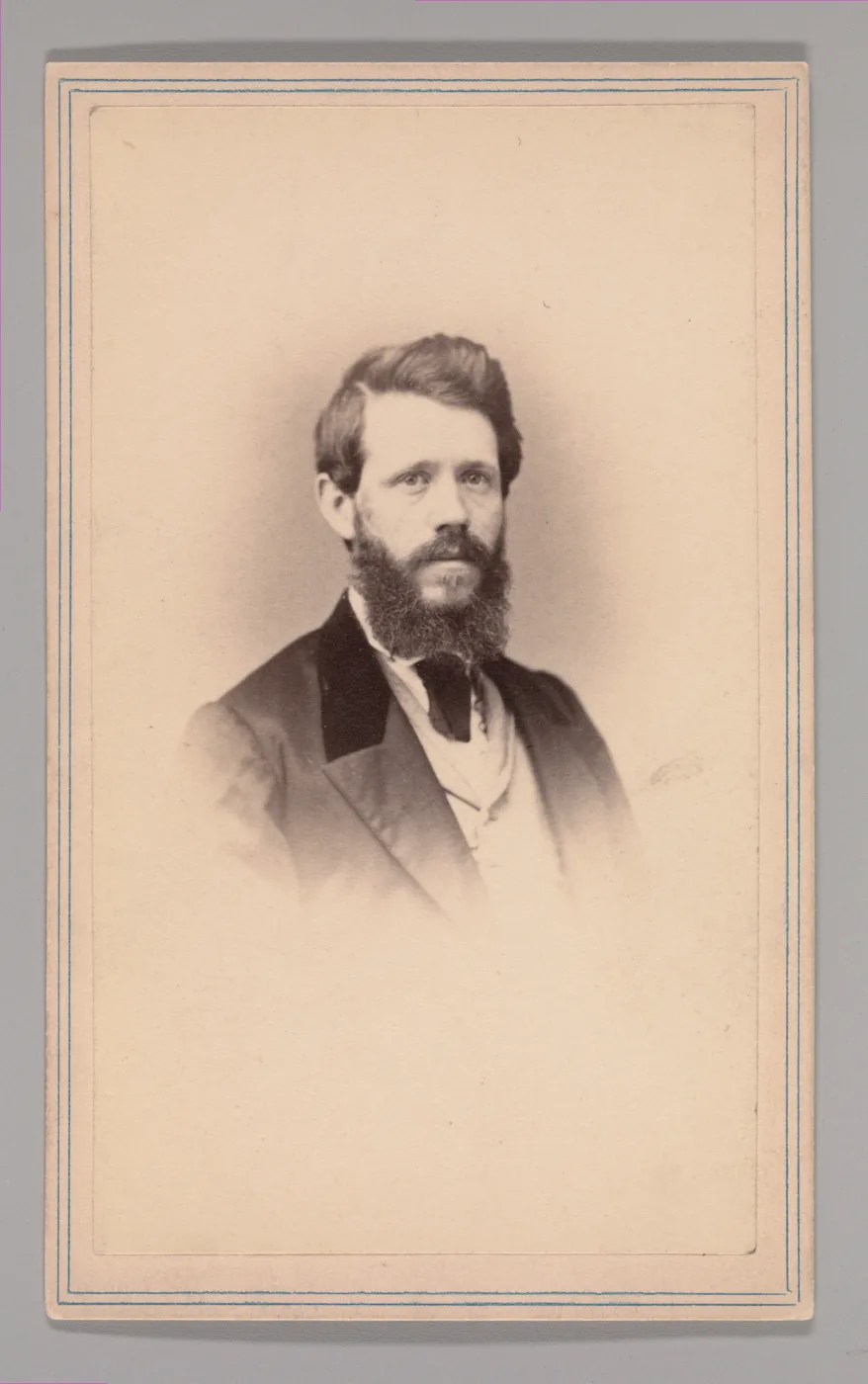
This small portrait is recorded as an albumen silver print made in 1864–66. Its pale card and fine image make the presentation part of the evidence. Albumen, made from egg white, binds a silver image to thin paper; such prints were often mounted for support and circulated in albums or as portrait cards. The Met notes their popularity from the mid-1850s through the 1890s.
Gelatin-silver papers also use a binder, but the binder is gelatin. Silver particles form the image in that layer. These prints became a major twentieth-century medium and can vary widely in finish and tone. A paper print may be one of several made from a negative; a later print of an old scene is not automatically a period print. Ask for evidence of print date, photographer, provenance and any edition or inscription.
03 · The case is a clue, not a verdict
Ambrotype, tintype or daguerreotype?
All three can appear in small cases with a mat and cover glass. An ambrotype is a collodion image on glass, usually a negative made to look positive against a dark backing. A tintype, also a collodion positive, is on dark-lacquered iron—not tin. These processes use silver in the image, but neither is a silver-plated copper daguerreotype.
A daguerreotype’s mirror-like change with angle is a useful clue; ambrotypes and tintypes generally lack that mirror effect. Tintypes may also appear loose, in card mounts or albums. Avoid removing a photograph from its case or testing it with a magnet: a fragile package, dark backing or later housing can complicate identification. Let a photograph conservator examine uncertain examples.
The collector’s eye
Read the object, then protect it
Request clear images of the complete front, case or mount and, where safely visible, the back. Record dimensions, inscriptions, maker and seller claims, provenance, condition and any repairs separately. A case can be replaced; a sitter’s identity or date needs evidence beyond a label. Compare the image with documented examples and keep uncertainty in your notes. Our collector reference desk offers a starting point.
Handle as little as possible, support the whole object, and keep fingers away from image surfaces. Keep cases closed, open hinges gently, and use a well-fitting protective box. Store photographs in a cool, stable, dry environment away from direct sunlight, damp and pollutants; use suitable photographic enclosures. CCI suggests 30–50% relative humidity for encased photographs, avoiding fluctuations and temperatures above 24°C. Avoid attics, basements and water hazards.
Never polish a photographic plate or rub its image. Silver mirroring, tarnish, flaking, cracked glass, moisture, loose seals or a damaged case call for a photograph conservator. Do not dismantle a package, apply cleaners or attempt to repair it yourself. Preserve detached parts and ask for professional advice; treatment depends on the whole object.
Sources & further reading
- Canadian Conservation Institute: Care of Encased Photographic Images — identification, housing and storage.
- The Met: Photography, Processes, Preservation, and Conservation — process glossary and conservation.
- The Met: Défilé sur le Pont-Royal and Charles Calverley — dates, media, credits and public-domain records.
- The Met Open Access policy — reuse of public-domain images.
- Library of Congress: The Daguerreotype Medium and Glossary — reference links; both returned access errors during this review.
Reviewed November 15, 2026. Museum reproductions are resized without cropping; the dates above describe the historical photographs, not their digital copies.