
A crown under a city
The crown in the middle of this silver coin is still there, even where the lettering that surrounds it has worn faint. It is a Prague groschen of Wenceslas II, king of Bohemia, dated to around 1300. It weighs 3.57 grams, according to the record for this photographed specimen. That is little enough to lose without noticing. The surprise is where it turned up: the site of Berlin’s old town hall.
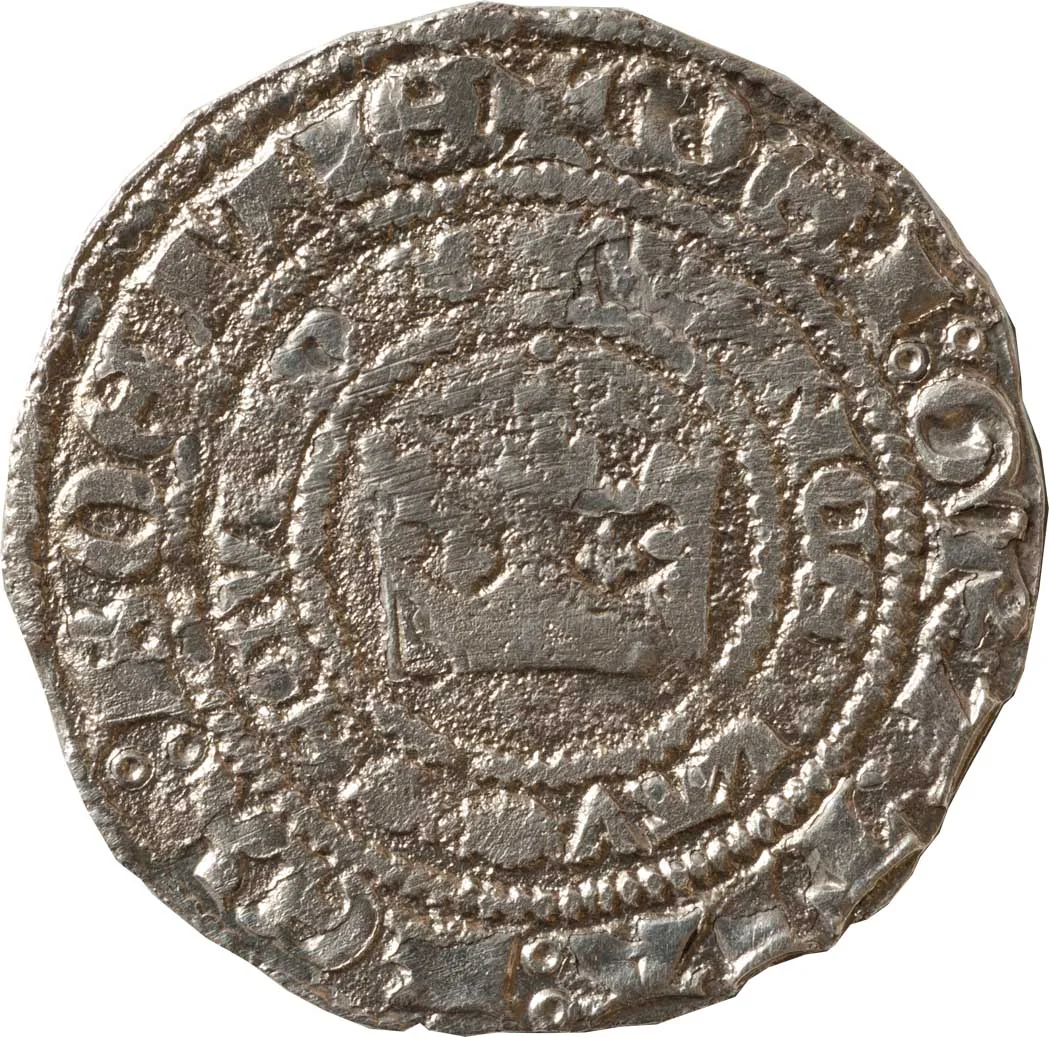
Archaeologists did not go looking for the coin in isolation. The city was extending its U5 subway line, and excavations between 2009 and 2016 exposed old buildings and street levels around what is now the Rotes Rathaus station. The Berlin heritage office’s excavation account describes coins helping researchers date walls, pits, floors and layers of fill. The groschen is one small find from a site with centuries of activity, not evidence that someone stashed a purseful of Bohemian silver under the building.
Why a Prague coin was struck at Kutná Hora
The name is a trap. The Prague groschen takes its name from Prague, but the central mint set up under Wenceslas II was at Kutná Hora. The Berlin Coin Cabinet’s record of a different coin of the same type identifies Kutná Hora as its mint and dates the issue to 1300–1305. Helfštýn’s minting exhibition ties the new coinage to the reform of 1300 and the rich silver deposits around the town.
It helps to think of the mine and mint as two steps, not two names for the same place. One supplied silver ore; the other struck coins that expressed the king’s authority in a form people could carry. The Collect Silver guide to Kutná Hora distinguishes the surviving medieval workings and the museum at Hrádek from the actual royal mint at the Italian Court. The places are close enough to tell one story, but each preserves a different part of it. Nothing in the Berlin specimen’s catalog is a chemical test tying its silver to a particular shaft.
What to look for on both sides
Start with the crown. Then look for the two bands of lettering around it, a layout that remains legible even when some individual characters are hard to make out. The Coin Cabinet’s clearer example records a Latin inscription naming Wenceslas II as king of Bohemia by the grace of God. Its reverse shows a crowned, double-tailed lion and names the denomination as Prague groschen. Both photographs here show the same excavated coin. On its reverse, the lion takes a little longer to pick out than the crown: follow the two curling tails on the right. You can compare the worn lettering with the Coin Cabinet’s clearer example, a separate coin of the same type.
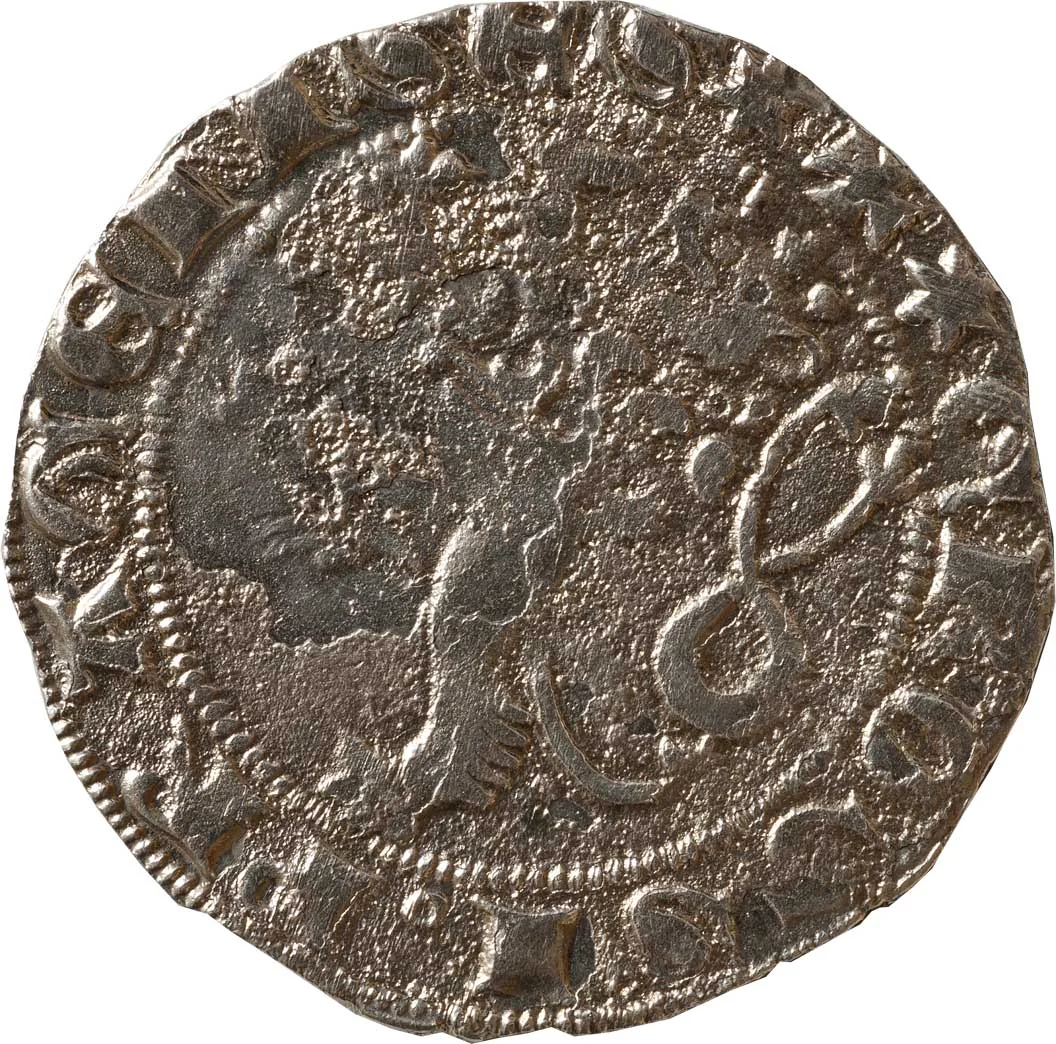
Why spend so much of a small silver surface naming the ruler? A crown could be recognized before a reader had worked through the letters. The lettering made the claim more precise: not just royal silver, but silver issued under a named king. That is a useful distinction whenever you read a coin. A mint name, ruler’s title and denomination answer different questions. Even when they appear together, they do not tell you where the coin was subsequently spent.
A destination, not an itinerary
A coin struck to circulate can pass from hand to hand without leaving a record of the exchanges. The Berlin groschen establishes that an example of Bohemian coinage reached Berlin. It does not establish when it arrived, who carried it, or what they might have paid for. Wear alone is no substitute for those missing details. Nor can we tell from either face whether it went straight from Bohemia to Berlin or arrived after a much longer journey.
The town hall was not one unchanging room. The excavation notes attached to the photograph describe its lower level as a place that served, at different times, for selling goods, drinking, and storage. Coins came from different floors and layers of fill across that space. Compare that with the Hoxne silver coins, where coins recovered together can be studied as a hoard. The same question is useful in both cases: which objects were actually found together? At Berlin, the wider site gives the groschen a setting, not a set of companions that can automatically be assigned to it.
For an excavator, a coin may help place a deposit in time: the deposit cannot have formed before a coin inside it was made, assuming that coin belongs to the deposit. A long-circulating coin, or one mixed into later fill, can end up in a layer much younger than itself. That is why the findspot matters alongside the design. The silver has a date as an object and a separate history in the ground.
The last coin was not a groschen
The Italian Court mint outlasted Wenceslas II by centuries. In 2026 the Czech Museum of Silver marked three hundred years since its last strike. That last coin was a half-thaler of Charles VI, struck in 1726. The exhibition paired early groschen and that late coin to show how the mint’s output changed. The museum listed November 17, 2026 as the exhibition’s final day. The Berlin find pictured here is the much earlier coin type, not the half-thaler and not identified as the example that appeared in the exhibition.
Look back at the crown one last time. Kutná Hora explains how a king put his name on a piece of silver. Berlin gives that coin a second place on the map, the one no die engraver could have put there.