
Two rounded wooden bodies sit one above the other, with narrow bands of bright metal between them. A single handle projects to the right. Seen assembled, this object might suggest a covered container. Its museum record gives the upper section a second job: it is also a drinking cup.
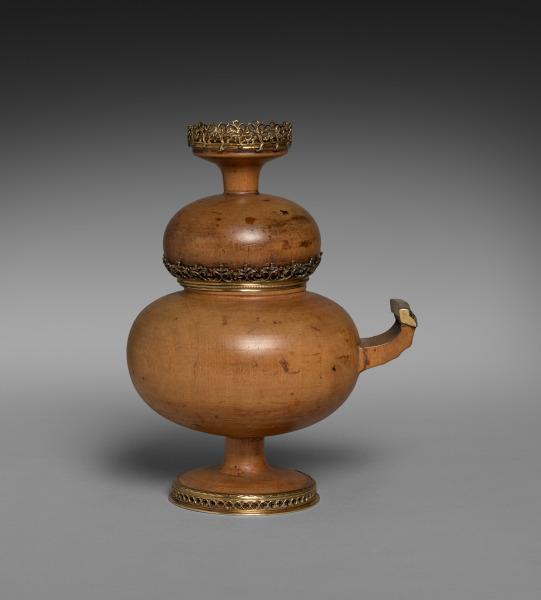
A lid that becomes a cup
The Cleveland Museum of Art explains that the smaller upper cup served as a lid and could be removed for drinking. The lower cup has a foot and handle. This is a composite object: maple provides the bodies, while the mounts are gilt silver, not solid gold.
Follow the outline in the photograph before looking for details. Compare the two rounded bodies, their narrower necks and the openwork metal bands. Which edges would become exposed when the upper cup was lifted? A photograph of the assembled object invites that question without showing the answer. It cannot establish how securely the parts fit or whether their contact surfaces have been altered.
Two dates, different evidence
The museum dates the cup to about 1530. It identifies a memorial portrait medal of Albrecht Dürer in the upper cup as a work by Matthes Gebel from 1528, the year Dürer died. The medal’s reverse is set into the base of the lower cup. Those statements concern the medal; they do not identify Gebel as maker of the vessel.
Keep the dates attached to their subjects. An earlier dated component does not make every part of an assembled object that age. In this view the medal is not available for close examination, so its identity follows the catalogue rather than a reading of visible lettering.
Record the parts before the whole
For a vessel that separates, an inventory can distinguish the assembled view, each component, the meeting edges and any inset ornament. Record what has actually been photographed and what remains unseen. Ask whether a measurement describes one part or the complete assembly before using it to compare objects.
The wood’s darker marks and the metal’s highlights are visible here, but neither supplies a treatment history. A useful next view would show the separated cups and their interiors; its absence is a limit of this study, not evidence about their condition. Explore how makers shape silver and documenting collectibles for more ways to separate observation from attribution. Object facts above follow the Cleveland Museum of Art record.