
10 Coin Hoards, One World Record
A river find, a lost hammer, and a block of coins that took years to separate. Follow ten finds containing silver coinage, from 82 coins to an official world record.
What do a river diver and a man searching for a lost hammer have in common? They both stumbled on old money. Another find came out in one enormous block, with silver-alloy coins still stuck together inside. Start at number ten and watch the count climb. One of these finds holds a world record.
We chose ten finds containing silver or silver-alloy coins and ordered them by published coin totals, from smallest to largest. Totals include any gold or bronze coins in the same hoard, but not jewelry or ingots. Approximate counts and known minimums are marked. This is a curated countdown, not a world ranking of all coin hoards.
The countdown
10 in the countdown
Ljubljanica River
Near Blatna Brezovica, Slovenia · Found in 1995
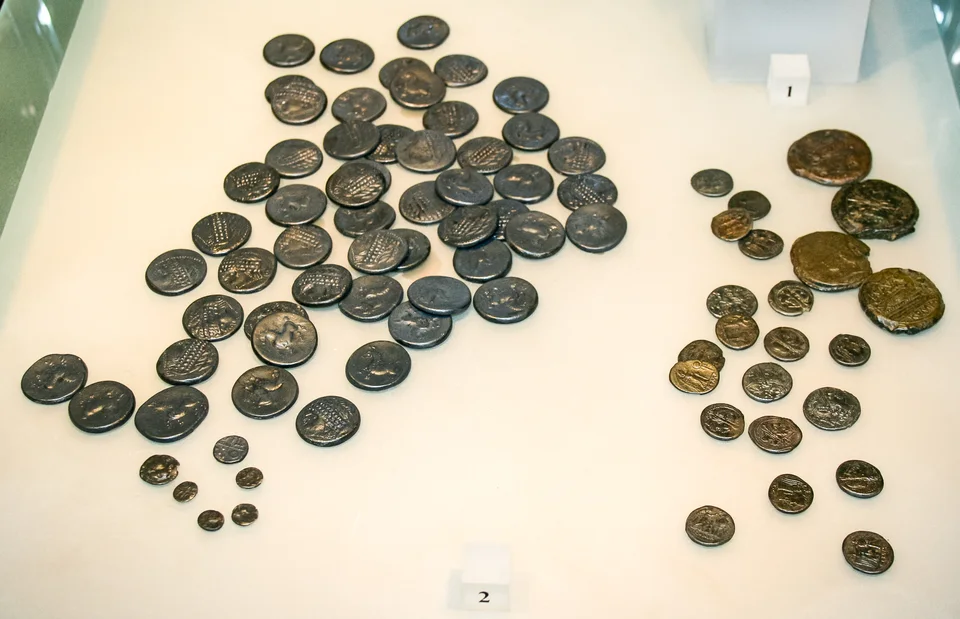
The second-century BCE Ljubljanica river hoard displayed at the National Museum of Slovenia. Photo: Szilas, CC0 1.0. · Image credit and rights 82 coins
A diver found 82 coins in about a square meter of the Ljubljanica riverbed. Seventy-eight were silver and four were bronze. The silver brought together Celtic and Roman Republican money, including three coins traced to Manching in what is now southern Germany. The researchers suggest the group may have been lost by accident. A hoard does not have to be a treasure somebody meant to bury.
Count source: National Museum of Slovenia exhibition catalogue · Find analysis by Peter Kos and Andrej Šemrov
9 in the countdown
Sysmä–Väärämaa
Sysmä, Finland · Found in 1870
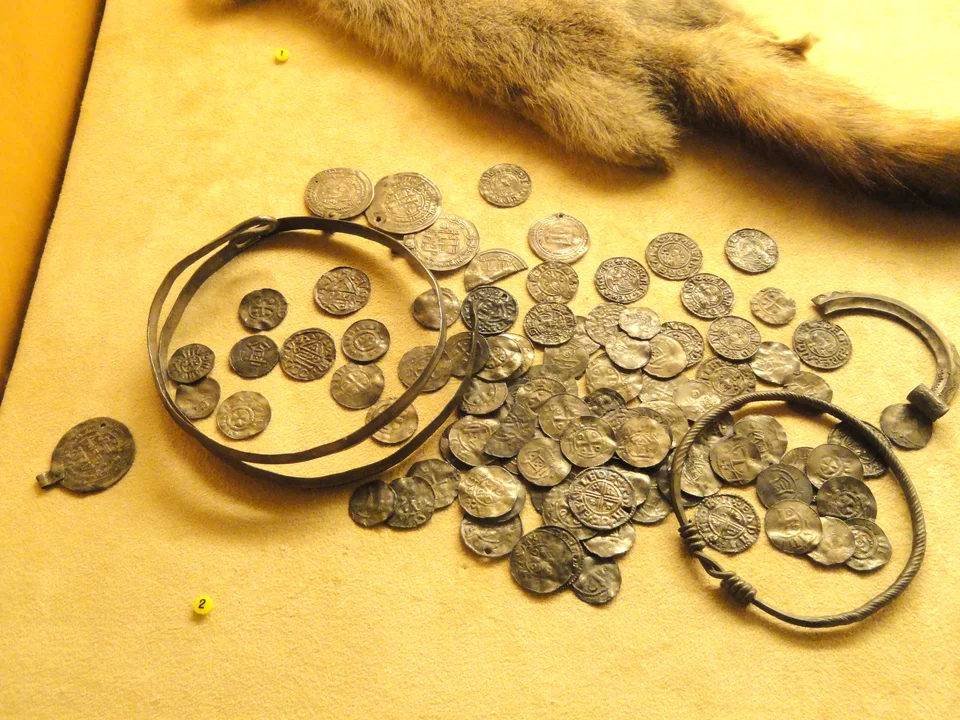
Objects from the 1870 Sysmä–Väärämaa hoard at the National Museum of Finland. Photo: Daderot, CC0 1.0. · Image credit and rights At least 98 coins
One penny found in Finland still carries the name of the man who struck it in York: Snacol. The National Museum of Finland records at least 98 coins in the Väärämaa find, including English, German and Islamic issues, along with jewelry. Its coins tell us the hoard was hidden sometime after 1006. The English penny was already decades old by then, even though we cannot tell which hands carried it to Finland.
Count source: National Museum of Finland coin and hoard record
8 in the countdown
Pella
Macedonia, Greece
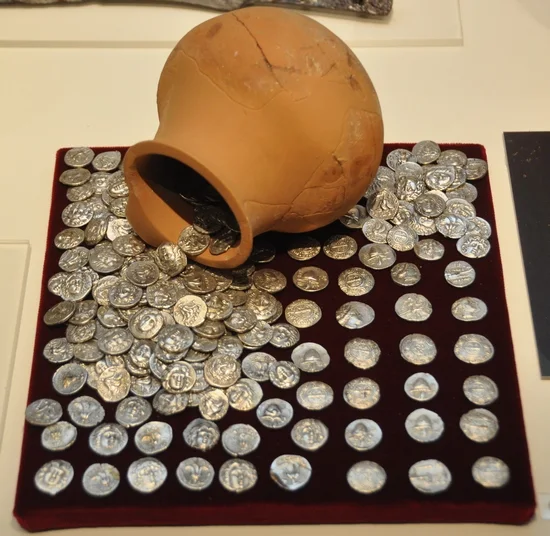
Silver coins from the Pella hoard on display at the Archaeological Museum of Pella. Photo: Jona Lendering, CC0 1.0. · Image credit and rights 307 coins
An excavation at Pella turned up a pot holding 307 silver coins. A published inventory dates the deposit to around 170 BCE. Its coins do not all name one place: alongside Macedonian and Histiaean pieces were drachms of Rhodes and coins modeled on Rhodian issues. The pot is why we can see those different kinds of money together instead of treating each one as an isolated find.
Count source: Greek national cultural catalogue · Coin Hoards VIII, entry 420 · International Numismatic Council survey
7 in the countdown
Bunnik
Utrecht province, Netherlands · Found in 2023
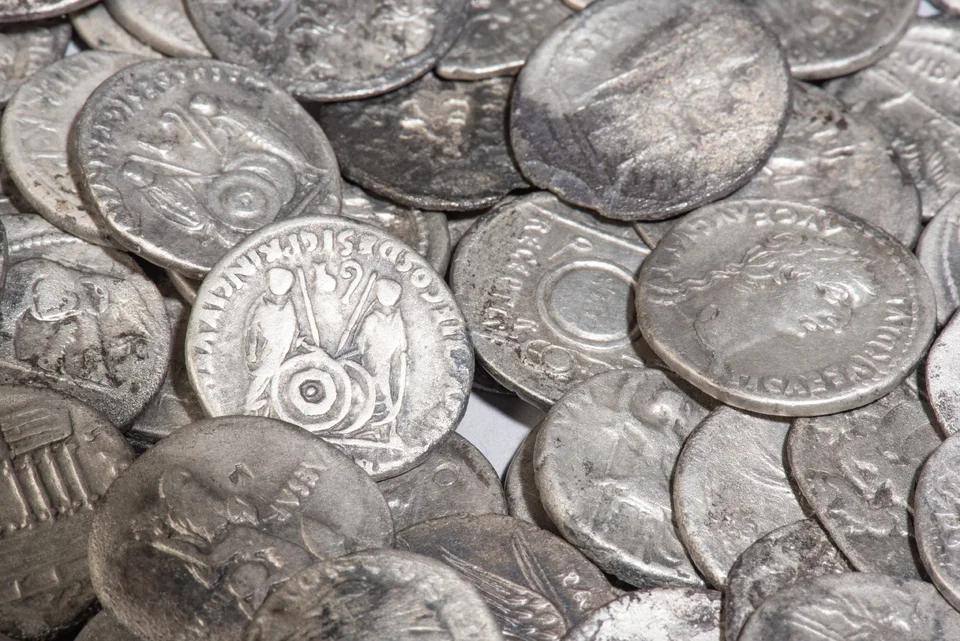
Roman silver denarii from the Bunnik hoard. Photo: Rijksmuseum van Oudheden (2024), CC0 1.0. · Image credit and rights 404 coins
Silver made up more than two-thirds of this find: 288 Roman denarii. The other coins were gold, including 44 British staters bearing the name of Cunobelinus. The youngest issues come from the reign of Claudius, when Roman forces invaded Britain. The archaeologists see a possible connection with returning soldiers. The coins offer a clue, not the name of the person who put them together.
Count source: Dutch National Museum of Antiquities · Oxford hoard inventory
6 in the countdown
Köngen
Baden-Württemberg, Germany · Original jar found in 1967
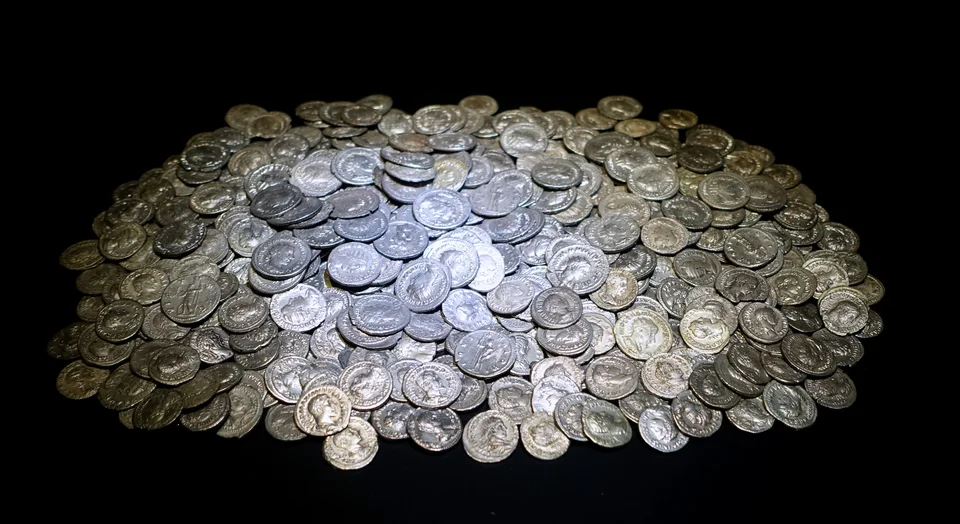
Coins from the Köngen hoard at the Landesmuseum Württemberg. Photo: Daderot, CC0 1.0. · Image credit and rights 555 coins in the original jar
A clay jar in a Roman cellar held 555 silver coins, according to Römerpark Köngen. Archaeologists recovered another 60 coins in later digs nearby; those are not part of this number. The coin types include denarii and antoniniani, two Roman denominations, and the latest issues name Philip the Arab. A date on the youngest coin tells us the jar could not have been filled earlier, not the year it was buried.
Count source: Römerpark Köngen: original jar and later finds · Newcastle University research inventory
5 in the countdown
Hartford
Cambridgeshire, England · Found in 1964
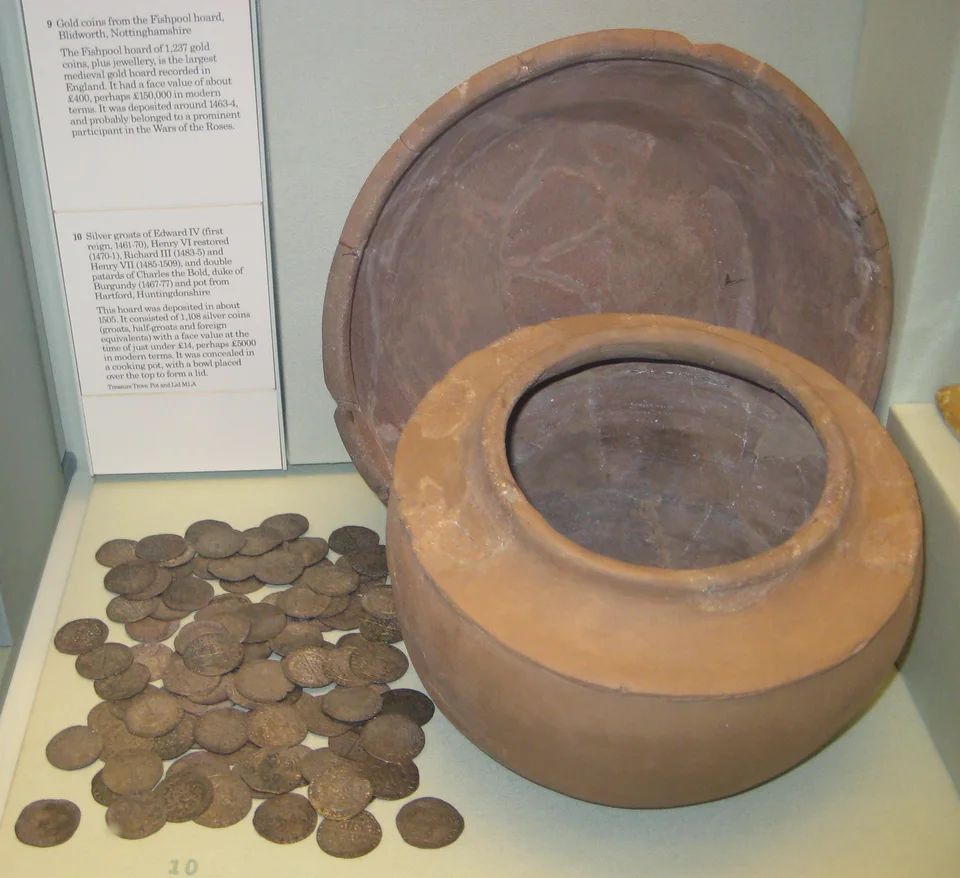
Part of the Hartford hoard at the British Museum. Photo: BabelStone, CC0 1.0. · Image credit and rights 1,108 coins
At first this looks like a stack of English money put aside around 1510. Most of the 1,108 silver coins were indeed groats and halfgroats. But the catalogue also counts 83 Burgundian double patards and two Portuguese coins. If you only looked at the familiar English portraits, you would miss the evidence that coins from farther away were part of the same stash.
Count source: Martin Allen’s hoard catalogue, entry 305
4 in the countdown
Cuerdale
Lancashire, England · Found in 1840
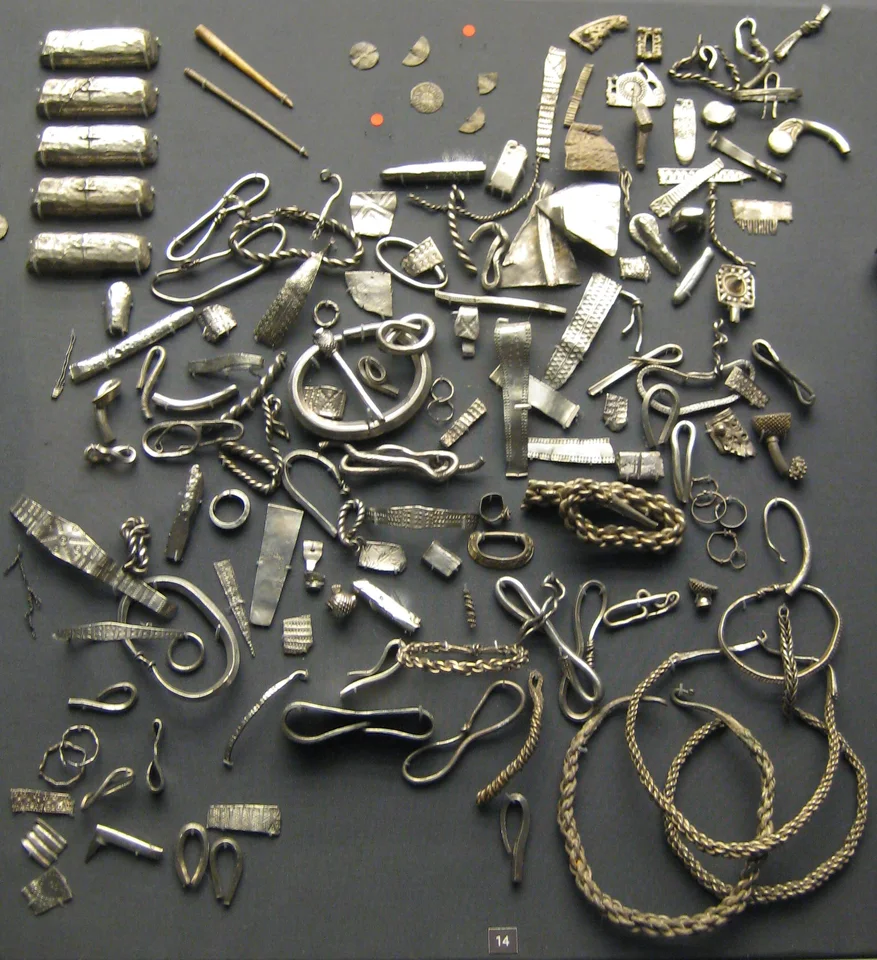
Part of the Cuerdale Hoard, including non-coin silver, displayed at the British Museum. Photo: BabelStone, CC0 1.0. · Image credit and rights About 7,500 coins
Workers digging on the bank of the River Ribble found a lead chest full of silver. The Ashmolean estimates 7,500 coins, separate from roughly 1,000 ingots, ornaments and silver fragments. The coins came from places as far apart as the Anglo-Saxon kingdoms and the Middle East. The chest held money with recognizable designs and silver you could weigh. To count the coins, we have to leave the other silver out.
Count source: Ashmolean Museum: count and find context
3 in the countdown
Colchester
Essex, England · Found in 1969
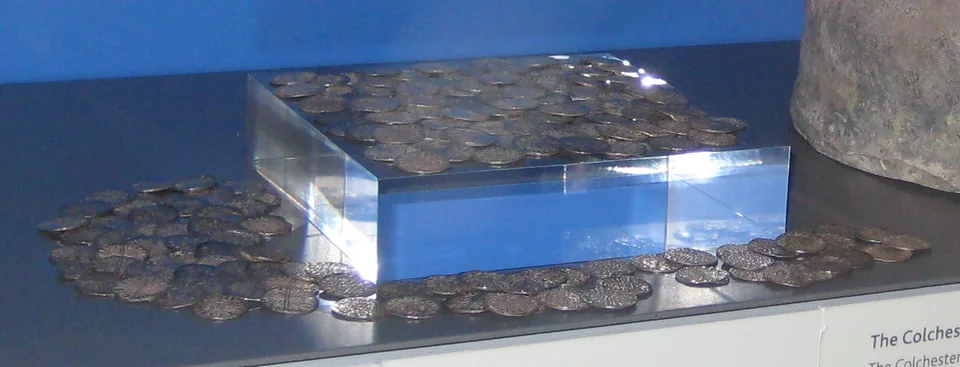
Part of the 1969 Colchester hoard, shown at the British Museum. Photo: BabelStone, CC0 1.0. · Image credit and rights Over 14,000 coins
Lifting the lid of a lead canister in Colchester revealed more than 14,000 medieval pennies. The published inventory counts 14,065 silver coins and 11 layered forgeries. Those few fakes matter: without them, the total would tell us how much official coinage survived but nothing about the copies mixed in with it. This is the hoard found in 1969, not the separate Colchester find of 1902.
Count source: Howard Brooks: the 1969 hoard and its container
2 in the countdown
Hoxne
Suffolk, England · First discovered in 1992
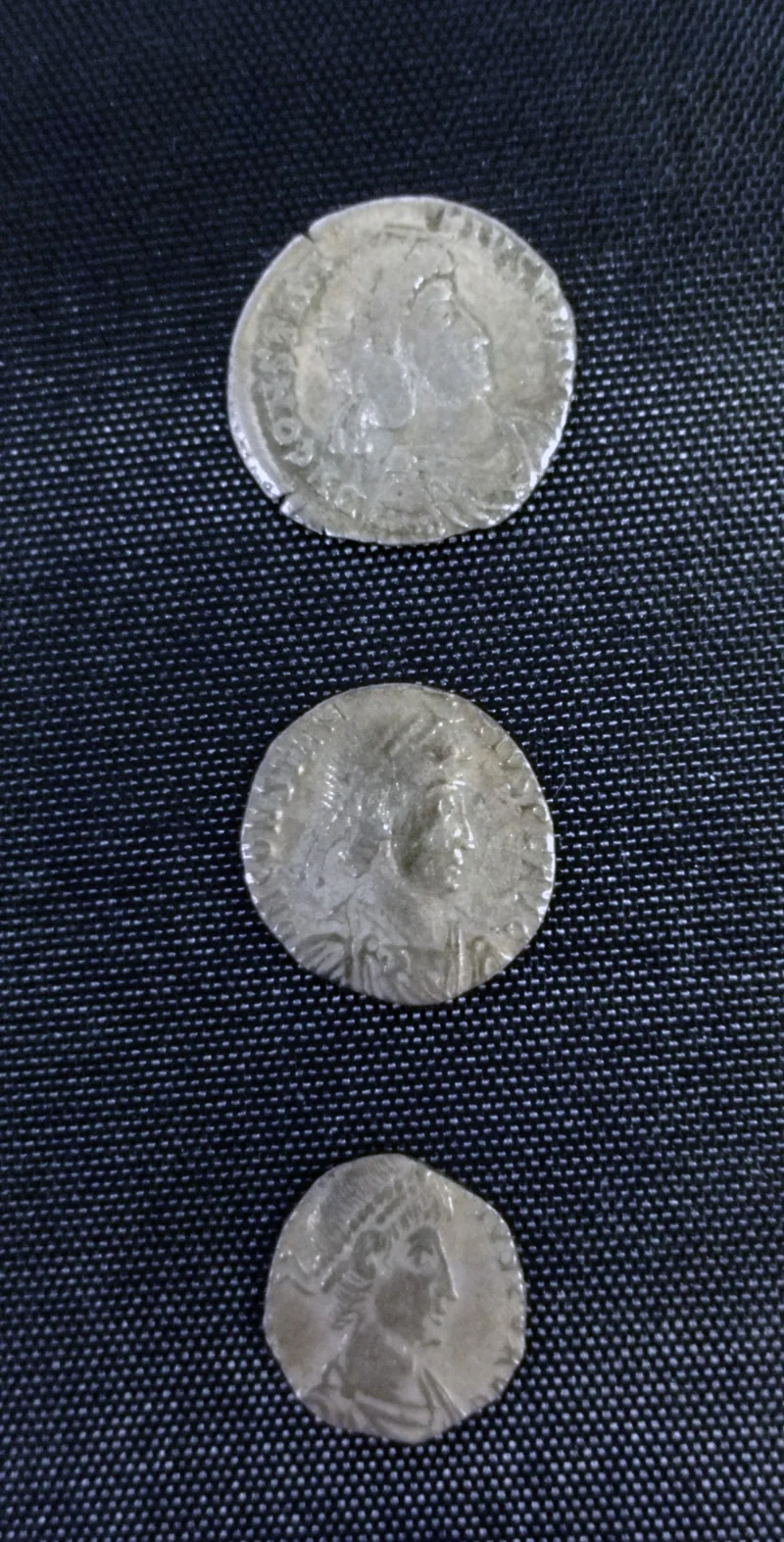
Three silver siliquae from the Hoxne Hoard, showing different degrees of clipping. Photo: The Land, with thanks to Fæ, public domain. · Image credit and rights About 15,000 coins
Eric Lawes went looking for a friend’s lost hammer and found a chest of late Roman valuables. The hoard held roughly 15,000 coins overall, including gold. In the Oxford inventory’s narrative, about 14,600 are silver denominations, including irregular issues. Cataloguer Peter Guest identified about 14,100 officially struck siliquae as the largest known late Roman collection of that denomination. Many have clipped rims: someone took silver from them before they went into the ground.
Count source: Oxford hoard inventory · Peter Guest’s catalogue summary · Why the Hoxne coins were clipped
The grand finale
1 in the countdown
Le Câtillon II
Grouville, Jersey · Found in 2012
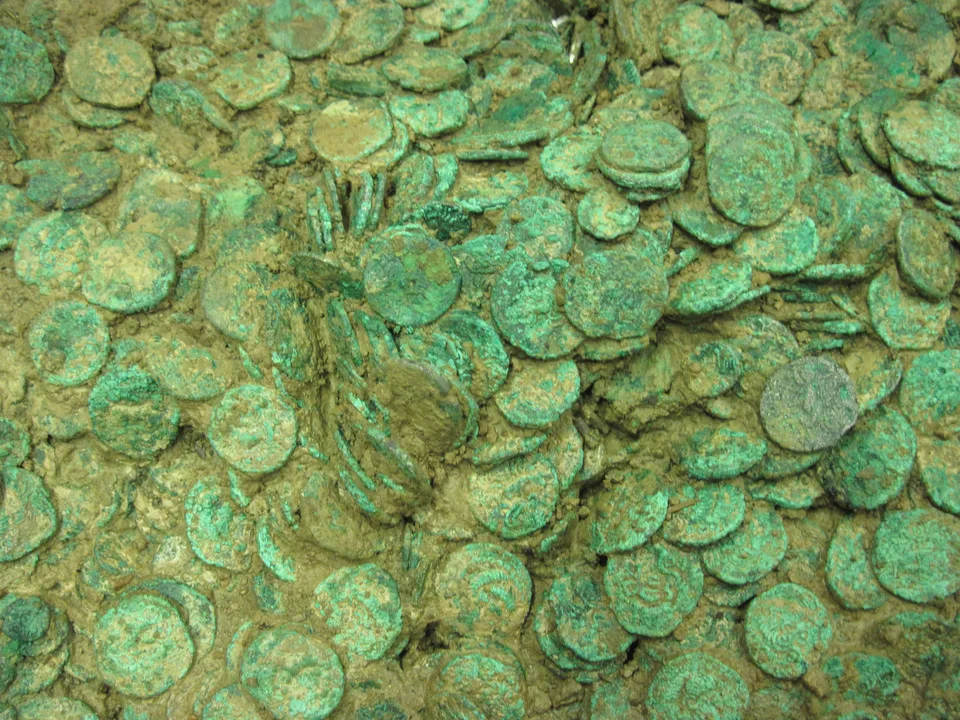
A section of Le Câtillon II (the Grouville Hoard) during cleaning and investigation in 2012. Photo: Man vyi, public domain. · Image credit and rights 69,347 coins
The last find came out of the ground as a block of earth and metal. Conservators separated it coin by coin over more than two years and mapped the coins’ positions in three dimensions. Guinness World Records verified 69,347 coins, its record for the largest collection of Iron Age coins discovered. That is a coin count, not 69,347 pure silver pieces: many of the coins are billon, a silver-copper alloy. The gold neck rings and ingots found with them are not part of that number.
Count source: Guinness World Records: verified count · Jersey Heritage: excavation and conservation · Jersey conservators’ report · Government of Jersey: Celtic coin hoard
You’ve reached number one.
Back to the JournalHow we counted
Ranks run from the lowest to the highest reported total coin count among these selected finds. A plus sign marks a minimum; “about” and “more than” retain the wording of rounded or incomplete inventories. Where catalogues count later finds or separate excavation stages differently, the card tells you which count it uses.
Coins of gold, bronze or silver alloy can be included in an inventory. Billon is an alloy with a low proportion of silver. Jewelry, ingots, fragments not counted as coins and other objects do not add to the rankings. The final card cites the record authority for the specific world-record category; it is not a claim about all ancient coins or all silver hoards.