
A Sasanian royal hunt
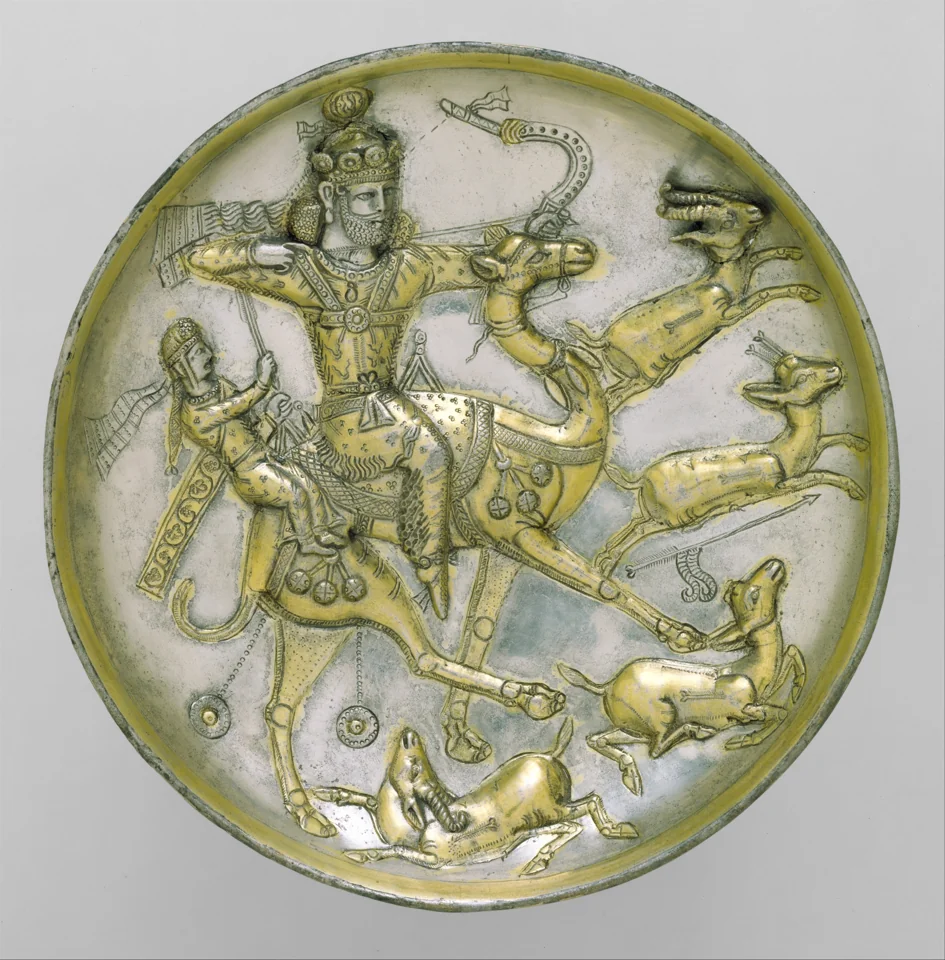
The Met identifies this scene with the story of Bahram Gur and Azadeh. A king and a companion ride together above the animals they hunt; gilding picks out details against the silver. The museum connects the image to a story later told in Persian literature. The plate itself predates the eleventh-century written account by Firdausi, so it is evidence for an earlier image and its interpretation—not an illustration made for that later manuscript.
This is a courtly image and a story about royal skill and power. Its presence on silver does not establish that the plate was a ritual vessel. Read the Met’s object record for the attribution and acquisition credit.
Nuada’s silver hand
In the medieval Irish narrative Cath Maige Tuired, Nuada loses a hand in battle. The physician Dian Cécht and the craftsman Crédne make him a moving hand of silver; later, Míach heals him. The story ties bodily wholeness to kingship and gives a smith’s skill a memorable place in the narrative.
That is an episode in a particular surviving medieval text, not evidence that silver has one fixed protective meaning across cultures. Read the CELT edition and translation for the passage and its context.