
A birthday gift that took two more years
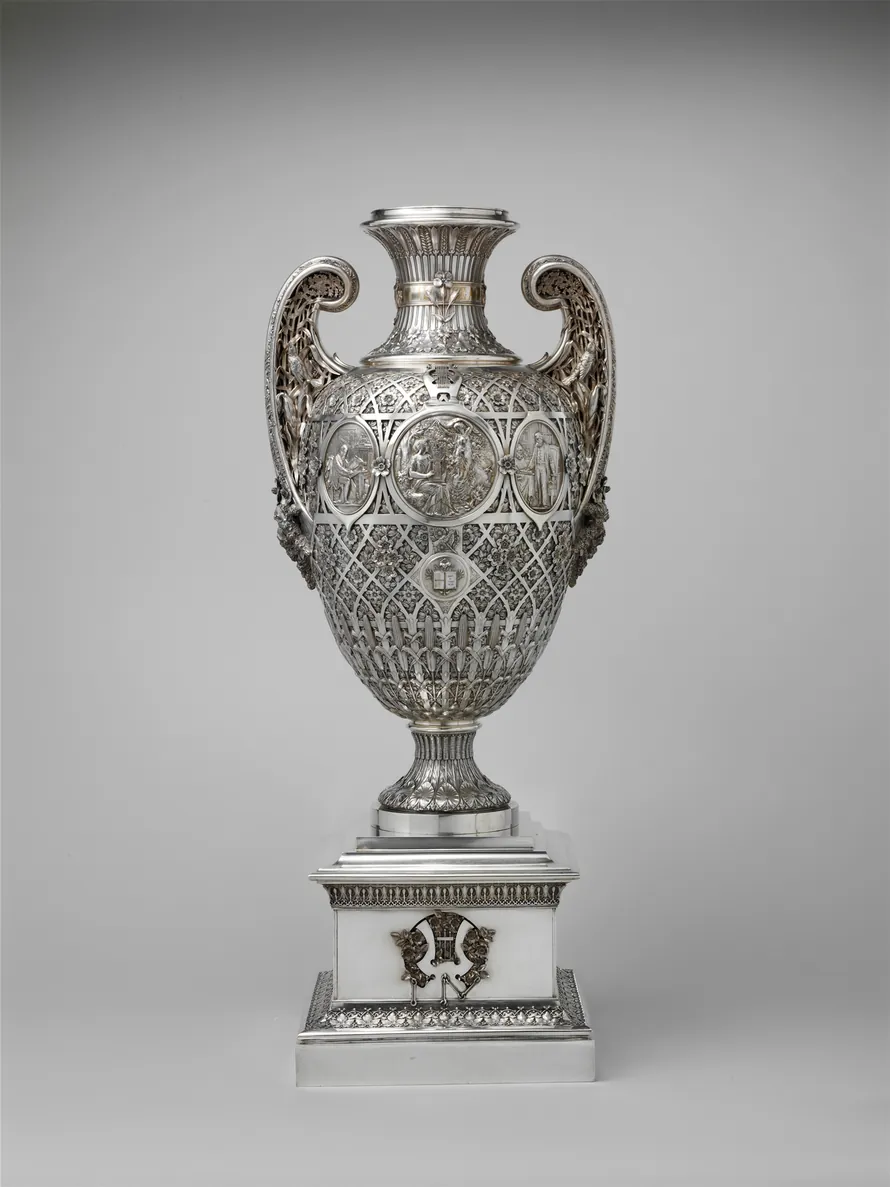
There’s a small figure on the Bryant Vase who turns away from the room and looks out over a landscape. On another panel, the same man is a journalist. Elsewhere he’s a reader of Homer. The silver vase, nearly three feet tall, asks you to walk around a life rather than take in a single likeness.
William Cullen Bryant turned eighty in November 1874. His friends chose to commission a tribute in silver, but the finished vase was not presented until June 20, 1876. Bryant was a poet and the editor of the New York Evening Post. He was also president of the Century Association, whose members were among the people behind the gift. In the printed account of the presentation, the committee’s plan and the speeches sit alongside the description of the vase. You can read the ceremony as well as look at what it left behind.
What to look for as you walk around it
Tiffany & Co. made the vase in New York from a design by James Horton Whitehouse. Its basic silhouette borrows from a Greek vessel, but the plants that spread across the body belong to a different landscape. Look for the little apple branches and blossoms woven through the ornament. The Met reads this American foliage as part of the tribute to Bryant’s poetry.
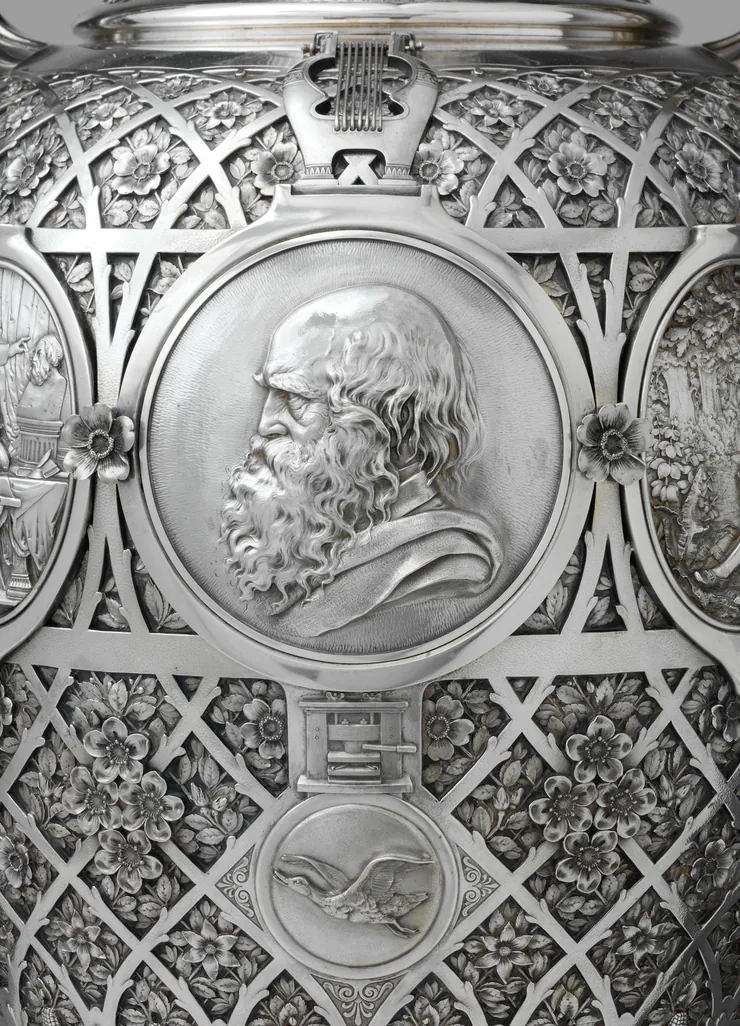
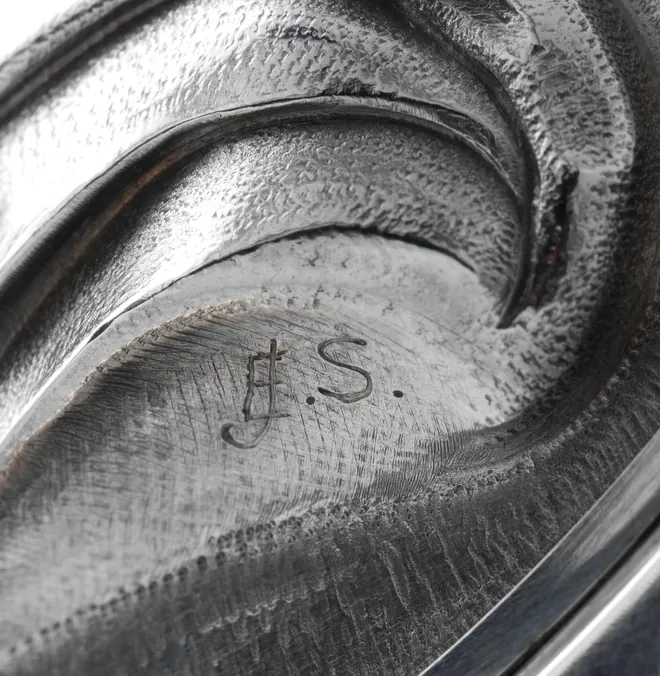
The ovals repay a closer look. The Met’s Saint-Gaudens study attributes at least five of the six medallion designs to Augustus Saint-Gaudens. It also identifies the Tiffany chaser Eugène J. Soligny as the man who finished the reliefs and signed with his initials at the lower edge of Bryant’s portrait. The modeling and the work of bringing the relief into focus in metal were different contributions. At the scale of a museum photograph, it’s easy to see Bryant’s face and miss the letters that name the hand that finished it.
From one audience to another
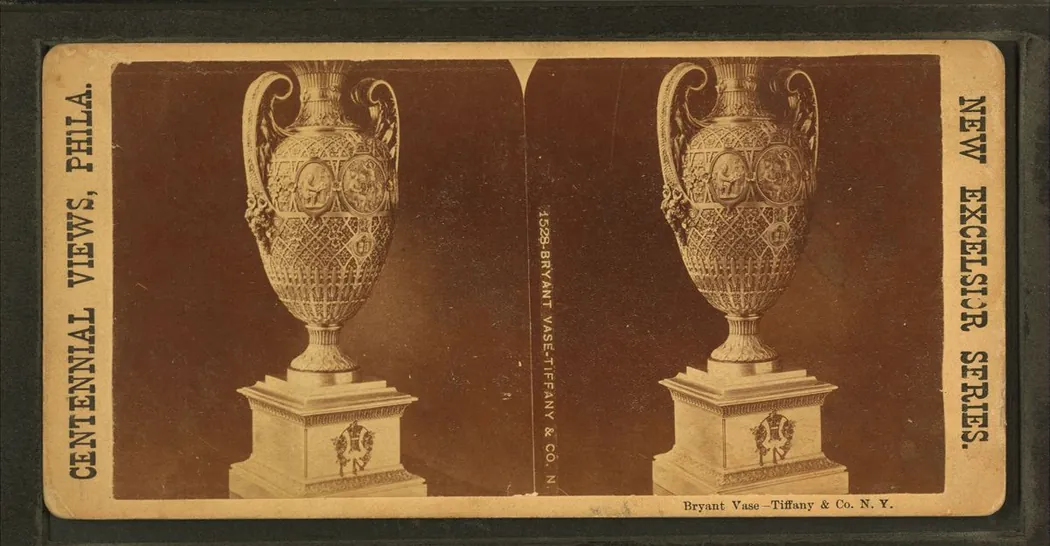
After the presentation, Tiffany displayed the vase at Philadelphia’s Centennial Exhibition. The Centennial Photographic Company recorded it on a pedestal for a stereograph, a card with two slightly different views that visitors could see in depth through a viewer. By then the gift had already left the room for which it was made. The photograph let its image travel farther still.
Bryant gave the original to The Metropolitan Museum of Art in 1877. The museum identifies it as the first piece of American silver to enter its collection. It records silver and gold as the materials and lists the overall height at 33½ inches. Those particulars describe the Met’s object, accession 77.9a,b. They don’t automatically describe a second vase with Bryant’s portrait in the same place.
Why Tiffany kept more than a photograph
Tiffany preserved the design in full-size workshop patterns. The Met catalogs the front and back patterns for the body as separate things, with other records for the rim, neck and handle. The body patterns are cataloged in copper, metal alloy and lead. A shop could use those patterns to make negative molds, which in turn could be used to make reproductions. The surviving tools are not slices cut from the finished silver vase.
In the Met’s reconstruction of the process, you can see why the ornament was worth saving this way. Metal builds up against a conductive mold by electrodeposition, picking up contours and even fine lines where it meets the surface. In an electrotype the deposited layer forms a substantial part of the object. An electroplated finish, by contrast, coats a shape that already exists. Those processes can be used on the same piece, which is why the object’s own material description matters.
A copy with its own paper trail
The Met says the design was not produced for commercial sale, though several copies were completed. It records copies associated with the Century Association and with Cummington, Massachusetts. The Century’s own collection catalog calls its example a silver-plated replica, citing a 1907 manuscript inventory. It records Agnes Haswell Osgood’s gift of the replica to the club in 1905. That year belongs in the copy’s ownership history. It isn’t a date for the original, or even necessarily the date the copy was made.
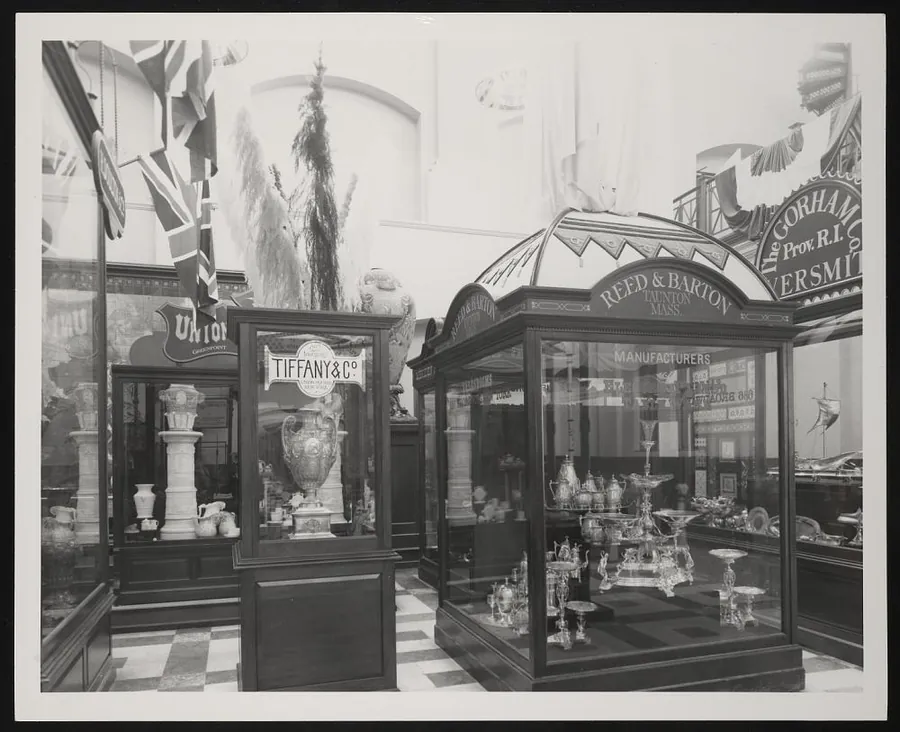
The museum display at the Smithsonian in the 1970s illustrates the same problem for anyone identifying an object from a picture. The Smithsonian’s archival caption explicitly identifies the vase shown with the silver and electroplated tableware as a reproduction. The label is better evidence of which object is pictured than the splendid outline shared by original and copies. The archive entry does not, by itself, establish that this is the exact example documented in the Century’s inventory.
Which Bryant Vase are you looking at?
Start with the object record, not the name in a photo caption. Jot down the institution and accession number if there is one. Record the overall dimensions and whether a separate pedestal is included. Then keep three questions apart: when was the design made, when was this particular object made or recorded, and what is this example actually made of? A period replica can be an authentic Tiffany object in its own right without being Bryant’s original gift or having the same metal content.
The passage from birthday tribute to workshop pattern to documented reproduction is the story here. A drawing could preserve the appearance of the apple blossoms. An electroformed pattern kept their relief, ready for another object and another audience.
Sources and images
Object records, contemporary accounts and photographs
- The Met: the original Bryant Vase, 77.9a,b; Augustus Saint-Gaudens in The Metropolitan Museum of Art for the panel subjects and Soligny’s signature.
- To William Cullen Bryant, at Eighty Years, from His Friends and Countrymen (1876) and the Century Association’s Bryant record.
- The Met’s Tiffany patterns for the front of the body, back of the body and rim and neck; the Century Association’s historical silver inventory, printed p. 57, for its copy. The Met’s workshop-pattern records are linked, not reproduced.
- The Centennial Photographic Company stereograph: NYPL, Robert N. Dennis collection; Free Library of Philadelphia, item c061525. The later display photograph is from Smithsonian Institution Archives.