
Two pieces of paper
On June 24, 1968, the paper in your hand mattered. If you still held a silver certificate when your exchange office closed, being inside the building didn’t buy you more time. But if you’d already turned in the notes and received an interim or bullion receipt, the rules gave you a separate window to claim the metal. The deadline to turn a note in wasn’t always the deadline to pick the silver up.
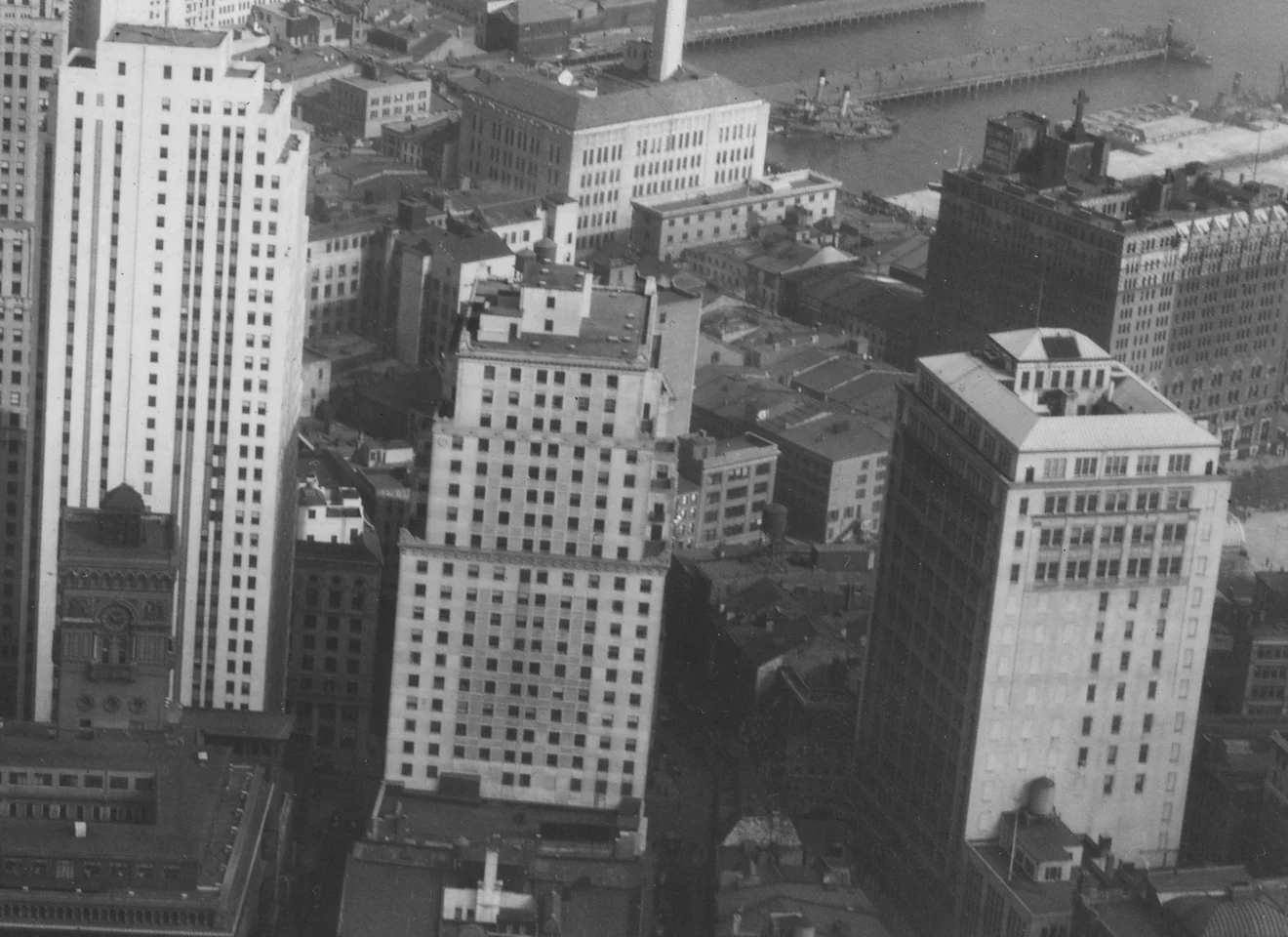
The Treasury accepted notes in person at four places: the Federal Reserve Banks and U.S. Assay Offices in New York and San Francisco. The assay offices delivered the silver. A person turning in notes at a Reserve Bank received paperwork to take to the assay office. The Treasury’s contemporary announcement.
Read the promise on the note
The Smithsonian keeps a Series 1957 one-dollar note. On its face you can read the old promise: “IN SILVER PAYABLE TO THE BEARER ON DEMAND.” A holder once could receive silver dollars. In March 1964, the Treasury stopped giving out silver dollars against certificates and paid in bullion instead. In June 1967, Congress gave bullion exchange one more year. The promise printed on the note didn’t change when the terms did.
See the Smithsonian’s actual note · Public Law 90-29, section 2.
How much silver did a dollar get?
The published rate was about $1.293 in certificates per fine troy ounce. At that rate a face-value dollar represented about 0.7734 fine troy ounce. Fine weight counts the silver itself, not the total weight of a piece that also contains other metals. The rules didn’t guarantee a one-ounce bar or .999 silver. In June 1968 the Treasury lowered the minimum fineness it could deliver from .895 to .830 without increasing or reducing the fine silver due. If the metal delivered was less pure, it took more of it to deliver the same silver content.
June 7 amendment, printed p. 8464 · How to read fine weight on bullion.
The same amount of fine silver shows up in Treasury’s calculation for the Peace dollar Denver tested in 1965.
Which deadline did the receipt carry?
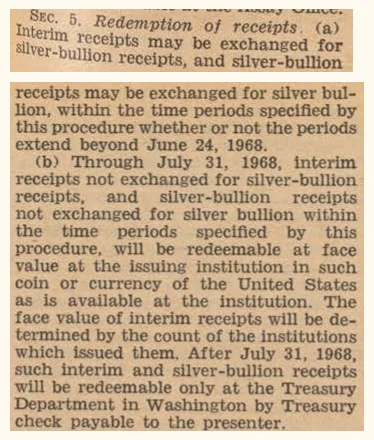
The notice says June 24 was the last day to present certificates for bullion. An already-issued interim receipt normally had to be exchanged by the tenth business day after it was issued. The separate bullion receipt normally had to be presented at the assay office by the fifth business day after it was issued. Those windows could run beyond June 24. The rule allowed that, but it isn’t proof that anyone actually picked up silver after the 24th. The Treasury’s annual report describes June 24 as the day of the final exchanges. Federal Register, sections 3–5.
Two assay offices, 89.3 million ounces
Across fiscal 1968, the Bureau of the Mint reported certificates equivalent to 89.3 million ounces of silver and more than 30,000 transactions. New York accounted for 84.4 million ounces and San Francisco for 4.9 million. Those are fiscal-year figures, not the last day’s tally. The transfer of 165 million fine troy ounces of .999 silver to the defense stockpile on June 25 was a separate transaction, not another redemption figure. Treasury annual report, pp. 119–120 · Treasury notice of the separate stockpile transfer.
What if you have one now?
The note didn’t stop being U.S. currency when the right to silver ended. Its face value, the metal it once entitled a holder to collect, and what someone might pay for it as a collectible are three different things. A series date, the denomination and the note’s condition are places to start when describing one. The fine weight above tells you what once crossed the counter, not what you can claim today.
For an earlier chapter, see how the Bland–Allison Act of 1878 provided for certificates against deposited standard silver dollars, and why two 1873 silver dollars had done different jobs. The 1878 act, section 3.