
From Pocket to Showpiece: Five Silver Objects, Smallest to Largest
Start with a one-inch scent box and count up through five real museum pieces. See what silver could do at a very different scale.
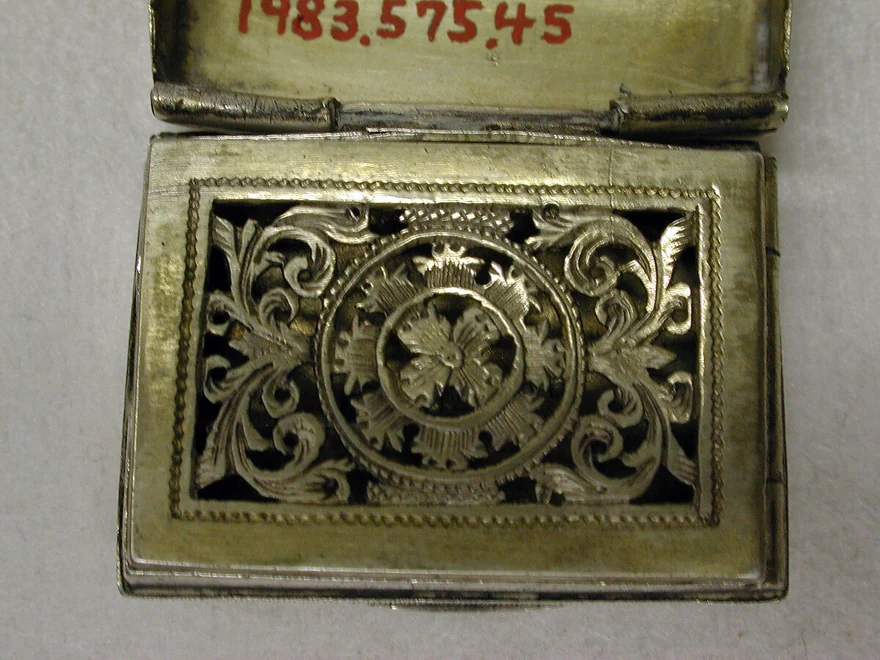
One inch of silver could carry a scent. Almost thirty inches could hold the attention of a room. Between those two scales, silver went from something you could hide in a pocket to something meant to be seen from a distance.
Start with the tiny open box. Each stop shows a real museum object, its size, and the job its maker wanted it to do.
The countdown
5 in the countdown
A box that carried a scent
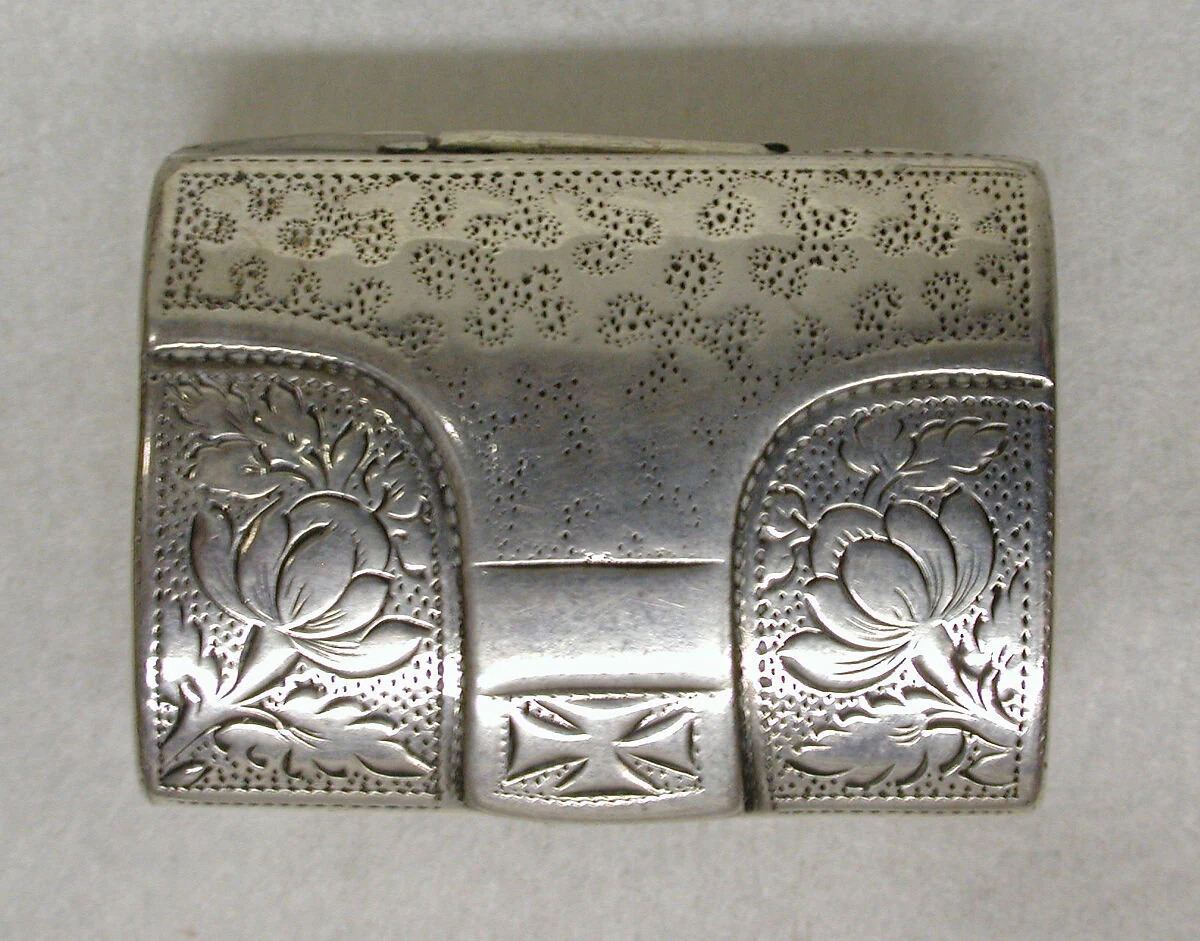
Silver vinaigrette by Joseph Taylor, Birmingham, 1806. The Met, Gift of Herbert K. Reis, 1983 (1983.575.45). Public domain. · Image credit and rights 2.5 cm long · 1 in.
Joseph Taylor made this Birmingham vinaigrette in 1806. Lift the silver lid and there is a second layer: a pierced grille. It held a tiny sponge dipped in aromatic vinegar underneath, allowing the smell to escape without the sponge falling out. The whole arrangement had to fit in about an inch.
Museum record: Collection record
4 in the countdown
Two fish and nine chains
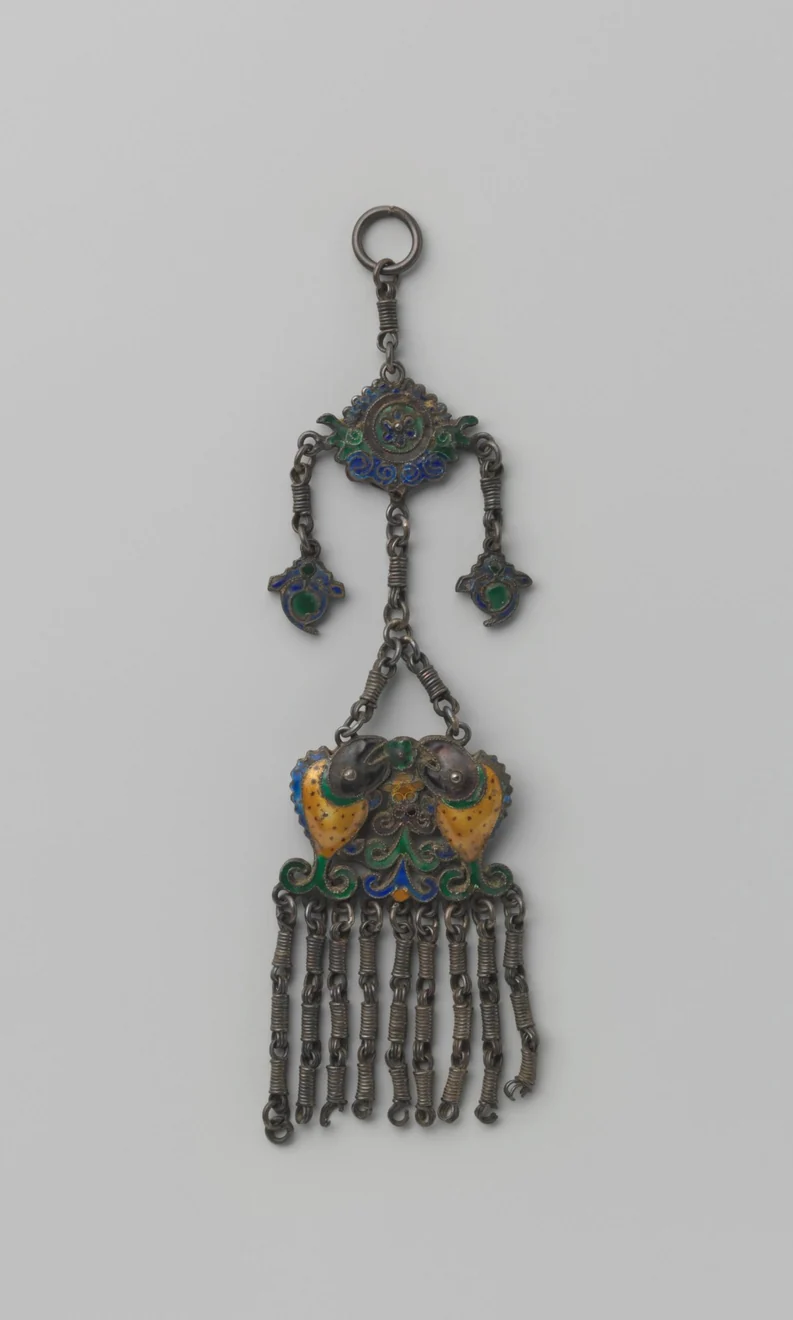
Silver and enamel chatelaine, seventeenth century, possibly Iran. Rijksmuseum, BK-NM-8305. Public domain. · Image credit and rights 15.2 cm high · about 6 in.
Two enameled fish form the body of this silver chatelaine, and nine fine chains hang below them. The Rijksmuseum dates it to the seventeenth century and gives Iran as a possible origin. The piece makes the arrangement visible; the record does not name what hung from its chains or who wore it.
Museum record: Collection record
3 in the countdown
A tall pitcher with a place for the thumb
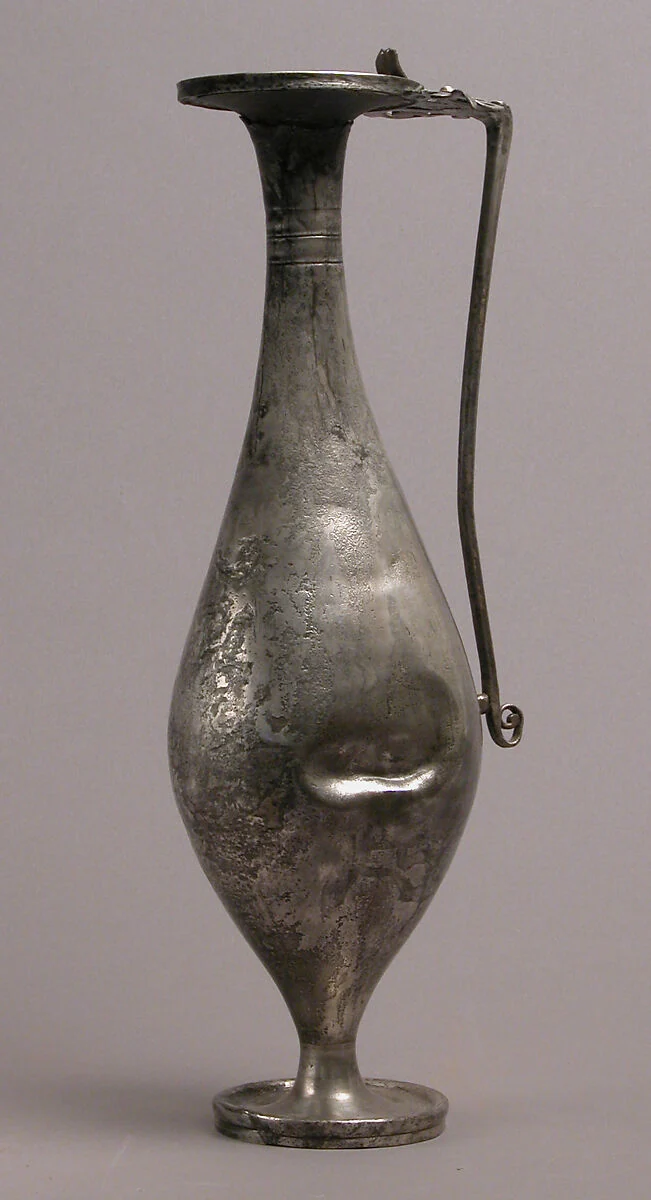
Silver ewer, Byzantine, fourth–fifth century. The Met, Fletcher Fund, 1947 (47.100.38). Public domain. · Image credit and rights 38 cm high · about 15 in.
This Byzantine ewer, made in the fourth or fifth century, is a narrow silver vessel with a long handle. Look at the little piece that curves near the rim. The Met identifies it as a thumb rest for pouring. A small detail helped a person control an object much larger than their hand.
Museum record: Collection record
2 in the countdown
A silver hand raised in blessing
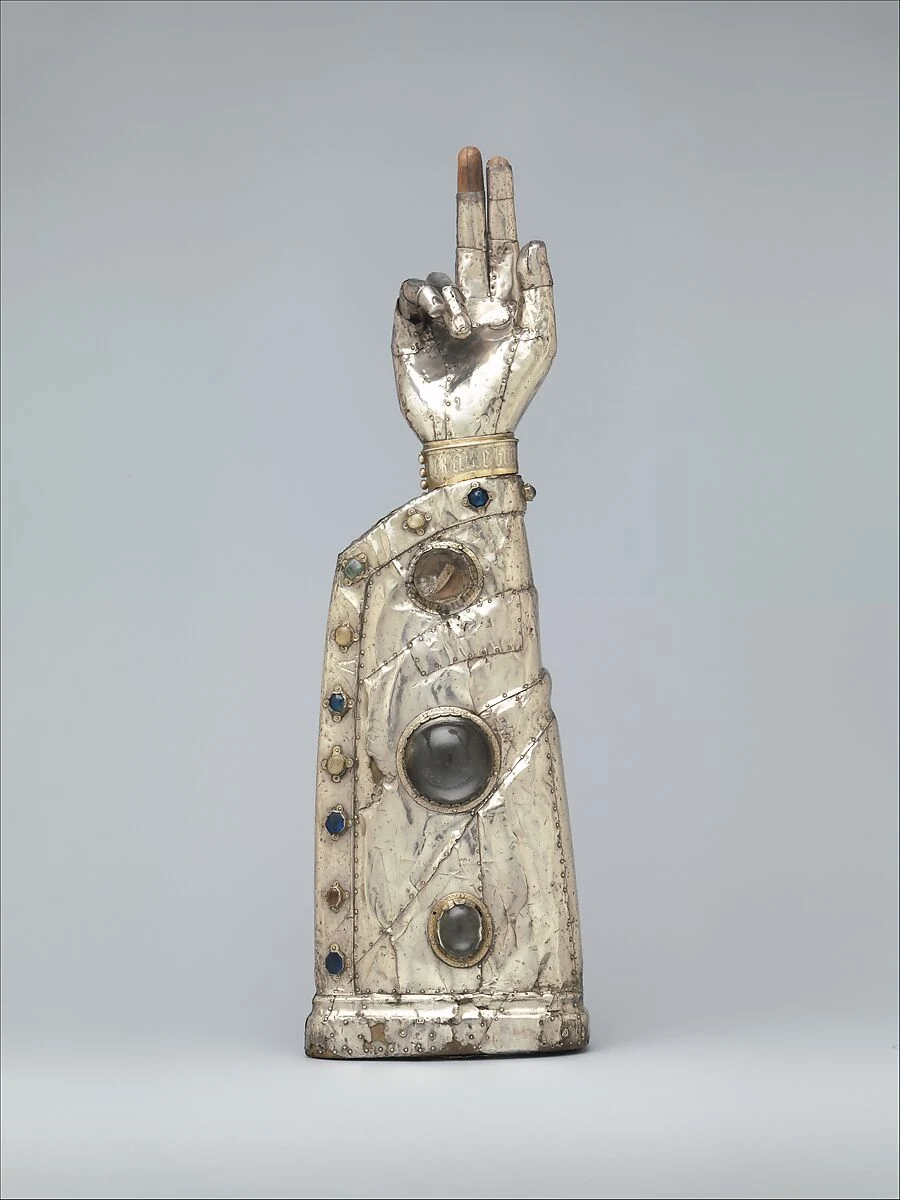
Arm reliquary of Saint Fiacre, France, thirteenth century with fifteenth-century additions. The Met, Gift of J. Pierpont Morgan, 1917 (17.190.353). Public domain. · Image credit and rights 51.6 cm high · 20 5/16 in.
The French reliquary takes the form of an arm raised in blessing. Silver and gilded silver cover a wooden core, with glass and rock crystal set into the surface. A tag and an engraving identify Saint Fiacre. An object shaped to be seen on an altar or in a procession needed a very different presence from a pocket box.
Museum record: Collection record
The grand finale
1 in the countdown
The centerpiece with dragons for handles
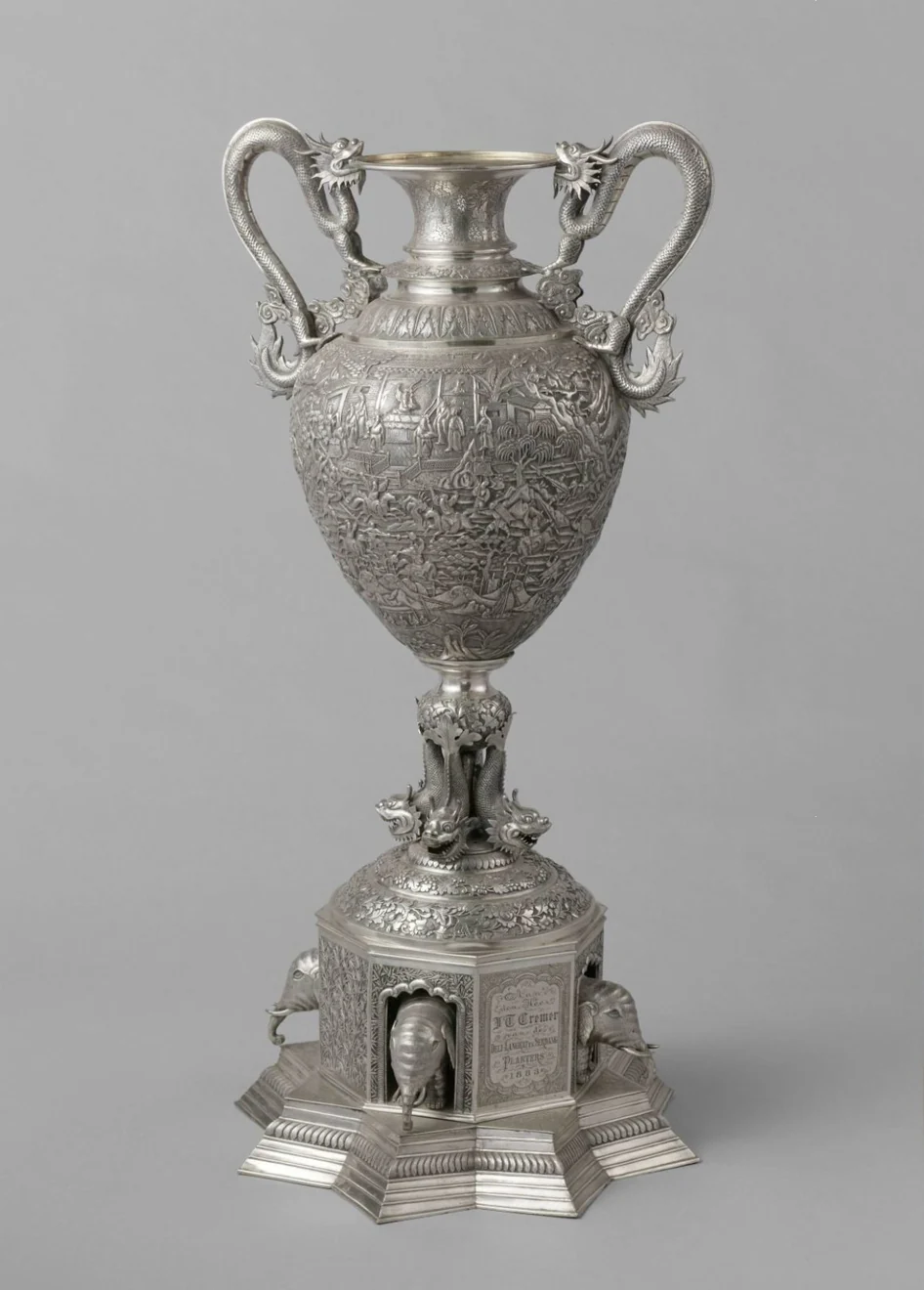
Silver centerpiece shown without lid, made in China, c. 1880–83. Rijksmuseum, NG-815. Public domain. · Image credit and rights 75.3 cm high as pictured · about 29.6 in.
Four fish support the vase, dragons curve into its handles, and elephants project from the base. Made in China around 1880–83, the silver centerpiece bears an inscription presenting it to J. T. Cremer from the Deli-Langkat and Serdang planters in 1883. The Rijksmuseum records 75.3 cm without the detachable lid, as shown here, and 87 cm with it. Even without the lid, it measures about thirty times the length of the little box we started with.
Museum record: Collection record
You’ve reached number one.
Back to the JournalKeep exploring: pocket scent boxes, wearable tool holders, Saint Fiacre’s silver arm, and silver made to be presented.
How we measured the objects
These are five selected museum objects, ordered by the largest documented dimension of each as pictured. For the small box that means length; for the others it means height. They are not world records and the numbers do not measure silver content.
Museum photographs are not shown at the same scale. The final object has a detachable lid; the number on its card omits the lid because the catalogue photograph does. Centimeters are the basis of the order; the inch equivalents are rounded where marked.