
Wearable silver / Links, movement & making
 Wearable silver / Links, movement & making
Silver chains: collecting one link at a time
A chain is a repeating design that changes as it moves. Open loops, close-set links and a rope-like spiral catch light differently. Collecting silver chains means learning to see that structure, then checking whether the whole piece works as well as its individual links.
 View full photograph
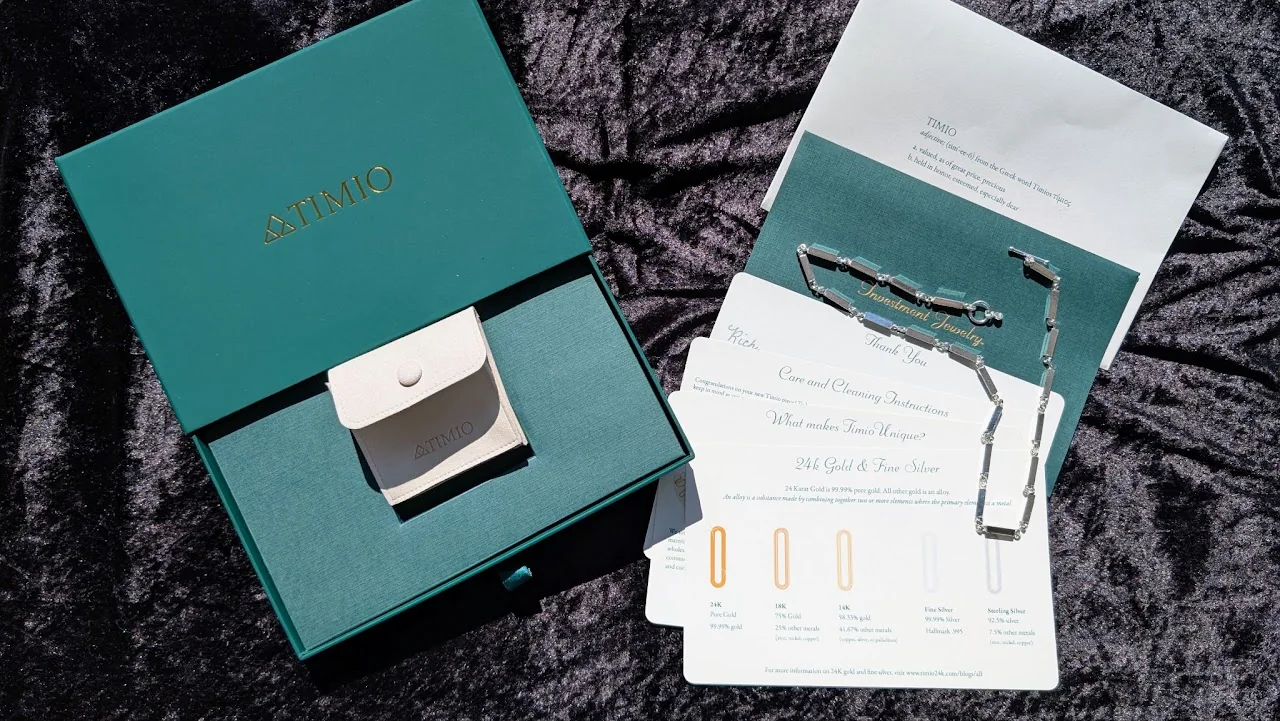
Gifted review piece. Timio provided the chain in exchange for an honest review and unboxing video. Rich previously represented Timio 24K.
Explore Rich’s Timio Axia reviewRead the repeat
Cable chains join round or oval loops; curb links interlock to lie flat. Figaro patterns interrupt a run of smaller links with an elongated one. Paperclip chains stretch the open loop, while box chains use squared links. Rope chains create a twisting, cord-like appearance. Compare an actual sequence of links rather than relying on a seller’s pattern name alone.
Snake chains form a close-fitting flexible tube; herringbone chains make a flatter, overlapping surface. Their smooth outlines can hide construction that is less obvious than an open cable. Herringbone deserves particular care because it can kink. A necklace worn alone, a pendant carrier and a chain bracelet make different demands on the same pattern.
Two designs with different stories
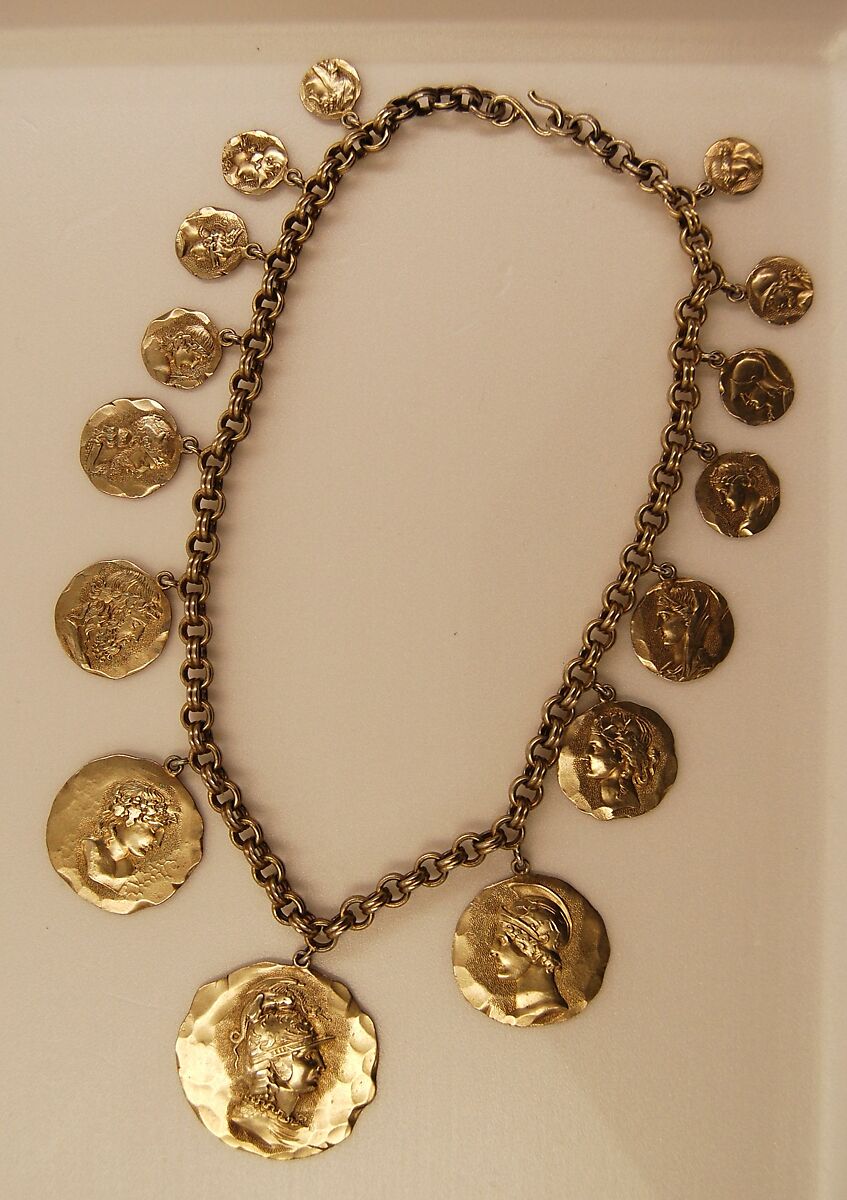
At The Metropolitan Museum of Art, a necklace by George W. Shiebler & Co., dated about 1880, combines circular double links with fifteen medallions imitating ancient coins. Its silver and silver-gilt construction and hook-and-eye closure are part of the design, not incidental fittings. The museum records a length of 16 inches (40.6 cm). This is nineteenth-century classical revival jewelry, not a necklace assembled from ancient coins.
Hermès traces its first silver Chaîne d’ancre bracelet to 1938 and Robert Dumas’s interest in ships’ anchor chains. The link itself became a recognizable design motif. These examples suggest two collecting directions: chains that support a sequence of ornaments, and chains whose repeated unit is the main attraction. A design’s introduction date does not date every later example.
 View full photograph
Length is only one measurement
Record overall length, link width and measured weight separately. A 45 cm necklace and a 60 cm necklace place the same pendant differently; neither length guarantees a particular position on every wearer. Use an existing comfortable chain as a reference. State whether measurements include the clasp and whether an extender is present.
Width is not wire thickness, and a large outline does not establish how much metal is inside. Ask whether links are hollow or solid in construction. For bracelets, distinguish laid-out length from usable inner circumference. Before pairing a pendant, check that its bail passes over the end fittings and ask a jeweler whether the chain can support its weight.
Follow the chain all the way to its ends
Inspect link contact points for thinning, and look for distortion, open joins, mismatched replacement links and stiff repairs. Examine the small connecting rings and end fittings as closely as the main chain. Spring-ring and lobster clasps should operate cleanly; a handsome hook or toggle still needs to suit the piece and its wearer.
Ask a jeweler to assess doubtful joins or closures rather than testing them by pulling. Hollow construction needs its own assessment; a broad link is not automatically robust or economical to repair. Record a replacement clasp honestly. It may make a chain wearable while changing the evidence for its original construction.
Separate fineness from finish
Sterling is 92.5% silver, commonly expressed as 925. Silverplate is a silver layer over another metal. Neither a shiny surface nor a clasp stamp establishes the material of every link. A full modern UK hallmark includes sponsor, fineness and assay-office marks; a lone 925 stamp is not that complete hallmark. Read marks in their country and period context.
Photograph marks and finishes before cleaning. Polishing removes some silver as well as tarnish, and can damage gilding or plating. Avoid immersion when hollow sections, repairs or other materials make treatment uncertain. Store chains separately, laid without sharp folds or tangles, and seek specialist advice for damaged or historically important examples.
Compare like with like
Compare completed sales for the same maker or attribution, pattern, material, dimensions and condition. A light hollow chain and a solid-link example are not interchangeable comparisons. An asking price is not a recorded sale; allow for fees, shipping and any necessary repair before deciding what to pay.
Keep clear photographs of the link repeat, clasp and marks, plus measurements, receipt and repair history. Separate the seller’s attribution from documented evidence. Gross weight is not automatically silver weight, and metal content alone does not price design or workmanship. Choose a chain you want to study or wear, without assuming appreciation.