
Collecting silver / Vessels & small wonders
Silver bottles.
Look beyond the surface.
A long neck, a small cap, a body made to catch the light. Follow the parts and you begin to see what kind of bottle you are collecting.
Start with the materialSilver body
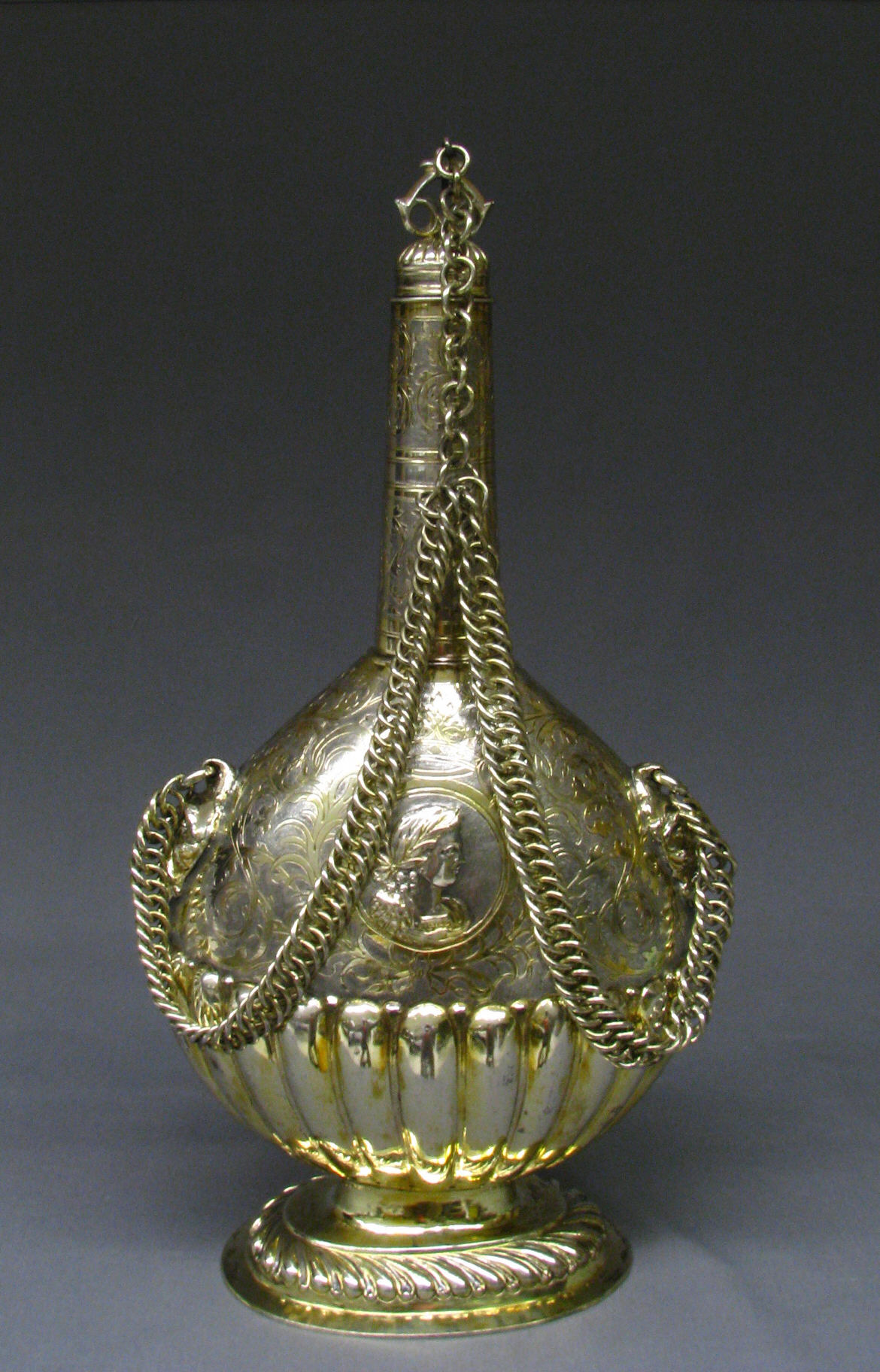 Open full photograph
Body & mount
Find where the silver begins.
Start with the material of the vessel itself. A silver-bodied bottle belongs to a different construction story from a glass, ceramic or other body fitted with silver mounts. A silver cap does not make the entire object silver. Record the body, neck fitting, closure and decorative additions separately before comparing examples.
The Met identifies the pilgrim flask shown here as silver and silver-gilt, made by I.P.S. in Leipzig around 1680–1700. Its rounded body, tall neck and foot make a strong silhouette. The chains add another line to follow. Gilding can give silver a gold-colored surface; color alone cannot tell you the underlying metal.
Forms & purpose
Let the form open the question.
Bottle, flask and scent bottle are useful starting terms, but shape alone cannot settle original use. A flattened vessel may suggest portability, while a broad foot suggests a standing display. Compare the name with a documented museum record rather than assigning a function from one photograph.
A scent bottle can turn the whole container into an ornament. Thomas Webb & Sons made the bird-head example shown below in 1870–1900. The Met describes its body as white and yellow cameo glass and its top as silver. The photograph is black and white, so use the catalog for those colors. This is a glass object with a silver component, not a solid-silver bird.
Glass body, silver top
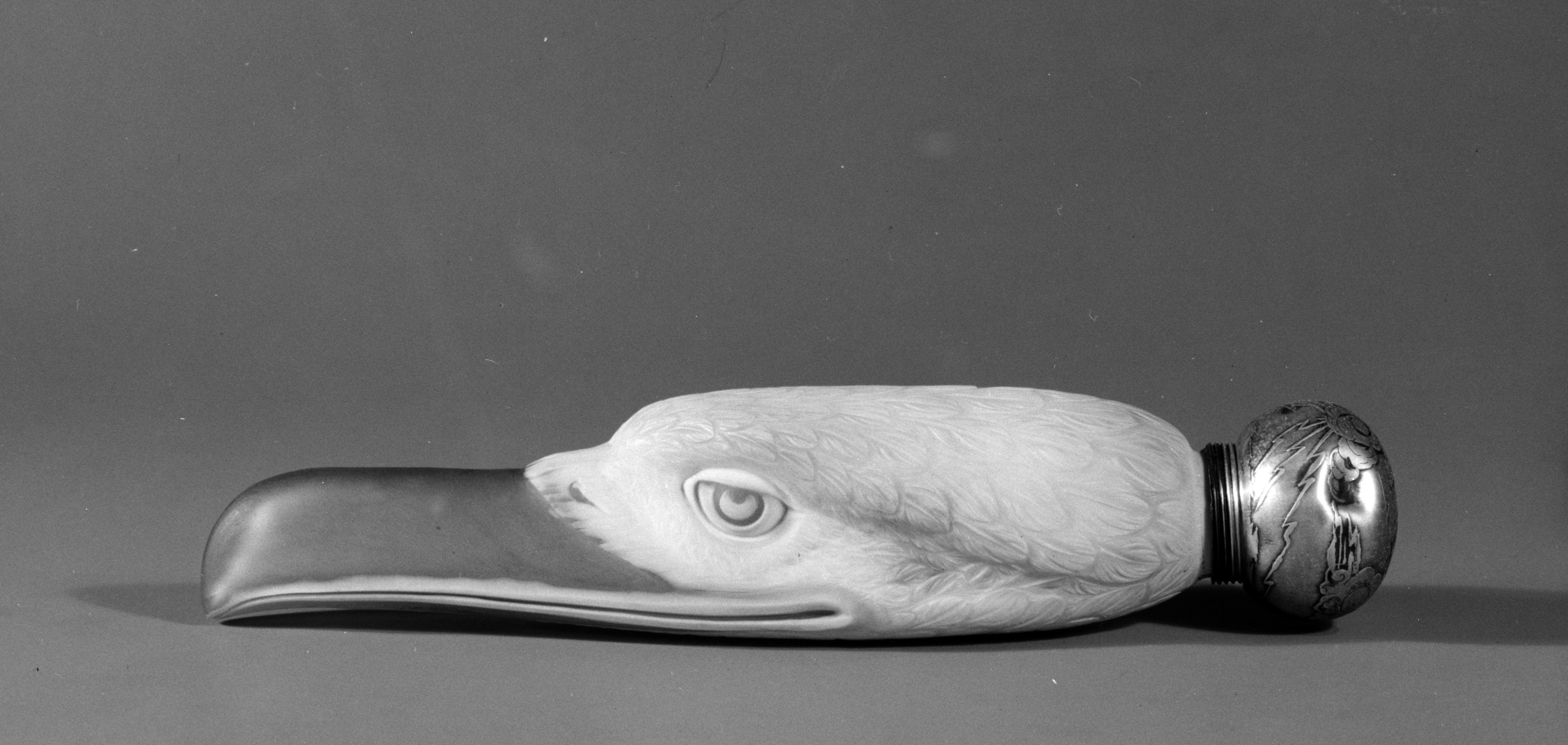 Open full photograph
Cap & stopper
Collect the closure with the bottle.
Ask exactly what is included: cap, stopper, inner plug, chain or fitted case, where applicable. A decorative outer cap and an inner stopper can serve different roles. Photograph removable parts beside the supported bottle only when they can be removed safely. Never force a stuck closure or use a chain as a handle.
Check how the parts meet. Does a cap sit straight? Are threads damaged, a hinge distorted or a chain attachment open? Ask whether a replacement is documented. A close fit or matching decoration is useful to record, but neither proves that two pieces began life together.
Joins & condition
Spend time at the meeting points.
Look around the neck, shoulders, base and any applied fittings. Record visible dents, splits, irregular seams, solder and areas where decoration becomes faint. On mounted glass, ask for clear views of the rim and the glass beside the mount. Metal can conceal damage; an attractive front view leaves those questions unanswered.
Keep condition descriptions literal. A dark line might be a join, residue or damage that needs examination. Do not prise a mount away to investigate. Before cleaning an unfamiliar combination of materials, consult a qualified conservator. Historical use and an intact appearance do not establish that a vessel is safe for food, drink or perfume today.
Dimensions & record
Measure the object, not an imagined volume.
Record overall height with the closure fitted, maximum width and depth, and any separate component measurements. Preserve the source’s measurement labels. The Met lists the pilgrim flask at 44.8 × 24 × 14.3 cm overall; those exterior dimensions do not give its internal capacity. Do not fill a collectible bottle to find out.
Keep total object weight distinct from silver weight, especially for glass bodies or mixed fittings. Save photographs of the base, marks, joins and closure with the receipt, material description and known repairs. Separate your observations from seller claims. A stamped number or familiar outline cannot authenticate the object by itself. Choose a collecting direction you enjoy: sculptural shapes, engraved bodies or the small decisions around a beautifully fitted cap.