
The silver funnel that wasn’t enough
In 1839 the wine writer Cyrus Redding had a complaint about the little silver funnels used to strain wine: the familiar perforated sort “does its office ill.” He didn’t want to get rid of the silver. His preferred funnel could still be made of it, with a bent spout and a generous opening. He wanted something different inside: a muslin bag hung from a wire.
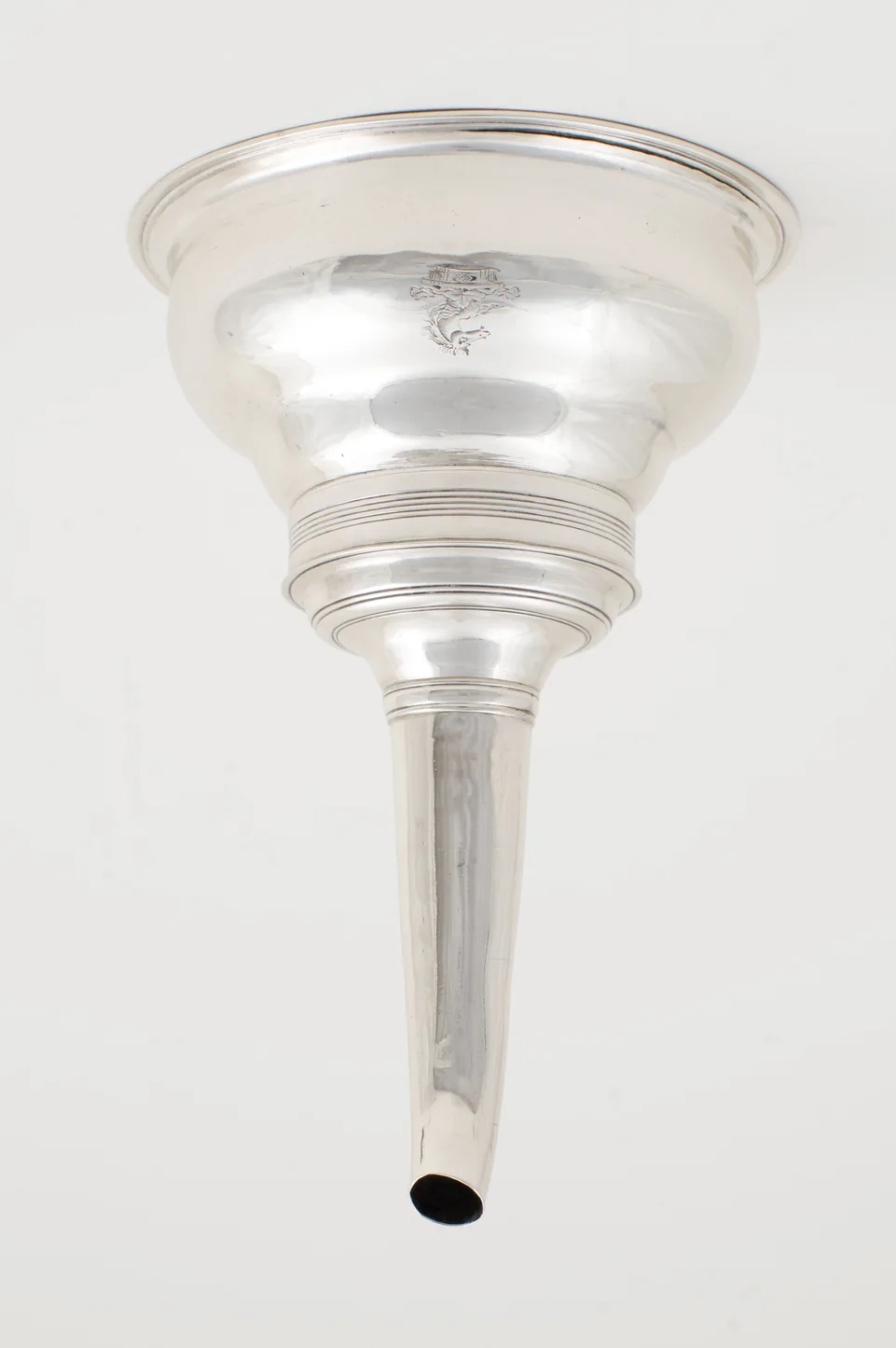
The complaint gives us a way to look at a Georgian wine funnel. John Moore’s silver example, dated 1796–97 by the Saint Louis Art Museum, has a broad mouth, a narrow stem and an outlet that doesn’t point straight down. It’s easy to pick out the silver and the marks. Redding’s advice sends your eye to two other places: where the wine passes through a filter, and where it comes out.
What a bent tip changes
A kitchen funnel is usually there to get liquid through an inconveniently small opening. The wine funnel also lets you choose where the liquid goes once it’s through. Set a bent outlet in a decanter with the opening turned toward the glass and it can direct the stream toward the inside wall. The bend guides the wine; it doesn’t screen it. Turn the same piece in your hand and the distinction is much easier to see than it is in a photograph taken directly from the front.
The New York Historical’s catalogue describes a later silver example with a tube that bends at the end so the outlet faces sideways. The other part of that object is a small removable bowl with a pierced bottom. That is where the filtering happens. Those two features can work together without being interchangeable. The Royal College of Physicians gives another example: a silver funnel made by Thomas Shepherd in 1771, with a detachable strainer that would have caught sediment as wine was transferred to a decanter.
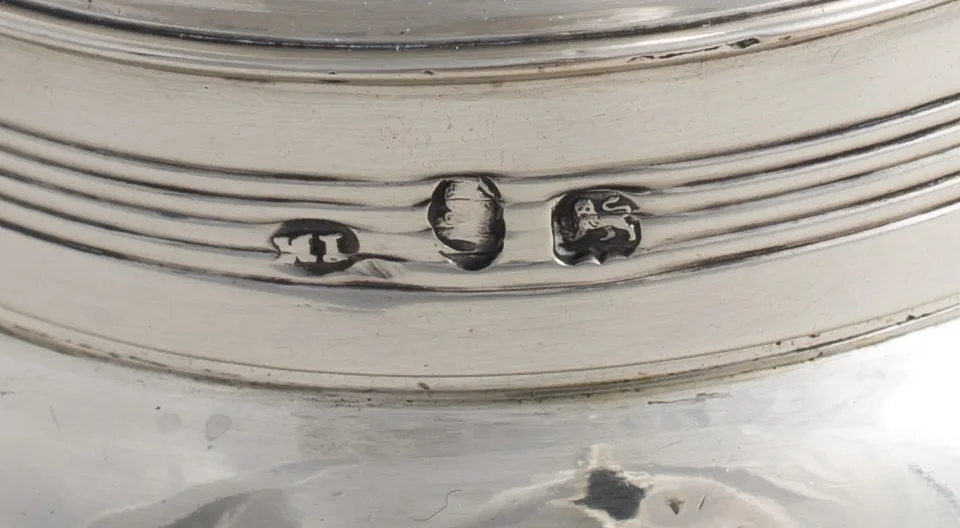
The Moore funnel, by contrast, is catalogued simply as a silver wine funnel. The photograph records marks on the rim and the shape of the tube. It is not evidence that this particular funnel had a muslin bag or that a separate piece is missing.
The cloth did the finer work
Think of where the troublesome material sits before the wine is even poured. Some wines leave a deposit in the bottle as they age. Pulling the cork or handling the bottle roughly can stir it back into the liquid. Then there are the bits of cork or sealing material that can tumble in at the neck. Redding tells his reader to keep the bottle as still as possible, clear the mouth, and pour steadily. He treats the funnel as one step in the process, not as a way to undo a careless pour.
A pierced metal bowl can stop particles larger than its holes. The weave of cloth provides a different barrier. Redding’s suggestion was to fasten a bag of muslin around a wire inside a conical funnel, like the bags used for coffee. The holder could be silver; the cloth did the finer filtering. That’s one writer’s preference, not proof that all Georgian funnels had bags, or that a perforated strainer was pointless. The metal takes the shape, holds the cloth or perforated insert when one is fitted, and puts the stream where the user wants it.
What made it to the table
The little tool would be easier to romanticize if Redding had insisted on decanting everything. He didn’t. In winter, he allowed some strong white wines, including sherry and Madeira, to wait in an open decanter before dinner. For delicate French wines, he wanted the bottle opened and served directly to preserve the fragrance and freshness he valued. In the same book, at the same table, the role of the funnel could vary with what was in the bottle.
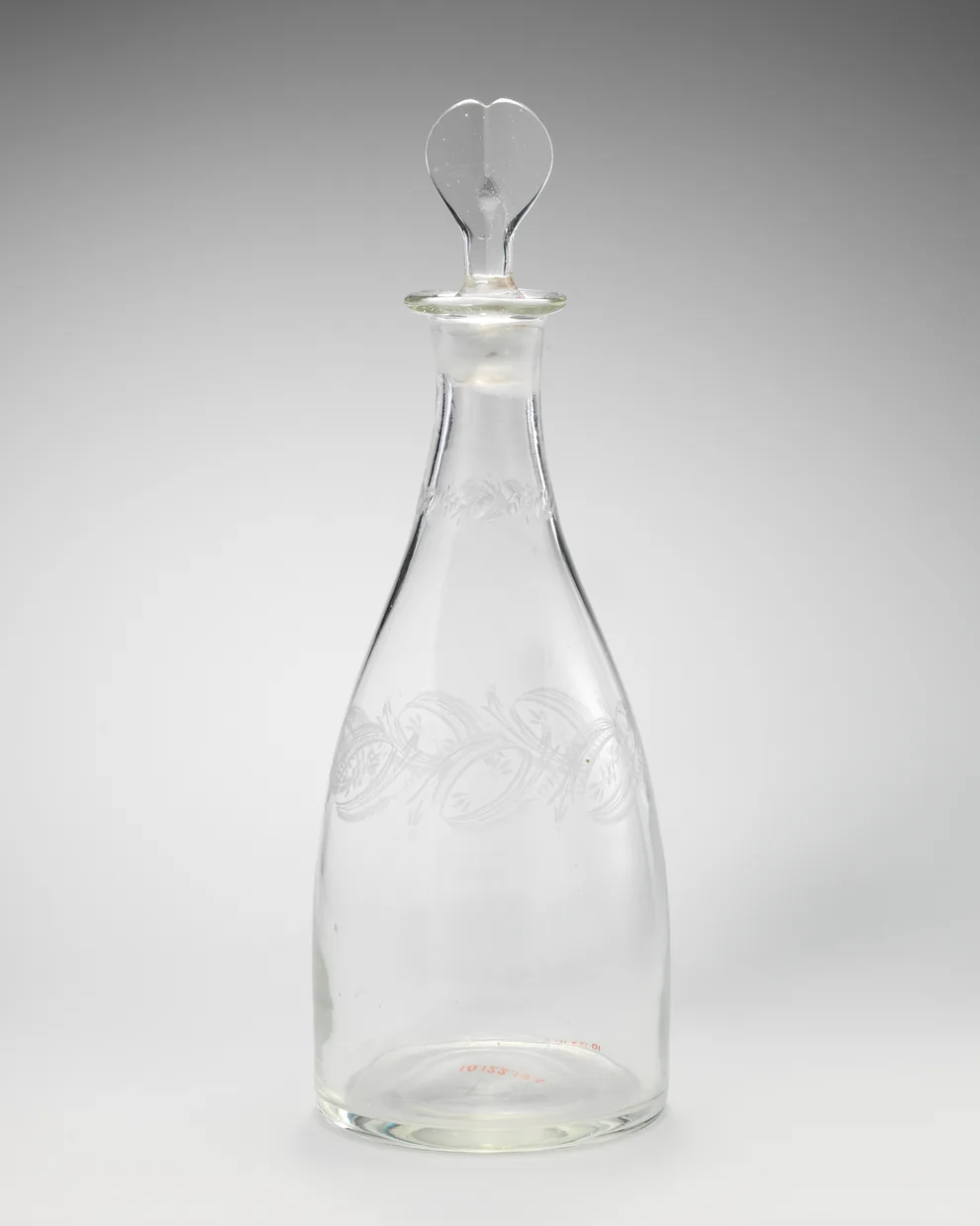
Once the decanter reached the table, nobody needed to see how the wine had got there. Look at the Met’s late eighteenth-century British glass decanter: the bottle it was filled from, the strainer and any cloth would all be elsewhere. This decanter and Moore’s funnel are separate museum objects, not a matched set. But the one helps explain the other. A pouring vessel could show off the wine, while a smaller object did its work before anyone sat down.
Check the opening before naming the object
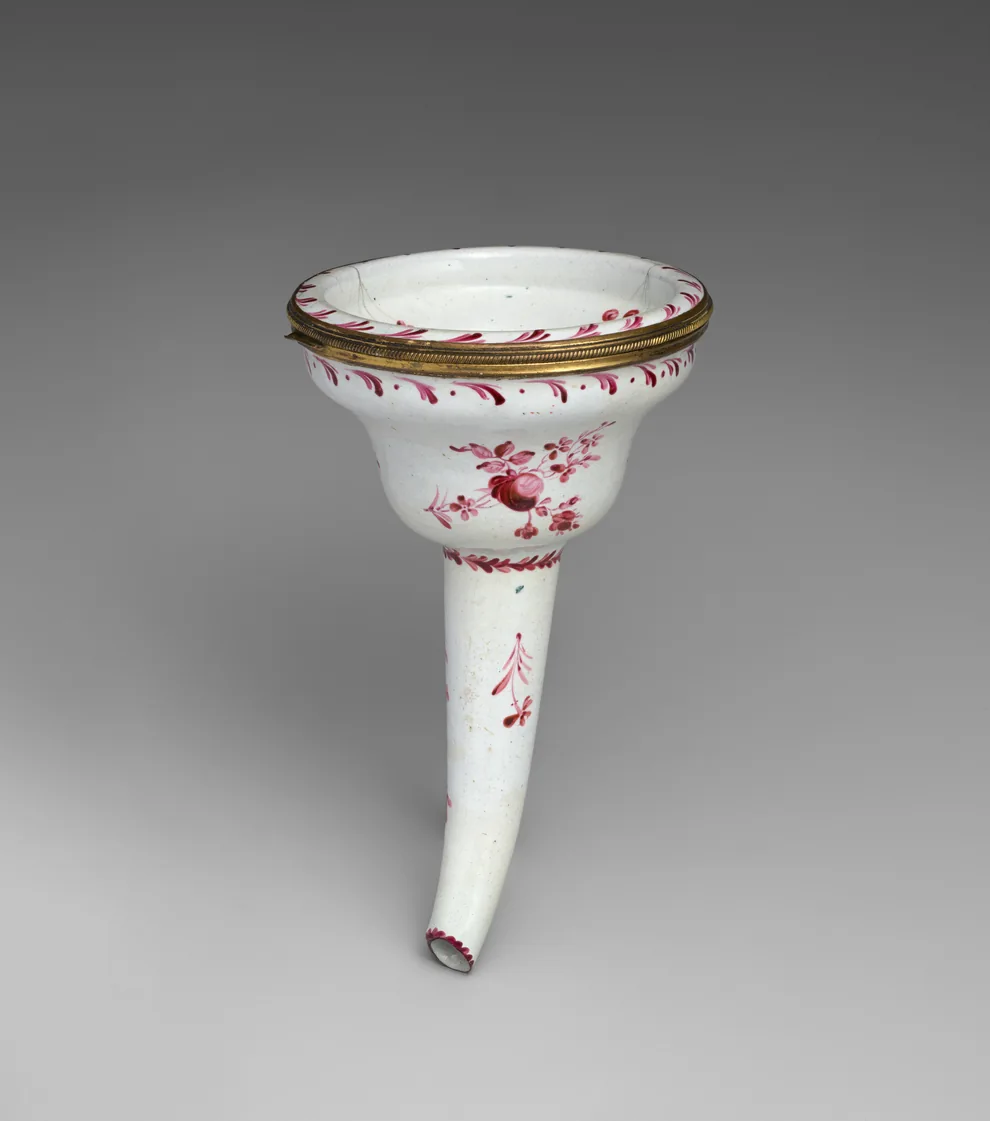
Silver wasn’t the only material that could give a funnel a curved outlet. A ca. 1770 example at The Met is enamel on copper, with a floral pattern and a taper you can follow all the way to the opening. The museum puts it in the company of small fashionable goods sold in toyshops, where enamels could offer shoppers a less costly alternative to precious metal. The enamel changes what the object looks like and where it sits in the market. It doesn’t change what the shape lets a person do.
When describing a loose funnel, look first at the tip and then into the bowl. Does the opening face straight down or to one side? Is there a perforated piece inside, a ledge it could rest on, or merely a hollow bowl? If you find marks on an insert as well as on the body, photograph both before assuming they came together. Don’t pull a tight insert free to find out. The silver tea strainer story shows why it matters where someone chose to stop the solids; the silver servingware guide has more on fittings and materials that are easy to overlook.
Sources and photographs
- Saint Louis Art Museum, John Moore’s silver wine funnel, 33:1937, 1796–97. Public domain object photographs.
- Cyrus Redding, Every Man His Own Butler (London, 1839), introduction, pp. x–xi: the perforated funnel, the muslin alternative and advice on decanting.
- Royal College of Physicians, silver collection catalogue, p. 10: Thomas Shepherd’s funnel and detachable strainer, X316.
- The New York Historical, silver wine funnel with strainer, 1951.309ab: description of the outlet and pierced bowl.
- The Metropolitan Museum of Art, glass decanter with stopper, 10.122.10a, b. Public domain photograph.
- The Metropolitan Museum of Art, enamel wine funnel, 2023.441.57: materials and retail context. Public domain photograph.