
Look at the tips, not the loops
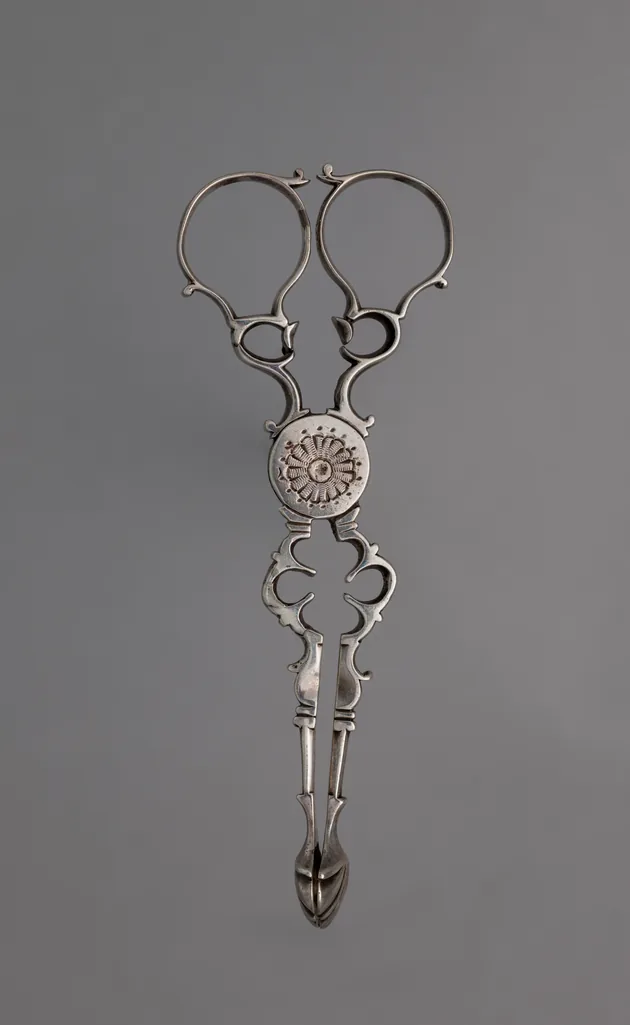
At first glance these silver tongs look like scissors. The two finger loops and the round hinge make you expect a blade. Follow the arms down, though, and they end in little cupped grips that face each other. They were made to hold a lump of sugar, not to cut through it.
This pair was made in London around 1750 and is now in the Cleveland Museum of Art. It is less than five inches long. A flower covers the hinge, and the curving openwork leaves little more silver than needed to connect the handle to the tips. Behind all that ornament is a job that only took a moment: pick up a piece of sugar from its bowl and put it in a cup of tea.
Before the sugar reached the table
Refined sugar was long sold in hard, cone-shaped loaves. Think of one sitting on a work surface in its paper wrapper. There is no handful of loose granules to spoon from it. The sugar needed to be broken down first, and a kitchen tool had to take the force.
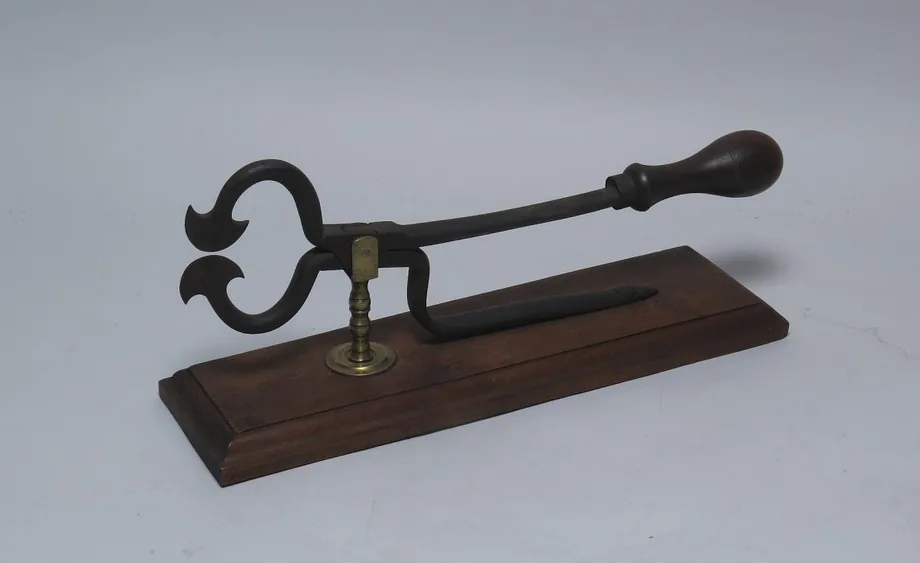
The Smithsonian’s Birmingham nippers, made around 1800–1840, make that job visible. A wrought-iron cutter is mounted to a walnut board, its pivot carried on a brass post. A long handle gives leverage. Look at the opposed edges and the fixed base, then look back at the Cleveland tongs’ little scoop-shaped ends. There is a reason the two tools are built differently, even though both are sometimes called sugar nips.
Materials are useful context rather than a shortcut. These particular cutters are iron and these particular table tongs are silver. The giveaway is in how the business ends meet: a cutter bites into sugar, while table tongs cradle a piece already small enough to serve.
How the hinge disappeared
Not all silver table tongs have loops. A second shape looks like a long U: squeeze the arms inward to take hold of the sugar, then ease your grip to let the bowed metal spring back. There is no separate hinge or pin to spot.
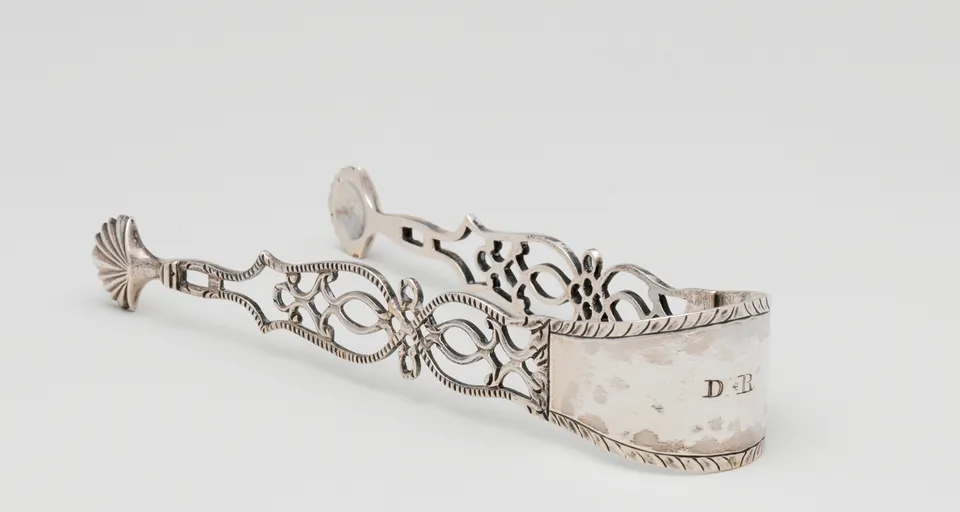
A New York pair at The Met, attributed to Myer Myers and dated about 1772, has an especially elaborate version of that bow. The arms are pierced, and the shallow tips look like tiny shells. Set it beside Bernard Wenman’s silver tongs, made in New York around 1800. Wenman used the same broad arrangement but left much more uninterrupted metal along the sides. The decoration changed; the little spoon-like grips still tell you where the sugar went.
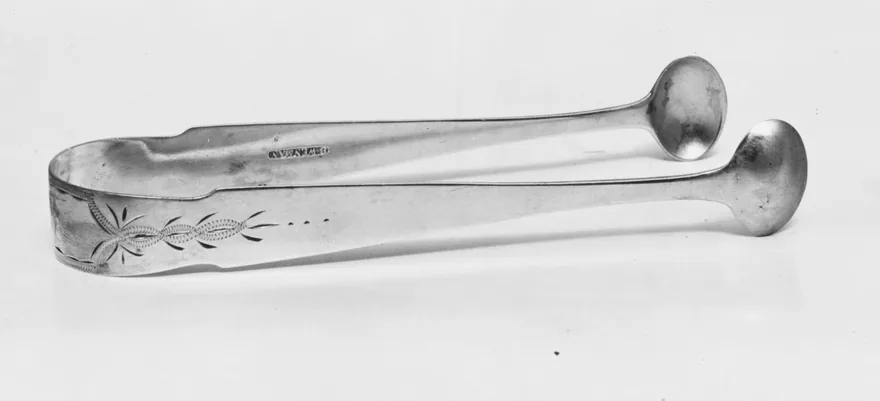
These are dated examples, not a rule for dating an unmarked piece. A bow does not make every pair late, and a hinge does not tell you where a particular pair was made. Pause over the words attributed to in the Myers record: the museum makes a distinction between its attribution for that pair and its unqualified credit to Wenman on the other.
What the tea table kept out of sight
Silver tongs put a small, controlled gesture at the table. Breaking the loaf happened elsewhere. So did growing and refining the cane. Royal Museums Greenwich connects the sugar loaves cut by domestic tools to plantation-grown cane in the Americas. London Museum places growing English demand in the context of increased Caribbean production using enslaved labor. Neither fact tells us which loaf passed through a particular kitchen, but both belong in the history of why so much household equipment was invented around sugar.
On a Paul de Lamerie sugar box, a harvesting scene actually brings that labor onto the silver surface, however decoratively. Look closely at the box after looking at the tongs. The box offers a glimpse of what happened before the sugar was ready to serve; the tongs tell you how little of that work a guest had to see.
Three photographs to ask for
- The tips, face to face. A front view can look like scissors. A side view shows whether the ends cup a lump, bite with opposed blades, or have teeth that warrant comparing another kind of serving tong.
- The hinge or bend. Look for the pin if the arms cross. On a bow type, ask for a view of the outside and inside of the bend. Distortion, a split, or a suspected repair is worth a second look. Don’t force the arms together to test them.
- The marks and their location. Photograph both arms inside and out, including the cups, hinge and bow where accessible. An owner’s monogram is not a maker’s punch. Keep a picture of the whole object so the position of each mark stays in the record.
A seller’s listing can use “nips,” “nippers,” “tea tongs” or “sugar tongs” for different forms. Search the names, but compare the working ends before you decide what you’re seeing.
Sources and images
Museum objects and the history behind them
- Cleveland Museum of Art: London sugar tongs, 1943.186. Compare Colonial Williamsburg’s account of scissor-type table tongs, 2020-303.
- Smithsonian: Birmingham tabletop sugar nippers, DL.388282; Royal Museums Greenwich: sugar loaves and nippers; London Museum: sugar loaf cutters and the Caribbean trade.
- The Met: sugar tongs attributed to Myers, 2012.244.4, and Bernard Wenman’s sugar tongs, 33.120.610.